


Aluminum CNC Machining Services
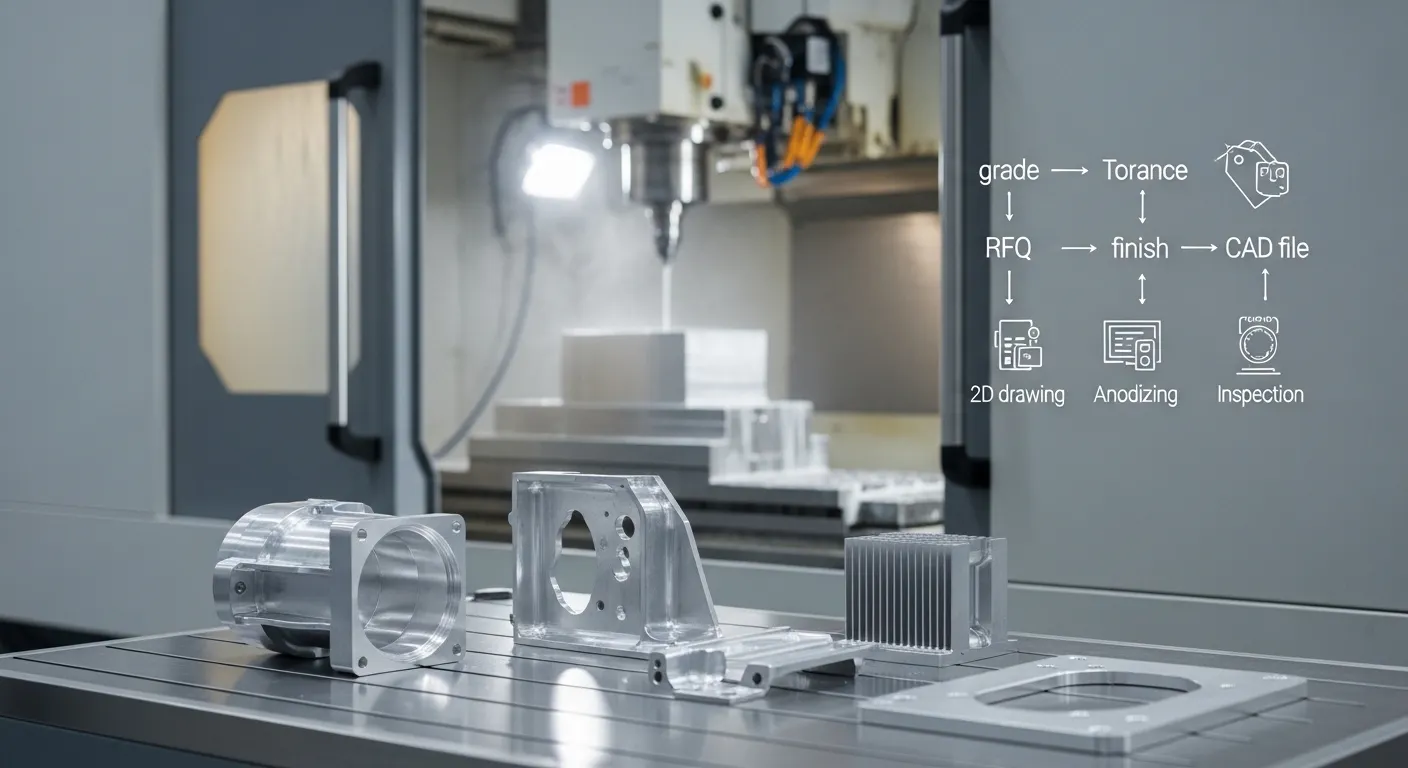
Aluminum is often selected for machined housings, brackets, enclosures, heatsinks, fixtures, adapters, mounting plates, and precision mechanical components. However, the right result depends on more than choosing “aluminum” as a material. Buyers should confirm the grade, machining process, anodizing or coating requirement, cosmetic surface expectation, critical dimensions, and production stage.
If you already have 2D drawings or 3D CAD files, SunOn can review your part requirements and help you prepare a practical RFQ for custom aluminum CNC parts.
Aluminum CNC Machining Services for Custom Parts
Aluminum is widely used in CNC machining because it is lightweight, machinable, corrosion-resistant in many applications, and suitable for both functional prototypes and finished production components. It is also easier to machine than many harder metals, which can support efficient production when the part design is clear.
SunOn supports custom CNC machining projects where aluminum parts need accurate dimensions, clean surfaces, threaded holes, pockets, slots, mounting features, or assembly-ready finishing. These parts may be used alone or as part of a larger OEM/ODM product.
Typical aluminum CNC part requests include:
- Electronics housings and covers
- Heat sinks and thermal plates
- Mounting brackets and frames
- Automotive and EV-related adapters or fixtures
- Industrial machinery components
- Aerospace-related lightweight structural parts
- Jigs, fixtures, and checking tools
- Consumer product metal shells
- Prototype parts for design validation
For broader CNC capability context, buyers can also review SunOn’s CNC machining manufacturer page.
Which Aluminum Grade Should Buyers Choose?
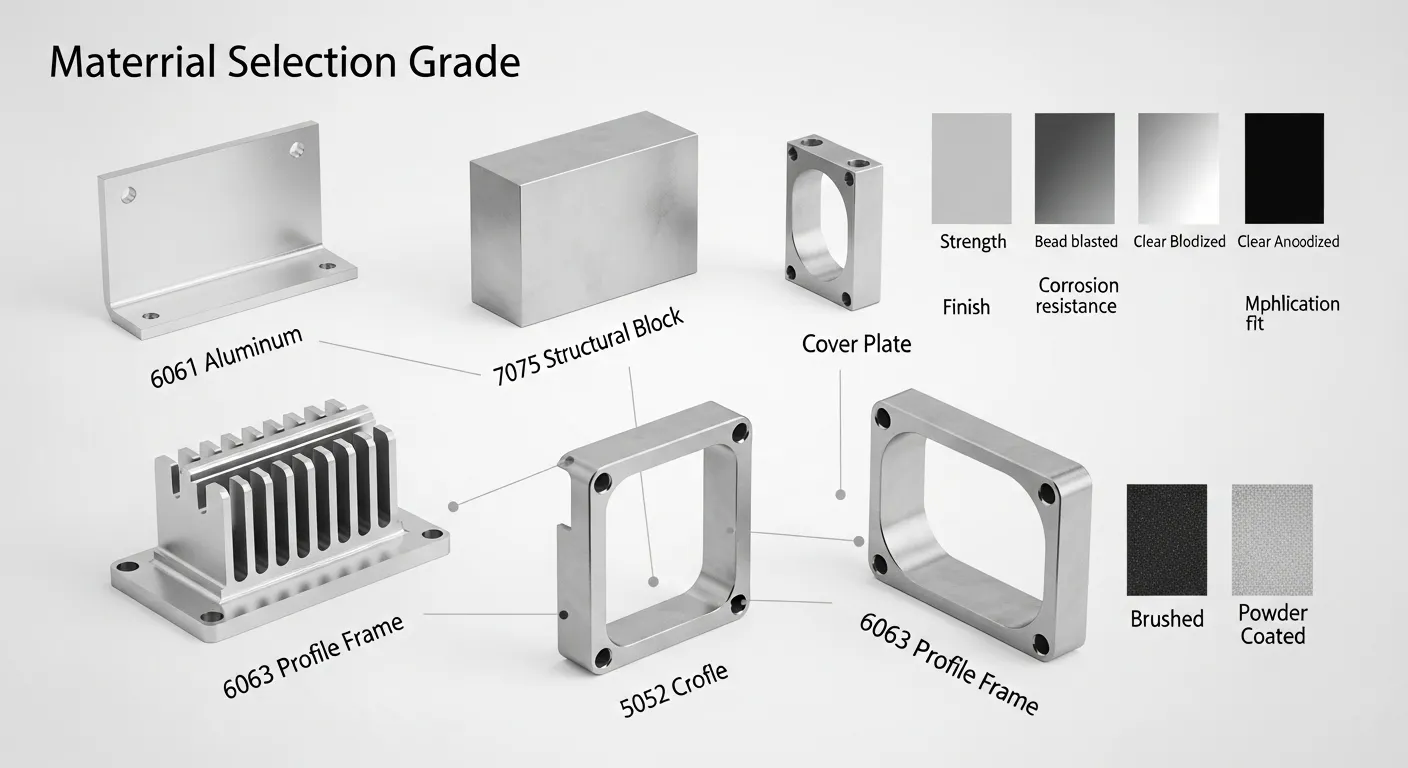
The aluminum grade affects machinability, strength, corrosion resistance, surface finish, anodizing result, cost, and part performance. Many buyers choose 6061 because it offers a balanced combination of machinability, strength, availability, and finishing behavior. However, some applications need a different grade.
For example, high-strength lightweight parts may require 7075 or 2024. Corrosion-focused parts may need 5052 or similar grades. Decorative profiles or enclosure-style parts may use 6063. Structural projects may consider 6082 depending on the buyer’s region, drawing, and sourcing requirements.
If the grade is already specified on the drawing, include it in the RFQ. If not, share the application, load requirement, finish requirement, and working environment so the material choice can be reviewed before machining.
Aluminum Grade and Finish Selection Table
| Buyer requirement | Common option to discuss | Good fit for | RFQ note |
|---|---|---|---|
| Balanced strength, machinability, and finish | 6061 | Brackets, housings, fixtures, prototypes, mechanical parts | Often a practical starting point if no special requirement is given |
| Higher strength and lightweight performance | 7075 | Aerospace-related parts, structural components, high-load parts | Confirm corrosion protection, finish, and tolerance needs |
| Corrosion resistance and formed/sheet-style applications | 5052 | Covers, panels, marine-style or outdoor-use parts | Confirm whether the part is best made by CNC machining, sheet metal, or a combined process |
| Decorative or extrusion-related parts | 6063 | Frames, profiles, appearance-focused parts | Confirm surface finish and anodizing appearance expectations |
| Structural applications | 6082 | Frames, plates, machined structural components | Useful when required by drawing or regional material standard |
| Fatigue or strength-focused applications | 2024 | Aerospace-related or performance parts | Confirm corrosion protection and application requirements carefully |
| Clean machined surface | As-machined | Functional parts, prototypes, internal components | Confirm visible surfaces and tool mark acceptance |
| Matte cosmetic appearance | Bead blasting or sandblasting | Enclosures, panels, consumer product parts | Confirm texture, masking, and cosmetic surface standards |
| Corrosion resistance and color finish | Clear or color anodizing | Housings, covers, brackets, visible parts | Confirm color, gloss, masking, and critical dimensions |
| Wear-resistant surface | Hard anodizing, if required and available | Sliding, wear, or functional surfaces | Confirm coating thickness impact and tolerance zones |
| Decorative or protective coating | Powder coating, polishing, brushing, or other finishing | Appearance parts and product shells | Confirm color, texture, surface class, and inspection method |
CNC Processes Used for Aluminum Parts
Different aluminum parts need different CNC machining methods. A simple flat bracket may only need CNC milling. A round spacer or shaft may require CNC turning. A housing with multiple faces, angled holes, or complex features may need multi-axis machining.
SunOn’s CNC machining support may include:
- CNC milling for pockets, slots, flat surfaces, plates, housings, frames, and brackets.
- CNC turning for shafts, bushings, spacers, round connectors, and cylindrical parts.
- Drilling and tapping for mounting holes, threaded holes, countersinks, and assembly features.
- 5-axis CNC machining for complex aluminum parts with multi-side features, curved surfaces, or reduced setup needs.
If your aluminum part has angled holes, complex surfaces, tight feature alignment, or multiple machined faces, the project may benefit from 5-axis machining. Buyers can learn more from SunOn’s 5-axis CNC machining services page.
Machinability, Geometry, and DFM Risks
Aluminum machines well, but part design still affects cost, tolerance, surface quality, and production stability. Thin walls, deep pockets, long unsupported features, sharp internal corners, very small holes, tight threads, and complex undercuts can increase machining risk.
Before quoting, buyers should review:
- Wall thickness and possible deformation
- Deep cavities and tool access
- Internal corner radius requirements
- Hole depth and thread depth
- Flatness or parallelism requirements
- Cosmetic surfaces that cannot show obvious tool marks
- Areas that need masking before finishing
- Assembly features such as inserts, pins, or threaded holes
A DFM review can help identify whether the part should be adjusted before machining. This is especially useful for prototypes that may later move into low-volume or production manufacturing.
Surface Finish and Anodizing Considerations
Surface finish is a major decision for aluminum CNC parts. Some parts only need an as-machined surface. Others require bead blasting, anodizing, powder coating, polishing, brushing, or a controlled cosmetic finish.
Anodizing is common for aluminum because it can improve corrosion resistance and appearance. However, buyers should not treat anodizing as a simple afterthought. It can affect dimensions, color consistency, surface texture, masking needs, and visible cosmetic quality.
For appearance-focused parts, send clear finish requirements with the RFQ. Helpful details include:
- Clear, black, or color anodizing requirement
- Matte or glossy appearance
- Bead blasted or brushed texture
- Visible and non-visible surface areas
- Masking areas
- Logo, laser marking, or silk screen requirement
- Critical dimensions after finishing
- Cosmetic acceptance standard, if available
Tolerance, Inspection, and Quality Details to Confirm
Tolerance should be based on function, not applied tightly to every dimension. Overly tight tolerance can increase machining time, inspection work, and cost. For aluminum CNC parts, buyers should mark the dimensions that truly affect fit, sealing, assembly, alignment, or movement.
Important tolerance and quality details include:
- Critical hole locations
- Thread fit and insert requirements
- Flatness or perpendicularity
- Part-to-part assembly fit
- Surface roughness requirement
- Finished dimensions after coating or anodizing
- Inspection report requirement
- Functional testing requirement, if relevant
SunOn can review drawings and project specifications before quotation. If your part has regulated industry requirements, special documentation, or strict inspection needs, state them clearly in the RFQ. The page should not rely on assumptions or unsupported certification claims.
Prototype, Small-Batch, and Production Support
Aluminum CNC machining is useful at several project stages. In early development, it can produce functional prototypes for testing fit, strength, assembly, and appearance. For product launch or bridge production, CNC machining can support small batches before tooling or die casting decisions are finalized.
For production planning, buyers should confirm whether CNC machining remains the best process. In some cases, CNC machining is ideal for precision, flexibility, and lower tooling cost. In other cases, die casting, injection molding, sheet metal fabrication, or mold-based production may become more suitable at higher volumes.
SunOn’s wider custom manufacturing support includes CNC machining, rapid prototyping, mold making, injection molding, die casting, surface finishing, assembly, and OEM/ODM production support. This helps buyers compare process options before committing to one manufacturing route.
For buyers sourcing CNC parts from China, SunOn’s CNC machining China page provides additional supplier and manufacturing context.
Application Areas for Aluminum CNC Parts
Aluminum CNC machining is used across many technical and commercial product categories. The best application fit depends on strength, weight, surface appearance, corrosion exposure, assembly method, and production volume.
Common application areas include:
- Electronics: enclosures, panels, heatsinks, mounting plates, covers
- Automotive and EV: brackets, adapters, fixtures, battery-related housings, prototype components
- Industrial machinery: frames, plates, connectors, motion components, jigs
- Aerospace-related projects: lightweight structural parts, brackets, housings, test components
- Medical and device development: prototype housings, fixtures, equipment components
- Consumer products: decorative metal shells, control parts, product frames
For aerospace-related CNC project planning, buyers can also review SunOn’s aerospace CNC machining page. Any special certification, documentation, or inspection requirement should be confirmed directly before quotation.
What to Send for an Aluminum CNC Machining Quote
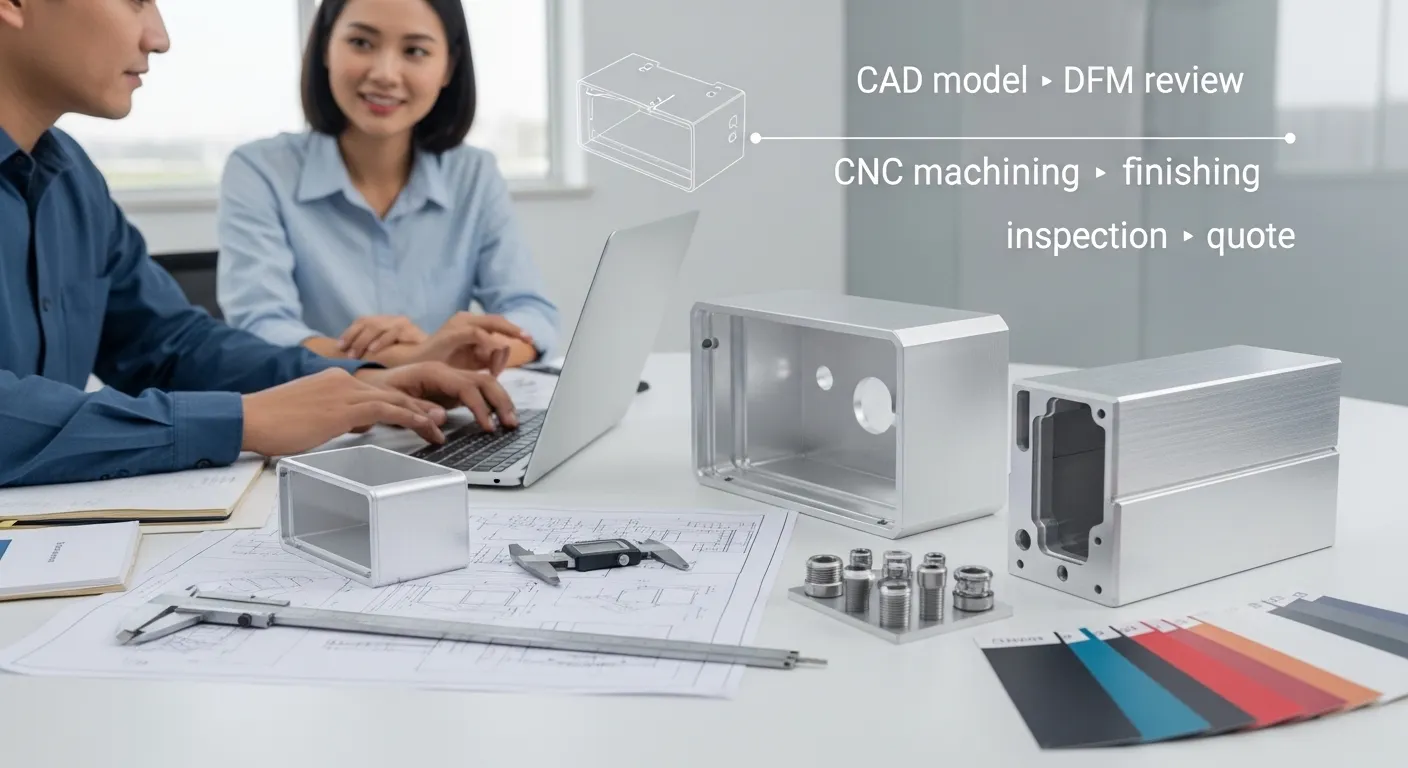
A clear RFQ helps the manufacturing team review feasibility, cost factors, finish requirements, and inspection needs. It also reduces delays caused by missing drawings or unclear specifications.
Before requesting a quote, prepare:
- Product or part name
- Quantity required
- Prototype, small-batch, or production stage
- Application or industry
- 2D drawing with dimensions and tolerances
- 3D CAD model, such as STEP or another usable format
- Aluminum grade, if known
- Surface finish requirement
- Anodizing color or coating requirement
- Critical dimensions and inspection needs
- Threading, inserts, holes, slots, or undercuts
- Assembly requirements
- Functional testing requirement, if relevant
- Delivery destination
- Target schedule
- NDA, BOM, or project specification, if needed
If the material grade or finish is not final, explain the part’s function and working environment. SunOn can review the project details and discuss suitable machining, finishing, and production options.
Why Buyers Work With SunOn for Custom Aluminum Parts
SunOn Mould supports buyers who need more than a basic machining quote. Many custom parts require engineering communication before production. Material choice, part geometry, tolerance, finishing, inspection, and assembly requirements all affect the final result.
Our team can support CNC machining projects together with related manufacturing services such as rapid prototyping, surface finishing, mold making, injection molding, die casting, and assembly. This is useful when an aluminum CNC part is part of a larger product development or OEM/ODM manufacturing project.
Instead of treating the part as only a price request, SunOn helps buyers prepare the right technical details before manufacturing begins.
Frequently Asked Questions
What aluminum grade is best for CNC machining?
6061 is often a practical choice for balanced strength, machinability, and finishing. For higher strength, buyers may consider 7075 or 2024. For corrosion-focused parts, 5052 may be relevant. The best grade depends on function, environment, finish, and drawing requirements.
Can SunOn machine aluminum prototypes and production parts?
Yes, SunOn supports custom CNC machining projects for prototypes, small batches, and production planning. Buyers should send drawings, CAD files, quantity, material grade, tolerance, finish, and inspection requirements for review.
What finishes are used for CNC-machined aluminum?
Common finish options include as-machined, bead blasting, anodizing, powder coating, polishing, and brushing. Buyers should confirm color, texture, visible surfaces, masking areas, and whether critical dimensions apply before or after finishing.
Can anodizing affect part dimensions?
Yes. Anodizing can affect surface dimensions and appearance. Buyers should mark critical dimensions, masking areas, and cosmetic surfaces on the drawing so the finishing requirement can be reviewed before production.
When should I choose 5-axis CNC machining?
5-axis machining may help when aluminum parts have complex surfaces, angled holes, multi-face features, or setup-sensitive geometry. It can reduce repositioning and improve access for complex parts.
What files are needed for a quote?
Send 2D drawings, 3D CAD files, material grade, quantity, tolerance, finish, application, inspection needs, and delivery destination. More complete RFQ details usually lead to clearer manufacturing review.
Request Aluminum CNC Machining Support
Send SunOn your aluminum part drawings, 3D CAD model, quantity, material grade, tolerance requirements, surface finish needs, anodizing or coating details, inspection requirements, and application information. Our team can review your project for CNC machining, DFM feedback, prototype support, small-batch production, finishing, assembly, or OEM/ODM manufacturing planning.
