


Stainless Steel Machining
Stainless steel is often selected for industrial equipment, automation parts, machinery components, electronics hardware, food-related equipment, marine-use parts, and durable assemblies. However, it is not as easy to machine as aluminum or some free-cutting metals. Grade choice, heat control, tool access, wall thickness, thread design, and finishing requirements can affect cost, quality, and lead time.
If you need stainless steel prototypes, low-volume parts, or production components, SunOn can review your 2D drawings, 3D CAD files, material requirements, tolerance notes, and finish expectations before quotation.
Stainless Steel CNC Machining for Custom Parts
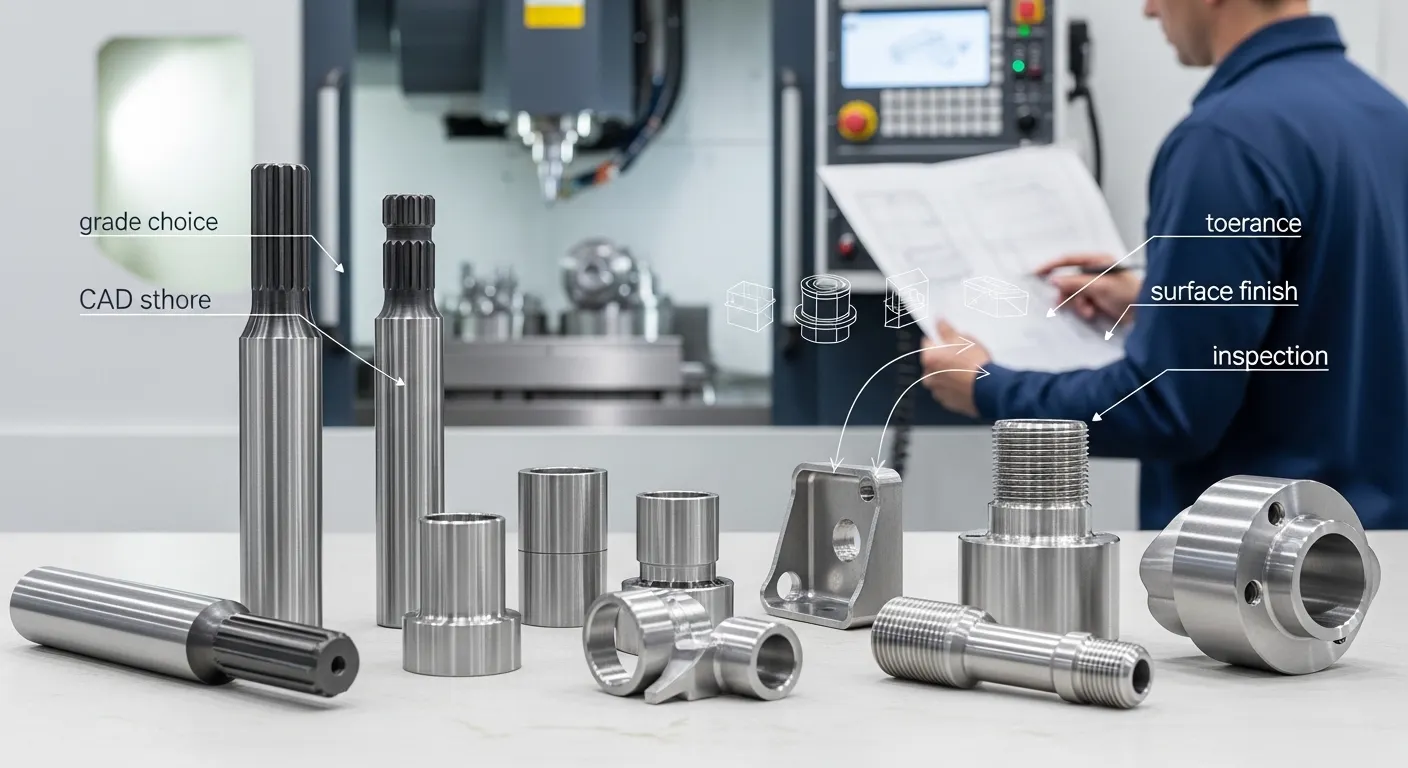
Stainless steel machining is suitable when a part needs strength, corrosion resistance, wear resistance, clean appearance, or long-term durability. For many projects, buyers already know they need stainless steel, but they still need help choosing the right grade and confirming manufacturability.
SunOn supports custom CNC machining for stainless steel parts through process planning, material review, machining route selection, surface finishing discussion, and quote preparation. Depending on the part design, the project may require CNC milling, CNC turning, drilling, tapping, threading, or multi-sided machining.
For broader custom CNC machining support, buyers can also review SunOn’s custom CNC machining service.
When Should Buyers Choose Stainless Steel?
Stainless steel is a good option when the part must perform better than standard carbon steel in corrosive or demanding environments. It is also useful when the part needs a clean surface, stable mechanical performance, or a premium metal appearance.
Common stainless steel machined parts include:
- Shafts, pins, bushings, and spacers
- Brackets, plates, clamps, and mounting parts
- Valve, pump, and fitting components
- Threaded parts, inserts, and fasteners
- Housings, covers, and structural hardware
- Food equipment, machine, and automation components
- Marine, chemical, and outdoor-use parts where corrosion resistance matters
However, stainless steel is not always the lowest-cost option. If the part does not need corrosion resistance or high strength, aluminum may be easier to machine and lighter in weight. For comparison, buyers can review SunOn’s aluminum CNC machining services.
Which Stainless Steel Grade Should You Choose?
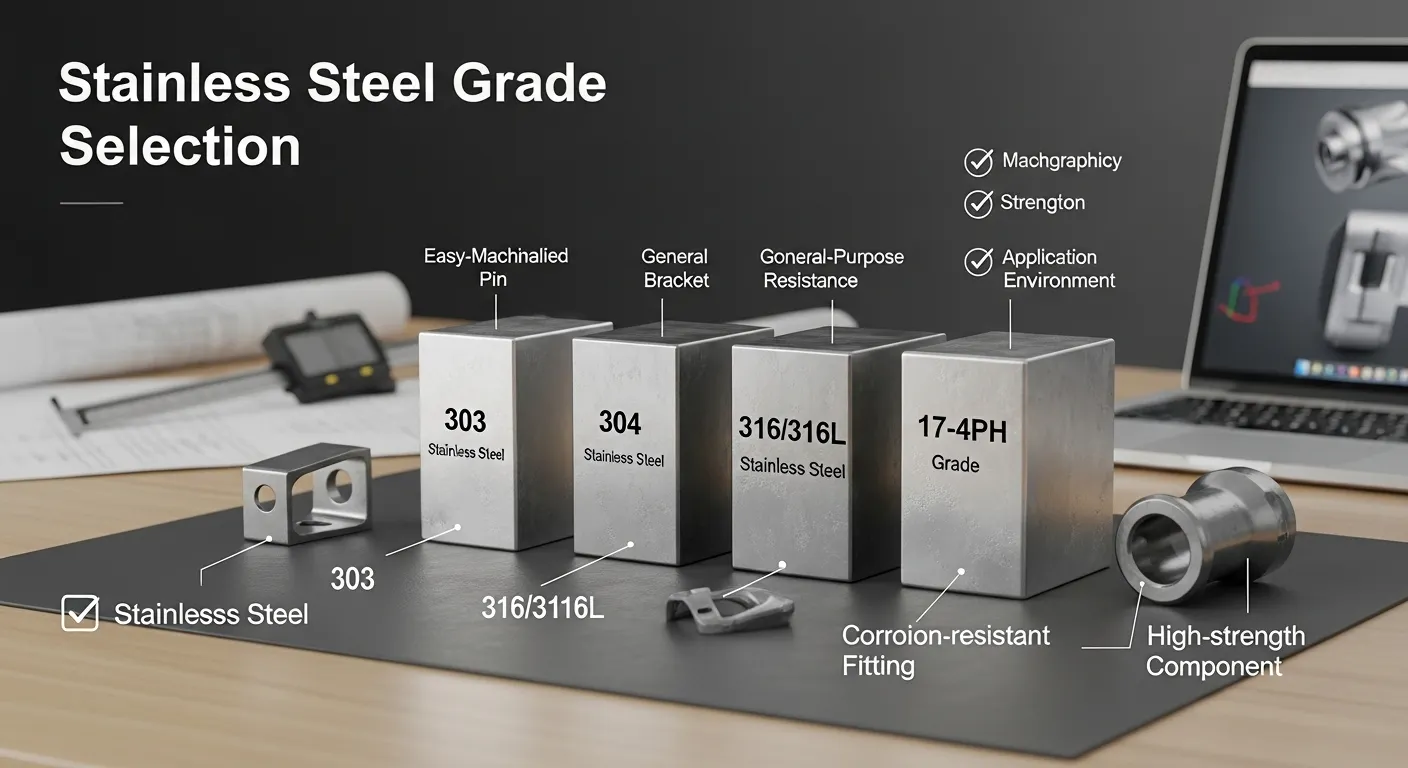
Grade selection is one of the most important decisions in a stainless steel machining project. The wrong grade can increase machining difficulty, affect corrosion resistance, create unnecessary cost, or reduce part performance.
The buyer should confirm the application environment before requesting a quote. For example, a dry indoor machine part may not need the same grade as a part exposed to saltwater, chemicals, cleaning fluids, or high temperatures.
| Stainless grade | Best used for | Machining consideration | Buyer note |
|---|---|---|---|
| 303 | Parts that need better machinability | Easier to machine than many stainless grades | Useful when corrosion resistance demands are moderate |
| 304 | General-purpose industrial stainless parts | Common choice, but harder to machine than 303 | Good starting point for many custom parts |
| 316 / 316L | Marine, chemical, washdown, or harsher environments | More demanding to machine than easier-cutting grades | Choose when corrosion resistance is more important |
| 17-4PH | High-strength stainless components | Requires careful review of strength and heat-treatment needs | Confirm mechanical requirements before quote |
| 410 / 416 | Wear-related or harder stainless applications | Machinability and hardness depend on grade and condition | Use only when the application requires these properties |
If the buyer is unsure about the grade, SunOn can review the part use, environment, strength needs, finish requirements, and cost target before quotation.
What Makes Stainless Steel More Difficult to Machine?
Stainless steel can be harder to machine than aluminum, brass, and many plastics. It may work-harden during cutting, hold heat near the tool, create stringy chips, and wear tools faster. These factors can affect surface quality, burr formation, and machining time.
Important design and machining points include:
- Avoid unnecessarily sharp internal corners.
- Use practical wall thickness where possible.
- Confirm thread depth and blind hole requirements.
- Specify tight tolerances only where they are functionally needed.
- Identify sealing, bearing, or assembly surfaces clearly.
- Discuss burr-sensitive edges, slots, small holes, and thin features.
- Confirm whether passivation or polishing is required after machining.
A good stainless steel machining quote should not only price the material. It should review the full part design, machining route, finishing process, and inspection needs.
CNC Milling, Turning, and 5-Axis Options
Different stainless steel parts need different CNC processes. CNC milling is often used for brackets, housings, plates, pockets, slots, flat surfaces, and complex prismatic parts. CNC turning is better for round parts such as shafts, pins, bushings, spacers, fittings, and threaded cylindrical components.
For parts with angled features, multiple sides, curved surfaces, or complex setup requirements, 5-axis machining may help reduce repositioning and improve machining access. Buyers with complex stainless parts can review SunOn’s 5-axis CNC machining services.
The best process depends on:
- Part shape and size
- Number of machined faces
- Hole direction and thread position
- Tolerance and surface finish areas
- Material grade and hardness
- Quantity and production stage
- Assembly or functional requirements
For global buyers sourcing custom stainless parts from China, SunOn can also support broader CNC manufacturing discussions through its CNC machining China service page.
Tolerance, Burr Control, and Surface Finish
Stainless steel parts often require more attention to burr control than softer or easier-cutting materials. Burrs may appear near drilled holes, milled slots, thread starts, thin edges, intersecting features, and internal corners. If a part has sealing surfaces, sliding contact, hand-touch areas, or assembly interfaces, the drawing should clearly mark critical edges and finish needs.
Buyers should confirm:
- General tolerance and critical tolerance areas
- Flatness, perpendicularity, or concentricity requirements
- Thread size, thread depth, and gauge requirements
- Surface roughness requirements if functionally important
- Deburring expectations for holes, slots, and exposed edges
- Whether cosmetic surfaces need polishing, brushing, or bead blasting
- Whether corrosion-resistant surfaces need passivation
- Whether inspection reports are required
Surface finishing should match the part’s function. As-machined surfaces may be enough for internal machine parts. Brushing or polishing may be better for visible components. Passivation may be needed when corrosion resistance and surface cleanliness are important.
Prototype, Low-Volume, and Production Support
Stainless steel machining projects often move through several stages. A buyer may first need a prototype for fit and function testing. After that, the design may move to low-volume validation, pilot production, or regular production.
SunOn can support buyers by reviewing manufacturability before parts are machined. This is useful when the part has tight tolerances, small holes, thin walls, difficult threads, special finish requirements, or assembly risk.
For prototype projects, the priority is usually speed of design validation and engineering feedback. For small-batch and production projects, the focus shifts toward repeatability, finishing consistency, inspection planning, and stable communication between engineering and purchasing teams.
What Should Buyers Send for a Stainless Steel Machining Quote?
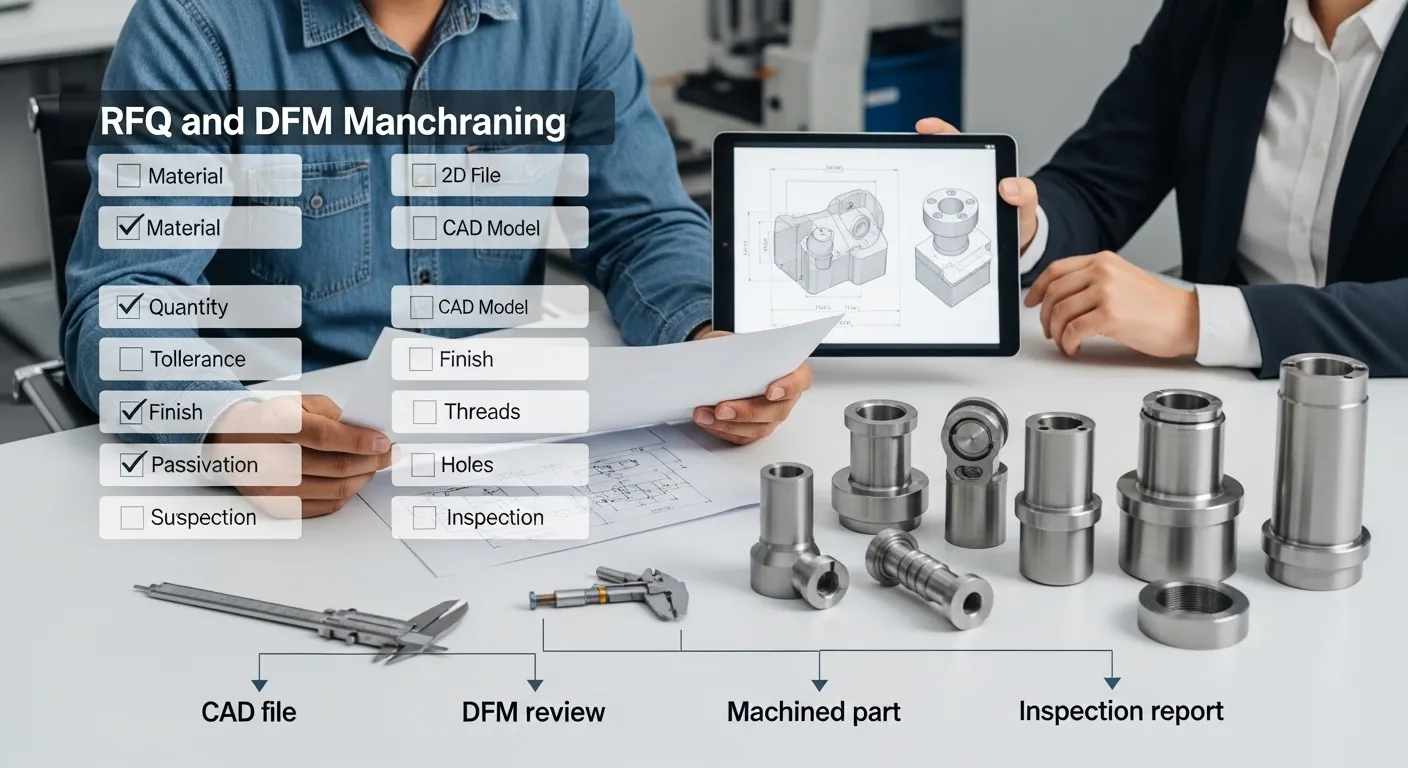
A clear RFQ helps the supplier review the part faster and reduces back-and-forth communication. It also helps avoid quoting the wrong material, finish, or tolerance level.
Before requesting a quote, prepare:
- Product or part name
- Application or industry
- Prototype, small-batch, or production stage
- Required quantity
- 2D drawing with dimensions and tolerance notes
- 3D CAD model for geometry review
- Stainless steel grade, if known
- Alternative material options, if acceptable
- Critical surfaces, holes, threads, or assembly areas
- Surface finish requirement
- Passivation, polishing, brushing, plating, or coating requirement if needed
- Inspection report or dimensional report requirement
- Functional testing requirement if relevant
- Delivery destination
- Target schedule
- NDA, BOM, or project specification if required
If the grade is not finalized, send the application details and working environment. SunOn can review whether the part may need a general-purpose stainless grade, a more corrosion-resistant grade, or a higher-strength grade.
Why Work With SunOn for Stainless Steel Parts?
SunOn is not only a CNC machining supplier. Our broader custom manufacturing support includes CNC machining, rapid prototyping, 3D printing, vacuum casting, injection mold manufacturing, plastic injection molding, die casting, sheet metal fabrication, surface finishing, mechanical assembly, and OEM/ODM manufacturing support.
This is useful when a project includes more than one manufacturing process. For example, a product may need stainless steel machined inserts, aluminum housings, plastic molded covers, die-cast parts, finishing, and final assembly support.
For technical buyers, SunOn can help review:
- Whether stainless steel is the right material
- Which CNC process fits the geometry
- Which tolerances should be controlled tightly
- Which finishes are practical for the application
- Which features may increase machining difficulty
- What details are missing from the RFQ
- How the project may move from prototype to production
The goal is to help buyers reduce manufacturing risk before parts are made.
Frequently Asked Questions
Which stainless steel grade is best for CNC machining?
It depends on the application. 303 is easier to machine, 304 is common for general corrosion resistance, 316/316L is better for harsher environments, and 17-4PH is used when higher strength is required.
Is 304 or 316 better for machined parts?
304 is suitable for many general industrial parts. 316 or 316L is usually better when the part may face saltwater, chemicals, cleaning fluids, or stronger corrosion exposure.
Why is stainless steel harder to machine than aluminum?
Stainless steel can work-harden, retain heat, wear tools faster, and create more burrs. It often needs careful toolpath planning, stable fixturing, coolant control, and realistic tolerance requirements.
Do stainless steel machined parts need passivation?
Passivation may be useful when corrosion resistance, surface cleanliness, or exposed stainless surfaces matter. Buyers should mention passivation requirements in the RFQ if the part will face corrosive or washdown environments.
What files are needed for a stainless steel machining quote?
Send a 2D drawing, 3D CAD model, material grade, quantity, tolerance notes, surface finish requirements, inspection needs, application details, delivery destination, and target schedule if available.
Can SunOn support prototypes and production parts?
Yes. SunOn supports custom manufacturing projects from prototype review to small-batch and production planning, including CNC machining, finishing, inspection discussion, and OEM/ODM manufacturing support.
Request a Stainless Steel Machining Quote
Send SunOn your stainless steel part drawings for DFM review and quotation. Please include the part type, quantity, application, production stage, 2D drawing, 3D CAD model, stainless grade if known, tolerance requirements, surface finish needs, passivation or polishing requirements, holes, threads, inserts, inspection needs, delivery destination, and target schedule.
SunOn’s team can review your stainless steel machining requirements and help you move from material selection and prototype validation to production-ready custom parts.
