


CNC Machining for Medical Devices
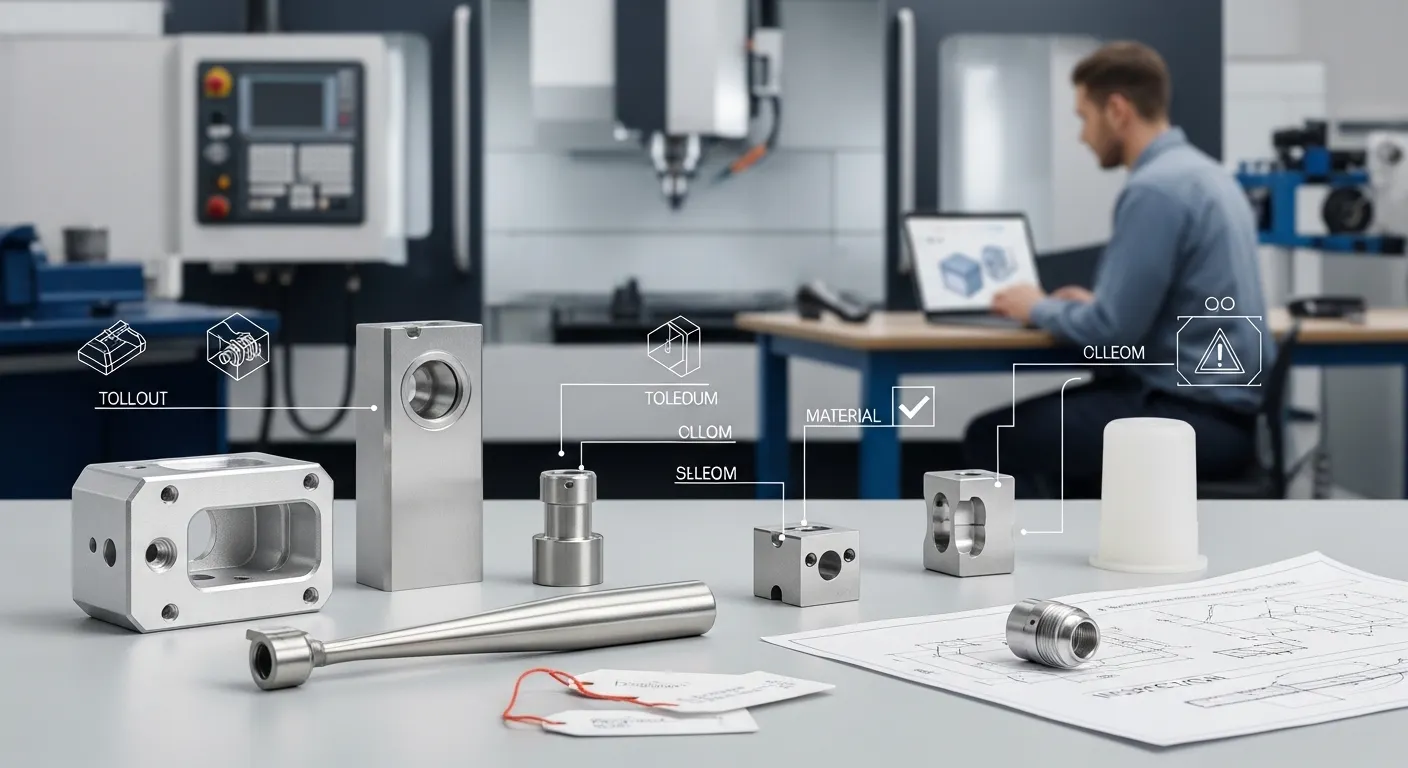
SunOn Mould provides custom CNC machining support for medical device product teams, OEM/ODM buyers, engineers, and procurement managers that need precise metal or plastic parts for prototypes, validation builds, small batches, or production planning. For medical-device-related projects, buyers should confirm material, tolerance, surface finish, quantity, drawing files, inspection needs, and application requirements before requesting a quote.
CNC machining for medical devices is often used when a part needs accurate dimensions, clean finishing, stable material performance, and controlled features such as holes, threads, slots, pockets, or mating surfaces. SunOn can support custom CNC milling, CNC turning, 5-axis machining, CNC prototype machining, finishing, assembly, and broader prototype-to-production manufacturing support.
This page helps buyers prepare the right technical details before sending an RFQ, so the part can be reviewed for manufacturability, cost, function, and production risk.
CNC Machining Support for Medical-Device-Related Projects
Medical device projects often move through several stages before final production. A product team may need one prototype for fit testing, a small batch for validation, or a repeatable production plan after the design is approved.
SunOn’s CNC machining support is suitable for buyers who need custom machined parts such as:
- Medical device housings and covers
- Handheld instrument components
- Diagnostic equipment parts
- Test fixtures and assembly fixtures
- Brackets, plates, and mounting parts
- Prototype metal and plastic components
- Connector parts, fittings, and precision hardware
- Small parts with holes, threads, slots, or tight mating features
For related custom machined parts and supplier capability, buyers can also review SunOn’s CNC machining parts manufacturer page.
What Medical Device Parts Can Be CNC Machined?
CNC machining works well when buyers need precision, repeatability, and material flexibility without investing in production tooling too early. It is especially useful for prototypes and small batches where the design may still change.
For medical-device-related components, CNC machining can support both functional and appearance parts. A buyer may need an aluminum housing for a diagnostic device, a stainless steel instrument part, a PTFE insulating component, or an ABS prototype enclosure.
Common project examples include:
- Housings for handheld or benchtop medical equipment
- Prototype covers for fit and assembly testing
- Stainless steel instrument bodies or handles
- Aluminum brackets, plates, and structural parts
- PTFE, PEEK, Delrin, ABS, or nylon plastic machined parts
- Assembly jigs, test fixtures, and validation fixtures
- Precision connectors or fittings for non-implant device assemblies
- Small parts requiring tapping, threading, countersinking, or inserts
The key is not only whether the part can be machined. Buyers also need to confirm which dimensions are critical, which surfaces need finishing, and which inspection records are required.
Choosing CNC Milling, Turning, or 5-Axis Machining
Different CNC processes fit different part geometries. The best process depends on the part shape, material, tolerance requirement, surface finish, and quantity.
CNC milling is often used for housings, plates, brackets, covers, fixtures, pockets, slots, and multi-face features. It is suitable for many custom metal and plastic parts.
CNC turning is better for round or cylindrical parts. Examples include shafts, pins, bushings, fittings, and connector-style components.
5-axis machining can help when a part has complex geometry, angled features, multi-side machining needs, or surfaces that are difficult to reach with simpler setups. It may reduce setups and improve consistency for complex parts.
Before quotation, buyers should share both 3D CAD files and 2D drawings. The 3D model shows geometry, while the 2D drawing defines critical tolerances, surface finish notes, threads, holes, inspection points, and special requirements.
Material Options for Medical CNC Machined Components
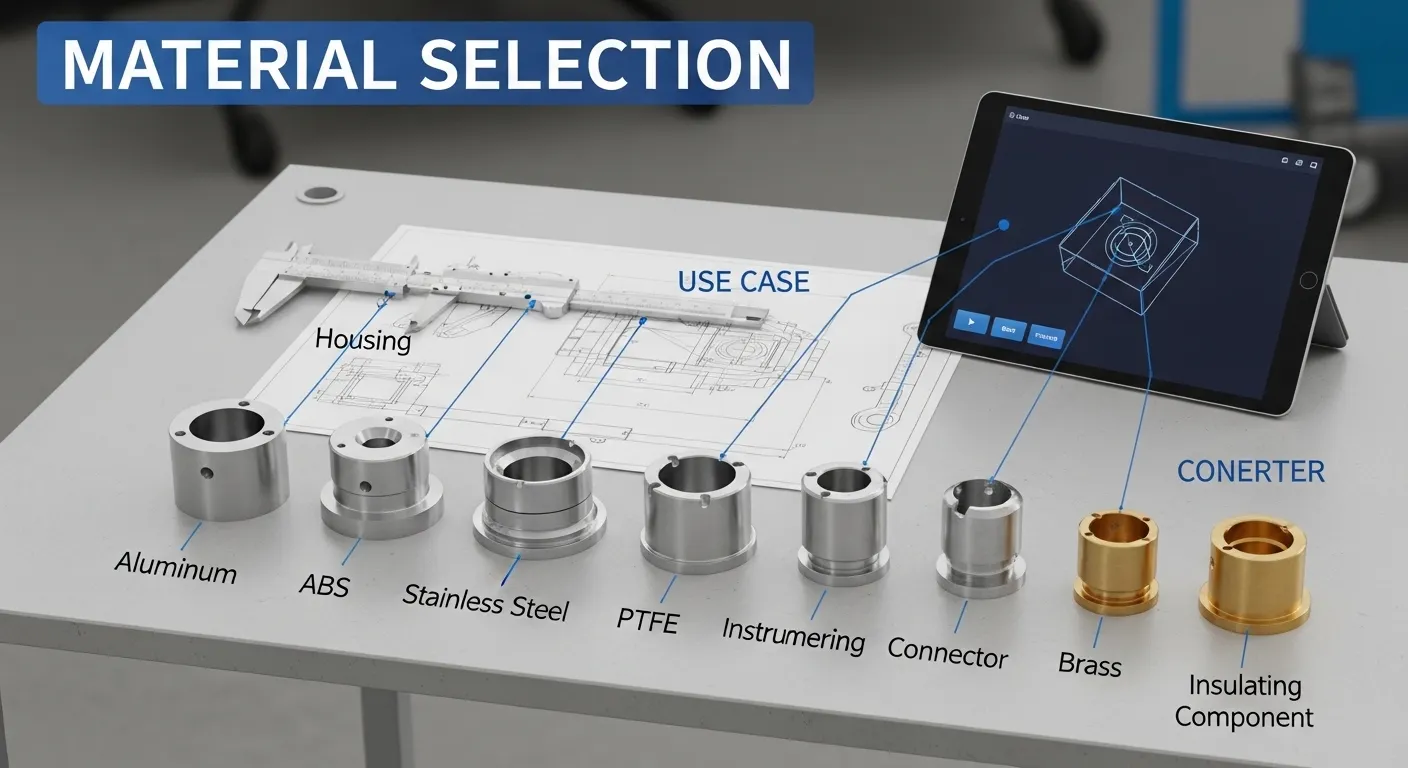
Material selection affects strength, weight, corrosion resistance, insulation, friction, machinability, appearance, and cost. For medical-device-related CNC parts, buyers should specify the material and grade if already approved by their engineering or regulatory team.
Common material categories include:
- Aluminum: useful for lightweight housings, brackets, fixtures, covers, and prototype parts.
- Stainless steel: often selected for strength, corrosion resistance, and durable instrument-style components.
- Titanium: used where high strength and low weight are needed, depending on project requirements.
- ABS: suitable for plastic prototypes, housings, covers, and enclosure-style parts. For related plastic machining details, see ABS CNC machining.
- PTFE: useful for low-friction, chemical-resistant, or insulating parts. SunOn also provides PTFE machining support.
- PEEK, Delrin, nylon, PC, and PMMA: may be considered for functional plastic components depending on load, temperature, friction, appearance, and dimensional needs.
- Brass: may suit selected connector, fitting, or precision hardware applications. Learn more from SunOn’s brass CNC machining page.
Buyers should not use vague material descriptions such as “medical-grade plastic” unless the exact material, grade, certificate need, and application condition are defined.
Application, Process, and RFQ Planning
The table below helps buyers connect common medical-device-related part needs with CNC process and RFQ details.
| Part or buyer need | Possible CNC process | Material considerations | Key RFQ details to confirm |
|---|---|---|---|
| Device housings and covers | CNC milling, 5-axis machining if complex | Aluminum, ABS, PC, PMMA, engineering plastics | Appearance surfaces, wall thickness, inserts, finish, assembly fit |
| Instrument handles or bodies | CNC milling, CNC turning, 5-axis machining | Stainless steel, aluminum, titanium if specified | Critical dimensions, grip surfaces, polishing, burr control |
| Test fixtures and validation jigs | CNC milling, CNC turning | Aluminum, stainless steel, engineering plastics | Functional surfaces, repeatability, fixture alignment, quantity |
| Cylindrical pins, shafts, fittings | CNC turning | Stainless steel, brass, aluminum, plastics | Diameter tolerance, thread type, surface finish, mating parts |
| Plastic functional parts | CNC milling, CNC turning | ABS, PTFE, PEEK, Delrin, nylon | Dimensional stability, friction, insulation, material grade |
| Prototype medical components | CNC milling, CNC turning, 5-axis machining | Final-use or test material | CAD file, 2D drawing, design stage, testing purpose |
Tolerance, Surface Finish, and Inspection Details
Medical-device-related parts often need more careful review than general industrial components. A small tolerance issue can affect assembly, sealing, movement, appearance, or testing results.
Buyers should identify which dimensions are truly critical. Over-tightening every tolerance can raise machining cost and make production harder. Instead, mark critical surfaces, mating features, hole positions, thread details, and functional dimensions clearly on the drawing.
Surface finish should also match the part’s function. Some parts need a clean appearance. Others need corrosion resistance, low friction, smooth contact surfaces, or better assembly fit.
Common finishing discussions may include:
- Deburring and edge break requirements
- Polishing or smooth surface requirements
- Bead blasting for matte appearance
- Anodizing for aluminum parts where suitable
- Plating or coating requirements if specified
- Passivation discussion for stainless steel parts if required
- Color, texture, or cosmetic surface notes
Inspection should be discussed before production, not after parts are finished. If a buyer needs dimensional reports, material documents, first-article checks, or specific inspection points, these should be included in the RFQ.
Prototype, Small-Batch Validation, and Production Planning
CNC machining is often the right choice before a medical device design moves into tooling or mass production. It allows teams to test fit, function, assembly, and material behavior without waiting for injection molds or die-casting tools.
For early development, SunOn can support CNC prototype machining and design feedback. For validation builds, small-batch CNC machining can help buyers test real assembly conditions. For later production, the team can review whether CNC machining remains the right process or whether injection molding, die casting, finishing, or assembly support should be considered.
This is important for buyers who may start with CNC prototypes but later need mold manufacturing, plastic injection molding, die casting, or OEM/ODM production support.
What Buyers Should Send for an Accurate Quote
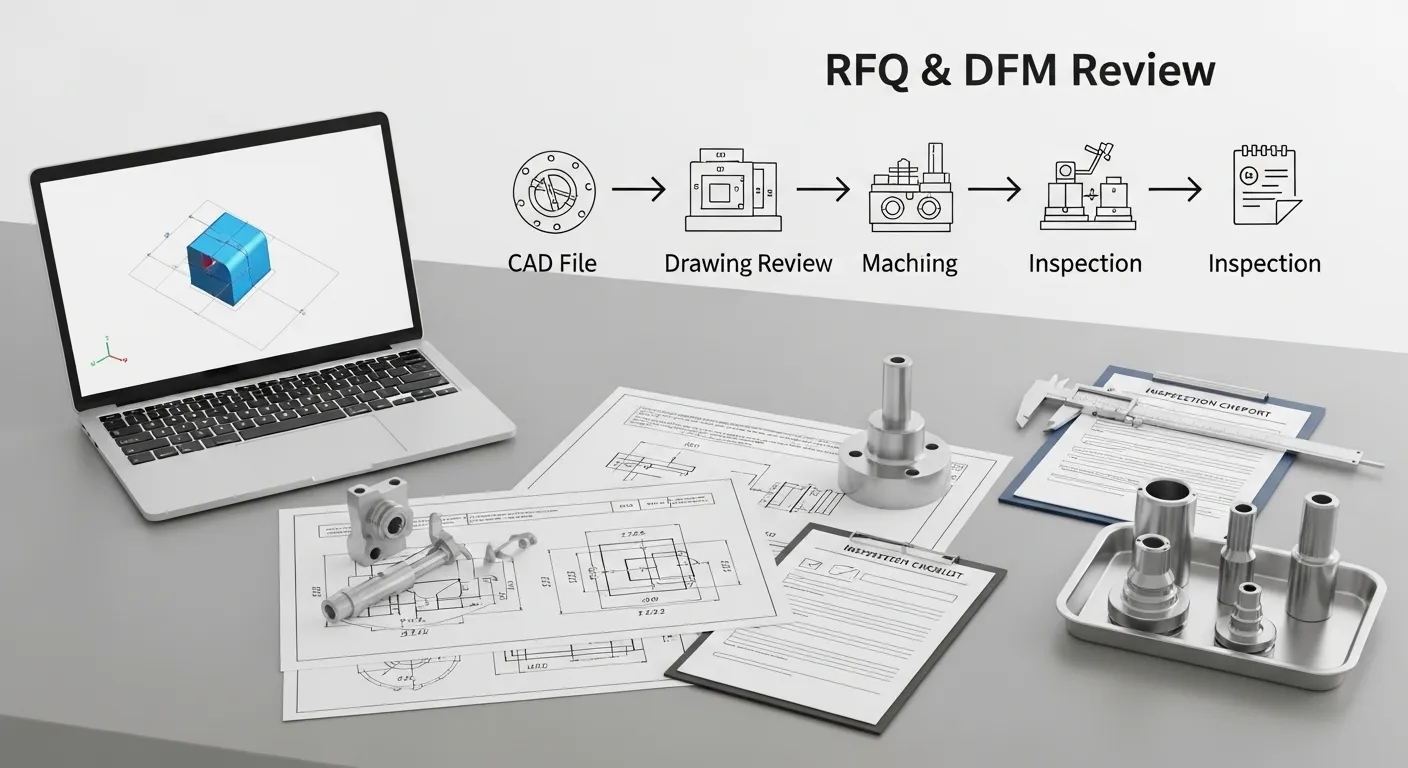
A clear RFQ helps reduce delays, wrong assumptions, and avoidable design changes. For medical-device-related CNC parts, buyers should prepare as much detail as possible before contacting SunOn.
Useful RFQ details include:
- Product or part name
- Application or industry
- Prototype, small-batch, or production stage
- Quantity required
- 3D CAD file
- 2D technical drawing
- Material requirement
- Material grade if known
- Critical tolerances
- General tolerance standard if used
- Surface finish requirement
- Color, coating, plating, anodizing, or polishing needs
- Holes, threads, inserts, slots, undercuts, or assembly features
- Inspection report requirement
- Functional testing requirement if relevant
- Delivery destination
- Target schedule
- NDA, BOM, or project specification if needed
If the design is not final, buyers can still send available files for manufacturability review. SunOn can help discuss process, material, finishing, and production direction before the buyer commits to a final build.
Supplier Selection Points for Medical CNC Projects
Choosing a supplier for medical-device-related CNC machining should not depend on price alone. The wrong supplier may machine the part, but miss drawing notes, surface requirements, tolerance priorities, or documentation needs.
Buyers should check whether the supplier can discuss:
- Material selection and machining behavior
- CNC milling, turning, and 5-axis process fit
- Prototype and small-batch requirements
- Critical tolerance review
- Surface finish and burr control
- Drawing-based inspection needs
- DFM feedback before production
- Communication for global OEM/ODM projects
- Future support for finishing, assembly, tooling, or production
SunOn is positioned as a custom manufacturing partner, not only a single-process machine shop. This is useful when a buyer needs CNC machining now, but may need mold making, injection molding, die casting, finishing, mechanical assembly, or OEM/ODM manufacturing support later.
Frequently Asked Questions
Can SunOn machine parts for medical device projects?
Yes. SunOn supports custom CNC machining for medical-device-related components such as prototypes, housings, fixtures, instrument parts, brackets, covers, and precision metal or plastic parts. Buyers should send drawings and project requirements for review.
What materials are suitable for medical CNC parts?
Common options include aluminum, stainless steel, titanium where specified, ABS, PTFE, PEEK, Delrin, nylon, PC, and PMMA. The right material depends on strength, weight, friction, insulation, corrosion resistance, surface finish, and application requirements.
Do I need both 2D and 3D files?
A 3D CAD file helps review geometry and machining strategy. A 2D drawing defines tolerances, threads, surface finish, critical dimensions, inspection notes, and special requirements. Sending both improves quote accuracy.
Can CNC machining support small-batch validation?
Yes. CNC machining is suitable for prototypes and small-batch validation before final tooling or mass production. It helps buyers test fit, function, assembly, material choice, and design updates.
What tolerance should I specify?
Specify tight tolerances only for critical features. General surfaces can often use standard drawing tolerances. Tolerance should be reviewed based on part geometry, material, CNC process, finish, and inspection method.
Can SunOn provide inspection documents?
Buyers should state inspection and documentation needs during RFQ. SunOn can review drawing-based inspection requirements and discuss suitable reporting needs before production. Do not leave inspection expectations until after machining.
Request a CNC Machining Quote for Medical-Device-Related Parts
Share your part drawings, 3D CAD model, material requirement, quantity, tolerance notes, surface finish, inspection needs, and project stage with SunOn Mould. Our team can review your medical-device-related CNC machining project, provide DFM feedback where needed, and help you plan prototype, small-batch, or production manufacturing support.
