


ABS CNC Machining
For OEM/ODM buyers, mechanical engineers, procurement teams, and product developers, CNC machined ABS is useful when the design is still changing, the quantity is not high enough for molding, or the part needs to be tested before mass production. To receive an accurate quote, buyers should send 2D drawings, 3D CAD files, quantity, tolerance requirements, surface finish expectations, application details, and any inspection or assembly requirements.
When ABS Is a Good Choice for CNC Machining
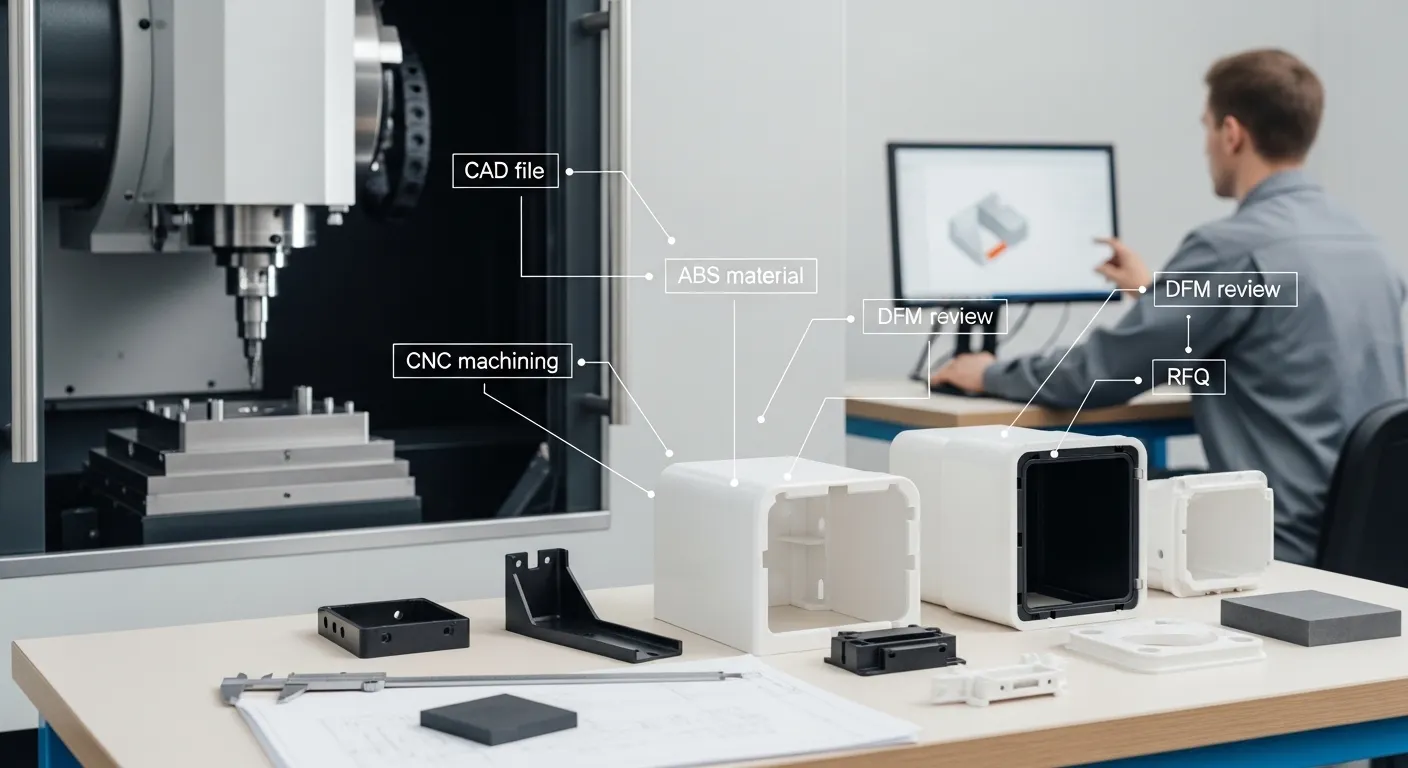
ABS is a practical engineering plastic for many machined prototype and low-volume production parts. It is commonly used when the part needs a balance of machinability, impact resistance, cost control, and appearance. Compared with some higher-performance plastics, ABS is often easier to use for early-stage product validation and enclosure-style components.
ABS CNC machining is especially suitable for:
- Functional prototypes that need better strength than basic visual models
- Plastic housings, covers, and enclosures
- Jigs, fixtures, brackets, and assembly aids
- Automotive interior prototypes and dashboard-related parts
- Consumer product shells and appliance components
- Low-volume parts where mold tooling is not yet justified
ABS may not be the best choice for every application. If the part will face high heat, long-term UV exposure, strong solvent contact, high load, or low-friction mechanical movement, another plastic or metal material may need to be reviewed during the RFQ stage.
Common ABS CNC Machined Part Applications
ABS is often chosen for plastic parts that need a practical balance between function, appearance, and cost. In CNC machining projects, buyers commonly use ABS for prototype housings, control panels, covers, brackets, test fixtures, and product samples before final tooling.
Typical ABS CNC machined applications include:
- Electronics housings and plastic enclosures
- Consumer product prototypes and outer shells
- Automotive interior samples, trim prototypes, and dashboard components
- Industrial equipment covers and non-load-critical plastic parts
- Assembly jigs, fixtures, and checking aids
- Appliance covers, panels, and functional test parts
For automotive-related machined components, buyers can also review SunOn’s CNC machined automotive parts capabilities when the project involves vehicle interior parts, brackets, fixtures, or related development components.
When CNC Machined ABS Beats Injection Molding
CNC machined ABS is often the better choice when the buyer needs parts before committing to mold tooling. Injection molding is efficient for stable, higher-volume production, but it requires tooling investment and a confirmed design. CNC machining can produce ABS parts directly from CAD data, making it useful when the product is still being tested or revised.
| Process | Best For | Buyer Decision |
|---|---|---|
| CNC machined ABS | Functional prototypes, small batches, design validation, pre-tooling parts | Choose when the design may still change or quantity is limited |
| Injection molding | Stable designs, higher-volume production, repeatable molded parts | Choose when tooling cost is justified by production volume |
| 3D printing | Fast concept models, early form checks, simple prototype validation | Choose when speed and design iteration matter more than machined material performance |
Many buyers use CNC ABS parts as a bridge between early prototypes and production tooling. A common path is CNC prototype, functional test, design update, low-volume machining, and then injection mold manufacturing when the design and demand become stable.
ABS vs PC vs Delrin for CNC Machined Parts
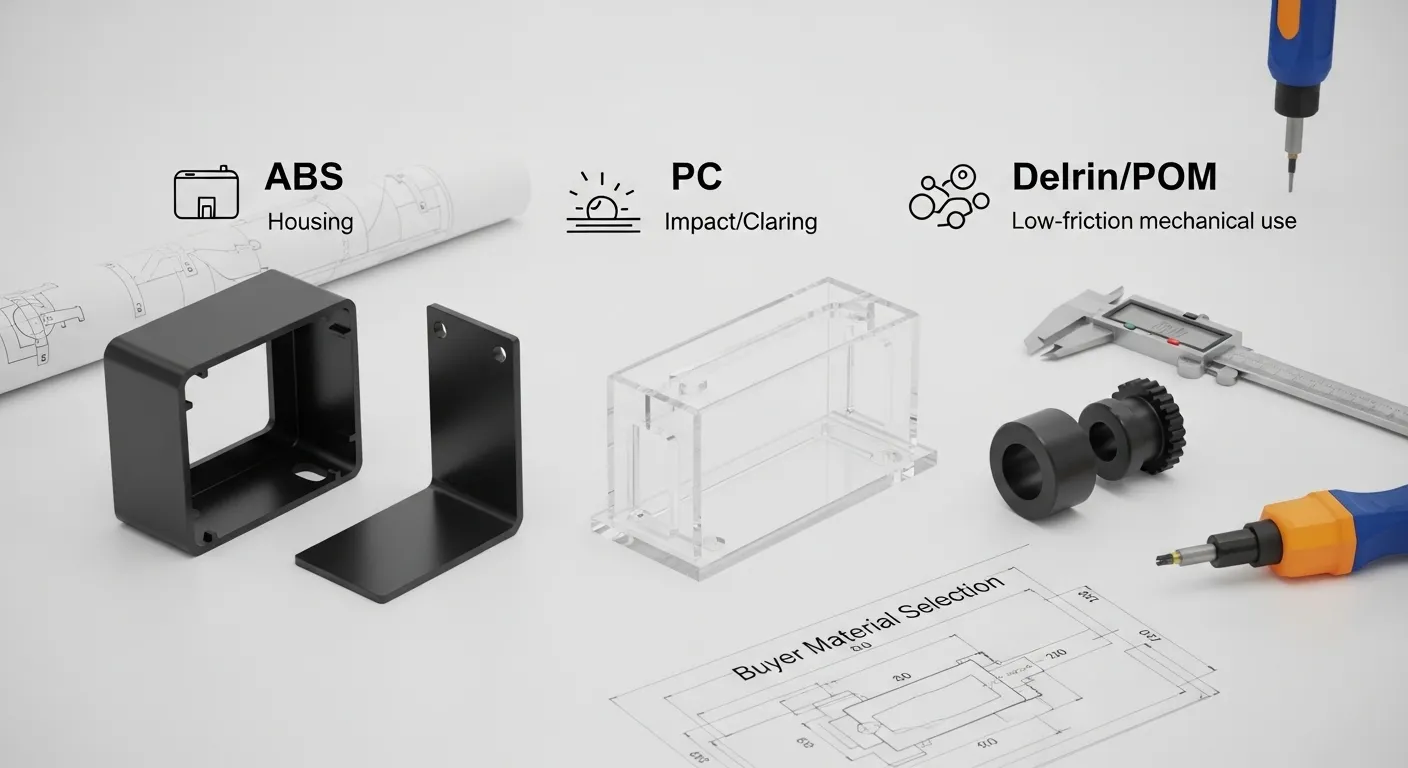
ABS is not the only plastic option for CNC machining. Buyers often compare ABS with PC and Delrin/POM before sending an RFQ. The right material depends on the part’s function, appearance, strength, friction, heat exposure, and tolerance requirements.
| Material | Best For | Strengths | Limitations | When to Choose |
|---|---|---|---|---|
| ABS | Housings, prototypes, brackets, covers, jigs, fixtures | Cost-effective, impact-resistant, easy to machine, good for functional prototypes | Not ideal for high heat, strong UV exposure, or demanding wear applications | Choose for practical plastic prototypes and low-volume enclosure-style parts |
| PC | Transparent covers, high-impact parts, protective components | High impact resistance and possible transparency | May require more careful machining and design review | Choose when transparency or higher impact performance is important |
| Delrin/POM | Gears, bushings, sliding parts, precision mechanical components | Low friction, good wear behavior, strong dimensional performance for mechanical parts | May not be the best choice for cosmetic housings or low-cost enclosure prototypes | Choose for moving parts, low-friction features, and mechanical precision applications |
If the part needs higher strength, heat resistance, or structural performance, buyers may also need to compare plastic machining with metal options such as aluminum CNC machining or stainless steel machining.
Tolerance, Wall Thickness, Finish, and Design Details to Confirm
ABS CNC machining results depend on the part geometry, wall thickness, tolerance callouts, machining setup, and finish expectations. Instead of assuming one fixed tolerance for every ABS part, buyers should confirm critical dimensions in the drawing and allow the supplier to review manufacturability before production.
Important design and specification details include:
- Tolerance requirements: Mark critical dimensions clearly on the 2D drawing.
- Wall thickness: Very thin walls may increase the risk of deformation or machining difficulty.
- Internal corners: CNC tools create radii, so sharp internal corners may need design review.
- Holes and threads: Confirm hole size, depth, thread type, inserts, and assembly requirements.
- Cosmetic surfaces: Identify visible surfaces that need smoother finish or painting.
- Functional surfaces: Mark areas that affect assembly, sealing, sliding, or positioning.
- Inspection needs: State whether dimensional reports or specific inspection checks are required.
Surface finish should also be discussed before quoting. Depending on the part design and project requirements, ABS parts may need deburring, sanding, painting, or other finish review. Final finish options should be confirmed based on geometry, cosmetic expectations, quantity, and SunOn’s project review.
What to Send for an ABS CNC Machining Quote
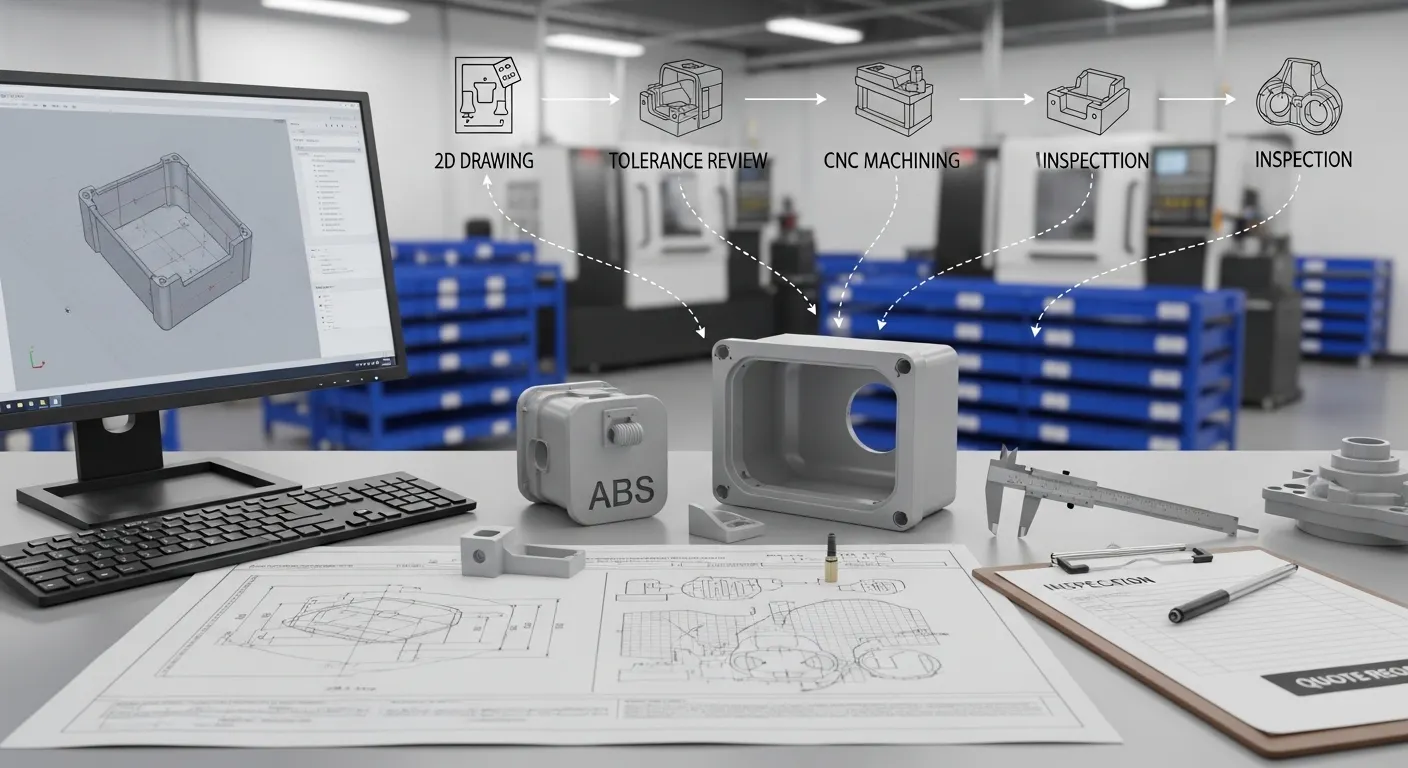
A complete RFQ helps SunOn review manufacturability, material choice, tolerance, finishing, and production planning more accurately. Buyers should avoid sending only a short message such as “quote ABS part” without technical details.
| RFQ Item | What to Provide | Why It Matters |
|---|---|---|
| Part type | Housing, bracket, fixture, cover, prototype, or other component | Helps identify the application and manufacturing risk |
| Quantity | Prototype, small batch, or production quantity | Affects process planning and cost review |
| 2D drawing | PDF or technical drawing with dimensions and tolerances | Clarifies critical dimensions and inspection points |
| 3D CAD model | STEP, IGES, or other available CAD format | Supports machining review and quote preparation |
| Material requirement | ABS grade, color, or alternative material request if known | Helps confirm material suitability and availability |
| Surface finish | As-machined, deburred, sanded, painted, or cosmetic requirement | Affects production steps and final appearance |
| Special features | Threads, inserts, holes, slots, undercuts, or assembly details | Helps avoid missing functional requirements |
| Inspection needs | Critical dimensions, report requirements, or functional checks | Supports quality planning before production |
| Delivery details | Destination, target schedule, and project urgency | Helps review production and shipping expectations |
For broader CNC machining requirements, buyers can also review SunOn’s custom CNC machining service page.
From ABS Prototype to Production Support
ABS CNC machining is often part of a larger product development workflow. A buyer may start with a few CNC machined ABS prototypes, revise the design after testing, order a low-volume batch, and then move toward injection mold manufacturing when the part is ready for production.
SunOn can support buyers across different manufacturing stages, including CNC machining, prototype review, DFM communication, mold manufacturing, injection molding, finishing, assembly, and OEM/ODM manufacturing support. This is useful for buyers who do not want to change suppliers after the prototype stage.
FAQ
Can ABS plastic be CNC machined?
Yes. ABS can be CNC machined for functional prototypes, housings, covers, brackets, fixtures, jigs, and low-volume plastic parts. The final machining approach depends on part geometry, tolerance requirements, wall thickness, surface finish, and application needs.
When should I choose CNC machined ABS instead of injection molding?
Choose CNC machined ABS when the design may still change, the quantity is low, or you need functional parts before investing in mold tooling. Injection molding is usually better when the design is stable and production volume can justify tooling cost.
Is ABS better than PC for CNC machining?
ABS is often more cost-effective and practical for housings, prototypes, and general plastic parts. PC may be better when the part needs transparency or higher impact performance, but it may require more careful machining and design review.
Is ABS better than Delrin/POM for CNC parts?
ABS is usually better for enclosure-style parts, covers, prototypes, and general plastic components. Delrin/POM is often better for low-friction, wear-resistant, and precision mechanical parts such as gears, bushings, and sliding components.
What tolerances are possible for ABS CNC machining?
Tolerance depends on part size, wall thickness, geometry, machining setup, and drawing requirements. Buyers should mark critical dimensions clearly so SunOn can review the part and confirm realistic tolerance expectations before production.
What surface finishes are available for CNC machined ABS?
ABS parts may require deburring, sanding, painting, or other project-specific finishing depending on the cosmetic and functional requirements. Finish availability should be confirmed after reviewing part geometry, quantity, and surface expectations.
What files are needed for an ABS CNC machining quote?
Buyers should send 2D drawings, 3D CAD files, quantity, ABS grade or color requirements, tolerance details, surface finish expectations, application information, threading or insert requirements, inspection needs, delivery destination, and target schedule.
Request an ABS CNC Machining Quote from SunOn
If you need custom ABS CNC machined parts, send SunOn your drawings, CAD files, quantity, material requirements, tolerance expectations, surface finish needs, application details, and inspection requirements. SunOn can review your project and help confirm whether CNC machined ABS, another plastic, metal CNC machining, or future injection molding is the right direction for your part.
