


CNC Machining Services for Custom Metal Parts
This page is for buyers who already have a part idea, drawing, CAD file, or sourcing requirement and need to confirm whether CNC machining is the right manufacturing route. Before requesting a quote, the most important details are material grade, quantity, tolerance, surface finish, application, inspection needs, and whether the part is for prototype testing, low-volume use, or production.
Send SunOn your 2D drawings, 3D CAD files, material requirements, and target quantity, and our team can review the project for manufacturability, process selection, finishing, and quotation.
Custom Metal CNC Machining for Technical Buyers
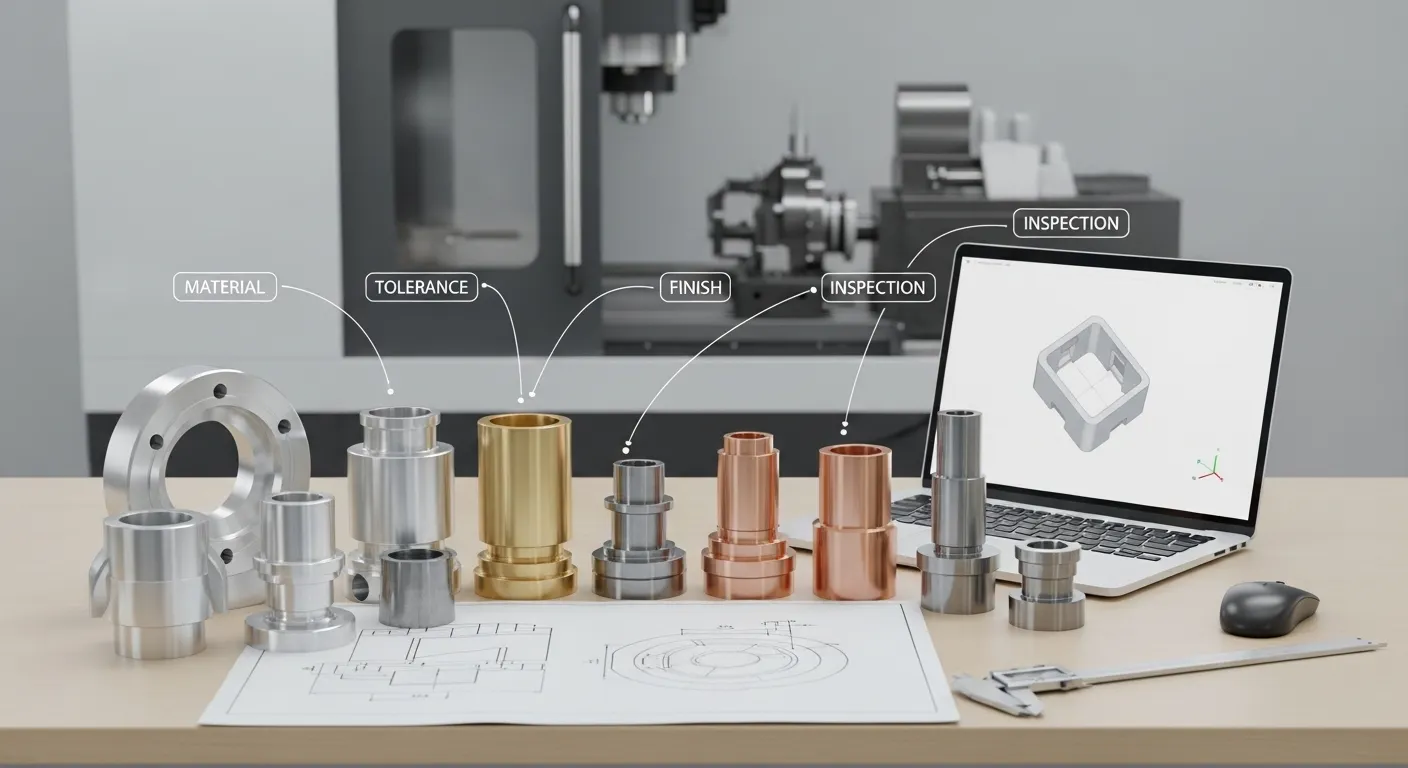
Custom metal parts often need more than a basic machining quote. A procurement manager may care about cost, consistency, communication, and delivery planning. An engineer may focus on geometry, tolerance, thread depth, wall thickness, surface finish, and material behavior.
SunOn supports CNC machining projects where buyers need metal parts such as:
- Aluminum housings, brackets, plates, fixtures, and covers
- Stainless steel shafts, structural parts, fittings, and machine components
- Brass and copper connectors, electrical parts, bushings, and thermal parts
- Titanium parts where strength-to-weight performance is important
- Steel and alloy steel parts for machinery, tooling, automation, and industrial use
- Prototype metal parts for testing form, fit, function, and assembly
- Small-batch and production-stage CNC machined components
For electronics-related housings, heat sinks, and precision hardware, buyers can also review SunOn’s related page on CNC machining for electronics. For machinery, equipment parts, fixtures, and industrial components, see CNC machining services for industrial equipment.
Which CNC Process Fits Your Custom Metal Part?
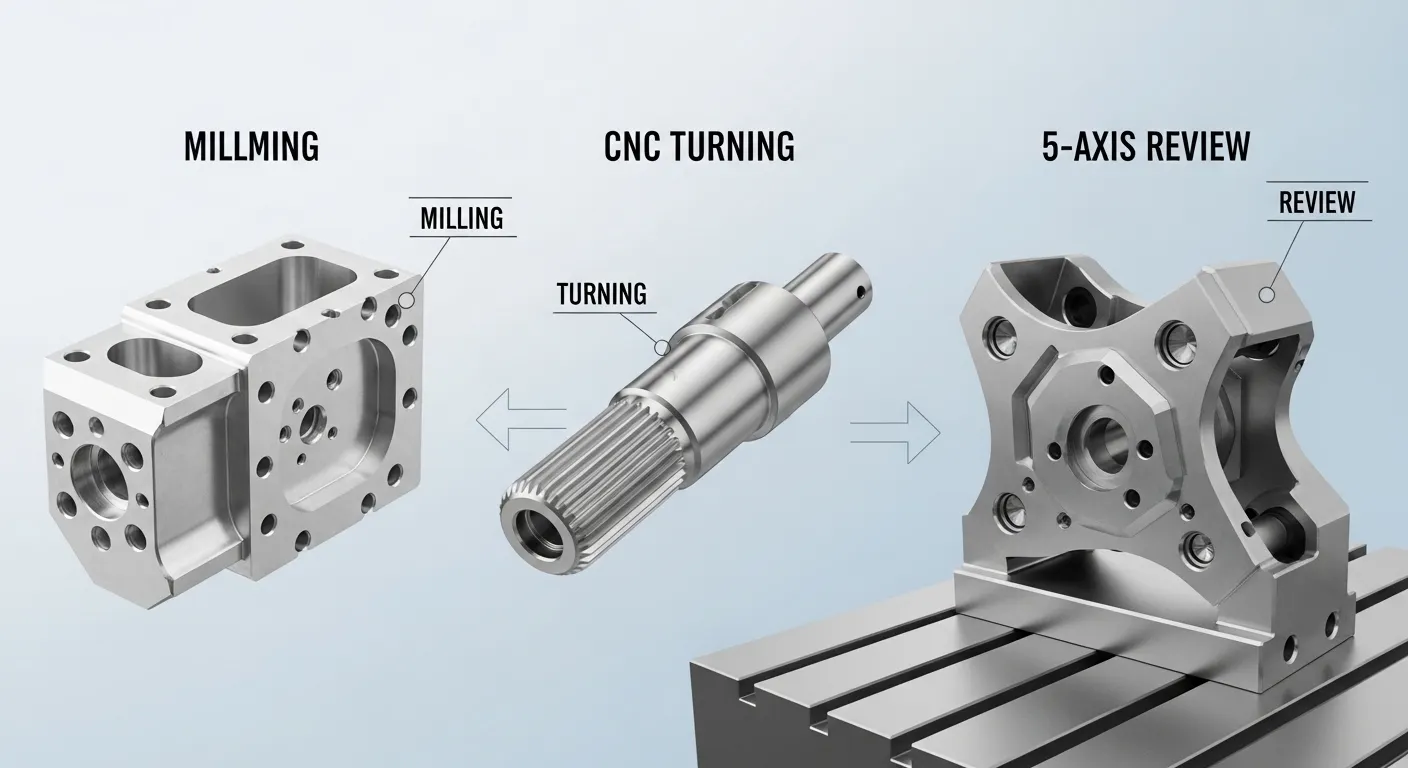
Different metal parts need different CNC machining routes. Choosing the right process early helps reduce redesign risk, quote changes, and production delays.
CNC milling is often suitable for blocks, plates, housings, pockets, slots, mounting holes, flat surfaces, and complex prismatic parts. It is commonly used for aluminum enclosures, stainless steel brackets, tooling plates, and precision fixtures.
CNC turning is better for round or cylindrical parts such as shafts, sleeves, bushings, pins, spacers, fittings, and threaded components. If a part is mainly rotational, turning may be more efficient than milling.
5-axis CNC machining may be reviewed when a metal part has angled surfaces, multi-sided features, complex contours, or geometry that would require many setups on standard equipment. It can help reduce repositioning, but it should be selected based on the actual part design, tolerance needs, and cost target.
Some parts need combined machining. For example, a turned shaft may also need milled flats, cross holes, slots, or threaded features. In these cases, the drawing should clearly show all functional surfaces and critical dimensions.
For parts where tight dimensional control is the main concern, SunOn’s high precision CNC machining page may help buyers understand what to discuss before RFQ.
Metal Material Selection for CNC Machined Parts
Material choice affects machining time, part strength, corrosion resistance, finish options, weight, conductivity, and final cost. Buyers should confirm the required metal grade when possible. If the grade is not fixed, SunOn can review the application and help discuss suitable options.
| Metal material | Common part applications | Buyer advantages | Machining and RFQ notes |
|---|---|---|---|
| Aluminum | Housings, brackets, plates, heat sinks, covers, prototypes | Lightweight, machinable, suitable for many finishes | Confirm grade, anodizing needs, cosmetic surfaces, and flatness requirements |
| Stainless steel | Shafts, fittings, structural parts, equipment components | Corrosion resistance, strength, durable appearance | Confirm grade, tolerance-critical areas, passivation or polishing needs |
| Brass | Bushings, connectors, fittings, low-friction parts | Good machinability, appearance, conductivity | Confirm thread details, surface finish, and functional contact areas |
| Copper | Electrical parts, thermal parts, conductive components | High electrical and thermal conductivity | Confirm conductivity needs, burr control, finish, and deformation-sensitive features |
| Titanium | Lightweight strength parts, performance components | High strength-to-weight ratio and corrosion resistance | Confirm application, tolerance, surface finish, and machining complexity |
| Steel / alloy steel | Fixtures, shafts, machine parts, tooling-related components | Strength, wear resistance, broad industrial use | Confirm grade, heat treatment needs, coating, and inspection requirements |
This table should guide early material selection, but the final choice should be based on the part’s function, environment, load, assembly requirement, and production budget.
Tolerance, Surface Finish, and Inspection Details to Confirm
Tolerance should match the part’s real function. Over-tolerancing every dimension can increase cost and make supplier review more difficult. Instead, mark critical dimensions on the 2D drawing and separate them from general dimensions.
Buyers should clearly identify:
- Critical fit dimensions
- Hole positions and thread requirements
- Mating surfaces
- Bearing or sliding areas
- Sealing surfaces
- Cosmetic surfaces
- Flatness, perpendicularity, or concentricity needs
- Areas where burrs or sharp edges are not acceptable
Surface finish also affects function and appearance. Depending on material and application, buyers may request anodizing, plating, polishing, bead blasting, powder coating, passivation, painting, or other finishing support. Each finish can affect appearance, corrosion resistance, surface feel, thickness, and cost.
Inspection expectations should be discussed before production. If a part needs dimensional reports, critical dimension checks, functional inspection, or assembly verification, include those requirements in the RFQ. For quality-system and inspection-related expectations, buyers may also review SunOn’s page on CNC machining services with ISO 9001 certification.
Prototype, Small-Batch, and Production Metal Parts
CNC machining is useful when buyers need real metal parts before committing to tooling or mass production. It allows product teams to test fit, assembly, strength, finish, and function using the intended material.
For prototype projects, the focus is usually speed of engineering feedback, manufacturability, and design correction. The buyer may need one or several versions before final approval.
For small-batch CNC machining, the focus shifts to repeatability, cost control, inspection, and stable communication. Buyers should confirm whether the batch is for testing, customer samples, pilot production, or bridge production.
For production projects, SunOn can also support broader manufacturing planning. If the final product later requires injection molding, die casting, mold making, sheet metal fabrication, finishing, assembly, or OEM/ODM production support, it is useful to discuss that path early.
Common Project Risks to Avoid
Many CNC metal part delays come from missing or unclear RFQ details. A 3D model alone may show the shape, but it may not explain tolerance, finish, material grade, threads, cosmetic surfaces, or inspection requirements.
Buyers should avoid these common issues:
- Sending only screenshots instead of CAD and drawings
- Using a material name without a grade or performance requirement
- Applying tight tolerance to every feature without functional reason
- Forgetting surface finish, coating, or color requirements
- Leaving thread type, depth, or insert requirements unclear
- Not marking cosmetic or visible surfaces
- Ignoring burr control, sharp edge, or assembly fit requirements
- Requesting a quote without quantity or production stage
- Not stating whether the part is for prototype, testing, or production
Clear information helps SunOn review the project faster and provide more practical manufacturing feedback.
RFQ Checklist for Custom Metal CNC Parts
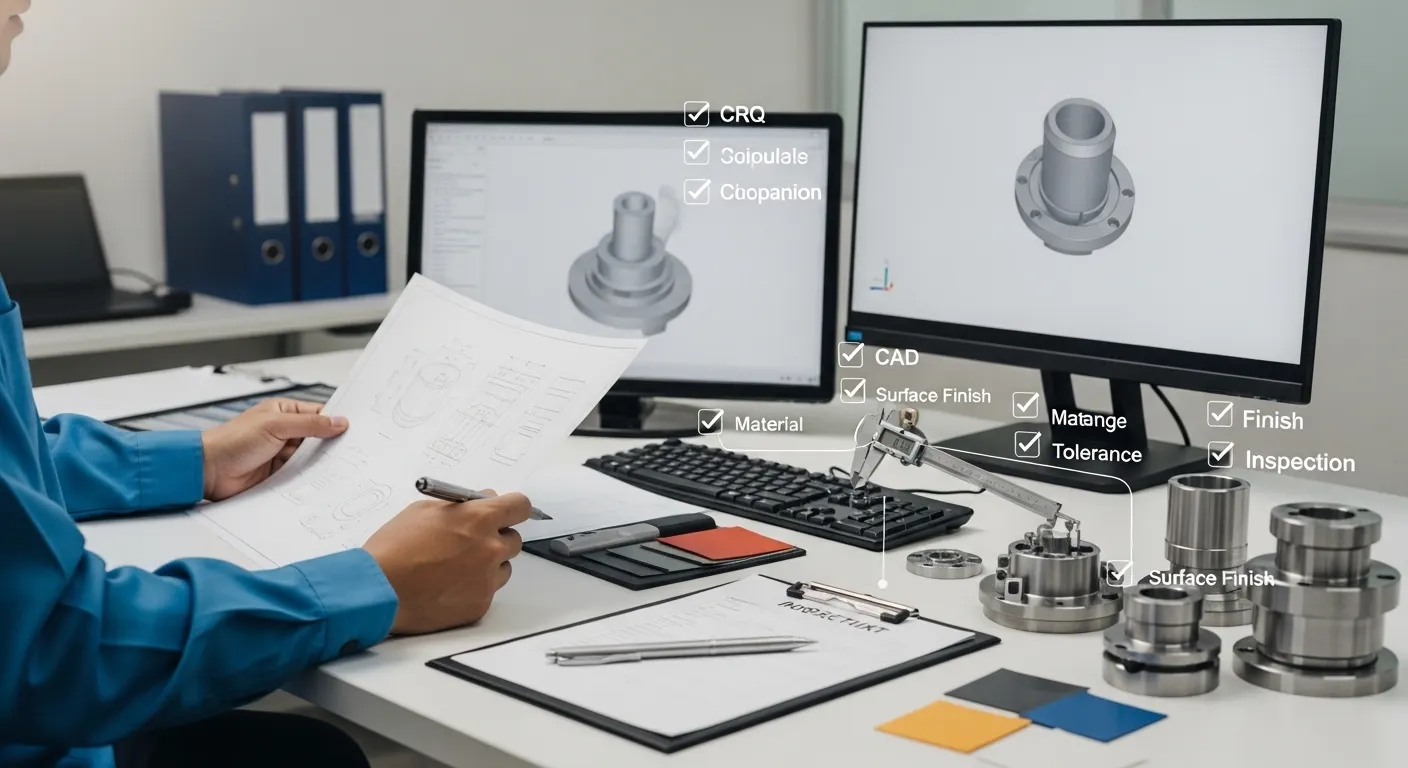
Before contacting SunOn, prepare as much of the following information as possible:
- Product or part name
- Application or industry
- Prototype, small-batch, or production stage
- Required quantity
- 3D CAD model
- 2D technical drawing
- Material and material grade if known
- Critical tolerances and GD&T notes
- Surface finish requirement
- Color, coating, plating, anodizing, polishing, or passivation needs
- Threading, tapping, holes, slots, inserts, or undercuts
- Assembly or mating part requirements
- Cosmetic surface requirements
- Inspection report or quality documentation needs
- Functional testing requirements if relevant
- Delivery destination
- Target schedule if relevant
- NDA, BOM, or project specification if needed
- Existing tooling or production history if applicable
If some details are not fixed, state that in the RFQ. SunOn can review the drawing and help discuss practical material, process, tolerance, and finishing options.
Why Work With SunOn for Custom Metal CNC Machining?
SunOn Mould is not only a CNC machining supplier. Our service scope includes CNC machining, 5-axis CNC machining, CNC milling, CNC turning, rapid prototyping, 3D printing, vacuum casting, mold manufacturing, injection molding, die casting, sheet metal fabrication, metal stamping, surface finishing, mechanical assembly, and OEM/ODM manufacturing support.
This helps buyers who need more than one production route. A product may start with CNC machined metal prototypes, move into small-batch CNC production, and later require mold making, die casting, injection molding, finishing, or assembly.
SunOn is a practical fit for buyers who need:
- Engineering communication before quotation
- Material and process discussion
- CNC prototype and small-batch support
- Metal and plastic manufacturing options
- Surface finishing and post-processing support
- Inspection and quality requirement discussion
- OEM/ODM production planning
- A supplier that can support more than one manufacturing process
The best result comes when buyers share complete project details early. This allows SunOn to review part geometry, manufacturing risks, finish expectations, and production requirements before quoting.
Frequently Asked Questions
What metals can SunOn machine for custom parts?
SunOn supports custom CNC machining for aluminum, stainless steel, brass, copper, titanium, steel, and other project-based metal requirements. The final material choice should be confirmed by part function, grade, tolerance, finish, and application environment.
Should my part be CNC milled or CNC turned?
Choose CNC milling for blocks, plates, housings, pockets, and flat or multi-sided parts. Choose CNC turning for shafts, bushings, sleeves, pins, and round parts. Some parts need both milling and turning.
Can SunOn support prototypes and production parts?
Yes. SunOn supports CNC prototype machining, small-batch CNC machining, and production-stage custom metal parts. Buyers should state the project stage, quantity, application, and inspection needs when requesting a quote.
What files should I send for a CNC quote?
Send a 3D CAD model and a 2D drawing when available. Also include material, quantity, tolerance, surface finish, application, inspection requirements, and delivery destination.
What tolerance details should I include?
Mark only the critical dimensions that affect fit, assembly, sealing, movement, or function. General dimensions can follow standard review, but critical features should be clear on the 2D drawing.
What surface finishes can be discussed?
Depending on the material and application, buyers may request anodizing, plating, polishing, bead blasting, powder coating, passivation, painting, or other finishing options. Confirm cosmetic and functional surfaces before quotation.
Request a CNC Machining Quote for Custom Metal Parts
Share your custom metal part requirements with SunOn for RFQ review, DFM discussion, and CNC machining support. Send your product or part type, quantity, prototype or production stage, application, 2D drawing, 3D CAD model, material grade, tolerance, surface finish, threading or insert details, inspection report needs, delivery destination, and any NDA, BOM, or project specification.
SunOn can review your files and help you discuss the right CNC process, material, finish, inspection plan, and manufacturing route for your custom metal parts project.
