


CNC Machining Services with ISO 9001 Certification
ISO 9001 matters because CNC machined parts are often used in assemblies where repeatability, documentation, and supplier communication affect the final product. A certified CNC supplier should help buyers review part requirements, control production documents, check critical dimensions, and respond clearly when a design or manufacturing issue appears.
SunOn supports custom CNC machining, CNC milling, CNC turning, 5-axis machining, prototype machining, small-batch parts, precision components, surface finishing, and OEM/ODM manufacturing support. Buyers can send 2D drawings, 3D CAD files, material details, finish requirements, and inspection needs for quote review and manufacturability feedback.
Why Buyers Ask for ISO 9001 CNC Machining Services
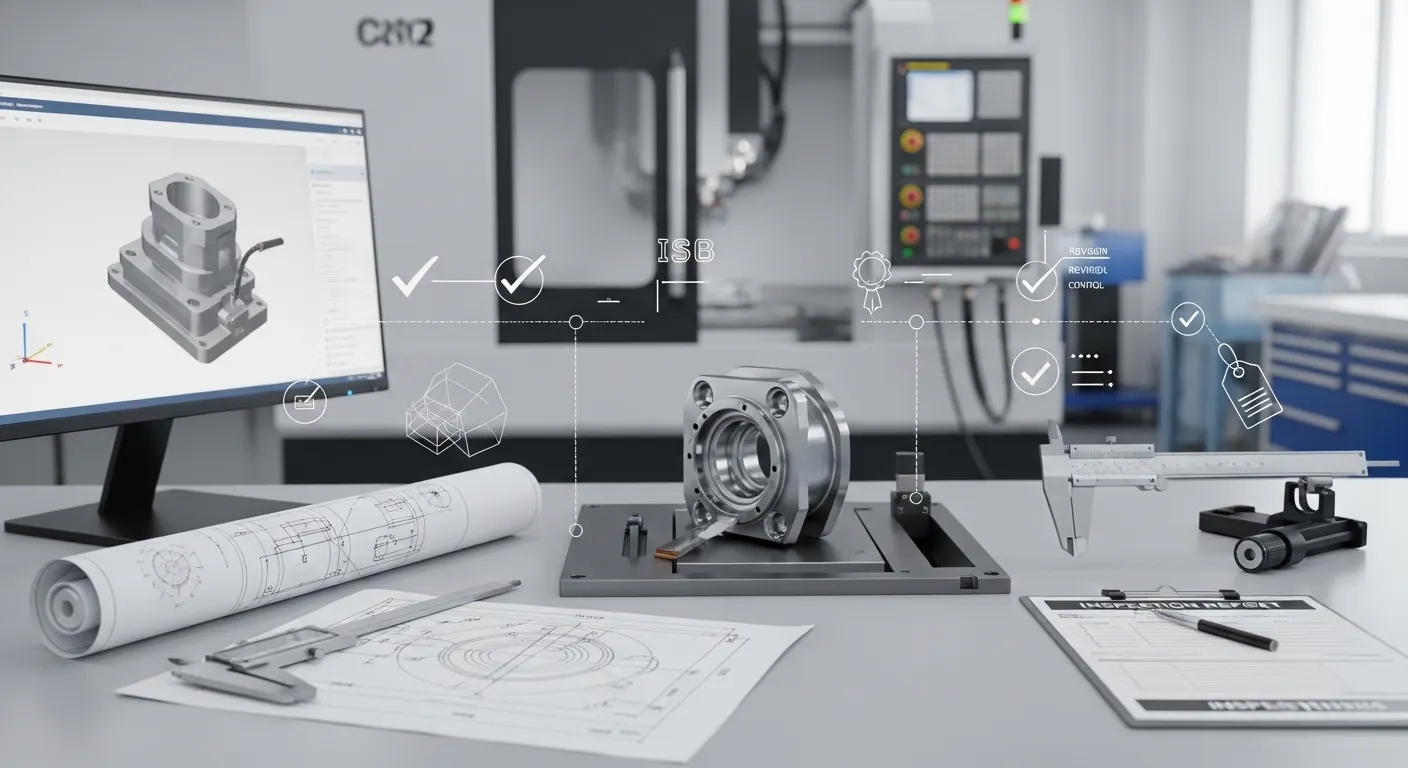
Buyers usually search for ISO 9001 CNC machining when the part is not just a simple prototype. The project may need repeatable dimensions, drawing-based inspection, internal purchasing approval, customer documentation, or supplier audit support.
ISO 9001 does not automatically guarantee that every part will meet every tolerance. It shows that the supplier works under a quality management system with process control, documentation, review, and corrective action procedures. The final part quality still depends on the drawing, material, geometry, machining method, tolerance level, finish, and inspection plan.
For procurement teams, ISO 9001 helps reduce supplier risk. For engineers, it helps create a clearer workflow from design review to machining, inspection, and shipment. For OEM/ODM buyers, it supports more consistent communication when moving from prototype to small-batch or production orders.
CNC Machining Capabilities to Confirm Before RFQ
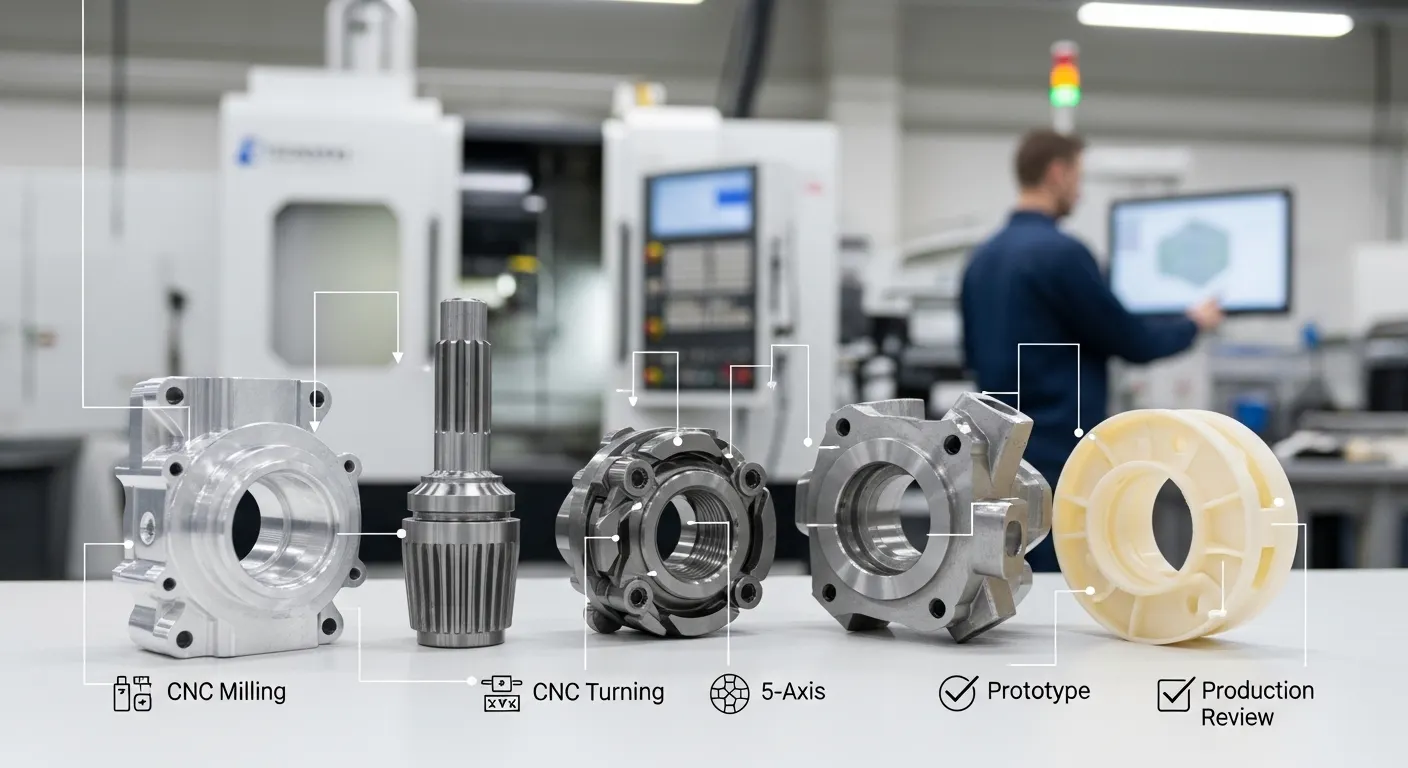
A quality-focused CNC project should begin with the part geometry and function. SunOn can support custom CNC machining projects involving metal and plastic parts, including milled, turned, and multi-axis components.
Buyers should confirm whether the part needs:
- CNC milling for housings, brackets, plates, slots, pockets, and complex surfaces
- CNC turning for shafts, bushings, sleeves, round parts, threaded parts, and cylindrical features
- 5-axis machining for complex angles, curved surfaces, multi-side machining, and reduced setups
- CNC prototype machining for design validation and functional testing
- Small-batch CNC machining for pilot production or market testing
- Precision CNC machining for parts with controlled dimensions and assembly requirements
If the project involves tight fit, complex geometry, or critical dimensions, buyers can also review SunOn’s related high precision CNC machining support.
The best process depends on the drawing, not only the material. A simple aluminum plate may need milling, while a stainless steel shaft may need turning. A complex enclosure or medical device component may require multiple setups, careful tolerance review, and defined inspection points.
What ISO 9001 Means for CNC Part Quality
For CNC buyers, ISO 9001 is most useful when it connects to real production controls. These controls may include drawing review, material confirmation, inspection planning, record keeping, nonconformance handling, and corrective action.
A strong CNC supplier should be able to discuss:
- Current drawing revision and file control
- Material requirement and grade confirmation
- Critical-to-function dimensions
- Tolerance and GD&T requirements
- Surface finish requirements
- In-process and final inspection expectations
- Packaging, labeling, and shipment requirements
- Corrective action process if an issue is found
This is especially important for repeat orders. A prototype may only need basic dimensional review, but a production batch may need clearer inspection records, controlled revisions, and consistent finish requirements.
Buyers should avoid assuming that ISO 9001 replaces engineering review. Certification supports the quality system, but the buyer still needs to provide complete specifications and approval criteria.
ISO 9001 CNC Supplier Audit Checklist

Use this checklist when evaluating SunOn or any CNC machining supplier for a quality-sensitive project.
| Buyer checkpoint | Why it matters | What to confirm before ordering |
|---|---|---|
| ISO 9001 certificate scope | Confirms whether the quality system applies to relevant operations | Ask for current certificate details and scope during supplier review |
| Drawing revision control | Prevents machining from outdated files | Send the latest 2D drawing and 3D CAD model with revision notes |
| Material confirmation | Reduces risk of wrong material or grade | Specify material type, grade, and any certificate requirement |
| Tolerance review | Identifies high-risk dimensions before machining | Mark critical dimensions, GD&T, fits, and assembly interfaces |
| Surface finish control | Affects appearance, corrosion resistance, friction, and assembly | Confirm anodizing, plating, polishing, bead blasting, painting, or other finish needs |
| Inspection records | Supports procurement and customer approval | Request dimensional reports, material records, or project-specific inspection documents if needed |
| Corrective action process | Helps resolve quality issues in repeat production | Ask how nonconforming parts and improvement actions are handled |
| Production stage | Changes the inspection and communication level | Identify prototype, small-batch, pilot run, or production requirement |
This table should be used early in the project, not after parts are already machined. Clear RFQ information helps the supplier quote more accurately and reduces avoidable quality disputes.
Materials and Finishes Buyers Should Specify
Material selection affects machining time, tolerance stability, surface quality, and cost. Buyers should specify the material clearly instead of writing only “metal” or “plastic” in the RFQ.
Common CNC material categories may include:
- Aluminum for lightweight housings, brackets, panels, fixtures, and prototypes
- Stainless steel for stronger parts, corrosion resistance, and durable assemblies
- Steel for structural and mechanical components
- Brass and copper for electrical, thermal, decorative, or precision parts
- Titanium for lightweight strength and demanding machining conditions
- Engineering plastics such as ABS, PC, POM/Delrin, nylon, PMMA, PEEK, or PTFE when plastic machined parts are needed
If the project involves titanium, buyers can review SunOn’s titanium CNC machining services for related material-specific considerations.
Surface finish should also be confirmed before quotation. A machined prototype may only need an as-machined surface, while a production part may need anodizing, plating, polishing, bead blasting, painting, powder coating, or other finishing. Finish requirements can affect tolerance, lead planning, inspection, and packaging.
Prototype, Small-Batch, and Production CNC Support
ISO 9001-certified CNC machining is useful at different stages of a product lifecycle.
For prototypes, buyers usually need manufacturability feedback, fast design learning, and functional testing. The focus is often on whether the part fits, works, and proves the design direction. SunOn’s rapid CNC machining services can support buyers who need prototype review before moving forward.
For small-batch CNC machining, buyers often need more repeatability. This stage may support pilot builds, market testing, pre-production samples, or assembly validation. Tolerance and finish requirements should be clearer than in early prototypes.
For production CNC machining, the project may need stronger document control, inspection records, packaging requirements, and repeat order consistency. Buyers should confirm which dimensions are critical, which reports are required, and whether any customer approval documents are needed before production begins.
Application Areas Where Quality Control Matters
ISO 9001 CNC machining is important when parts must fit assemblies, support product reliability, or meet buyer documentation requirements.
Typical project areas may include:
- Electronics housings, heat sinks, brackets, connectors, and device components
- Industrial equipment parts, fixtures, machine components, and automation parts
- Automotive-related components, test parts, jigs, and mechanical assemblies
- EV, new energy, and battery-related hardware components
- Medical device product development parts and non-claim-sensitive prototype components
- Aerospace-related product development parts where buyer specifications control acceptance
For electronics-related projects, buyers can review SunOn’s CNC machining for electronics support to understand part and application considerations.
SunOn can also support related manufacturing needs beyond CNC machining, including rapid prototyping, mold making, injection molding, die casting, post-processing, surface finishing, assembly, and OEM/ODM production support. This helps buyers plan beyond a single machined part when the project moves toward tooling or larger production.
What to Send for an Accurate CNC Machining Quote
A complete RFQ helps SunOn review manufacturability, machining method, cost factors, quality requirements, and production planning. Buyers should send as much technical detail as possible.
Prepare the following before requesting a quote:
- Product or part type
- Quantity required
- Prototype, small-batch, pilot run, or production stage
- Application or industry
- 3D CAD model
- 2D drawing with dimensions and tolerances
- Material requirement and grade if known
- Surface finish requirement
- Color, coating, plating, anodizing, polishing, or painting requirement
- Critical dimensions, fits, threads, holes, slots, inserts, or undercuts
- Assembly or post-processing requirements
- Inspection report or material certificate requirement
- Functional testing requirement if relevant
- Delivery destination
- Target schedule if relevant
- NDA, BOM, existing drawings, or project specification
If the part is still in development, the RFQ can also request DFM review. SunOn’s engineering team can review machining risks such as deep cavities, thin walls, tight internal corners, difficult threads, high finish expectations, or tolerance conflicts.
How SunOn Supports Quality-Focused CNC Buyers
SunOn Mould works with global OEM/ODM buyers, engineers, product development teams, procurement managers, industrial companies, hardware startups, and manufacturing brands. The goal is to help buyers move from design files to manufacturable parts with clear communication.
For ISO 9001 CNC projects, SunOn can help buyers review technical requirements before production, including material, tolerance, finish, inspection, and production stage. This is important when a part must fit into an assembly, pass internal inspection, or support a repeat order.
SunOn is also suitable for buyers who need more than CNC machining. A project may start with CNC prototypes, then move to mold making, injection molding, die casting, finishing, assembly, or OEM/ODM manufacturing support. Keeping these options connected can reduce supplier changes as the product develops.
Frequently Asked Questions
Does ISO 9001 guarantee CNC part tolerance?
No. ISO 9001 supports quality management and process control, but tolerance depends on the drawing, material, geometry, machining method, and inspection plan. Buyers should clearly mark critical dimensions and acceptance requirements.
What inspection documents should I request?
Common requests may include dimensional inspection reports, material certificates, first article inspection, certificates of conformity, or project-specific records. The required documents should be discussed before quotation and confirmed in the order.
What files are needed for CNC machining RFQ?
Send a 3D CAD model and a 2D drawing when possible. Include material, quantity, tolerance, finish, application, inspection requirements, and any assembly details. Complete files help reduce quote delays.
Can SunOn support prototypes and production?
Yes. SunOn supports CNC prototype machining, small-batch machining, precision CNC parts, and OEM/ODM production support. Buyers should identify the production stage so the review process matches the project goal.
When should buyers request DFM review?
Request DFM review when the part has tight tolerances, thin walls, deep holes, complex surfaces, special finishes, inserts, threads, or assembly requirements. Early review can reduce machining risk and redesign cost.
What should procurement teams check before approval?
Check certificate scope, drawing control, material confirmation, inspection expectations, communication process, corrective action handling, and production-stage support. These points matter more than choosing a supplier by price alone.
Request CNC Machining Quote and DFM Review
Send SunOn your 2D drawings, 3D CAD files, quantity, material, tolerance, surface finish, application, and inspection requirements for CNC machining quote review. If your project requires ISO 9001 documentation, supplier audit support, prototype validation, small-batch machining, or production planning, include those requirements in the RFQ so SunOn can review the project clearly before manufacturing.
