


Titanium CNC Machining Services
For titanium parts, buyers should confirm the material grade, geometry, tolerance, surface finish, inspection requirements, quantity, and application before requesting a quote. SunOn supports CNC milling, CNC turning, 5-axis machining where suitable, surface finishing, assembly discussion, and broader OEM/ODM manufacturing support.
Send your 2D drawings, 3D CAD files, titanium grade, quantity, tolerance, finish, and inspection needs for DFM review and quotation.
Titanium CNC Machining Services for Custom Parts
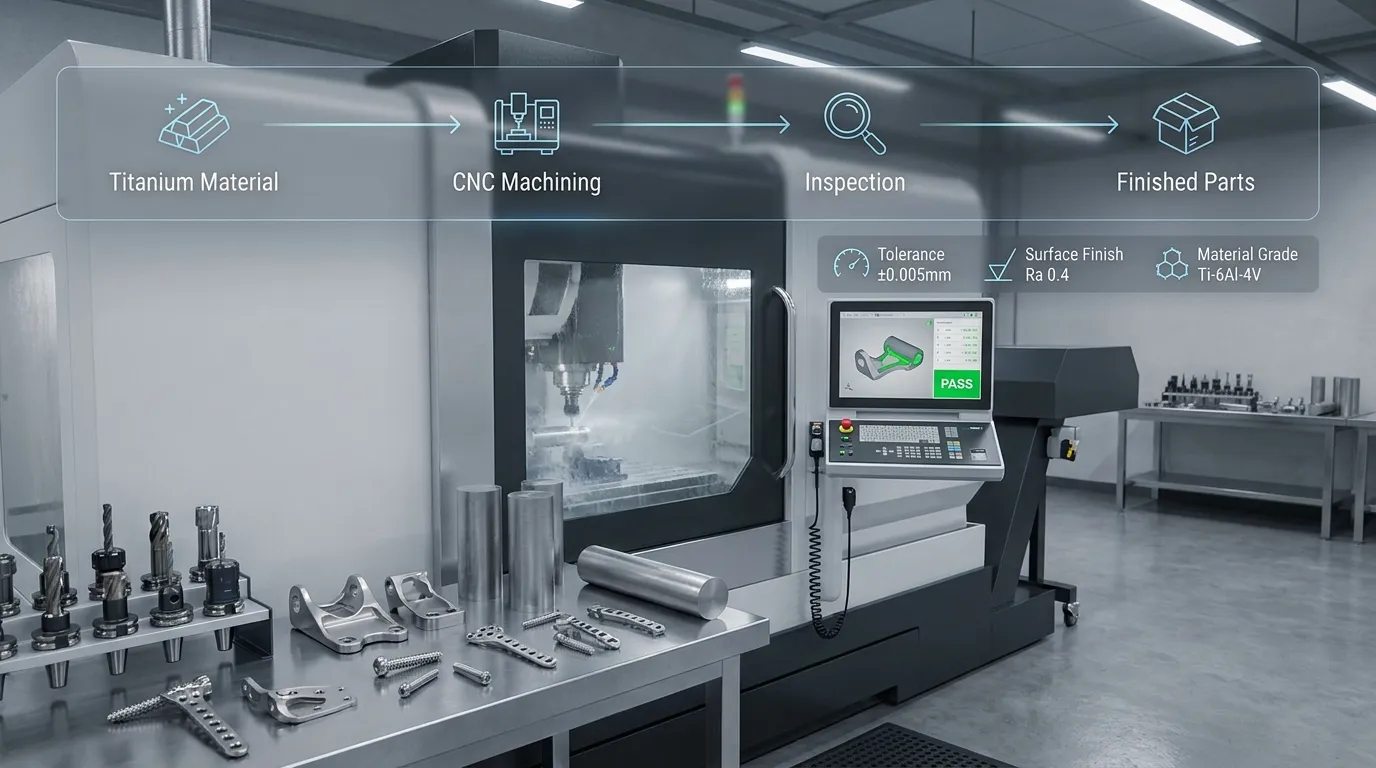
Titanium CNC machining is suitable when a part needs to be strong, lightweight, corrosion-resistant, and reliable in demanding working conditions. It is commonly considered for aerospace-related components, medical device product parts, marine hardware, robotics, industrial equipment, electronics, automotive performance parts, and new energy applications.
However, titanium is not quoted like an easy-to-machine metal. The material can retain heat at the cutting zone, increase tool wear, and harden during machining if the wrong cutting strategy is used. For buyers, this means the RFQ should include more than only “titanium part” and quantity.
SunOn helps buyers review:
- Part geometry and CNC process route
- Titanium grade requirement
- Prototype, small-batch, or production stage
- Critical dimensions and tolerance zones
- Surface finish and deburring needs
- Threading, holes, slots, pockets, inserts, or assembly details
- Inspection report and functional requirement expectations
This allows the quote to reflect the actual machining risk, not just the material name.
When Should Buyers Choose Titanium?
Titanium is a strong choice when aluminum may be too soft or weak, and stainless steel may be too heavy for the design. It can also be useful where corrosion resistance, fatigue performance, or temperature exposure matters.
Buyers often consider titanium for:
- Lightweight structural brackets and housings
- High-strength shafts, pins, spacers, and fasteners
- Medical device product components and surgical instrument-related parts
- Aerospace-related frames, mounts, clamps, and machined hardware
- Marine and chemical-environment parts
- Robotics, automation, and industrial equipment components
- EV, battery, and new energy mechanical parts
- Performance automotive and motorsport components
The final material decision should be based on strength, weight, corrosion exposure, temperature, assembly load, surface finish, and cost target. If the grade is not fixed, SunOn can review the application and discuss suitable options during the quotation stage.
Titanium Grade Checklist for RFQ
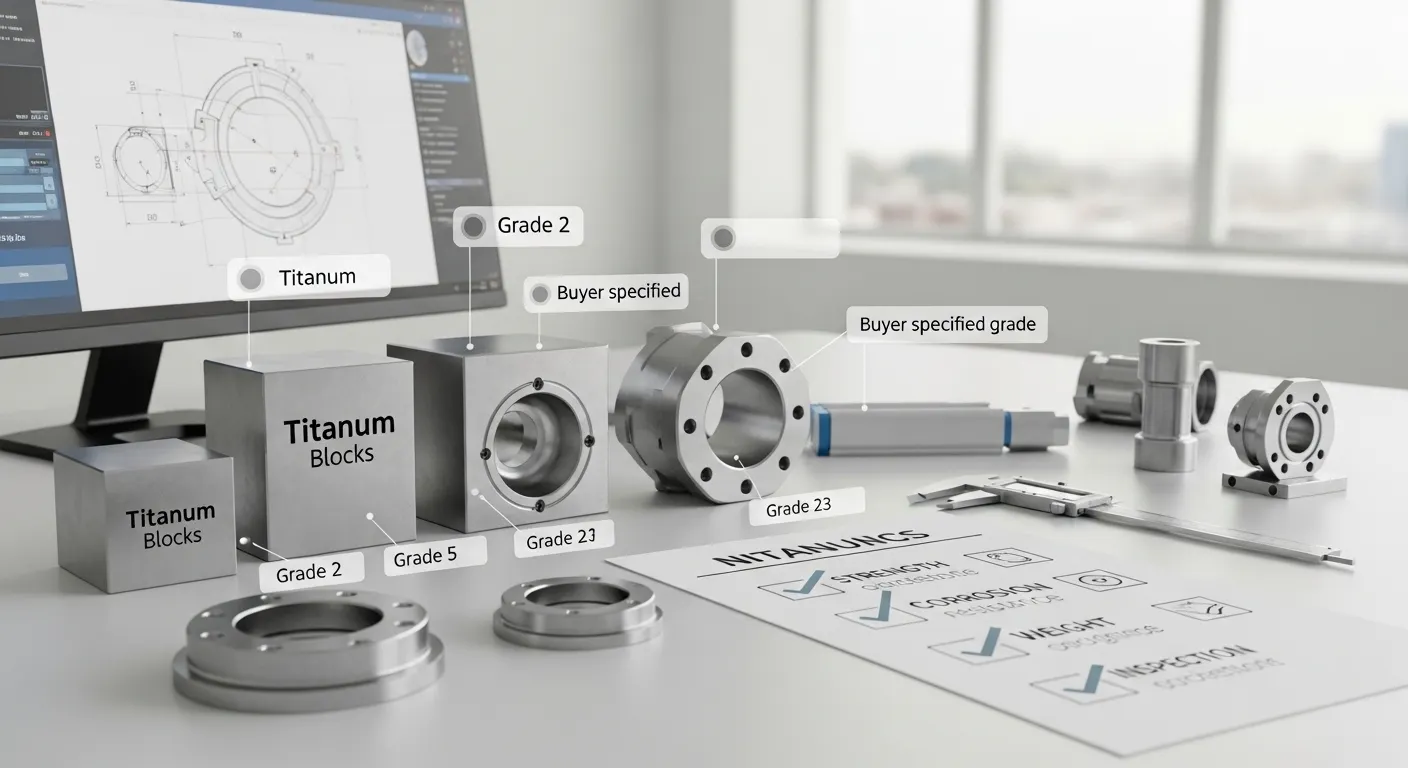
Different titanium grades can change machinability, cost, performance, and application suitability. Buyers should specify the grade if it is already defined by the drawing, BOM, or engineering requirement.
| Titanium grade discussion point | Common reason buyers consider it | RFQ note for buyers |
|---|---|---|
| Grade 2 titanium | Corrosion resistance, moderate strength, general industrial use | Confirm if the part needs corrosion resistance more than high strength |
| Grade 5 / Ti-6Al-4V | High strength-to-weight ratio and demanding mechanical use | Share load, tolerance, finish, and inspection expectations clearly |
| Grade 23 titanium | Often discussed for medical-related product requirements | Do not assume availability; confirm documentation and project requirements first |
| Grade 9 titanium | Strength and formability balance in selected applications | Share application conditions and any drawing-specified standard |
| Buyer-specified grade | Required when the project has strict material rules | Send the drawing, BOM, material note, and any required documentation |
The grade should not be guessed if the part is used in a safety-critical or regulated product. In those cases, the buyer should provide material specifications, documentation needs, and inspection requirements before quote.
Why Titanium Requires Careful CNC Machining
Titanium is valuable because it is strong and light, but these same properties make it harder to machine. It does not transfer heat away from the cutting zone as quickly as many other metals. As a result, cutting heat can stay near the tool edge.
This can lead to faster tool wear, surface marks, burrs, or dimensional variation if the process is not controlled. Work hardening can also become a problem when cutting parameters, tool engagement, or chip evacuation are not suitable.
Important machining factors include:
- Rigid workholding to reduce vibration and chatter
- Proper tool selection and toolpath planning
- Controlled cutting parameters
- Coolant and chip evacuation strategy
- Suitable corner radii instead of sharp internal corners where possible
- Wall thickness review for thin or flexible features
- Hole depth, thread depth, and tapped feature review
- Deburring planning for functional edges
For buyers, the main point is simple: a titanium part with deep pockets, thin walls, tight tolerances, small threads, and cosmetic finish requirements needs more review than a simple block, bracket, or turned spacer.
Which CNC Process Fits Your Titanium Part?
The best process depends on part geometry, tolerance, surface requirements, and quantity. SunOn can review drawings and CAD files to determine whether CNC milling, CNC turning, or a more complex machining route is suitable.
CNC milling is often used for titanium housings, brackets, plates, blocks, slots, pockets, complex profiles, and flat or angled features. It is useful when the part has multiple faces, mounting holes, or non-round geometry.
CNC turning is suitable for round titanium parts such as shafts, pins, bushings, spacers, rings, sleeves, threaded components, and cylindrical connectors. Turned parts may also need milling if they include flats, cross holes, slots, or side features.
5-axis CNC machining may be considered for complex titanium geometry, angled surfaces, multi-face features, and parts that benefit from fewer setups. It can help reduce repositioning, but it should be selected based on real part geometry, not as a default requirement.
For related process planning, buyers can review SunOn’s CNC turning and milling services.
Tolerance, Surface Finish, and Inspection Details Matter
Titanium CNC parts should be quoted with clear tolerance and finish information. A drawing with every dimension marked as tight tolerance can increase cost and machining risk. Instead, buyers should identify critical features and allow practical general tolerances where possible.
Before quotation, confirm:
- Critical dimensions and functional surfaces
- Flatness, concentricity, parallelism, or position requirements
- Hole diameter and depth
- Thread type, pitch, and depth
- Mating surfaces and assembly interfaces
- Edge break, burr control, and sharp-edge restrictions
- Surface roughness or cosmetic appearance requirements
- Inspection report requirements
Surface finish should also match the application. Some titanium parts only need an as-machined finish. Others may need polishing, bead blasting, passivation, anodizing, or other finishing discussions, depending on function and appearance needs.
If an inspection report is required, the buyer should state this early. It helps the manufacturing team plan inspection time, documentation, and quality expectations before production begins.
Prototype, Small-Batch, and OEM/ODM Manufacturing Support
Titanium machining is often used during product development because it allows engineers to test real material performance before tooling or production decisions. It may also support low-volume end-use parts where injection molding, die casting, or stamping is not suitable.
SunOn can support buyers who are working through:
- Functional titanium prototypes
- Engineering validation samples
- Small-batch CNC parts
- Pre-production components
- OEM/ODM manufacturing projects
- Parts that later require finishing, assembly, mold making, injection molding, or die casting support
For product teams that need broader production planning, SunOn’s OEM CNC machining services page can help connect CNC machining with manufacturing support beyond one-off parts.
What Should Buyers Send for a Titanium CNC Machining Quote?
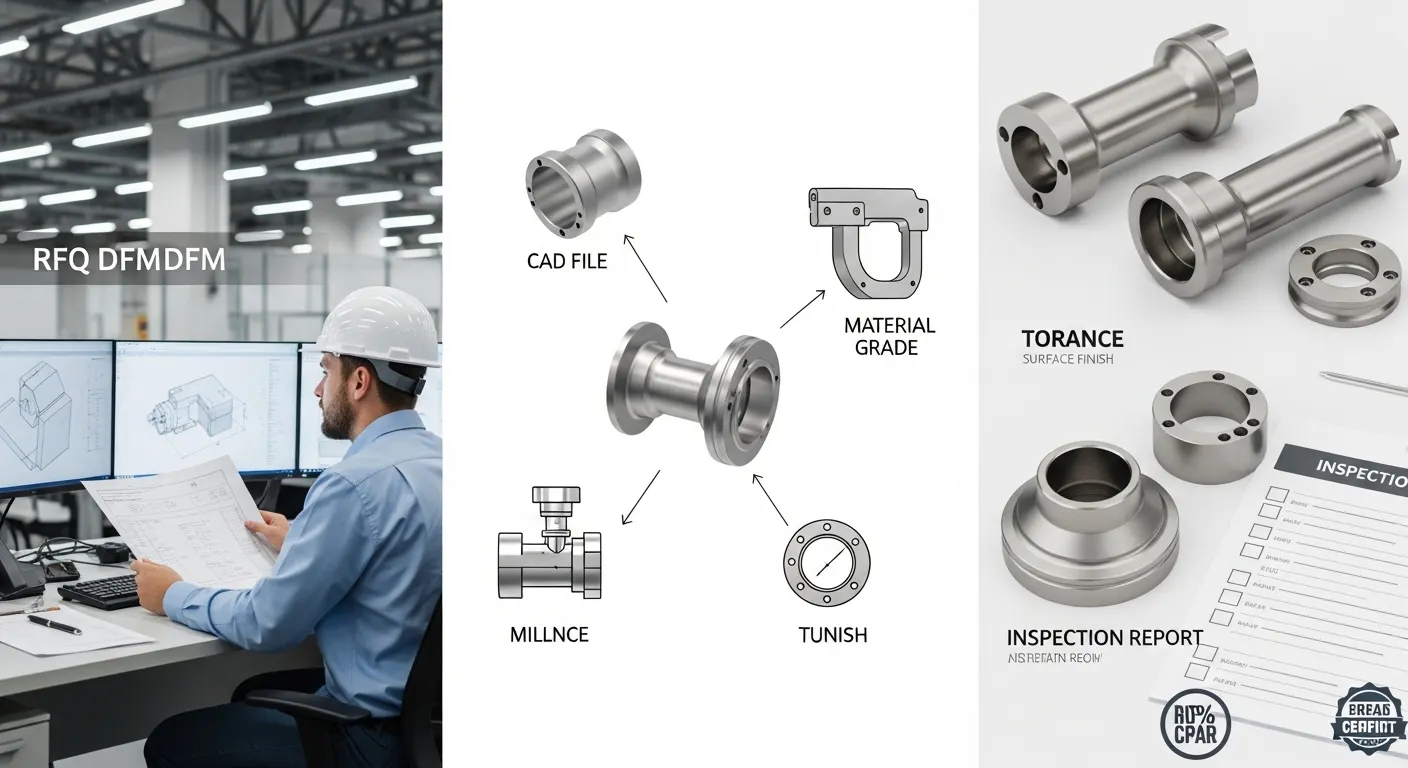
A clear RFQ helps reduce back-and-forth communication and improves quote accuracy. Titanium parts can vary widely in machining complexity, so buyers should include technical and commercial details together.
Prepare these details before contacting SunOn:
- Product or part name
- Application or industry
- Prototype, small-batch, or production stage
- Quantity for quotation
- 2D drawing with dimensions and tolerances
- 3D CAD model for geometry review
- Titanium grade, if known
- Critical tolerance areas
- Surface finish requirement
- Color, coating, polishing, anodizing, or plating requirement if relevant
- Threads, inserts, holes, slots, undercuts, or assembly features
- Inspection report requirement
- Functional testing requirement if applicable
- Delivery destination
- Target schedule if relevant
- NDA, BOM, or project specification if needed
For quote preparation guidance, buyers can also visit SunOn’s CNC machining quote page.
How SunOn Helps Reduce Titanium Machining Risk
A good titanium machining supplier should not only accept a drawing and return a price. The supplier should review the design, identify machining risks, and help the buyer avoid avoidable rework.
SunOn’s team can help buyers check whether the design includes risk areas such as thin walls, deep pockets, sharp internal corners, tight threads, cosmetic faces, or difficult-to-inspect dimensions. This review is especially useful for product development teams and global buyers who need reliable communication before ordering.
The goal is to match the part requirement with a practical manufacturing route. That may include CNC milling, CNC turning, 5-axis machining, finishing, inspection planning, or wider custom manufacturing support.
Frequently Asked Questions
Can titanium be CNC machined for custom parts?
Yes. Titanium can be CNC machined into custom parts using milling, turning, and more complex machining routes when needed. The process requires careful control of heat, tooling, workholding, and chip evacuation.
Which titanium grade should I choose?
The right grade depends on strength, corrosion resistance, weight, application, and documentation needs. Grade 2 and Grade 5 are common discussion points. If your drawing specifies a grade, send that requirement with the RFQ.
Is Grade 5 titanium difficult to machine?
Grade 5 titanium is widely used because of its strength-to-weight ratio, but it is more demanding than many common metals. Tool wear, heat buildup, and work hardening must be controlled during machining.
What tolerances are possible for titanium parts?
Tolerance depends on geometry, wall thickness, feature size, grade, setup method, and inspection requirements. Share critical dimensions clearly instead of applying tight tolerances to every feature.
What surface finishes are available for titanium CNC parts?
Common finish discussions include as-machined, polishing, bead blasting, passivation, and anodizing where suitable. The correct finish depends on appearance, corrosion exposure, assembly fit, and functional surface needs.
What files are needed for quotation?
Send a 2D drawing, 3D CAD model, material grade, quantity, tolerance requirements, surface finish, application details, and inspection needs. These details help SunOn review manufacturability and prepare a more accurate quote.
Request Titanium CNC Machining Review and Quotation
Share your titanium part requirements with SunOn Mould for CNC machining review, DFM feedback, and quotation. Send your product or part type, quantity, prototype or production stage, application, 2D drawing, 3D CAD model, titanium grade, tolerance, surface finish, threading or assembly details, inspection report needs, delivery destination, target schedule, and any NDA, BOM, or project specification.
