


CNC Machining Quote
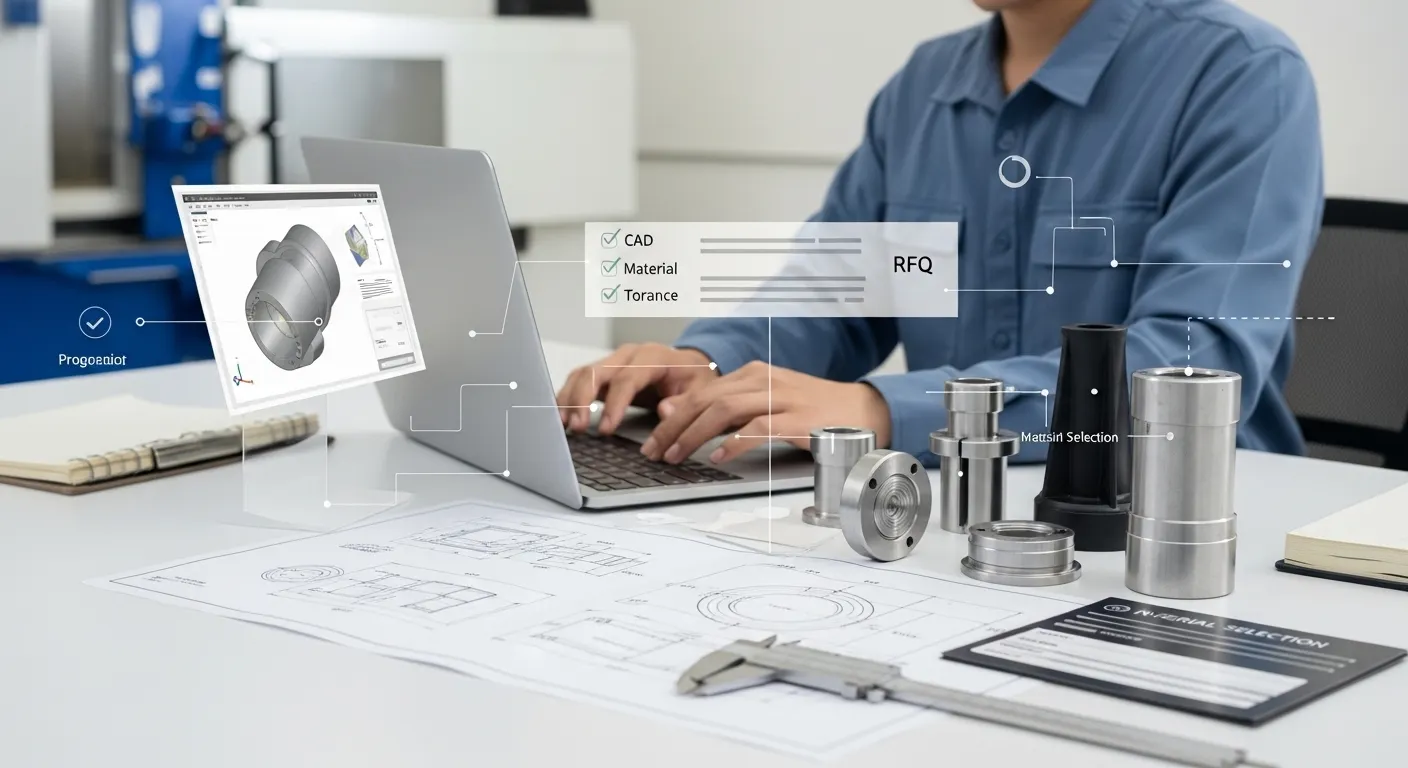
A CNC machining quote is not based only on part size. Price and feasibility are affected by material, machining complexity, tolerance, quantity, finish, inspection level, and production schedule. A simple aluminum bracket, a tight-tolerance stainless steel shaft, a PEEK functional prototype, and a finished enclosure will all need different quoting details.
SunOn supports CNC machining together with rapid prototyping, mold making, injection molding, die casting, surface finishing, assembly, and OEM/ODM production support. This helps buyers move from early part validation to production planning with clearer technical communication.
What Affects a CNC Machining Quote?
The most important quote factors are material, tolerance, quantity, part complexity, surface finish, inspection requirements, and target schedule. These details help the engineering team estimate machining time, setup needs, material cost, finishing work, and quality-control requirements.
Part geometry also matters. Deep pockets, thin walls, small holes, undercuts, internal corners, tight slots, threaded features, and complex multi-side machining can affect the process plan. Some parts may be suitable for CNC milling. Others may need CNC turning, turning and milling, or 5-axis machining.
Buyers should confirm these points before requesting a quotation:
- Material and grade, if already selected
- Prototype, small-batch, or production quantity
- Critical dimensions and tolerance notes
- Surface finish, coating, color, or cosmetic requirements
- Threading, inserts, holes, slots, undercuts, or assembly features
- Inspection report or functional testing needs
- Application or working environment
- Delivery destination and target schedule
Clear information reduces back-and-forth and helps SunOn review the project more efficiently.
CNC Quote Submission Checklist
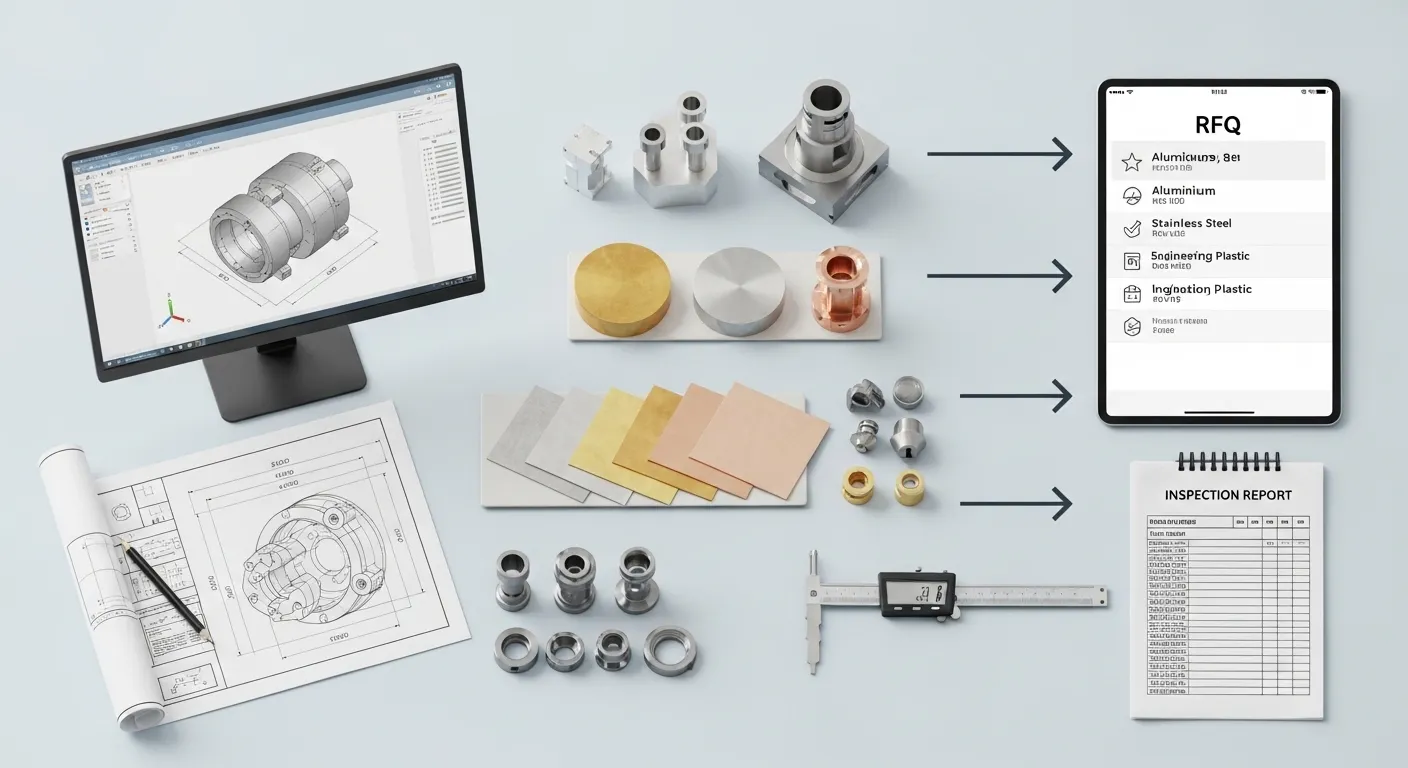
Use this checklist before sending drawings or requesting DFM review.
| RFQ item | What to provide | Why it affects the quote |
|---|---|---|
| 3D CAD model | STEP, STP, IGES, IGS, STL, SLDPRT, X_T, or similar file | Shows part geometry, volume, machining access, and complexity |
| 2D drawing | PDF, DWG, DXF, or drawing file | Confirms tolerances, threads, surface roughness, notes, and critical dimensions |
| Material | Metal or plastic type, plus grade if known | Material affects machining time, cost, finish, and performance |
| Quantity | Prototype, small batch, or production volume | Quantity affects setup cost, unit cost, fixture planning, and inspection planning |
| Tolerance | General and critical tolerance requirements | Tight tolerances may require extra machining control and inspection |
| Surface finish | As-machined, anodizing, plating, polishing, painting, powder coating, or other finish | Finish affects appearance, function, cost, and schedule |
| Part features | Holes, threads, inserts, pockets, slots, undercuts, thin walls | These features affect machining strategy and tool access |
| Inspection needs | Dimensional report, critical dimension check, or functional testing if required | Quality requirements should be planned before quoting |
| Application | Product type, industry, use environment, mating parts | Helps review material, tolerance, and finish suitability |
| Delivery details | Destination and target schedule | Helps evaluate packing, logistics, and project timing |
What Files Should You Send for a CNC Quote?
For most custom CNC projects, send both a 3D CAD model and a 2D drawing. The 3D model shows the part shape and machining geometry. The 2D drawing confirms the details that are not always clear in the model.
A 2D drawing is especially important when the part includes:
- Critical tolerances
- GD&T requirements
- Thread specifications
- Surface roughness notes
- Cosmetic surface requirements
- Insert or assembly instructions
- Heat treatment or post-processing notes
- Inspection points or report requirements
If you only have a 3D model, SunOn can still review the part and discuss missing details. However, the quote may need clarification before production. For technical parts, the drawing helps avoid assumptions.
Common file types may include PDF, DWG, DXF, STEP, STP, IGES, IGS, STL, SLDPRT, SLDASM, X_T, X_B, 3MF, ZIP, and related project files. If the project includes multiple components, send a BOM or assembly drawing when available.
Which CNC Process Should Be Quoted?
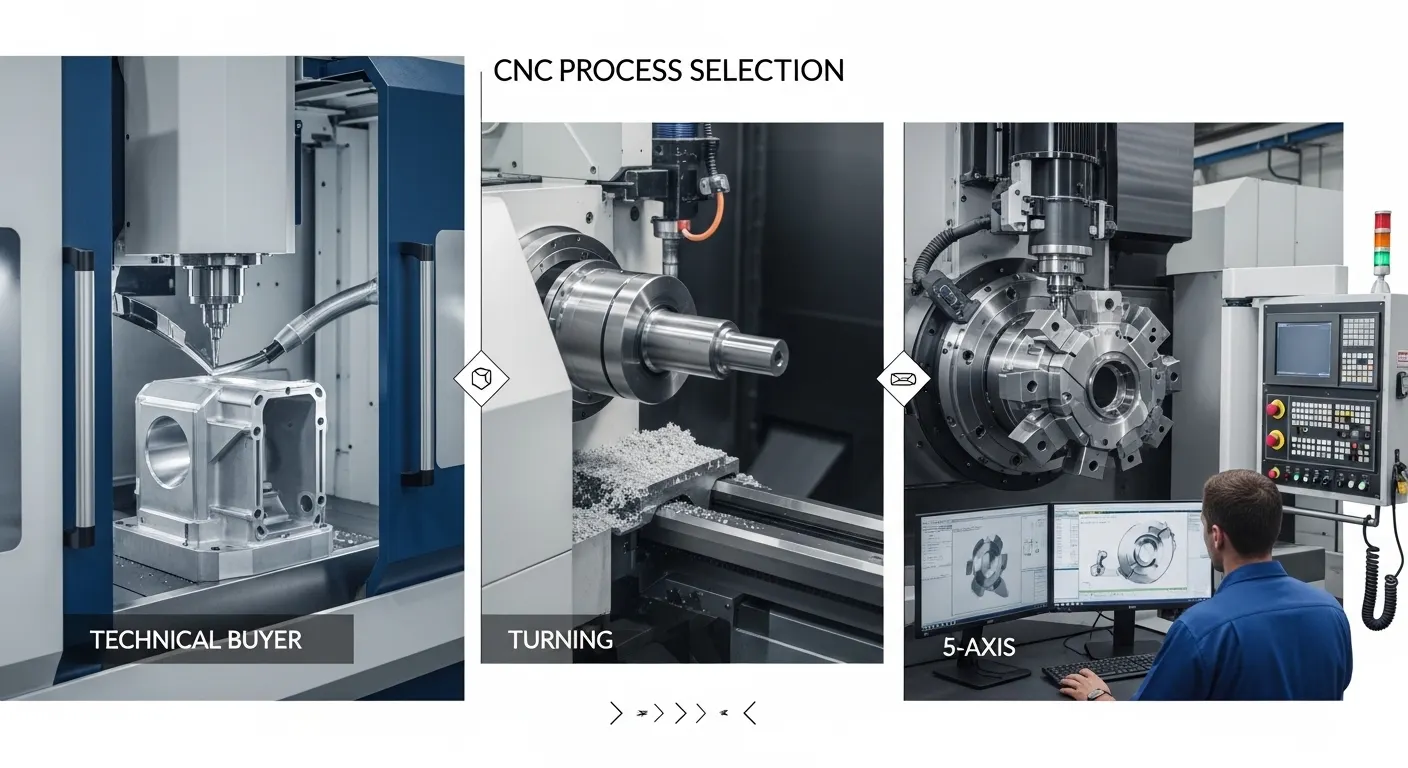
The best CNC process depends on the part shape, features, tolerance, and quantity. Buyers do not always need to choose the process before sending an RFQ, but sharing the part function helps SunOn review the best route.
For prismatic parts such as housings, plates, brackets, covers, fixtures, and parts with pockets or slots, custom CNC milling services may be suitable.
For round or cylindrical components such as shafts, pins, bushings, spacers, threaded parts, and fittings, CNC turning services may be the better option.
For parts that combine round geometry with milled flats, cross holes, grooves, slots, or side features, CNC turning and milling services can help reduce process changes and improve part consistency.
For complex parts with multiple angled surfaces, deep features, or difficult access points, 5-axis machining may be reviewed during DFM. The goal is not only to machine the part, but to select a process that supports function, tolerance, finish, and cost control.
Material, Tolerance, and Finish Details to Confirm
Material choice affects machining cost, part strength, weight, corrosion resistance, temperature performance, appearance, and surface finish. If the material is already fixed by your engineering team, include the exact requirement in the RFQ. If not, share the application so SunOn can review options.
Common CNC material categories include:
- Aluminum for lightweight housings, brackets, covers, prototypes, and machined assemblies
- Stainless steel for strength, corrosion resistance, and durable functional parts
- Brass and copper for electrical, thermal, fitting, and decorative applications
- Titanium for lightweight strength and demanding functional parts
- Engineering plastics such as ABS, POM/Delrin, nylon, PC, PMMA, PEEK, and PTFE
Tolerance should be specified carefully. Not every dimension needs a tight tolerance. If all features are marked too tightly, cost and inspection work may increase. Mark only critical dimensions as tight, and allow practical general tolerances for non-critical areas.
Surface finish also affects quoting. Buyers should confirm whether the part can remain as-machined or needs anodizing, plating, polishing, painting, powder coating, bead blasting, brushing, or other treatment. For visible parts, include cosmetic surface expectations and color requirements.
For broader CNC capability planning, buyers can also review SunOn’s precision CNC machining services.
Prototype, Small-Batch, or Production Quote?
A prototype quote is usually focused on speed of validation, part function, material testing, and design improvement. The buyer may need one or several parts to test fit, assembly, strength, or appearance before making changes.
A small-batch quote focuses more on repeatability, cost control, finishing consistency, and inspection requirements. Fixtures, process planning, and batch-level quality checks may become more important.
A production quote needs clearer control over material, tolerance, finishing, packaging, inspection, and repeat orders. If the part may later move to injection molding, die casting, sheet metal, or assembly, tell SunOn early. This helps the team consider prototype-to-production planning instead of treating the CNC part as a one-time order.
Buyers should state the production stage clearly:
- Prototype for design testing
- Engineering validation sample
- Small-batch trial order
- Bridge production before tooling
- Production CNC parts
- CNC parts for assembly or OEM/ODM manufacturing
Inspection and Quality Details for Quotation
Inspection requirements should be discussed before quotation, not after machining starts. A simple appearance part may need a different inspection plan than a functional component with mating surfaces and critical dimensions.
Include inspection requirements such as:
- Critical dimensions to check
- Dimensional report needs
- Thread inspection needs
- Mating surface requirements
- Cosmetic surface acceptance standard
- Functional testing request, if relevant
- Assembly fit requirements
- Material or finishing documentation, if required
If your part is used in automotive, electronics, medical device development, aerospace-related equipment, new energy, automation, or industrial machinery, explain the application clearly. SunOn can then review the project requirements with proper technical context. Avoid leaving the supplier to guess which dimensions or surfaces matter most.
How SunOn Reviews a CNC Machining RFQ
After receiving your files and project details, SunOn reviews the part from both engineering and production perspectives. The review may include manufacturability, material choice, machining process, tolerance risk, finishing requirements, inspection needs, and production stage.
The team may check whether the part is better suited for CNC milling, CNC turning, turning and milling, 5-axis machining, rapid prototyping, mold making, die casting, injection molding, finishing, or assembly support. This is useful when the buyer is still comparing manufacturing routes.
For example, CNC machining may be suitable for prototypes, functional samples, jigs, fixtures, precision parts, and low-volume production. However, if the project later needs high-volume plastic parts, injection molding may become part of the production plan. If the project needs metal housing production, die casting or sheet metal may also be reviewed.
This wider manufacturing view helps buyers avoid choosing a process only for the first sample while ignoring later production needs.
Common RFQ Mistakes That Delay Quotation
Many quote delays happen because important technical details are missing. A 3D model may show geometry, but it may not explain tolerance, finish, thread standards, material grade, or inspection needs.
Avoid these RFQ mistakes:
- Sending screenshots instead of CAD files
- Sending a 3D model without critical tolerance notes
- Not stating material or expected performance
- Requesting tight tolerance on every feature
- Forgetting surface finish or color requirements
- Missing thread, insert, or assembly details
- Not explaining whether the part is prototype or production
- Leaving quantity unclear
- Not sharing delivery destination or target schedule
- Asking for a final production quote before the design is stable
If some details are unknown, explain the current project stage. SunOn can review the information and ask targeted questions.
Frequently Asked Questions
What information is needed for a CNC machining quote?
Send the part type, quantity, 2D drawing, 3D CAD model, material, tolerance, finish, inspection needs, application, delivery destination, and target schedule. Include assembly or BOM details if the project has multiple parts.
Can I request a quote with only a 3D model?
Yes, but a 2D drawing is recommended for critical parts. The drawing confirms tolerances, threads, surface roughness, inspection notes, and other requirements that may not be clear in the 3D model.
Why do tolerances affect CNC machining cost?
Tighter tolerances may require more careful process planning, slower machining, extra setup control, and additional inspection. Use tight tolerances only on critical dimensions that affect fit, function, or assembly.
Which materials can SunOn review for CNC machining?
SunOn can review metal and plastic CNC projects, including aluminum, stainless steel, steel, brass, copper, titanium, ABS, POM/Delrin, nylon, PC, PMMA, PEEK, and PTFE, depending on project requirements.
Should I choose CNC milling or CNC turning?
Choose CNC milling for brackets, housings, plates, pockets, and prismatic parts. Choose CNC turning for shafts, bushings, pins, spacers, and cylindrical parts. Mixed geometry may need turning and milling.
Can SunOn support prototype and production projects?
Yes. SunOn supports CNC prototype machining, small-batch CNC machining, production support, finishing, assembly, and related OEM/ODM manufacturing services. Share your production stage so the team can review the correct process route.
Request a CNC Machining Quote from SunOn
Send SunOn your 2D drawing, 3D CAD model, part type, quantity, material requirement, tolerance notes, surface finish requirement, inspection needs, application, delivery destination, and target schedule. If your project includes holes, threads, inserts, slots, undercuts, cosmetic surfaces, assembly requirements, or functional testing needs, include those details in the RFQ.
For early-stage projects, you can also request DFM review, material selection support, prototype machining, or process planning. SunOn can review CNC machining together with prototyping, finishing, mold making, injection molding, die casting, assembly, and OEM/ODM production support, helping your team move from drawings to manufactured parts with clearer technical communication.
