


Precision CNC Machining Services
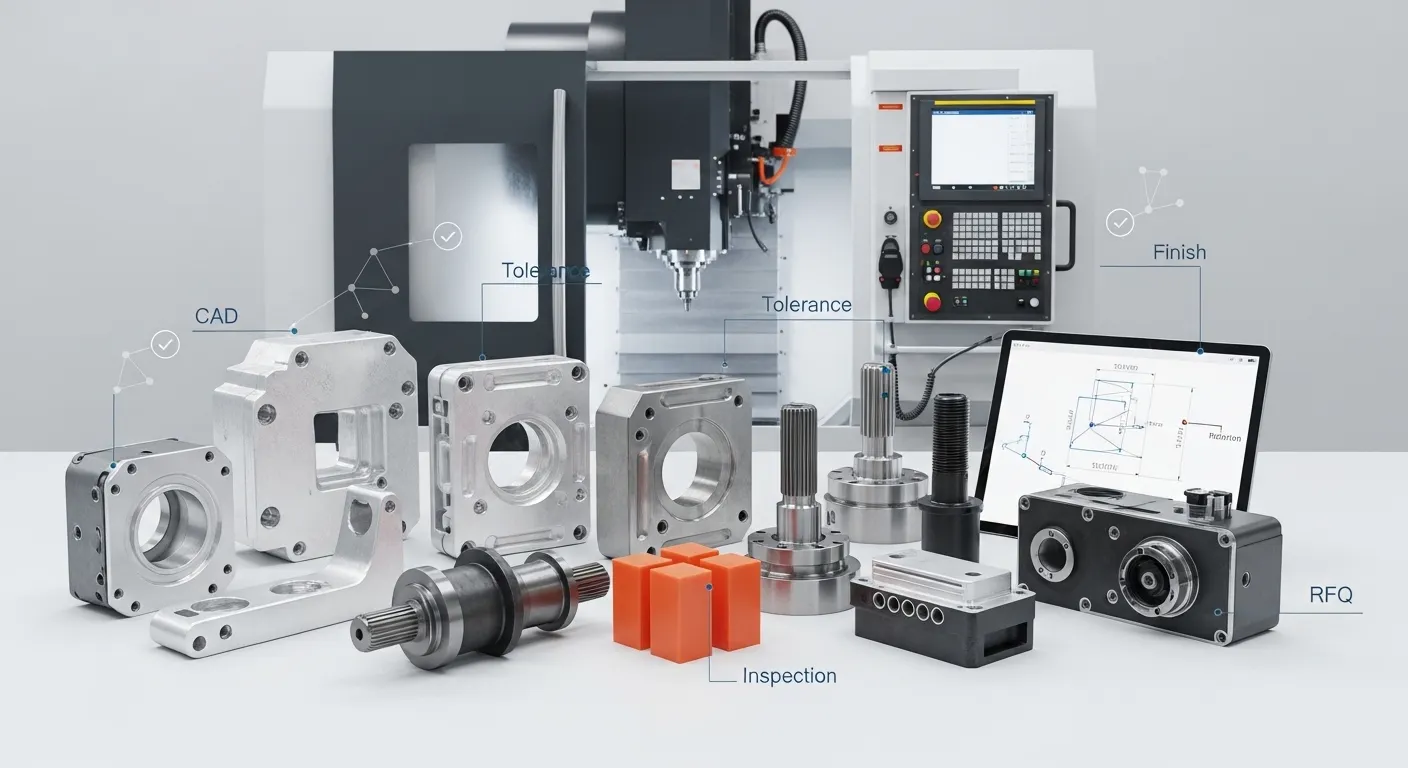
For a reliable quote, buyers should confirm the part material, quantity, tolerance requirements, surface finish, application, inspection needs, and production stage before machining starts. A 3D CAD model helps define the geometry, while a 2D drawing helps confirm critical dimensions, threads, fits, GD&T, surface roughness, and inspection requirements.
This page is for buyers who already know they need machined parts and want a practical manufacturing partner, not a basic CNC explanation. SunOn can review your drawings, discuss manufacturability, support prototype-to-production planning, and help connect CNC machining with finishing, assembly, mold making, injection molding, die casting, or OEM/ODM production when the project requires more than one process.
Precision CNC Machining for Drawing-Based Custom Parts
Precision CNC machining is most useful when a part needs controlled dimensions, repeatable geometry, functional surfaces, and material-specific machining support. For procurement teams, the key question is not only “Can this part be machined?” but also “Can the supplier understand the drawing, confirm the critical features, and manufacture the part according to the project requirement?”
SunOn supports custom CNC machining for parts such as:
- Mechanical housings and covers
- Brackets, plates, blocks, and frames
- Shafts, pins, sleeves, spacers, and bushings
- Heat sinks and electronics components
- Fixtures, jigs, and tooling components
- Prototype parts for testing and assembly checks
- Low-volume machined parts for pilot production
- Custom metal and plastic components for OEM/ODM products
If your part includes thin walls, deep pockets, small holes, threaded features, sealing faces, tight fits, undercuts, or multiple datum surfaces, it should be reviewed before production. These details affect tool access, setup planning, machining time, finishing, inspection, and final cost.
CNC Milling, Turning, and 5-Axis Machining Support
Different CNC processes fit different part geometries. Choosing the correct process early helps reduce quotation delays and manufacturability risks.
CNC milling is suitable for prismatic parts with flat surfaces, pockets, slots, holes, counterbores, and multi-face features. It is often used for housings, covers, brackets, plates, mold components, fixtures, and equipment parts.
CNC turning is suitable for round or cylindrical parts. Buyers often use turning for shafts, pins, bushings, sleeves, spacers, threaded parts, and rotating components. If a turned part also needs milled flats, holes, grooves, or cross features, the drawing should show those requirements clearly.
5-axis CNC machining can help with complex geometry, multi-side machining, curved surfaces, difficult tool access, and parts that need fewer setups. It may also support better feature alignment when multiple faces must relate to each other closely.
If your main concern is extremely strict dimensional control, review SunOn’s related page on tight tolerance CNC machining services to understand how tolerance requirements should be discussed before quoting.
Materials for Precision CNC Machined Parts
Material selection affects strength, weight, corrosion resistance, wear behavior, heat resistance, electrical performance, appearance, tolerance stability, and finishing choices. The best material depends on the part function, operating environment, quantity, and cost target.
Common CNC metal material categories include:
- Aluminum for lightweight housings, brackets, covers, panels, heat sinks, and prototypes
- Stainless steel for corrosion-resistant components and stronger functional parts
- Steel for mechanical strength, tooling, fixtures, and industrial components
- Brass and copper for conductivity, fittings, electrical parts, and decorative components
- Titanium for lightweight strength and demanding performance requirements
Engineering plastics are also widely used when buyers need insulation, lower weight, chemical resistance, friction control, or prototype validation. Common plastic machining options include ABS, POM/Delrin, PTFE, PEEK, nylon, PC, and PMMA.
For high-performance plastic components, buyers can review SunOn’s PEEK machined parts page. For broader plastic material selection, see CNC plastic machining services.
Plastic parts often need extra tolerance discussion because some materials can move, deform, or respond differently to clamping, heat, and wall thickness. Metal parts also need material-specific review, especially when strength, surface finish, coating, or corrosion resistance matters.
Tolerance, Repeatability, Finish, and Inspection Details
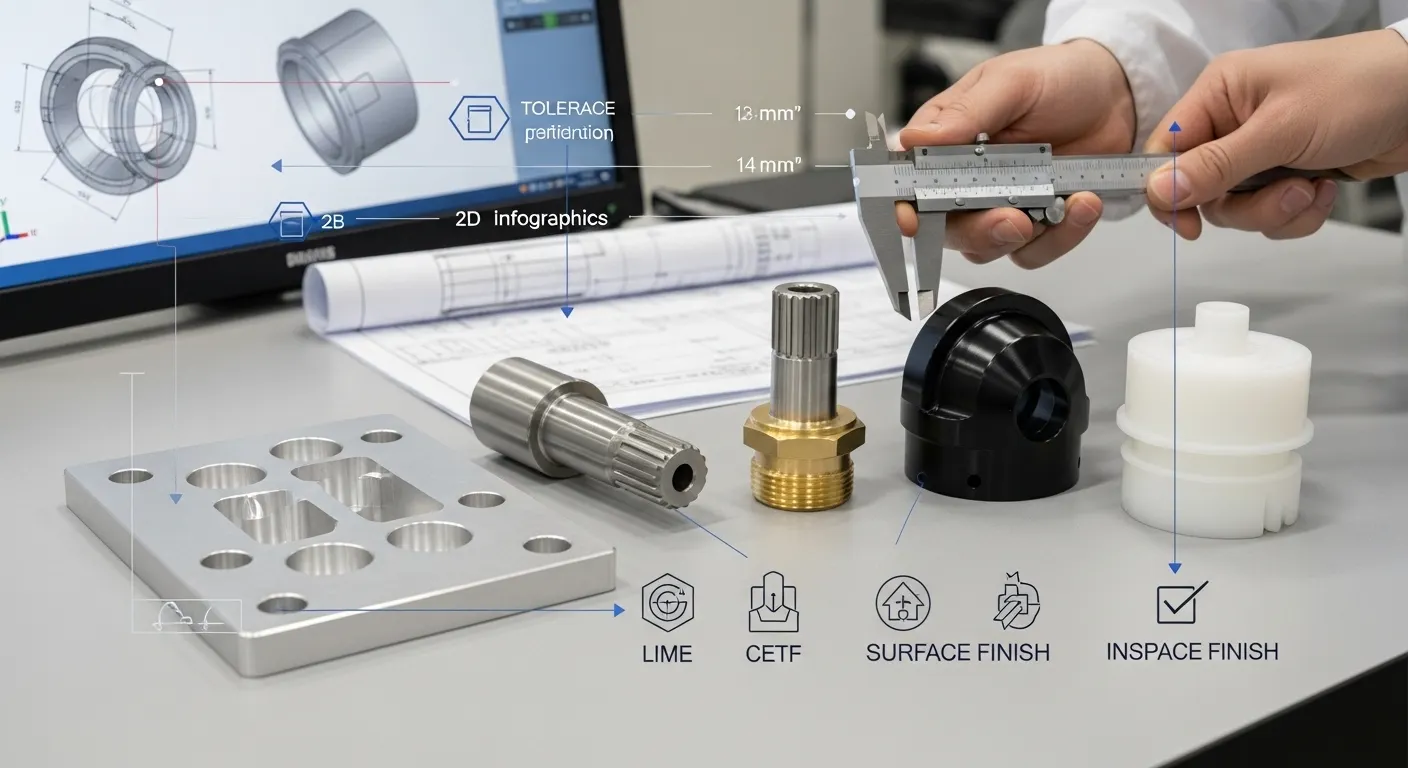
Precision CNC machining should not be treated as one fixed tolerance number. Tolerance depends on the material, part size, feature geometry, setup method, tool access, wall thickness, finishing process, and inspection method.
Buyers should identify which dimensions are truly critical. Over-tightening every feature can increase cost and review time without improving part function. Instead, use the drawing to mark:
- Critical dimensions and functional fits
- Hole and shaft tolerances
- Thread specifications
- Datum surfaces
- Flatness, perpendicularity, and parallelism needs
- Sealing surfaces or contact faces
- Surface roughness requirements
- Areas affected by coating, plating, or anodizing
- Inspection report requirements
Surface finishing should also be confirmed before quotation. Depending on the part material and function, buyers may request as-machined finish, deburring, bead blasting, polishing, brushing, anodizing, plating, powder coating, painting, or other post-processing support.
Finishes can affect both appearance and final dimensions. For example, anodizing, plating, coating, or polishing may change surface condition or fit. If the part has tight assembly requirements, finish thickness and final inspection should be discussed early.
For electronics housings, panels, covers, and related machined components, SunOn’s CNC electrical enclosure page may help buyers review enclosure-specific machining and finishing needs.
Precision CNC Machining RFQ Checklist
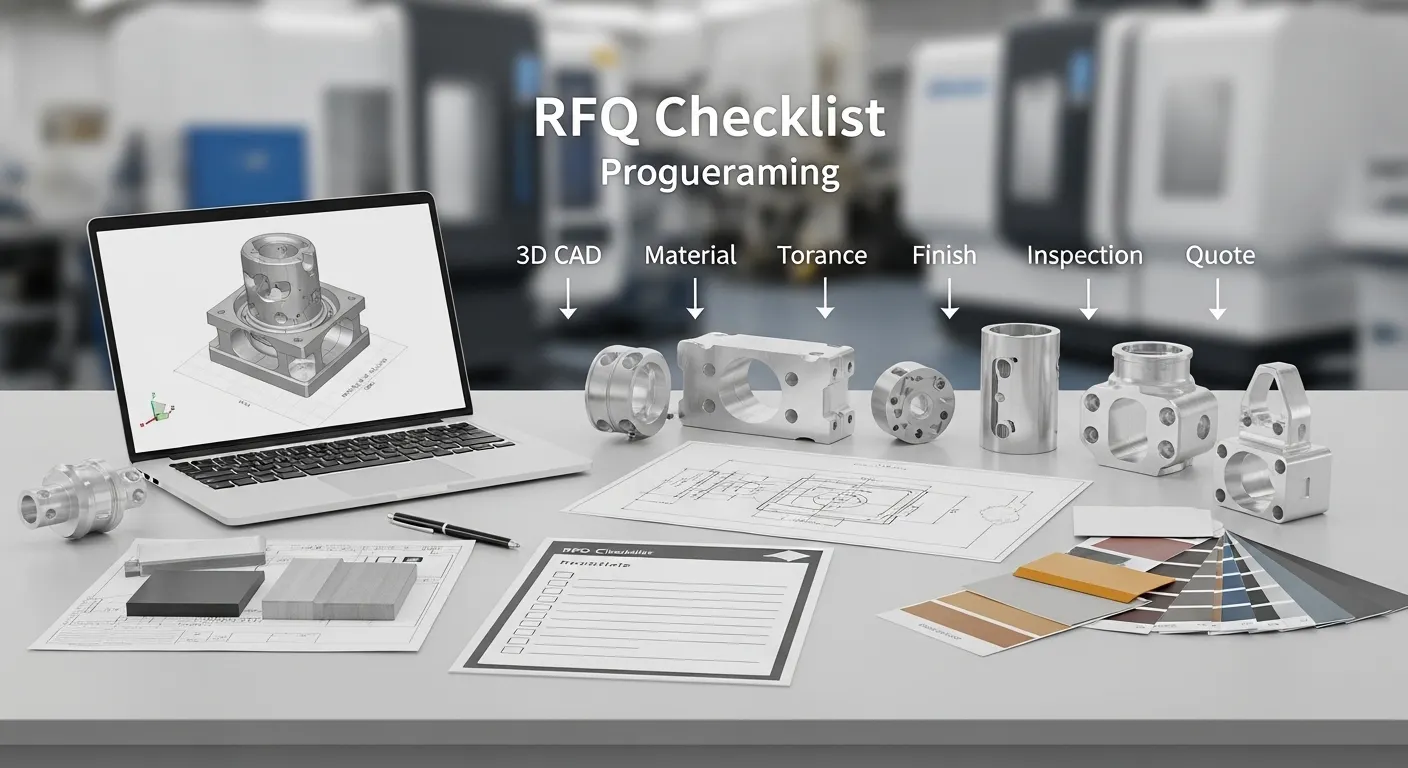
A complete RFQ helps SunOn review your project faster and reduce back-and-forth. It also helps engineers identify tolerance, material, finishing, and inspection risks before production.
| Buyer requirement | What to confirm | Why it matters | RFQ note for SunOn |
|---|---|---|---|
| Part geometry | Milling, turning, 5-axis needs, holes, slots, threads, undercuts | Affects setup, tooling, machining time, and cost | Send 3D CAD and 2D drawings |
| Material | Metal or plastic type, grade if known | Affects tolerance, finish, strength, and machining behavior | Include material grade or performance need |
| Tolerance | Critical dimensions, fits, GD&T, datum surfaces | Helps control function without overpricing non-critical areas | Mark critical tolerances clearly |
| Surface finish | As-machined, anodizing, plating, polishing, powder coating, painting | Affects appearance, corrosion resistance, wear, and final size | Specify color, coating, or finish standard if needed |
| Inspection | Dimensional check, inspection report, critical feature review | Supports quality control and buyer acceptance | State report requirements before quote |
| Quantity and stage | Prototype, small batch, pilot run, or production | Affects planning, pricing, and manufacturing route | Include current and future quantity expectations |
Prototype, Small-Batch, and Production Planning
CNC machining can support different stages of product development. For early prototypes, buyers may need fast design validation, assembly testing, fit checks, or functional samples. At this stage, the part may change after testing, so DFM feedback and material discussion are important.
For small-batch production, repeatability becomes more important. Buyers should confirm the drawing revision, inspection requirements, finish consistency, and packaging expectations. If the parts will be assembled with other components, thread quality, hole position, flatness, and surface finish should be reviewed before machining.
For production support, SunOn can help buyers consider whether CNC machining remains the best process or whether another manufacturing route may fit future volume. Some projects may continue with CNC machining. Others may later move toward plastic injection molding, die casting, sheet metal fabrication, finishing, or assembly support.
This prototype-to-production view is useful for OEM/ODM buyers who want one manufacturing partner to understand the project history instead of changing suppliers at each stage.
What Buyers Should Review Before Choosing a Supplier
A precision CNC supplier should do more than accept a file and quote a price. The right partner should help buyers check whether the drawing, material, tolerance, finish, and quantity match the project goal.
Before selecting a supplier, buyers should ask:
- Can the supplier review both 2D drawings and 3D CAD files?
- Can they discuss manufacturability before production?
- Do they understand prototype, small-batch, and production requirements?
- Can they support both metal and plastic CNC machining?
- Can they coordinate finishing and post-processing?
- Can they discuss inspection needs before quote approval?
- Can they support related manufacturing services if the project scales?
SunOn Mould is positioned for buyers who need custom manufacturing support beyond a single CNC operation. Our team can discuss CNC machining, rapid prototyping, mold making, injection molding, die casting, surface finishing, mechanical assembly, and OEM/ODM manufacturing support based on the project requirement.
What to Send for a CNC Machining Quote
To request a precision CNC machining quote, prepare as much project information as possible. A complete RFQ helps the engineering and quotation team understand the part function, manufacturing risks, and quality expectations.
Please include:
- Product or part type
- Quantity required
- Prototype, small-batch, or production stage
- Application or industry
- 2D drawing
- 3D CAD model
- Material requirement
- Material grade if known
- Tolerance requirements
- Surface finish requirement
- Color, coating, plating, anodizing, or polishing needs
- Threading, inserts, holes, slots, or undercuts
- Assembly requirements if relevant
- Inspection report requirements
- Functional testing needs if relevant
- Delivery destination
- Target schedule if relevant
- NDA, BOM, or project specification if needed
If you are unsure about the best material or process, send the part function, operating environment, and expected quantity. SunOn can review the project and discuss whether CNC machining, 5-axis machining, plastic machining, mold manufacturing, injection molding, die casting, or another process is more suitable.
Frequently Asked Questions
What files are needed for a precision CNC machining quote?
Send a 3D CAD model and a 2D drawing when possible. The CAD file defines geometry, while the drawing confirms tolerances, threads, finishes, material, critical dimensions, and inspection requirements.
Can SunOn machine both metal and plastic parts?
Yes. SunOn supports custom metal CNC machining and plastic CNC machining. Material choice should be confirmed based on strength, weight, wear, heat, insulation, appearance, and application requirements.
How should I specify CNC machining tolerances?
Mark only the critical dimensions, fits, datum surfaces, GD&T, threads, and surface roughness requirements on the drawing. This helps avoid unnecessary cost and keeps the quote focused on functional features.
Which surface finishes can be discussed?
Buyers may discuss as-machined finish, deburring, bead blasting, polishing, brushing, anodizing, plating, powder coating, painting, or other suitable finishing options based on material and application.
When should I consider 5-axis CNC machining?
Consider 5-axis machining for complex parts with multi-side features, curved surfaces, difficult tool access, or tight relationships between features on different faces.
Can SunOn support prototype and production projects?
Yes. SunOn can support CNC prototype machining, small-batch CNC machining, production planning, finishing, assembly, and broader OEM/ODM manufacturing support depending on the project requirements.
Request Precision CNC Machining Support From SunOn
Send your 2D drawings, 3D CAD files, material requirements, quantity, tolerance needs, surface finish requirements, inspection expectations, application details, delivery destination, and target schedule to SunOn Mould for CNC machining quote review. Our team can help evaluate manufacturability, discuss prototype or production planning, and support custom manufacturing from precision machined parts to finishing, assembly, mold making, injection molding, die casting, and OEM/ODM production.
