


CNC Electrical Enclosure
For custom enclosure projects, CNC machining is often suitable when the design needs precise openings, strong material, tight component fit, low-volume production, or fast design updates before tooling investment. SunOn can support buyers with CNC machining, prototyping, surface finishing, assembly-related review, and broader OEM/ODM manufacturing support when the project needs to move from sample validation to production.
Custom CNC Electrical Enclosure Manufacturing Support
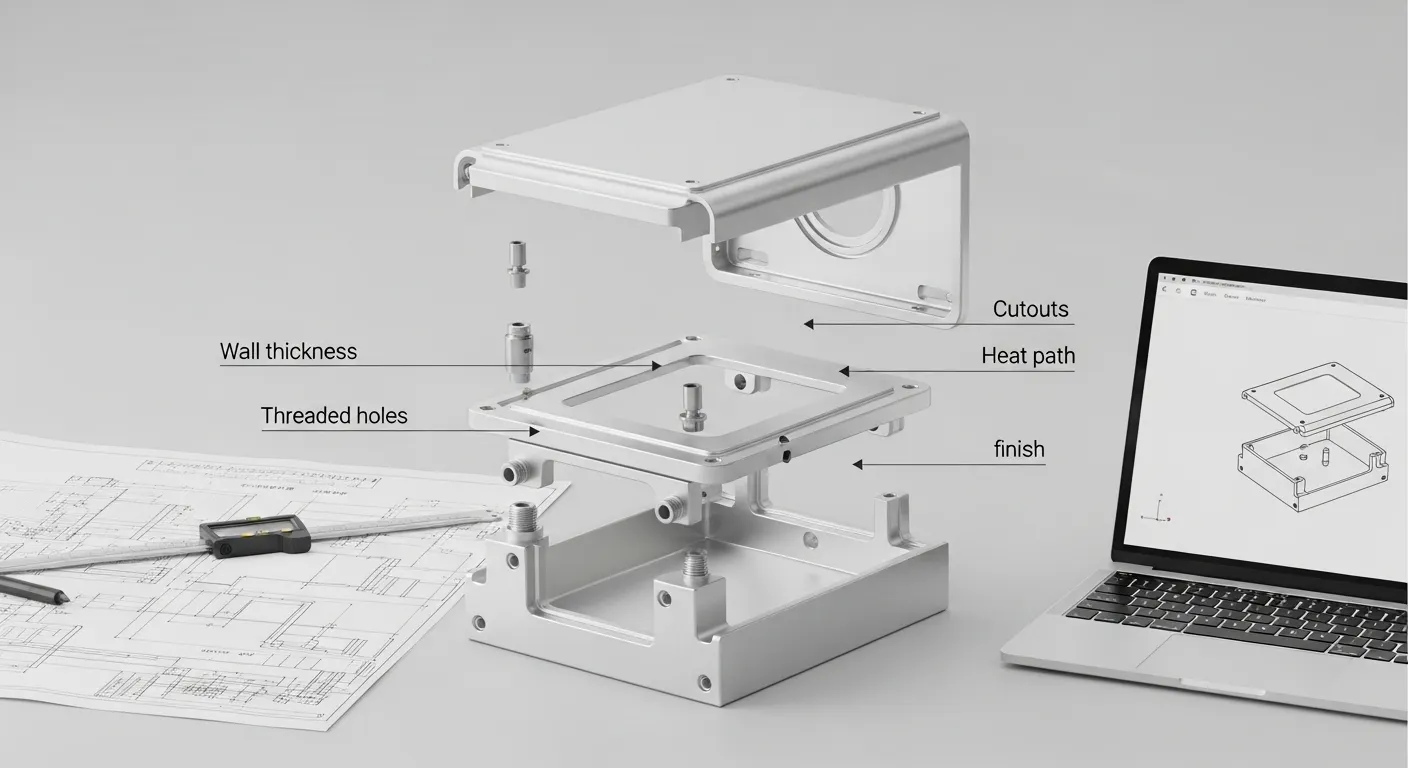
Electrical and electronic enclosures protect internal components, but they also control how the product assembles, cools, connects, and functions in real use. A small error in port position, screw hole location, or internal clearance can cause PCB interference, poor lid fit, connector misalignment, or assembly delays.
SunOn supports custom enclosure parts such as:
- Electronics housings
- Control module enclosures
- Sensor device housings
- Industrial equipment covers
- Power supply housings
- Display bezels and front panels
- Connector plates and machined covers
- Prototype aluminum enclosures
- Plastic machined enclosure parts
- OEM/ODM enclosure components
For these parts, buyers should not only ask whether a supplier can machine the shape. They should also check whether the supplier can review manufacturability, understand assembly fit, support finishing, and communicate clearly before production.
When Is CNC Machining Suitable for Electrical Enclosures?
CNC machining is a strong choice when the enclosure needs accurate features without mold tooling. It is especially useful for prototypes, functional samples, low-volume parts, and designs that may still change after testing.
CNC milling can create pockets, connector openings, mounting holes, threaded features, grooves, flat mating surfaces, and visible cosmetic surfaces. For more complex geometries, multi-axis machining may help reduce setups or improve access to angled features. CNC turning may also be used when the enclosure includes round caps, collars, sleeves, or cylindrical housing sections.
CNC may be the better option when your project needs:
- Accurate PCB mounting points
- USB, HDMI, power, sensor, or cable cutouts
- Display, keypad, or button openings
- Threaded holes or insert locations
- Thick or rigid walls
- Heat-dissipating aluminum structures
- Low-volume parts before mold tooling
- Design changes between prototype versions
- Custom geometry that standard enclosures cannot provide
However, CNC is not always the only process to consider. Sheet metal may fit larger bent box designs. Injection molding may fit high-volume plastic enclosures after the design is stable. Die casting may be reviewed for higher-volume metal housings where tooling investment makes sense. SunOn’s broader manufacturing support allows buyers to discuss process selection before committing to the wrong route.
Enclosure Design Details Buyers Should Confirm
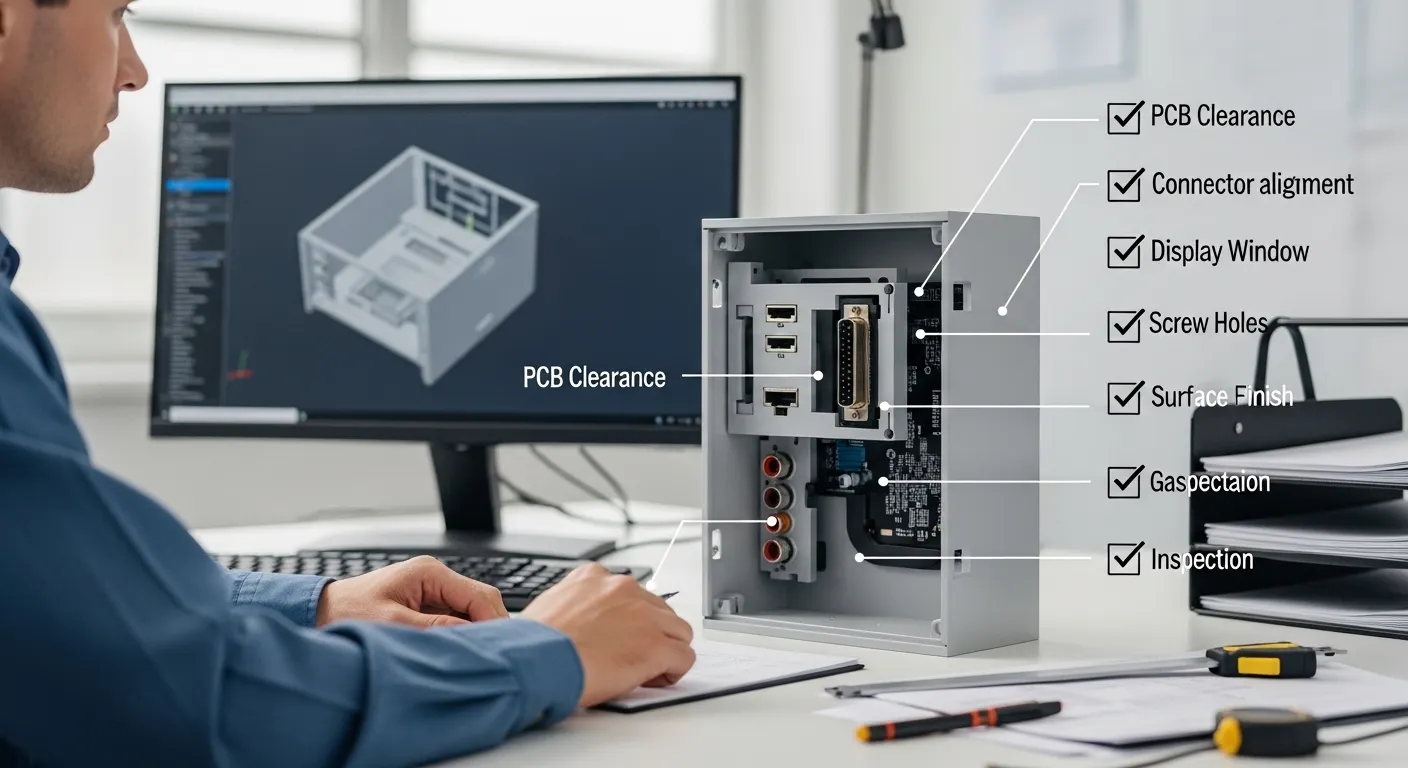
A CNC electrical enclosure should be reviewed as a functional assembly, not only as a machined part. Before quotation, buyers should identify which features are cosmetic, which are functional, and which dimensions are critical for assembly.
Important design details include:
- External size and internal clearance
- Wall thickness and pocket depth
- Internal corner radius limits
- PCB size and mounting hole positions
- Connector cutouts and edge clearance
- Display, keypad, switch, and button openings
- Cable entry points and strain relief areas
- Lid, base, cover, or panel fit
- Screw holes, tapped holes, and inserts
- Gasket grooves or sealing surfaces if required
- Vent openings or heat-dissipation features
- EMI or shielding expectations
- Surface finish and cosmetic requirements
- Inspection requirements for critical dimensions
Wall thickness is especially important. Very thin walls may deform, vibrate, or create machining risk. Very thick walls may increase machining time and material use. Internal pockets and sharp corners also need review because CNC tools have physical diameter limits. If the design includes tight internal corners, the drawing should show acceptable radii or relief areas.
CNC Electrical Enclosure RFQ and Design Checklist
| Buyer requirement | What to specify | Why it matters | SunOn review point |
|---|---|---|---|
| Enclosure size | External and internal dimensions | Confirms component clearance and assembly fit | Review wall thickness, pockets, and cover fit |
| Cutouts | Connector, display, switch, cable, or vent openings | Prevents port misalignment and assembly interference | Review hole size, location, edge distance, and tool access |
| Material | Metal or plastic material requirement | Affects strength, weight, insulation, heat, and finish | Review material-process fit and application needs |
| Critical tolerance | Key dimensions only | Controls assembly fit and inspection focus | Review realistic tolerance based on geometry and material |
| Surface finish | Anodizing, coating, polishing, blasting, plating, or color need | Affects appearance, corrosion resistance, and final dimensions | Review finish impact on mating areas and threaded features |
| Quantity | Prototype, small batch, or production volume | Helps select CNC, molding, die casting, or sheet metal | Review cost-effective manufacturing route |
| Assembly needs | Threads, inserts, screws, gasket, PCB, or mating parts | Reduces fit and rework risk | Review assembly sequence and inspection points |
| Inspection | Dimensional report, thread check, or fit check | Supports procurement and engineering approval | Review quality expectations before production |
Material Options for CNC Electrical Enclosures
Material selection should match the enclosure’s function. A housing for a handheld device, industrial controller, power product, or sensor unit may need different strength, weight, heat, insulation, and finish properties.
Aluminum is a common choice for CNC machined electronic enclosures. It offers a useful balance of machinability, strength, weight, and heat dissipation. It can also support common cosmetic and protective finishes when suitable for the design.
Stainless steel may be considered when the enclosure needs higher strength, corrosion resistance, or a more rugged structure. It can be more demanding to machine than aluminum, so geometry, tolerance, and finish requirements should be reviewed carefully.
Engineering plastics may fit projects where insulation, lower weight, or non-conductive performance matters. Plastic machined housings, covers, spacers, and internal parts may be useful for electronics prototypes and functional assemblies. Buyers can review related options through SunOn’s CNC plastic machining services.
Delrin and PEEK may be used for internal functional parts, insulating components, spacers, or high-performance machined features where the application requires them. For related material guidance, see SunOn’s pages on Delrin CNC machining and PEEK machined parts.
Cutouts, Threads, Heat, and EMI Considerations
Electrical enclosure buyers often focus on the outside shape first. In production, the risk often comes from smaller features. Connector openings must match real component positions. Screw holes must align with the PCB or mating cover. Threads must be strong enough for assembly. Cable openings need enough clearance without weakening the wall.
Heat dissipation is another important design point. Aluminum housings may help transfer heat from internal components. Some designs may need thicker contact surfaces, machined heat paths, fins, vents, or mounting areas for thermal pads. These details should be shown in the CAD model and drawing, not left as general notes.
EMI and shielding needs should also be discussed early. Material choice, lid contact, grounding points, coating, surface contact, and assembly design may affect shielding strategy. SunOn can review machining and manufacturing details, while product-level EMI validation should follow the buyer’s engineering and testing requirements.
Tolerance, Finish, and Inspection for Enclosure Fit
Tolerance should be assigned based on function. Not every surface needs a tight tolerance. Over-tolerancing can increase cost, machining time, and inspection complexity. Under-tolerancing can cause poor port alignment, loose covers, PCB interference, or visible gaps.
Critical dimensions may include:
- PCB mounting hole positions
- Connector cutout locations
- Lid and base mating surfaces
- Threaded hole positions
- Display window dimensions
- Gasket or sealing surface geometry
- Assembly interfaces with other parts
For projects with demanding fit, buyers can review SunOn’s tight tolerance CNC machining services to understand how precision requirements should be discussed before quotation.
Surface finish also affects both appearance and function. Enclosures may need anodizing, bead blasting, brushing, polishing, plating, powder coating, painting, or marking, depending on material and application. Coating thickness and cosmetic requirements should be considered around threads, mating surfaces, sliding areas, and connector openings.
Inspection expectations should be agreed before production. Buyers may request dimensional checks, thread checks, visual inspection, fit checks, or inspection reports for critical dimensions. Clear drawings help the manufacturing team focus on the features that affect assembly and product performance.
Prototype, Small Batch, or Production Planning
CNC machining is often the right starting point when the enclosure design is still being tested. It allows engineers to check PCB fit, connector access, thermal behavior, assembly method, user handling, and visual appearance before committing to tooling.
For small-batch production, CNC can remain practical when the enclosure is complex, the quantity is limited, or the design requires frequent updates. For higher-volume projects, SunOn can help buyers review whether injection molding, die casting, sheet metal fabrication, or a hybrid process may be more suitable.
This prototype-to-production thinking is important for hardware startups and OEM/ODM teams. A design that works for ten CNC samples may need changes before mass production. Draft angles, wall thickness, ribs, bosses, fastening methods, finish selection, and tooling strategy should be reviewed before scaling.
Common Risks in Custom Enclosure Projects
Many enclosure problems appear late because the RFQ did not include enough application detail. A CAD model may show the shape, but it may not explain which surfaces are cosmetic, which holes are critical, or how the part will assemble.
Common risks include:
- Connector openings that do not match real hardware
- Internal pockets that create weak walls
- Sharp internal corners that cannot be machined as designed
- Coating thickness causing tight fit problems
- Missing thread or insert specifications
- Unclear cosmetic surface requirements
- Heat or EMI needs discussed too late
- Quantity changing without process review
- No inspection requirement for critical features
A good RFQ reduces these risks. It allows SunOn to review the part from both manufacturing and assembly viewpoints before quoting.
What to Send for a CNC Electrical Enclosure Quote
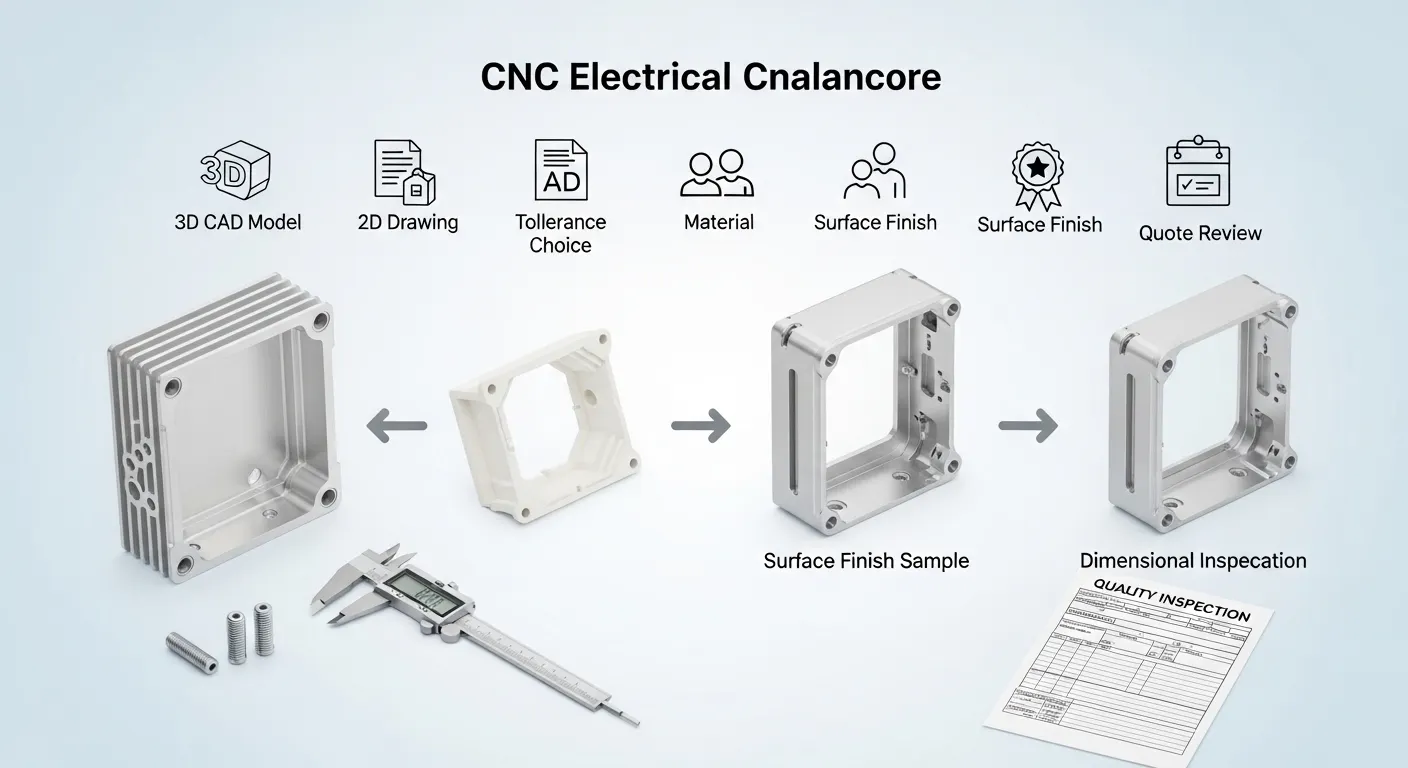
For an accurate CNC enclosure quote, send as much project information as possible. Clear files and requirements help reduce back-and-forth and improve manufacturability review.
Prepare the following details:
- Product or part type
- Prototype, small-batch, or production stage
- Quantity required
- Application or industry
- 3D CAD model
- 2D drawing with critical dimensions
- Material requirement and grade if known
- Wall thickness or internal clearance requirements
- Connector, display, switch, and cable cutout details
- Threading, inserts, holes, slots, or assembly features
- Surface finish, color, coating, plating, or anodizing needs
- Tolerance requirements for critical dimensions
- Inspection report or fit-check requirements
- Functional testing needs if relevant
- Delivery destination and target schedule
- NDA, BOM, or project specification if required
If the material or process is not final, SunOn can review the application, quantity, and performance needs before recommending a suitable manufacturing direction.
Why Work With SunOn for Custom Enclosure Manufacturing?
SunOn Mould supports buyers who need more than one machining operation. Many enclosure projects require CNC machining, prototyping, surface finishing, assembly review, and future production planning. Some projects may later require plastic injection molding, die casting, mold manufacturing, sheet metal fabrication, or OEM/ODM support.
This broader manufacturing scope helps buyers avoid treating the enclosure as an isolated part. Instead, the project can be reviewed around function, fit, finish, quantity, and production stage.
SunOn is a suitable partner for buyers who need:
- Custom CNC machined metal or plastic enclosure parts
- Prototype and low-volume machining support
- Manufacturing review before production
- Surface finishing and post-processing discussion
- Process selection between CNC, molding, die casting, or sheet metal
- OEM/ODM manufacturing support for product development
Frequently Asked Questions
Can CNC machining be used for electrical enclosures?
Yes. CNC machining is suitable for custom electrical enclosures that need accurate cutouts, threaded holes, mounting points, machined pockets, and strong material. It is especially useful for prototypes, functional samples, and low-volume production.
Is CNC better than sheet metal for enclosures?
CNC is often better for complex geometry, precise machined features, thick walls, and tight component fit. Sheet metal may be better for larger bent boxes, simple cabinet shapes, or designs based mainly on folded panels.
Which material is best for a CNC electrical enclosure?
Aluminum is common for lightweight strength and heat dissipation. Stainless steel may fit rugged use. Engineering plastics may help with insulation or lower weight. The best material depends on heat, shielding, strength, finish, and assembly needs.
What files are needed for quotation?
Send a 3D CAD model, 2D drawing, material requirement, quantity, finish, tolerance notes, cutout details, and inspection needs. Include PCB, connector, or assembly information when it affects fit.
Can SunOn machine connector cutouts and threaded holes?
SunOn can review custom enclosure designs with connector openings, display windows, screw holes, tapped holes, inserts, slots, and mounting features. Critical dimensions should be clearly marked on the drawing.
Can CNC enclosures be used for production?
Yes, CNC can support prototypes and low-volume production. For higher-volume projects, buyers should review whether CNC machining, injection molding, die casting, or sheet metal fabrication is the best long-term process.
Request a CNC Electrical Enclosure Quote
Share your CNC electrical enclosure drawings with SunOn for manufacturing review and quotation. Send your 3D CAD model, 2D drawing, material requirement, quantity, prototype or production stage, tolerance notes, finish requirement, cutout details, threading or insert needs, inspection expectations, delivery destination, and any NDA, BOM, or project specification.
SunOn can help review the enclosure for CNC machining, DFM, surface finishing, prototype support, and future OEM/ODM production planning.
