


Custom CNC Milling Services
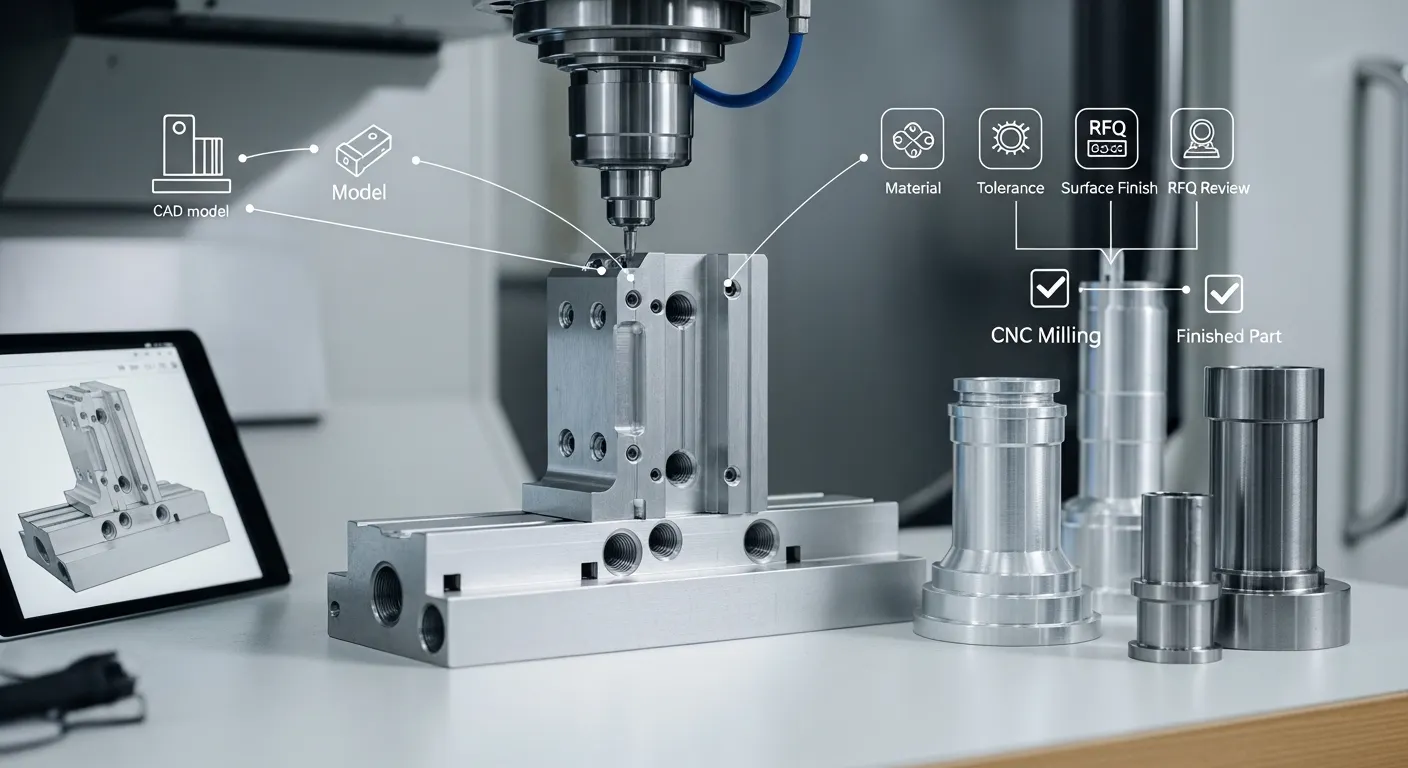
This service is suitable for prismatic parts such as brackets, housings, plates, fixtures, covers, heat sinks, tooling components, and machined enclosure parts. Buyers can use CNC milling for prototypes, small-batch parts, bridge production, and production support when tooling is not yet required or when the part geometry is better suited to machining.
If your project needs engineering review, material advice, surface finishing, or prototype-to-production manufacturing support, SunOn can help evaluate the milling requirements before production starts.
CNC Milled Parts SunOn Can Support
CNC milling is often the right choice when a part starts from a block, plate, billet, or sheet and needs material removed from one or more sides. It is especially useful for parts with flat surfaces, controlled holes, machined pockets, mounting features, and assembly interfaces.
Common CNC milled parts include:
- Aluminum brackets and mounting plates
- Electronic housings and machined covers
- Industrial equipment components
- Automation machine parts
- Heat sinks and thermal management parts
- Tooling plates, jigs, and fixtures
- Prototype plastic or metal parts
- Custom panels with slots, holes, and threaded features
- Low-volume OEM/ODM mechanical components
For enclosure-style parts, buyers can also review SunOn’s related CNC electrical enclosure support when the project involves panels, housings, covers, mounting holes, connectors, or assembly fit.
What Features Matter in CNC Milling?
A CNC milling quote depends on more than part size and quantity. The geometry affects machining time, setup planning, tool access, tolerance risk, and finishing needs.
Important features to confirm include:
- Deep pockets or narrow slots
- Internal corner radius requirements
- Thin walls or thin floors
- Flatness requirements
- Hole position and hole depth
- Threaded holes and tapped features
- Counterbores and countersinks
- Side holes or angled features
- Undercuts or hard-to-reach areas
- Inserts, pins, or assembly interfaces
- Cosmetic surface requirements
If a part requires machining on several sides, the engineering team may review whether 3-axis, 4-axis, or 5-axis machining is more suitable. The goal is not only to cut the shape, but also to reduce setup risk and keep critical features aligned.
When Should Buyers Choose CNC Milling Instead of CNC Turning?
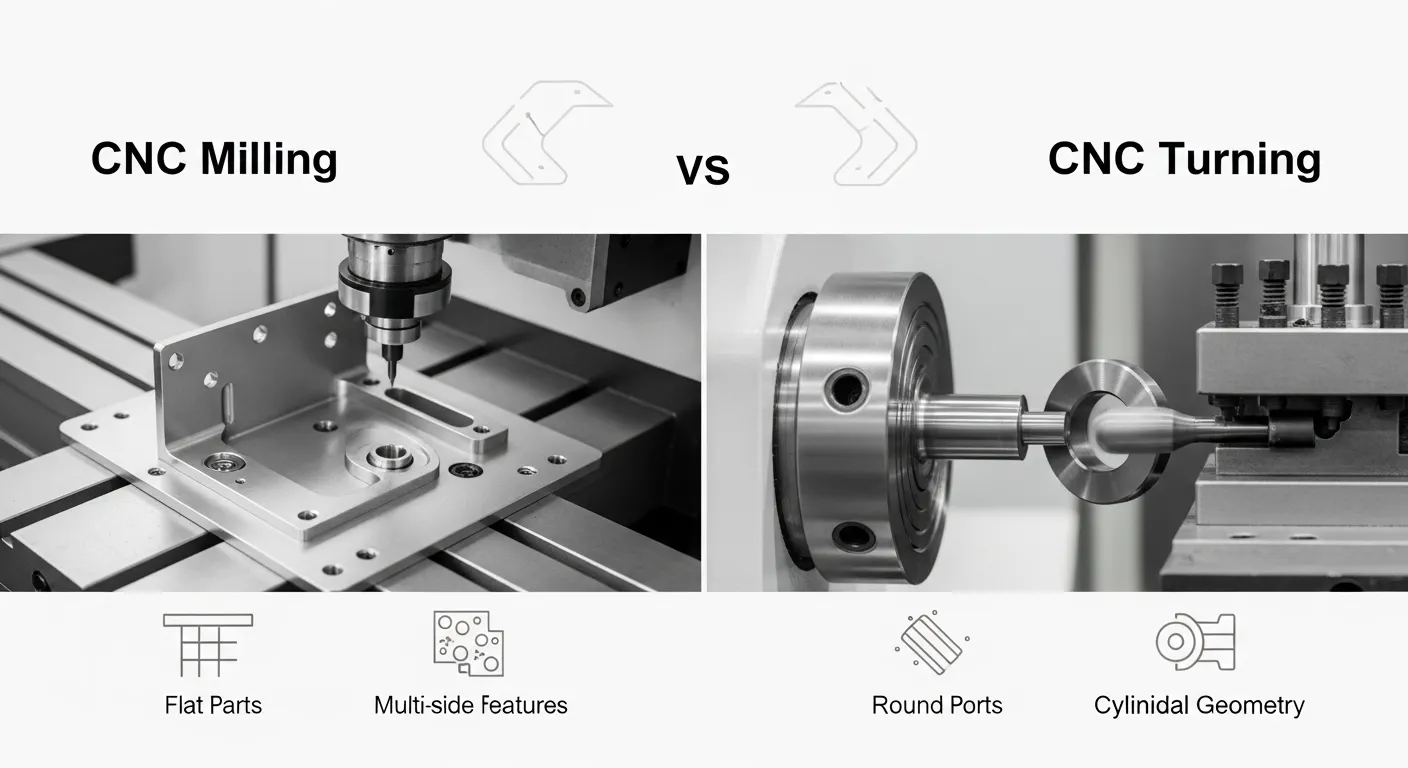
CNC milling and CNC turning both produce precision machined parts, but they fit different geometries. Milling is usually better for block-like, flat, pocketed, or multi-feature parts. Turning is usually better for round, cylindrical, shaft-like, or tube-like parts.
| Buyer requirement | Better process to review | Why it matters |
|---|---|---|
| Flat plate with holes, slots, or pockets | CNC milling | Milling can machine flat faces, pockets, and mounting features efficiently. |
| Bracket, housing, cover, or fixture | CNC milling | These parts often need multi-side machining and controlled flat surfaces. |
| Shaft, pin, bushing, spacer, or sleeve | CNC turning | Turning is more suitable for round parts with concentric diameters. |
| Round part with cross holes or flats | Turning plus milling review | The part may need turning first and secondary milling features. |
| Complex multi-side prismatic part | 4-axis or 5-axis milling review | Multi-side machining can reduce repeated setups. |
| Prototype with uncertain final process | CNC machining review | Milling may be used before mold making, casting, or production tooling. |
For cylindrical components, buyers can compare requirements with SunOn’s CNC turning services before preparing the RFQ.
CNC Milling for Prototype, Small-Batch, and Production Projects
CNC milling is useful at several stages of product development. For early prototypes, it helps buyers test size, assembly fit, mounting points, mechanical function, and material behavior. For small-batch production, it can support market testing, pilot builds, spare parts, and low-volume OEM components.
When a project later moves toward higher-volume production, SunOn can also discuss related manufacturing routes such as mold making, injection molding, die casting, finishing, assembly, or OEM/ODM production support. This helps buyers avoid sourcing each stage from unrelated suppliers.
Typical project stages include:
- Prototype machining: for design validation, functional testing, and engineering samples.
- Small-batch CNC machining: for pilot runs, trial assembly, or low-volume commercial parts.
- Bridge production: for parts needed before tooling is ready.
- Production support: for machined parts, fixtures, jigs, tooling components, or custom OEM parts.
The best process depends on geometry, material, tolerance, finish, quantity, and target application.
Materials for Custom CNC Milled Parts
SunOn supports CNC machining projects involving metal and plastic materials. The final material should be confirmed by drawing requirements, working environment, mechanical load, temperature, electrical needs, appearance, and surface finish.
Common material groups include:
- Aluminum: suitable for lightweight brackets, housings, heat sinks, plates, prototypes, and machined covers.
- Stainless steel: suitable for stronger or corrosion-resistant parts where weight and machining cost are acceptable.
- Brass and copper: often used for electrical, conductive, decorative, or precision mechanical components.
- Titanium: considered when strength-to-weight ratio and corrosion resistance are important.
- Engineering plastics: useful for lightweight, insulating, wear-resistant, or prototype components.
Plastic CNC milling projects may involve ABS, PC, POM/Delrin, nylon, PMMA, PTFE, PEEK, or other engineering plastics depending on the application. For plastic-specific machining considerations, buyers can review SunOn’s CNC plastic machining services.
Tolerance, Flatness, and Surface Finish Details to Confirm
Not every dimension needs a tight tolerance. Over-specifying tolerances can increase machining time, inspection effort, and cost. Buyers should clearly mark critical dimensions on the 2D drawing and separate them from general dimensions.
Important tolerance details include:
- Critical hole diameter and hole position
- Flatness for sealing or assembly surfaces
- Parallelism or perpendicularity requirements
- Fit between mating parts
- Thread size and thread depth
- Bearing, pin, or insert areas
- Cosmetic surfaces versus non-visible surfaces
Surface finish also affects the quote. Some parts only need deburring or an as-machined surface. Others may need anodizing, plating, powder coating, polishing, brushing, bead blasting, painting, or other post-processing.
For tighter tolerance and inspection-sensitive projects, buyers can compare related requirements with SunOn’s precision CNC machining services.
DFM Review Before CNC Milling
A manufacturability review helps reduce avoidable machining problems before production. SunOn’s team can review drawings and CAD files to identify areas that may affect cost, machining access, finish, tolerance, or assembly.
Common DFM discussion points include:
- Whether sharp internal corners can be adjusted with a practical radius
- Whether deep pockets need design changes for tool access
- Whether thin walls may deform during machining
- Whether tolerance callouts are realistic for the function
- Whether holes, slots, and threads are reachable from the planned setup
- Whether finishing may affect dimensions or appearance
- Whether another process should be reviewed for future production
This review is especially useful for new product development teams, hardware startups, and OEM/ODM buyers preparing parts for prototype testing or supplier comparison.
What Should Buyers Send for a CNC Milling RFQ?
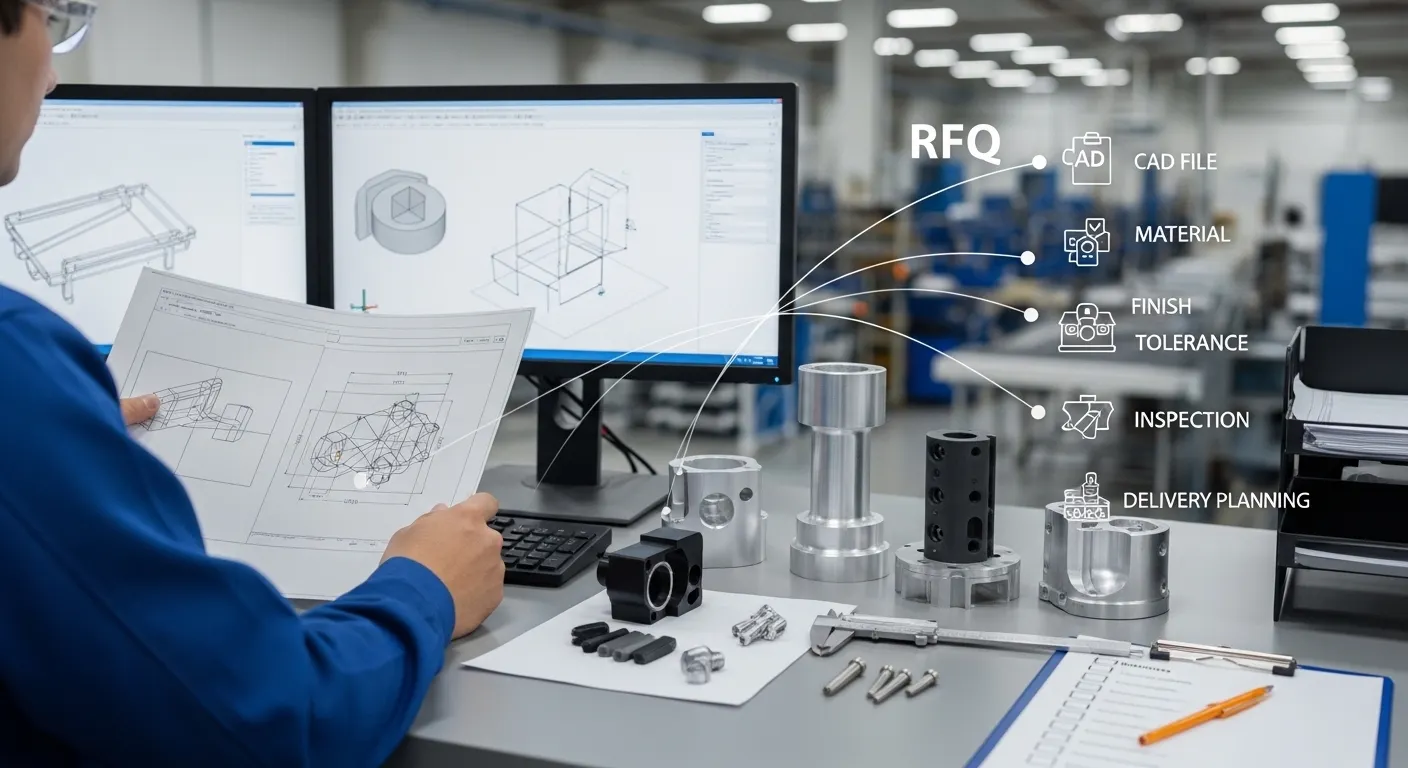
A clear RFQ helps SunOn review the project faster and provide more useful feedback. Missing drawings, unclear tolerances, or incomplete material details can delay the quote or create misunderstandings during production.
Before contacting SunOn, prepare:
- Product or part name
- Application or industry
- Prototype, small-batch, or production stage
- Estimated quantity
- 3D CAD model
- 2D technical drawing
- Material requirement and grade if known
- General and critical tolerance requirements
- Surface finish requirement
- Color, coating, plating, anodizing, or polishing requirement
- Holes, slots, pockets, threads, inserts, or assembly notes
- Inspection report requirement if needed
- Functional testing requirement if relevant
- Delivery destination
- Target schedule if relevant
- NDA, BOM, or project specification if required
If you are unsure whether the part should be milled, turned, molded, cast, or fabricated, send the available files and explain the product function. The team can help review the process direction.
Why Work With SunOn for CNC Milling Projects?
SunOn Mould is a custom manufacturing partner for global buyers that need more than a single machining operation. Many projects require CNC machining first, then finishing, assembly, mold making, injection molding, die casting, or production support later.
This is useful when buyers want one supplier to understand the product from prototype to production. It also helps when parts must be reviewed for manufacturability, material behavior, surface appearance, assembly fit, and future production planning.
SunOn’s support can be especially useful for:
- OEM/ODM product companies developing new parts
- Engineers testing mechanical designs
- Procurement teams shortlisting China manufacturing suppliers
- Hardware startups preparing functional prototypes
- Industrial buyers sourcing custom metal or plastic components
- Electronics, automation, machinery, new energy, and consumer product teams
The goal is to help buyers confirm the right manufacturing route before they commit to production.
Frequently Asked Questions
What types of parts are best for CNC milling?
CNC milling is suitable for prismatic parts with flat faces, pockets, slots, mounting holes, threaded holes, and multi-side features. Common examples include brackets, housings, plates, fixtures, covers, heat sinks, and prototype components.
Can SunOn mill both metal and plastic parts?
Yes. SunOn supports CNC machining projects involving metals and engineering plastics. Buyers should confirm the application, material requirement, grade if known, tolerance, surface finish, and quantity before quotation.
Should my part be CNC milled or CNC turned?
Choose milling for flat, block-like, pocketed, or multi-feature parts. Choose turning for round parts such as shafts, pins, bushings, and sleeves. Some parts may need both turning and milling.
What files are needed for a CNC milling quote?
Send a 3D CAD model and a 2D drawing if available. Also include material, quantity, tolerance, finish, application, threads, inserts, inspection needs, and delivery destination.
Can SunOn review my design before machining?
Yes. SunOn can review drawings and CAD files for manufacturability, material selection, tolerance risks, machining access, surface finish, and process direction before quotation.
Can CNC milling support prototypes and production parts?
Yes. CNC milling can support prototypes, small batches, bridge production, and production components. The best approach depends on part geometry, quantity, material, tolerance, finish, and long-term production plan.
Request a CNC Milling Quote From SunOn
Share your 2D drawing, 3D CAD file, quantity, material requirement, tolerance notes, surface finish, application, inspection needs, and delivery destination with SunOn Mould. Our team can review the part geometry, confirm whether CNC milling is suitable, discuss DFM points, and help you plan prototype, small-batch, or production manufacturing support.
