


CNC Turning Services
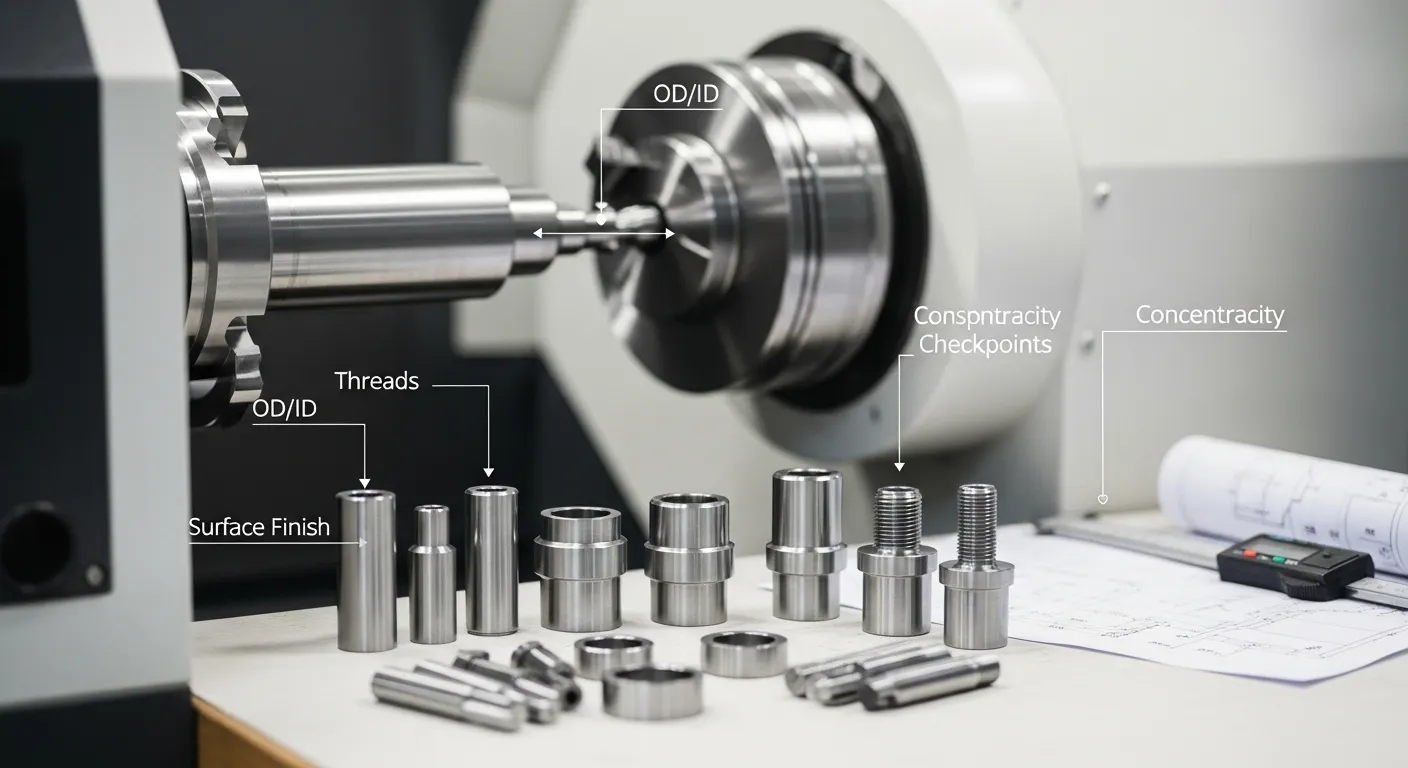
CNC turning is often the right process when the part has a central axis, controlled outer diameter, inner bore, thread, groove, shoulder, or smooth round surface. Before requesting a quote, buyers should confirm the material, quantity, tolerance, surface finish, inspection needs, 2D drawing, 3D CAD file, and any secondary milling features.
SunOn supports CNC turning as part of a wider custom manufacturing service that includes CNC milling, 5-axis machining, prototyping, mold making, injection molding, die casting, surface finishing, assembly, and OEM/ODM production support.
CNC Turning for Shafts, Pins, Bushings, and Threaded Parts
CNC turning is best suited for parts where the workpiece rotates and the cutting tool shapes the diameter, bore, thread, groove, or end face. This makes it a practical choice for components that need round geometry and repeatable dimensional control.
Common CNC turned parts include:
- Shafts and stepped shafts
- Pins and dowel-style parts
- Bushings and sleeves
- Spacers and collars
- Threaded rods and threaded inserts
- Nozzles, fittings, and connectors
- Bearing seats and cylindrical housings
- Round parts with grooves, chamfers, shoulders, or bores
For these parts, small details can affect fit and function. A shaft may need a controlled diameter and surface finish. A bushing may need accurate inner and outer diameters. A threaded part may need a defined thread standard, thread length, and mating requirement. A concentric part may need clear runout or alignment requirements on the drawing.
SunOn’s CNC machining team can review these details during RFQ and DFM discussion, so the process, material, tolerance, and finishing route are matched to the actual use of the part.
When Should Buyers Choose CNC Turning?
Buyers should choose CNC turning when the main shape of the part is round, tubular, or rotational. It is commonly used when the most important dimensions are outer diameter, inner diameter, bore depth, thread, groove, shoulder length, or surface finish along a cylindrical face.
CNC milling is usually better for block-shaped, flat, pocketed, or highly prismatic parts. However, many real components need both turning and milling. A turned shaft may also need a flat. A round connector may need side holes. A sleeve may need slots, keyways, or cross-drilled features.
In these cases, SunOn can review whether the part should use:
- CNC turning for round geometry
- Secondary CNC milling for flats, slots, holes, or side features
- CNC turning plus milling for mixed geometry
- Broader precision CNC machining services when tighter fit, more complex features, or inspection planning is required
The key decision is not only “turning or milling.” Buyers should also confirm how many setups are needed, which features are critical, and which surfaces affect assembly or performance.
CNC Turning Part Suitability Checklist
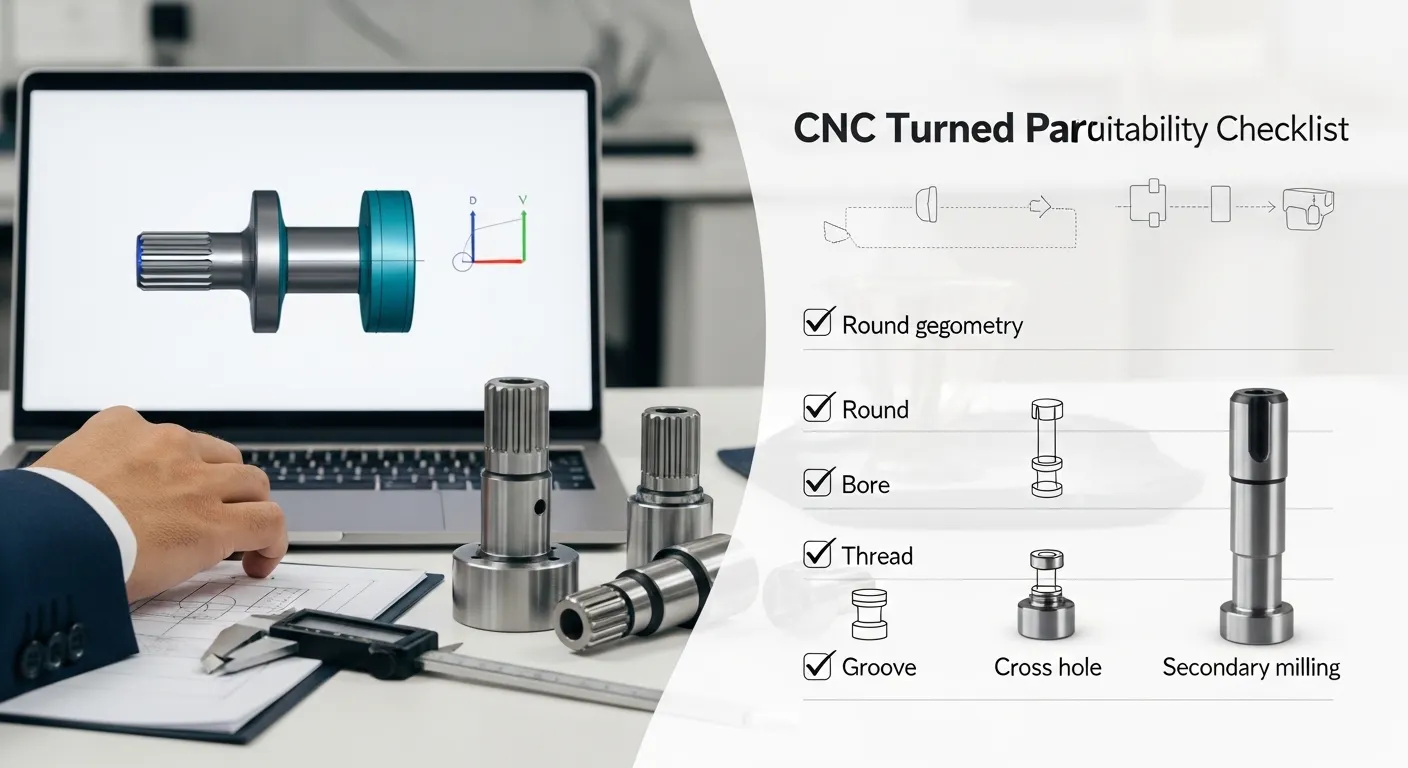
Use this checklist before sending a CNC turning RFQ. It helps engineers and purchasing teams prepare clearer information and avoid avoidable quote delays.
| Part requirement | CNC turning fit | What to confirm in RFQ |
|---|---|---|
| Round or cylindrical main shape | Strong fit | Outer diameter, length, shoulders, chamfers |
| Shaft, pin, sleeve, or bushing | Strong fit | OD/ID tolerance, mating parts, surface finish |
| Internal or external threads | Strong fit | Thread standard, thread length, fit requirement |
| Bore or through-hole | Strong fit | Bore diameter, depth, tolerance, finish |
| Grooves or undercuts | Usually suitable | Groove width, depth, location, tool access |
| Cross holes, flats, or slots | May need secondary milling | Hole position, flat size, slot width, setup needs |
| Tight concentricity or runout | Needs clear review | GD&T, inspection method, critical datum |
| Long slender part | Needs DFM review | Length-to-diameter ratio and bending risk |
| Thin wall section | Needs DFM review | Wall thickness, material, deformation risk |
| Cosmetic or smooth surface | Suitable with finish planning | Surface roughness, polishing, coating, plating |
| Prototype or small batch | Suitable | Quantity, design validation purpose |
| Production order | Suitable with planning | Repeatability, inspection, packaging, finish control |
Materials for CNC Turned Parts
Material selection affects machinability, tolerance stability, surface finish, strength, corrosion resistance, wear, weight, and cost. Buyers should send the required material grade if it is already specified. If the grade is not fixed, SunOn can review the application and discuss suitable options.
Common metal options for turned parts may include aluminum, stainless steel, steel, brass, copper, and titanium, depending on the part function and buyer specification. Aluminum is often selected for lightweight parts. Stainless steel may be considered for corrosion resistance or strength. Brass and copper can be useful for electrical, fitting, or wear-related components, depending on the design.
Engineering plastics can also be turned for lightweight, insulating, low-friction, or chemical-resistant parts. Options may include POM/Delrin, PEEK, PTFE, ABS, nylon, PC, PMMA, and related plastics based on project needs. For plastic machined parts, buyers can also review SunOn’s CNC plastic machining services. For high-performance plastic components, see SunOn’s page on PEEK machined parts.
For any material, the RFQ should confirm the grade, quantity, finish, tolerance, operating environment, and whether the part contacts heat, chemicals, friction, load, or mating components.
Tolerance, Concentricity, Surface Finish, and Inspection
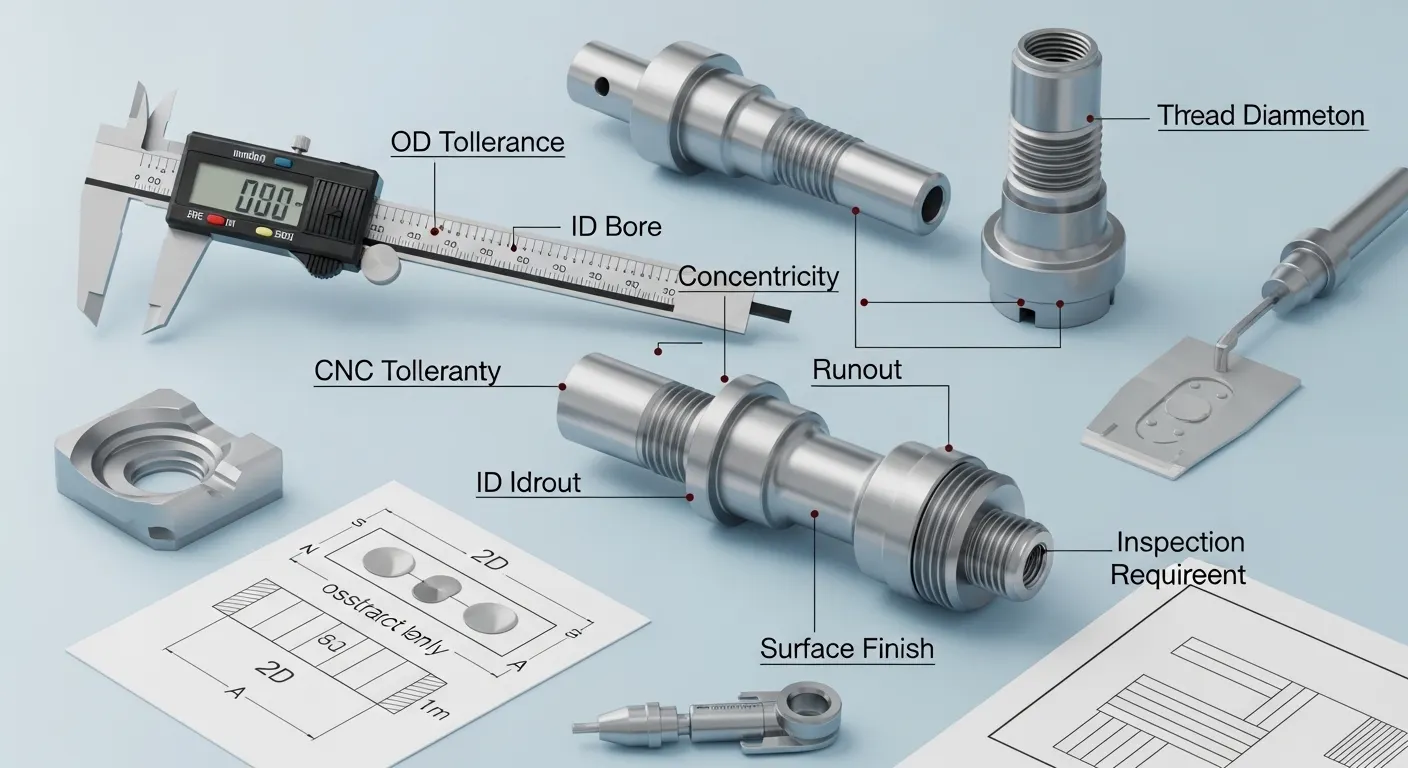
CNC turned parts often fail or pass based on details that look small on a drawing. A shaft may not fit if the diameter or surface finish is wrong. A bushing may fail if the bore is out of tolerance. A threaded connector may cause assembly problems if thread details are unclear.
Buyers should identify critical features before quoting, such as:
- Outer diameter and inner diameter tolerance
- Bore depth and bore finish
- Shoulder length and face flatness
- Internal or external thread standard
- Concentricity between OD and ID
- Runout requirement
- Groove width and location
- Surface roughness or cosmetic finish
- Mating part or assembly fit
- Inspection report requirement
Do not apply tight tolerances to every feature without a reason. Tight requirements can affect machining strategy, inspection time, and cost. Instead, define which dimensions are critical to fit, motion, sealing, alignment, or assembly.
SunOn can review drawings and discuss which tolerances need special attention before machining. If buyers need dimensional reports, first article inspection, thread checks, material documentation, or other inspection details, these should be included in the RFQ.
Secondary Milling, Threads, Holes, and Special Features
Many CNC turned parts are not purely round. A part may begin as a turned component but still require extra machining. This is common for connectors, fittings, actuator parts, shafts, mounting pins, bushings, and equipment components.
Secondary features may include:
- Cross-drilled holes
- Flats or wrench flats
- Slots and keyways
- Internal threads
- External threads
- Tapped holes
- Grooves and undercuts
- Chamfers and radii
- Milled faces
- Inserts or assembly-related features
These details should be shown clearly in the 2D drawing and 3D model. If a side hole must align with a flat, or a slot must match a mating component, the drawing should define the datum and position requirement.
When the part has both round and non-round features, SunOn can review whether CNC turning, CNC milling, or a combined machining route is more suitable.
Prototype, Small-Batch, and Production CNC Turning
CNC turning can support different project stages. The right approach depends on whether the buyer is testing a design, preparing a pilot build, or planning repeat production.
For prototypes, the focus is usually fit, function, assembly, and material validation. Buyers may need one or several samples to test shaft fit, thread engagement, bushing wear, or surface finish.
For small-batch orders, the focus shifts to repeatability, stable inspection, finishing consistency, and packaging. This stage is common for hardware startups, product development teams, industrial equipment projects, and bridge production before tooling or larger production.
For production planning, buyers should confirm the drawing revision, approved material, surface finish, inspection level, assembly needs, and any packaging or labeling requirements. SunOn’s wider manufacturing support can also connect CNC turning with finishing, assembly, mold making, injection molding, die casting, and OEM/ODM production planning when the project expands beyond machined parts.
What to Send for a CNC Turning Quote
A clear RFQ helps SunOn review the part faster and reduces back-and-forth questions. Before requesting a quote, prepare as many of these details as possible:
- Part name or product type
- Prototype, small-batch, or production stage
- Quantity required
- Application or industry
- 3D CAD file
- 2D technical drawing
- Material and material grade if known
- Critical tolerance requirements
- Thread standard and thread fit
- Surface finish or coating requirement
- Plating, anodizing, polishing, passivation, or other finishing needs
- Cross holes, flats, slots, grooves, undercuts, or inserts
- Concentricity, runout, or GD&T requirements
- Inspection report or testing requirement
- Mating part information if relevant
- Assembly or post-processing requirements
- Delivery destination
- Target schedule if relevant
- NDA, BOM, or project specification if needed
If the design is still under development, buyers can also send early drawings for manufacturability review. This helps identify risks such as thin walls, long slender features, deep bores, difficult grooves, unclear tolerances, or unnecessary tight specifications.
Why Work with SunOn for Custom CNC Turning?
SunOn Mould supports CNC turning as part of a broader custom manufacturing workflow. This is useful for buyers who do not only need a single turned part, but also need help with prototypes, production planning, finishing, assembly, and related manufacturing processes.
Our team can help technical and commercial buyers review:
- Whether turning is the right process for the part
- Whether secondary milling is needed
- Which material is suitable for the application
- Which tolerances are function-critical
- Which surfaces need finishing
- Which inspection details should be confirmed
- Whether the project may later need molding, die casting, assembly, or OEM/ODM support
This makes the page especially relevant for product development teams, engineers, procurement managers, industrial equipment companies, electronics manufacturers, automotive-related buyers, new energy product teams, and global buyers looking for a China-based custom manufacturing partner.
Frequently Asked Questions
What parts are best suited for CNC turning?
CNC turning is best for round or rotational parts such as shafts, pins, bushings, sleeves, spacers, collars, fittings, and threaded parts. It is also suitable when OD, ID, bore, groove, thread, or concentricity control is important.
Can turned parts include holes, flats, or slots?
Yes. Many turned parts need secondary milling or additional machining for cross holes, flats, slots, keyways, or side features. Send both the 2D drawing and 3D model so SunOn can review the best machining route.
What files are needed for a CNC turning quote?
Send a 3D CAD file and a 2D drawing when available. The drawing should show material, quantity, tolerance, threads, surface finish, critical dimensions, inspection needs, and any secondary features.
Can SunOn machine both metal and plastic turned parts?
SunOn supports custom CNC machining for metal and plastic parts. Material choice should be confirmed based on strength, wear, weight, temperature, chemical exposure, friction, surface finish, and application requirements.
What tolerance details should buyers confirm?
Confirm critical OD, ID, bore, thread, shoulder, concentricity, runout, and surface finish requirements. Avoid applying tight tolerances everywhere unless each feature is function-critical.
Can CNC turning support prototype and production projects?
Yes. CNC turning can support prototype validation, small-batch builds, and production planning. Buyers should share the project stage, quantity, drawing revision, material, finish, and inspection needs during RFQ.
Request CNC Turning Support from SunOn
Send your CNC turning drawings and CAD files to SunOn for quotation, DFM review, material selection support, tolerance review, surface finish discussion, inspection planning, and prototype-to-production manufacturing support.
For the most accurate review, include your part type, quantity, project stage, application, 2D drawing, 3D CAD model, material requirement, tolerance details, surface finish needs, threading or secondary milling features, inspection report requirements, delivery destination, and any NDA, BOM, or project specification.
