


OEM CNC Machining Services
For OEM projects, the buyer usually needs more than a machined part. They need a supplier that can review drawings, understand the function of the component, confirm material and surface finish requirements, discuss tolerance risks, support prototype or small-batch production, and prepare for repeat orders. SunOn supports CNC milling, CNC turning, 5-axis machining, prototyping, finishing, and wider OEM/ODM manufacturing needs.
To request a quote, buyers should prepare 2D drawings, 3D CAD files, material requirements, quantity, tolerance notes, finish needs, application details, inspection requirements, and any NDA or project documentation.
OEM CNC Machining for Custom Parts and Production Programs
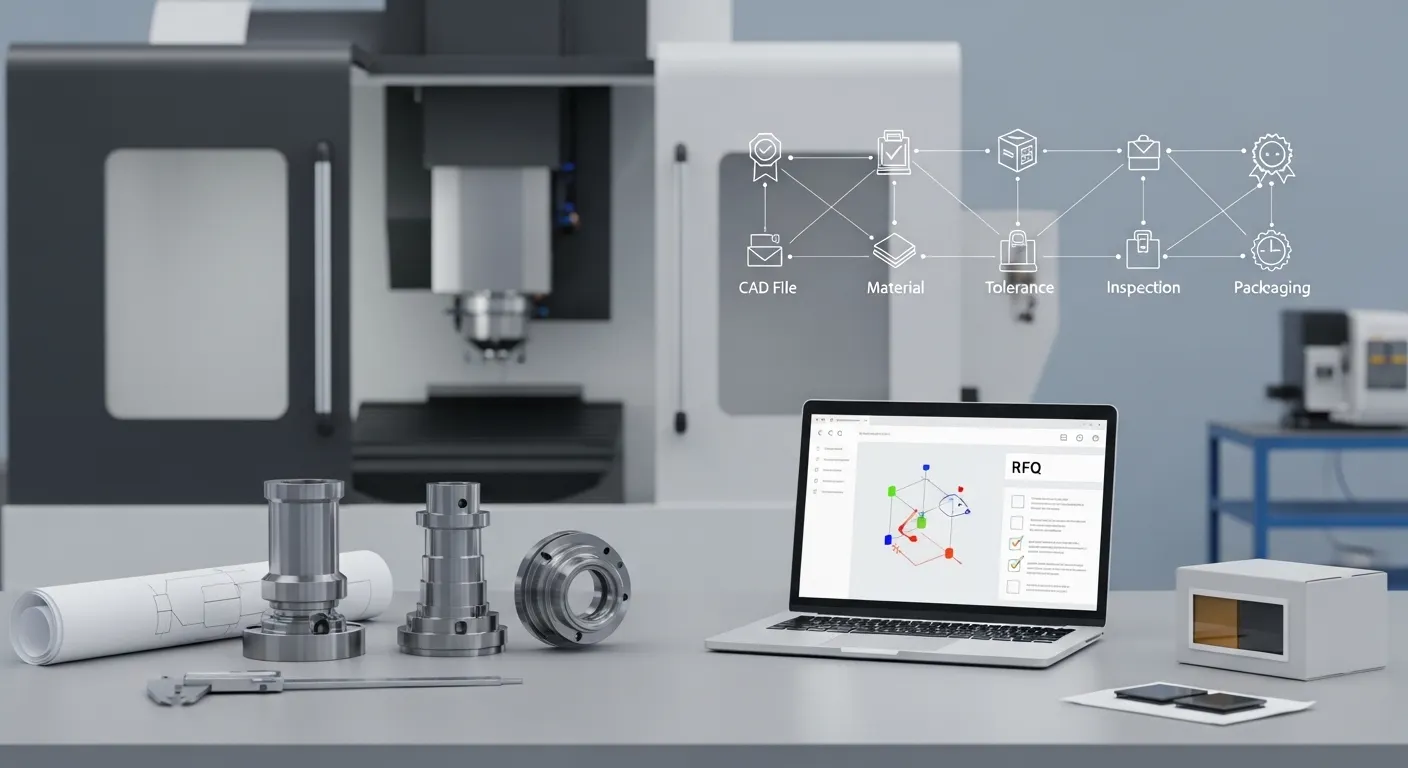
OEM CNC machining is often used when a company needs custom parts made to its own drawings, product design, assembly requirements, or brand specifications. These parts may be used for prototypes, functional testing, pilot builds, low-volume production, replacement parts, or repeat manufacturing.
SunOn’s CNC machining support can help buyers manage different project stages, including:
- CNC prototype machining for design validation
- Small-batch CNC machining for market testing or pilot production
- Precision CNC machining for functional metal or plastic parts
- Custom metal parts machining for housings, brackets, shafts, fixtures, blocks, and mechanical components
- Custom plastic parts machining for engineering plastic prototypes or functional parts
- OEM/ODM production support when CNC parts are part of a larger product program
This page is designed for buyers who already have a real part requirement and need a manufacturing partner to review the project, prepare a quote, and support production planning.
How SunOn Supports NDA-Based OEM Projects
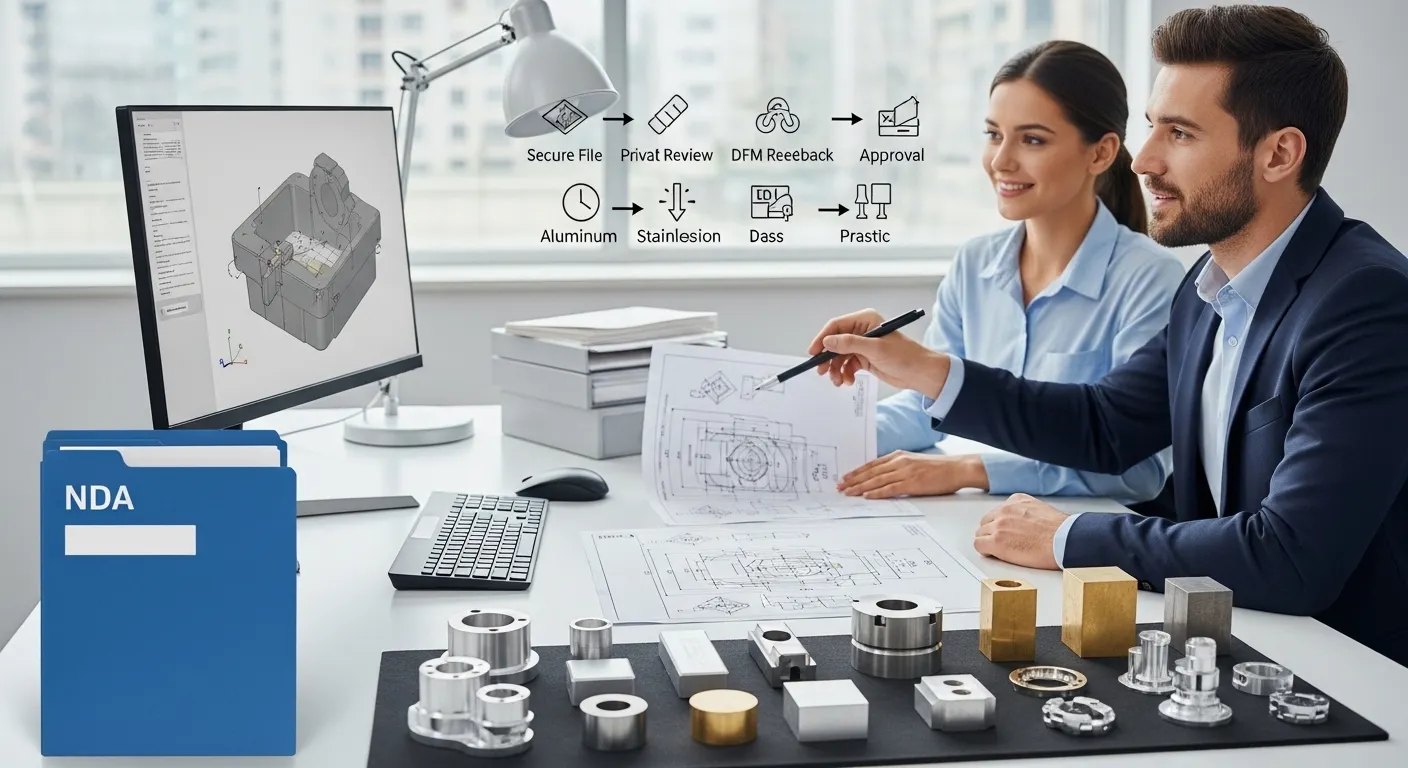
Many OEM buyers work with confidential product designs, unreleased components, internal drawings, BOMs, or customer-specific assemblies. Before sharing sensitive files, buyers often need to know how the supplier will communicate and manage project details.
SunOn can support OEM project discussions where confidentiality, drawing control, and clear technical communication are important. Buyers can share NDA requirements, project specifications, CAD files, 2D drawings, and revision notes during the RFQ stage.
For complex or repeat-production projects, it is helpful to confirm:
- NDA or confidentiality requirements
- Drawing revision number
- Approved 3D model and 2D drawing
- Critical dimensions and functional surfaces
- Material and finish specifications
- Inspection or reporting requirements
- Packaging, labeling, or assembly needs
- Buyer-side approval process before production
This helps reduce misunderstandings before machining starts.
Which CNC Process Fits Your OEM Part?
Different part geometries need different CNC processes. Selecting the right process helps improve manufacturability, cost control, surface quality, and production consistency.
CNC milling is commonly used for parts with flat surfaces, pockets, slots, holes, profiles, and complex external shapes. If your project includes milled housings, plates, blocks, brackets, covers, fixtures, or precision features, SunOn’s custom CNC milling services may be relevant.
CNC turning is suitable for round or cylindrical parts such as shafts, bushings, pins, sleeves, spacers, threaded components, and rotating parts. Some parts need both turning and milling features. For these projects, buyers can review SunOn’s CNC turning and milling services.
5-axis CNC machining can be useful for complex geometries, multi-surface features, difficult angles, and parts that would otherwise need multiple setups. Buyers should send complete 3D CAD data and drawings so the manufacturing team can review whether 5-axis machining is necessary or whether a simpler process can meet the requirement.
Materials and Finishes to Confirm Before Quoting
Material selection affects machining method, tolerance control, surface finish, part strength, appearance, and production cost. OEM buyers should confirm the required material early, especially when the part has mechanical, electrical, thermal, chemical, or appearance requirements.
Common CNC machining material categories include:
- Aluminum for lightweight parts, housings, brackets, covers, and prototypes
- Stainless steel for corrosion-resistant or stronger mechanical parts
- Steel for durable industrial components, fixtures, and structural parts
- Brass and copper for conductive parts, fittings, and precision components
- Titanium for lightweight strength where the application requires it
- ABS, PC, PMMA, POM/Delrin, nylon, PTFE, and PEEK for custom plastic machined parts
Surface finish requirements should also be discussed before quotation. Depending on the part and material, buyers may request anodizing, plating, polishing, bead blasting, brushing, powder coating, painting, passivation, or other post-processing.
If the finish affects assembly, sealing, corrosion resistance, color, branding, or cosmetic appearance, include it in the drawing or RFQ notes.
Tolerance, Inspection, and QC Details for OEM CNC Parts
Tolerance requirements should be practical and clearly marked. Overly tight tolerances on non-critical features can increase machining complexity and cost. At the same time, unclear tolerance notes can create risk for functional parts.
For OEM CNC machining services, buyers should identify:
- Critical dimensions
- Fit surfaces
- Threaded holes
- Bearing or shaft areas
- Insert locations
- Thin walls or deep pockets
- Flatness, parallelism, or concentricity needs
- Surface roughness requirements
- Cosmetic surfaces
- Inspection report expectations
A 3D model is useful for geometry, but a 2D drawing is still important when tolerances, threads, surface finish, materials, and inspection notes must be controlled. If the part has assembly or functional testing requirements, those should be shared before production.
SunOn’s team can review the drawing and discuss manufacturability concerns before quoting or production planning.
OEM CNC Machining RFQ Checklist
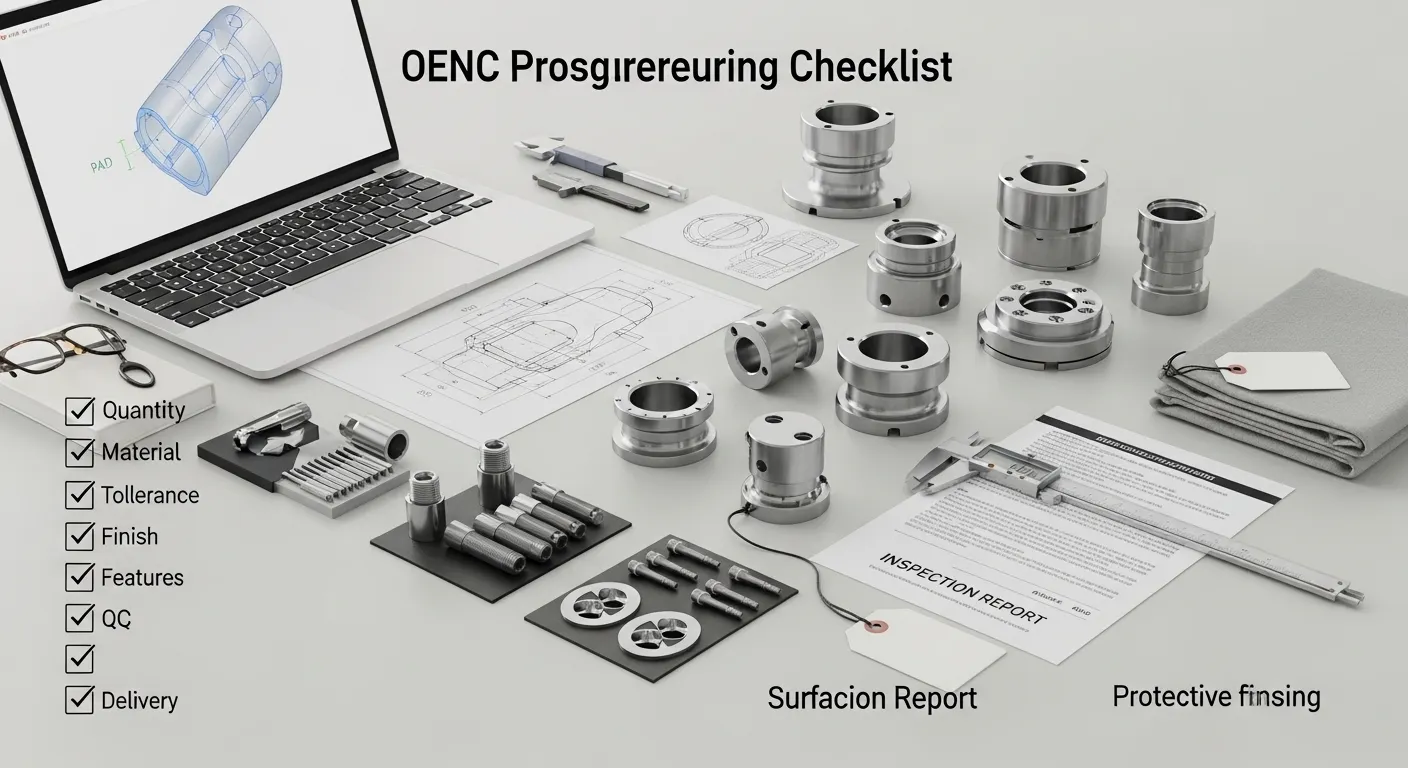
A complete RFQ helps the supplier quote more accurately and reduces back-and-forth communication. It also helps buyers compare suppliers more fairly.
| RFQ detail | What buyers should provide | Why it matters | SunOn review point |
|---|---|---|---|
| Part information | Part name, function, and application | Helps understand performance needs | Process and material suitability |
| Files | 3D CAD model and 2D drawing | Defines geometry and tolerances | DFM and quote review |
| Material | Material type and grade if known | Affects machining, cost, and finish | Material availability and machining approach |
| Quantity | Prototype, small batch, or production volume | Affects production planning | Batch strategy and process setup |
| Tolerance | Critical dimensions and drawing notes | Controls fit and function | Machining and inspection review |
| Surface finish | Anodizing, plating, polishing, painting, or other finish | Affects appearance and performance | Finishing route and quote accuracy |
| Features | Threads, inserts, holes, slots, undercuts, thin walls | Impacts tooling and machining risk | DFM feedback |
| Quality needs | Inspection report, sample approval, functional checks | Supports buyer approval | QC planning |
| Packaging | Labeling, protection, assembly, export packing needs | Reduces damage and sorting issues | Packaging discussion |
| Project terms | NDA, schedule, delivery destination, BOM, revision level | Supports commercial planning | Communication and project setup |
For quote preparation, buyers can also review SunOn’s CNC machining quote page.
Prototype, Small-Batch, and Repeat Production Support
OEM buyers often start with one stage and later move to another. A prototype may become a pilot batch. A pilot batch may become repeat production. Because of this, it is important to discuss the long-term production plan early.
For prototype parts, the main goal is usually design validation, fit testing, appearance review, or functional testing. Buyers may accept faster changes and design revisions.
For small-batch CNC machining, consistency becomes more important. The team should confirm material, finish, tolerance, inspection, and packaging before production.
For repeat production, the buyer and supplier should align on drawings, approved samples, quality checks, packaging method, communication flow, and revision control. This is where OEM documentation and stable communication become especially important.
OEM Onboarding Checklist for Repeat CNC Production
Before moving from first samples to repeat CNC production, buyers should confirm a clear onboarding process. This helps reduce risk across future batches.
Key onboarding points include:
- Confirm NDA or confidentiality needs
- Lock the approved drawing revision
- Confirm the approved sample or first article
- Define critical dimensions and inspection points
- Confirm material and surface finish standards
- Agree on packaging and labeling requirements
- Share assembly or functional requirements if relevant
- Clarify batch quantity and reorder expectations
- Confirm the contact person for engineering and purchasing communication
- Document any change-control process for future revisions
This process is especially useful for OEM/ODM buyers that need consistent parts for industrial equipment, electronics, consumer products, automation systems, new energy products, machinery, or mechanical assemblies.
How SunOn Fits Broader OEM/ODM Manufacturing Needs
Many CNC parts are not isolated projects. They may belong to a larger product assembly or production plan. SunOn’s broader custom manufacturing scope can support buyers who need more than CNC machining.
Depending on the project, SunOn can also support rapid prototyping, 3D printing, vacuum casting, plastic injection mold manufacturing, plastic injection molding, 2K injection molding, die-casting mold manufacturing, aluminum die casting, zinc alloy die casting, silicone molding, sheet metal fabrication, metal stamping, post-processing, surface finishing, mechanical assembly, and OEM/ODM manufacturing support.
This helps buyers discuss process selection when CNC machining is not the only possible route. For example, CNC machining may suit prototypes and low-volume parts, while injection molding or die casting may be considered when the design and quantity justify tooling.
What Buyers Should Clarify Before Choosing a Supplier
A strong CNC supplier should not only accept drawings. The supplier should ask practical manufacturing questions before production starts.
Before choosing an OEM CNC machining partner, buyers should check whether the supplier can discuss:
- CNC process selection based on part geometry
- Material and finish suitability
- DFM risks before production
- Critical tolerances and inspection needs
- Prototype-to-production planning
- Drawing revisions and documentation
- Packaging and shipment protection
- Clear communication for engineering and procurement teams
- Related manufacturing support if the part belongs to a larger assembly
These points help buyers avoid suppliers that only compete on price while ignoring manufacturability, communication, quality planning, or repeat production needs.
Frequently Asked Questions
What files are needed for OEM CNC machining?
Send a 3D CAD model and a 2D drawing when possible. The drawing should include material, tolerance, surface finish, threads, critical dimensions, and inspection notes. Also include quantity, application, and project stage.
Can SunOn support NDA-based CNC projects?
Yes, buyers can discuss NDA or confidentiality requirements before sharing sensitive drawings, CAD files, BOMs, or product specifications. This is important for OEM projects involving unreleased products or customer-owned designs.
Is CNC machining suitable for prototypes and repeat production?
Yes. CNC machining can support functional prototypes, small batches, pilot production, and repeat orders. The production plan should confirm material, tolerance, finish, inspection, and packaging requirements before moving beyond samples.
How should buyers specify tolerances?
Mark critical dimensions clearly on the 2D drawing. Avoid applying tight tolerances to every feature unless needed. Share fit, assembly, functional, and inspection requirements so the machining team can review risk.
What finishes should be included in the RFQ?
Include anodizing, plating, polishing, bead blasting, brushing, painting, powder coating, passivation, or other finish needs. Also mention color, cosmetic surfaces, corrosion resistance, and assembly requirements if they matter.
Can SunOn review manufacturability before production?
Yes, SunOn can review drawings, CAD files, material choices, tolerance notes, surface finish needs, and difficult features before quoting or production planning. DFM review helps reduce machining risk and communication gaps.
Request an OEM CNC Machining Quote
Send your OEM CNC machining project to SunOn Mould for quote review, DFM discussion, and manufacturing support. To help our team respond accurately, share your part type, quantity, prototype or production stage, application, 2D drawing, 3D CAD model, material, tolerance, surface finish, threading or insert needs, inspection requirements, packaging notes, delivery destination, target schedule, and any NDA, BOM, or project specification.
For drawing-based quote preparation, visit SunOn’s CNC machining quote page, or review the CNC machining instant quote page if you are preparing files for a faster RFQ discussion.
