


CNC Machining Services for Industrial Equipment
SunOn supports custom CNC milling, CNC turning, 5-axis CNC machining, prototype machining, small-batch parts, post-processing, surface finishing, assembly support, and broader OEM/ODM manufacturing. Whether you need shafts, brackets, housings, machine plates, rollers, fixtures, pump parts, valve components, or replacement parts, our team can review your 2D drawings, 3D CAD files, material requirements, tolerance notes, and application details before production planning.
CNC Machining Services for Industrial Equipment Buyers
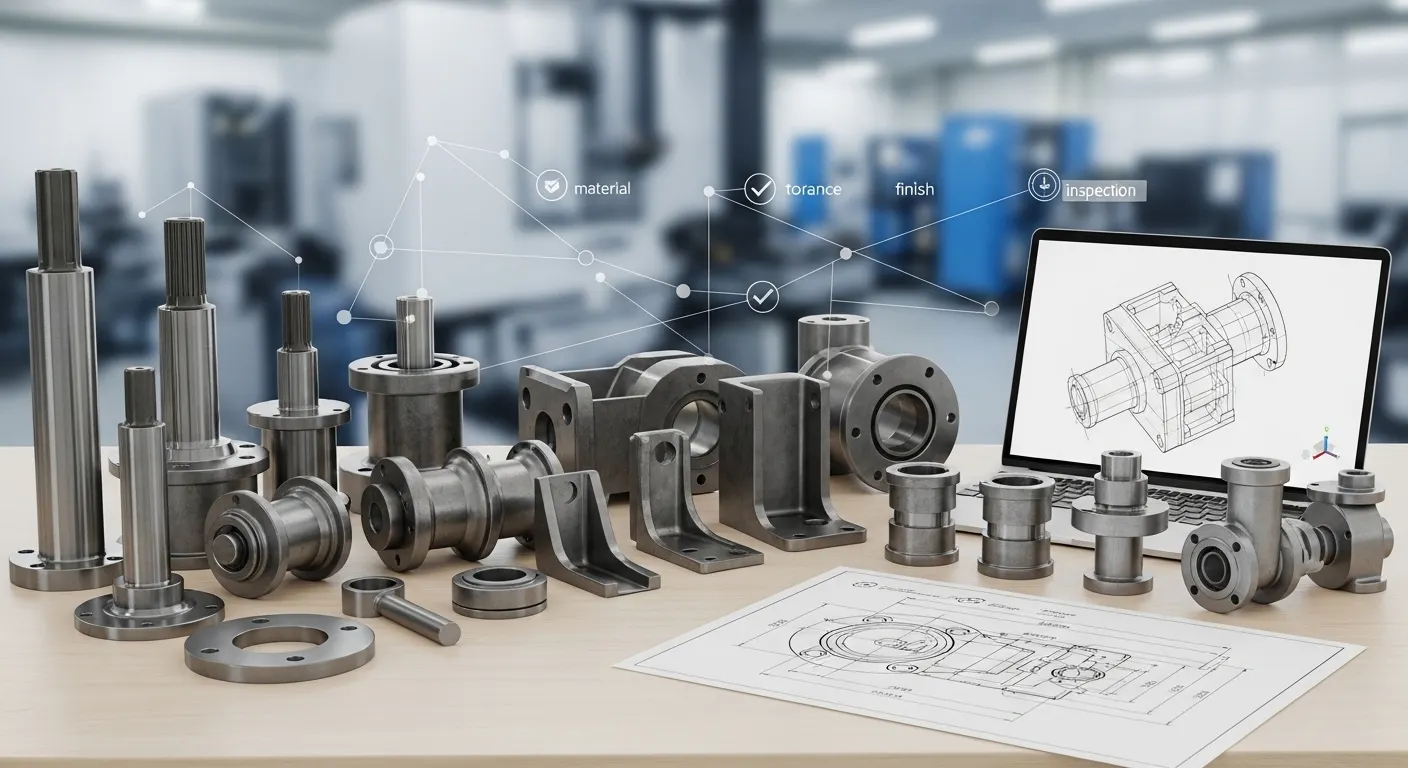
Industrial equipment components are usually functional parts. They may carry load, guide motion, hold assemblies, support bearings, protect internal mechanisms, or connect with other machined, molded, cast, or sheet metal parts.
For this reason, the CNC machining supplier must understand both the drawing and the part function. A bracket may look simple, but hole position, flatness, coating, and assembly fit can affect the whole machine. A shaft may need correct diameter control, surface finish, and material choice to support rotation or sliding contact.
SunOn’s CNC machining support is suitable for buyers who need:
- Custom industrial machinery parts
- Equipment repair or replacement components
- CNC machined shafts, rollers, hubs, and bushings
- Brackets, mounting plates, and structural supports
- Housings, covers, frames, and protective components
- Fixtures, jigs, gauges, and assembly aids
- Pump, valve, connector, and fluid-related parts
- Prototype, small-batch, or repeat production components
For urgent prototype or replacement-part projects, buyers can also review SunOn’s rapid CNC machining services for related CNC project support.
What Industrial Equipment Parts Can Be CNC Machined?
CNC machining is often selected when industrial equipment parts need accurate geometry, stable fit, repeatability, and a material that can handle real operating conditions. It is especially useful when the part has machined holes, slots, pockets, threads, bores, bearing seats, flat mounting surfaces, or complex multi-face features.
Common industrial equipment parts include:
- Shafts and rollers for motion, rotation, and guide systems
- Brackets and mounting plates for structural support and assembly alignment
- Housings and covers for motors, sensors, gear areas, or internal mechanisms
- Fixtures and jigs for production, welding, inspection, or assembly
- Bushings, spacers, hubs, and sleeves for fit and positioning
- Pump and valve components for fluid handling equipment
- Machine plates and blocks for automation, packaging, material handling, or test systems
- Replacement parts for worn, obsolete, or modified equipment components
Before machining, buyers should identify which features are critical. For example, a visual surface may need a clean finish, while a bearing bore may need stricter dimensional review. A mounting plate may need flatness and hole-position control, while a shaft may need roundness, surface finish, and fit confirmation.
Choosing the Right CNC Process for Industrial Parts
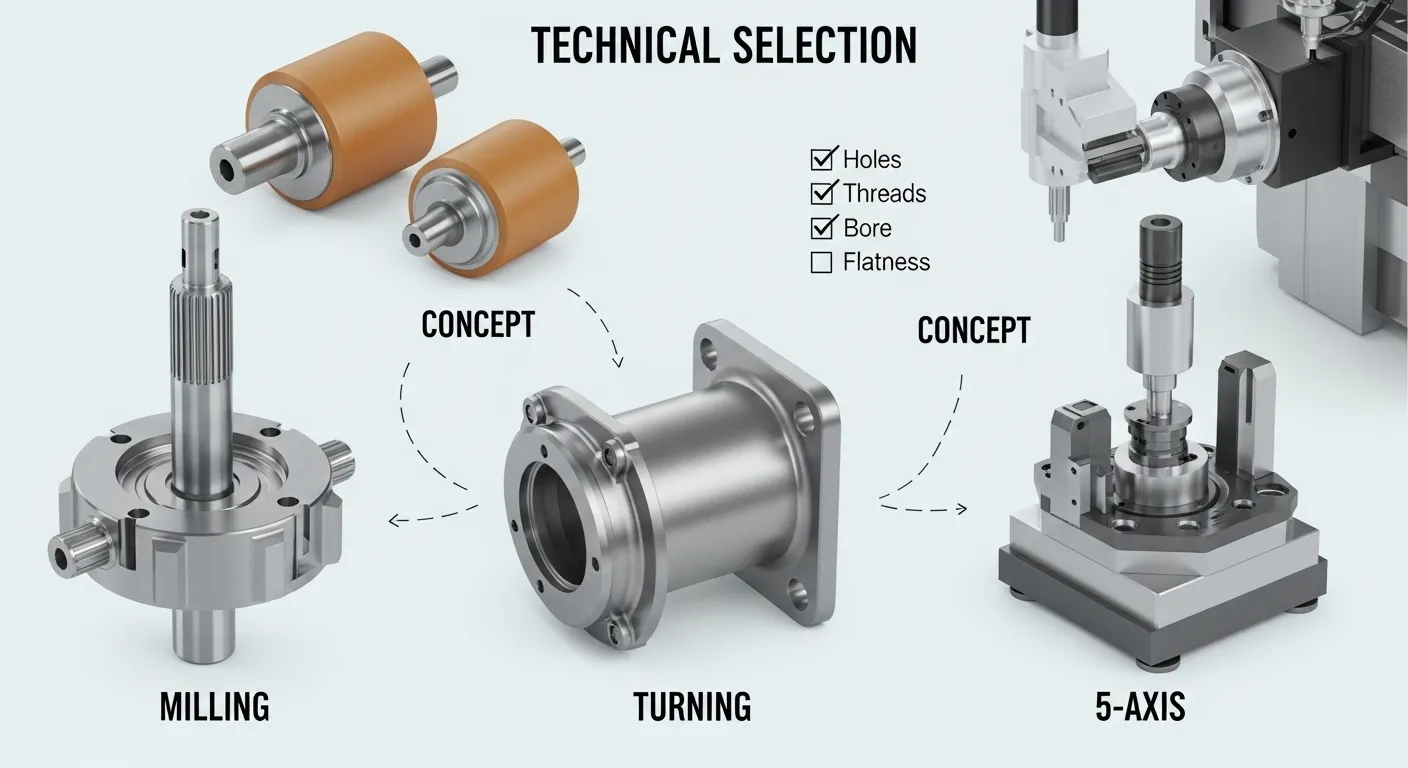
Different industrial equipment parts need different CNC processes. The right choice depends on geometry, material, tolerance, surface requirements, and quantity.
CNC milling is commonly used for brackets, plates, housings, blocks, pockets, slots, fixture bases, mounting surfaces, and multi-feature components. It is a good choice when the part has flat faces, holes, pockets, or features on several sides.
CNC turning is suitable for cylindrical parts such as shafts, rollers, bushings, hubs, sleeves, spacers, and threaded round components. Turning can support efficient machining when the main geometry rotates around a central axis.
5-axis CNC machining can help with complex industrial components that require angled features, multi-face machining, curved surfaces, or fewer setups. It may be useful for housings, fixtures, complex brackets, and parts where alignment between several machined faces matters.
Drilling, tapping, boring, and threading are important for industrial assembly. Buyers should clearly mark threaded holes, press-fit areas, bearing seats, dowel holes, counterbores, and sealing faces on the drawing.
For parts with tighter fit or complex precision requirements, buyers may also review SunOn’s high precision CNC machining service page.
| Industrial equipment part | Common CNC process | Material considerations | Key details to confirm |
|---|---|---|---|
| Shafts, rollers, hubs | CNC turning, turning + milling | Steel, stainless steel, aluminum, brass | Diameter fit, surface finish, concentricity, threads |
| Brackets and plates | CNC milling | Aluminum, steel, stainless steel | Hole position, flatness, coating, assembly fit |
| Housings and covers | CNC milling, 5-axis machining | Aluminum, stainless steel, engineering plastics | Pockets, bores, sealing faces, wall thickness |
| Fixtures and jigs | CNC milling, 5-axis machining | Aluminum, steel, plastic | Locating points, repeatability, wear areas |
| Pump and valve parts | CNC milling, turning | Stainless steel, brass, copper, alloy steel | Threads, bores, sealing surfaces, working media |
| Replacement components | Milling, turning, secondary operations | Match original material or improve if needed | Sample, drawing, fit, function, quantity |
Material Selection for Durable CNC Machined Components
Material selection affects strength, wear resistance, corrosion resistance, weight, machinability, finish, and cost. Industrial equipment buyers should avoid choosing material only by price. A low-cost material may fail early if the part faces friction, vibration, moisture, heat, or repeated load.
Common material categories for industrial CNC parts include:
- Aluminum for lightweight brackets, housings, plates, covers, heat-related parts, and automation components.
- Stainless steel for corrosion resistance, fluid-contact parts, food-related equipment components, and harsh operating environments.
- Carbon steel and alloy steel for stronger load-bearing parts, shafts, blocks, machine elements, and wear-related components.
- Brass and copper for fittings, bushings, conductive parts, fluid components, and special mechanical or electrical uses.
- Engineering plastics such as ABS, PC, nylon, POM/Delrin, PTFE, and PEEK for lightweight, insulating, low-friction, or non-metallic parts when suitable for the application.
If the material grade is already defined by your drawing or BOM, include it in the RFQ. If not, share the part function, load condition, working environment, temperature exposure, wear condition, and finish requirement so the project can be reviewed more clearly.
Tolerance, Surface Finish, and Inspection Details to Confirm
Industrial equipment parts often include both general features and critical features. Not every dimension needs the same tolerance. Overly tight tolerances can increase cost and machining difficulty, while unclear tolerances can create assembly risk.
Before requesting a quote, identify:
- Critical dimensions and functional surfaces
- Bearing seats, bores, shafts, and sliding areas
- Threaded holes, tapped holes, dowel holes, and inserts
- Flatness, perpendicularity, parallelism, and concentricity needs
- Surface finish requirements for contact, sealing, or appearance
- Coating, anodizing, plating, polishing, bead blasting, or powder coating needs
- Inspection report or dimensional verification requirements
Surface finishing is especially important for industrial parts exposed to handling, moisture, wear, chemicals, or visual inspection. SunOn’s wider manufacturing support includes post-processing and surface finishing, so buyers should include finish notes early instead of adding them after machining.
For quality-system related CNC content, buyers can also visit SunOn’s CNC machining services with ISO 9001 certification page.
Prototype, Replacement, Small-Batch, and Production Support
Industrial equipment projects do not always begin with mass production. Many buyers need one sample, a small replacement batch, a prototype for a new machine, or a modified part for an existing assembly.
CNC machining is useful across several project stages:
- Prototype parts for design validation, fit testing, and functional trials
- Repair or replacement parts for worn, damaged, or unavailable components
- Small-batch parts for special machines, custom equipment, or pilot builds
- Production parts for repeat OEM/ODM manufacturing requirements
- Bridge production before mold making, die casting, or another production process
If the part may later move to injection molding, die casting, or assembly production, tell SunOn early. Our team can consider the wider manufacturing route, not only the first machined sample.
Industrial Applications SunOn Can Support
SunOn’s CNC machining services can support many industrial equipment projects where custom parts must fit into larger mechanical or electromechanical systems.
Relevant application areas include:
- Automation equipment
- Machinery and mechanical assemblies
- Material handling systems
- Packaging and processing equipment
- Testing fixtures and production aids
- Pump, valve, and fluid equipment
- Equipment housings and covers
- Industrial control and electronic equipment components
- Custom OEM/ODM machinery parts
For industrial control housings, heat sinks, sensor-related parts, or precision electronic equipment components, buyers may also find SunOn’s CNC machining for electronics page useful.
RFQ Checklist for Industrial Equipment CNC Machining
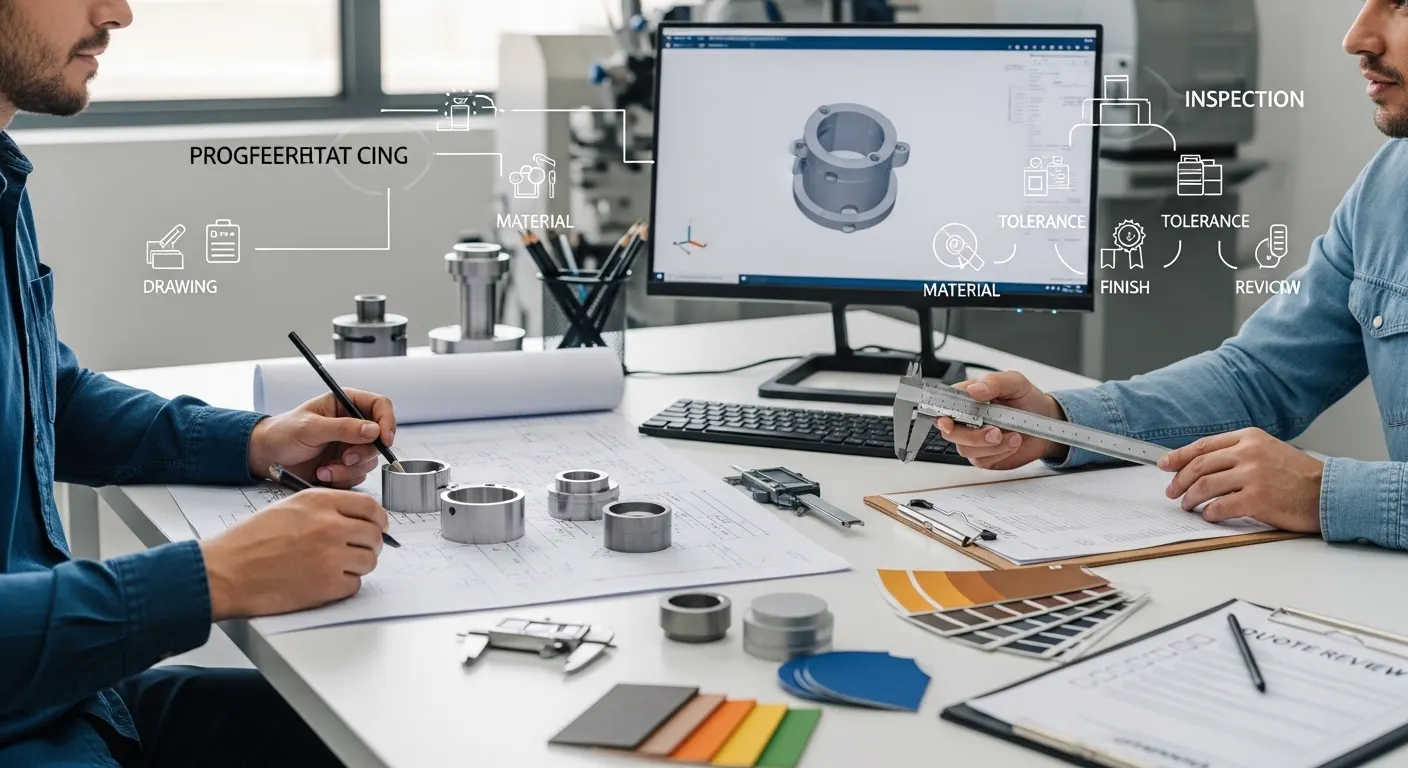
A clear RFQ helps reduce back-and-forth and improves quote accuracy. Before contacting SunOn, prepare as many of the following details as possible:
- Product or part name
- Application or industry
- Prototype, replacement, small-batch, or production stage
- Quantity required
- 2D technical drawing
- 3D CAD model
- Material requirement and grade if known
- Critical tolerance requirements
- Surface finish, coating, plating, anodizing, or polishing needs
- Threading, inserts, holes, slots, bores, undercuts, or assembly details
- Inspection report or quality documentation needs
- Functional testing requirements if relevant
- Working environment, such as load, heat, moisture, friction, or chemical exposure
- Delivery destination
- Target schedule if relevant
- NDA, BOM, sample part, or project specification if available
If you do not have a complete drawing, send the best available information. Photos, samples, sketches, application notes, or assembly context can help the team understand the part before formal quotation.
Why Work With SunOn for Industrial Equipment CNC Parts?
SunOn Mould is not only a CNC machining supplier. SunOn supports custom manufacturing projects from prototype to production, including CNC machining, 5-axis machining, rapid prototyping, plastic injection mold manufacturing, injection molding, die casting, sheet metal fabrication, post-processing, surface finishing, mechanical assembly, and OEM/ODM manufacturing support.
This matters for industrial equipment buyers because one project may need more than one process. A machine housing may begin as a CNC prototype and later move to tooling. A metal bracket may need machining, finishing, and assembly. A production project may require CNC parts, molded parts, die-cast parts, and final assembly support.
SunOn can help buyers review manufacturability, material selection, tolerance requirements, surface finish needs, and production stage before machining begins. That makes the quote process more practical for engineers, procurement teams, and OEM/ODM buyers who need reliable custom parts for industrial equipment.
Frequently Asked Questions
Can SunOn machine replacement parts for industrial equipment?
Yes. Buyers can send drawings, samples, photos, material details, and application notes for replacement-part review. Important details include fit, function, critical dimensions, surface finish, and quantity.
Which materials are suitable for industrial equipment CNC parts?
Common options include aluminum, stainless steel, carbon steel, alloy steel, brass, copper, and engineering plastics. The best choice depends on load, wear, corrosion, temperature, weight, and assembly requirements.
Should my part be milled, turned, or 5-axis machined?
Milling fits brackets, plates, housings, and blocks. Turning fits shafts, rollers, bushings, and round parts. 5-axis machining may suit complex multi-face parts, angled features, and geometry that needs fewer setups.
What tolerance details should I send?
Send the 2D drawing with critical dimensions clearly marked. Include notes for bores, bearing seats, shafts, threaded holes, flatness, concentricity, sealing faces, and inspection requirements.
Can SunOn support prototypes and production parts?
Yes. SunOn supports CNC prototype machining, small-batch machining, production planning, surface finishing, assembly support, and broader OEM/ODM manufacturing services for custom industrial projects.
What files are needed for a CNC machining quote?
Send 2D drawings, 3D CAD files, material requirements, quantity, tolerance notes, surface finish needs, application details, inspection requirements, and delivery destination. A BOM or sample can also help.
Request a CNC Machining Quote for Industrial Equipment Parts
Share your industrial equipment part requirements with SunOn for CNC machining review, DFM discussion, and quotation. Send the part type, quantity, prototype or production stage, application, 2D drawing, 3D CAD model, material requirement, tolerance notes, surface finish requirement, threading or assembly details, inspection needs, delivery destination, and target schedule.
SunOn’s team can review your drawings and help you plan custom CNC machined parts, replacement components, prototypes, small batches, production parts, finishing, assembly, and OEM/ODM manufacturing support for industrial equipment projects.
