


What is IATF 16949 Certification? Why It Matters for Mold Makers
IATF 16949 Certification is the global technical specification and quality management standard specifically for the automotive industry. It builds upon the ISO 9001 framework by adding stringent requirements aimed at defect prevention, waste reduction, and the mitigation of supply chain variation. For mold makers and manufacturers, achieving this certification demonstrates a commitment to "zero-defect" production and the ability to meet the rigorous safety and reliability standards required by Original Equipment Manufacturers (OEMs). While ISO 9001 focuses on general customer satisfaction, IATF 16949 mandates the use of specific "Core Tools" like PPAP and APQP to ensure that every plastic component meets precise automotive tolerances.
Understanding the IATF 16949 vs. ISO 9001 Difference
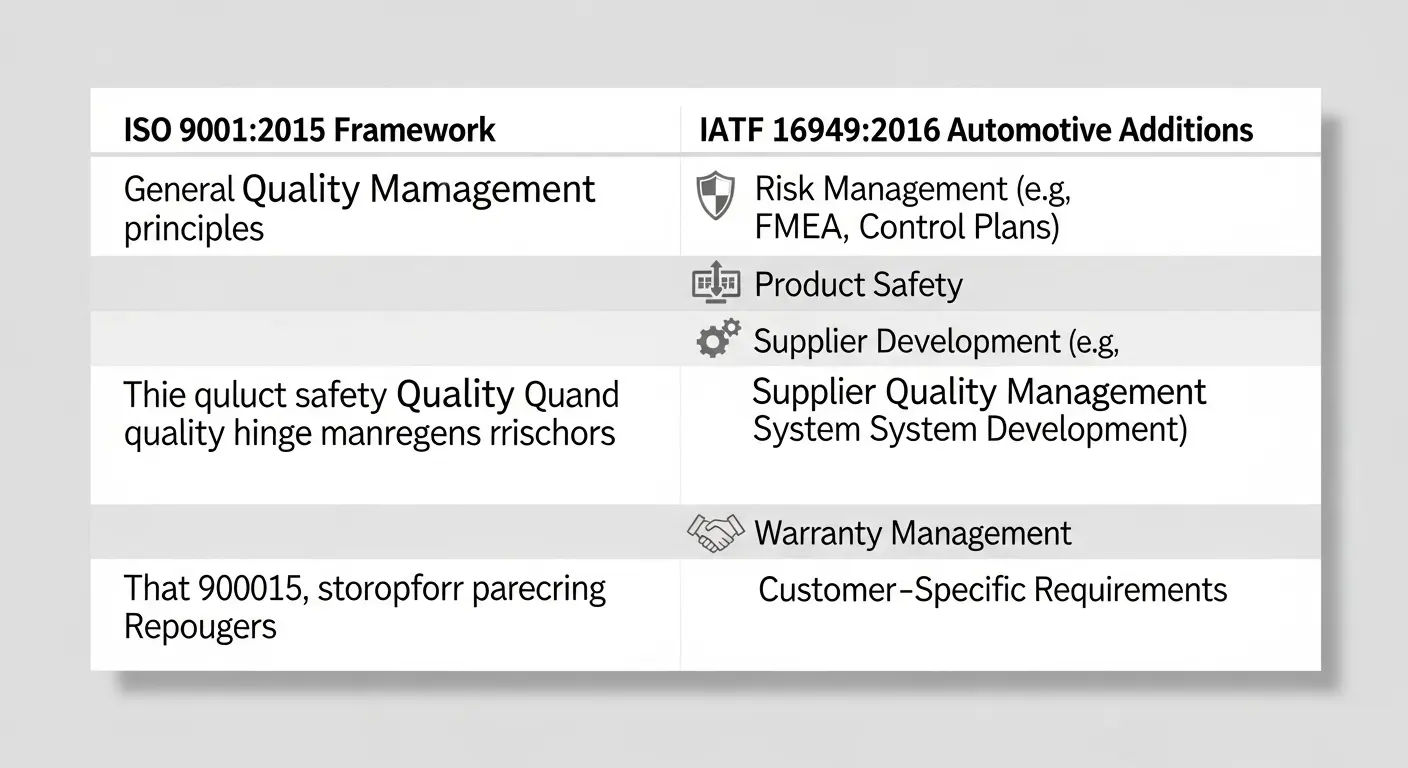
Many procurement managers ask if ISO 9001 is sufficient for their manufacturing needs. While ISO 9001 provides a solid foundation for quality management in any industry, it lacks the technical depth required for high-risk environments like automotive or aerospace. IATF 16949 vs ISO 9001 for manufacturers represents a shift from general process management to specific risk-based performance.
ISO 9001 focuses on the "what"—what must be done to satisfy a customer. In contrast, IATF 16949 focuses on the "how"—how a manufacturer predicts, measures, and eliminates failures before they occur. For example, while ISO 9001 requires a company to document its training procedures, IATF 16949 requires specific evidence of competency for auditors and personnel involved in product safety.
Another critical distinction lies in supplier management. IATF 16949 requires certified companies to develop their own supply chain toward ISO 9001 compliance at a minimum. This creates a "cascade of quality" that ensures raw material consistency. In the context of the plastic injection molding process, this means an IATF-certified mold maker will have stricter verification protocols for the resins and tool steels they source, directly reducing the risk of material failure for the end buyer.
The 5 Core Tools: How SunOn Ensures Automotive Quality
The backbone of IATF 16949 automotive mold making is the implementation of the five "Core Tools." These methodologies, developed by the Automotive Industry Action Group (AIAG), provide a standardized language for quality across the global supply chain. Implementing these tools is not just a checkbox exercise; it is a fundamental shift in how a mold maker approaches engineering and production.
APQP (Advanced Product Quality Planning)
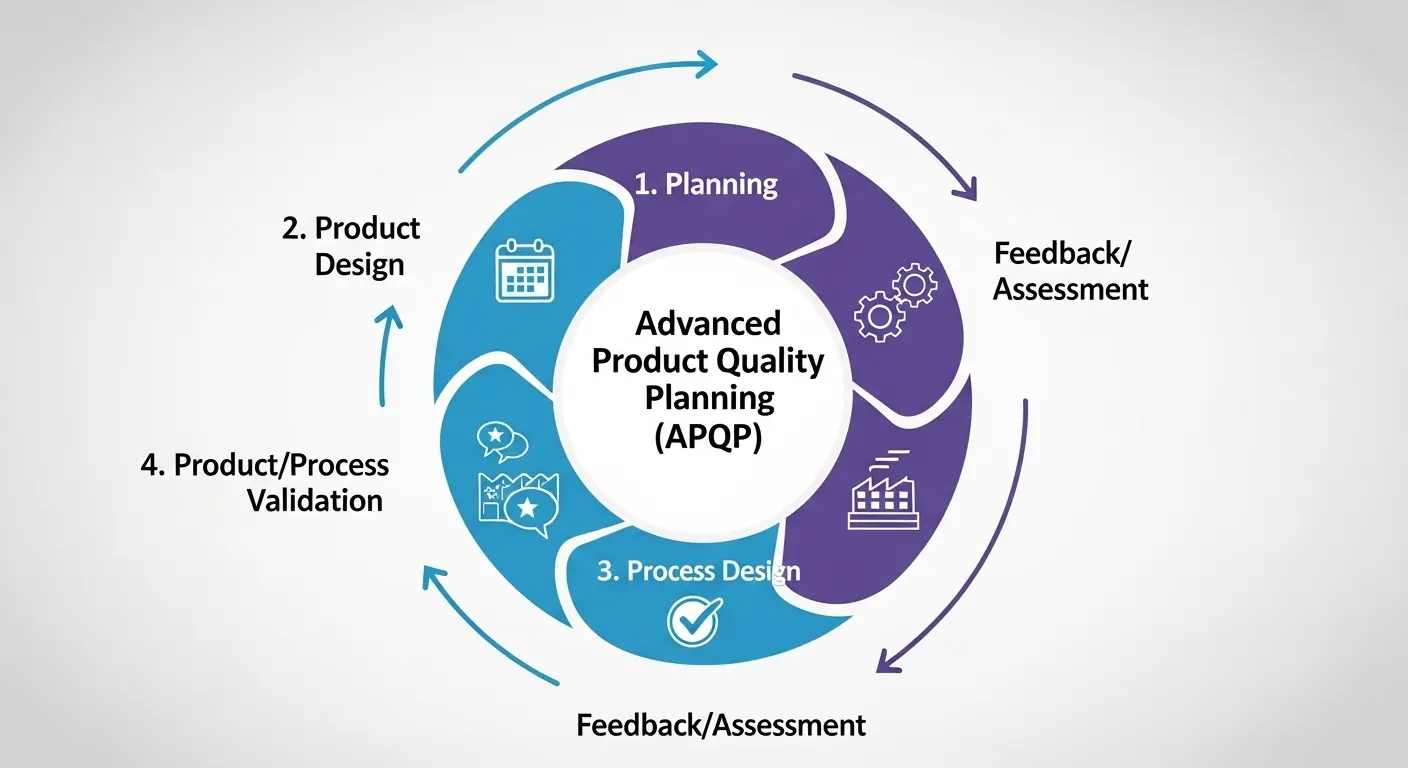
APQP is a structured framework for defining and establishing the steps necessary to ensure that a product satisfies the customer. It begins long before the first shot is fired in the mold. During the APQP phase, we conduct deep-dive reviews of the product design to identify potential manufacturability issues. This aligns with our commitment to a 2K injection molding guide, where multi-material complexity requires early-stage planning to prevent delamination or injection errors.
PPAP (Production Part Approval Process)
PPAP is the industry standard for proving that a manufacturer can consistently produce parts that meet the client's requirements at the actual production rate. A PPAP submission includes everything from dimensional results and material test reports to the initial process capability studies. For buyers, receiving a Level 3 PPAP provides the ultimate confidence that the supplier's process is stable and repeatable.
FMEA (Failure Mode and Effects Analysis)
FMEA is a proactive tool used to identify how a product or process might fail. We use Design FMEA (DFMEA) to evaluate risks in the part design and Process FMEA (PFMEA) to analyze risks on the factory floor. By assigning a Risk Priority Number (RPN) to potential failures, such as short shots or flash in a 2K injection molding process and benefits evaluation, we can implement preventative actions before the mold is even machined.
MSA (Measurement System Analysis)
Quality data is only as good as the tools used to collect it. MSA is a mathematical method used to determine if a measurement system (the gauge, the technician, and the environment) is accurate and precise. In high-precision molding, we perform Gage R&R (Repeatability and Reproducibility) studies to ensure that our CMM and optical measurement tools provide consistent data, regardless of who is operating the equipment.
SPC (Statistical Process Control)
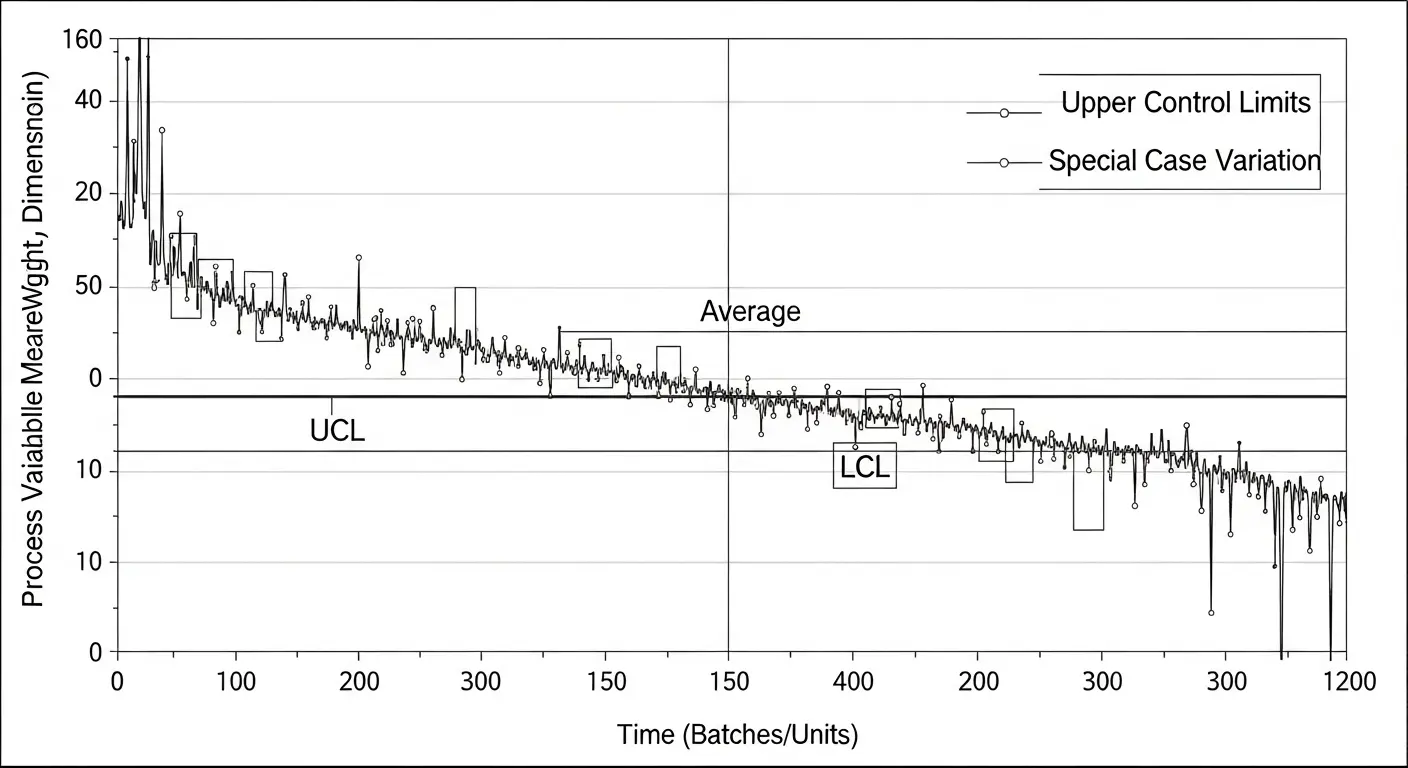
SPC involves using statistical techniques to monitor and control a production process. By tracking variables like cycle time, melt temperature, and injection pressure on a control chart, we can detect "special cause" variations before they result in defective parts. This real-time monitoring is essential for maintaining automotive injection molding quality standards over long production runs.
4 Critical Benefits of IATF 16949 for B2B Buyers
For sourcing managers and hardware founders, choosing a partner with IATF 16949 Certification offers tangible business advantages. This certification isn't just about technical compliance; it's about the bottom line. When your supplier adheres to these standards, your internal cost of quality drops significantly.
Mitigating Global Supply Chain Risk
Automotive projects involve high capital expenditure on tooling. IATF 16949 mandates robust contingency planning for everything from utility interruptions to labor shortages. When you work with a certified mold maker, you are buying into a system that has pre-verified "Plan B" scenarios. This resilience is vital when managing complex projects like a plastic injection mold for medical devices, where supply interruptions can halt clinical trials or market launches.
Achieving a Culture of Continual Improvement
One of the core requirements of the standard is the "Plan-Do-Check-Act" (PDCA) cycle. Certified suppliers must prove they are actively looking for ways to reduce variation. This culture of improvement often results in optimized cycle times and better material utilization. Over the life of a project, these efficiencies translate into lower unit costs for the buyer without sacrificing the mechanical integrity of the parts.
Standardizing Global Supplier Qualification
If you are a procurement lead at a multinational firm, IATF 16949 provides a universal benchmark. It eliminates the need for redundant second-party audits. Because the standard is recognized globally, you know that a certified factory in China operates under the same quality principles as one in Germany or the United States. This standardization simplifies the onboarding of new suppliers and reduces the lead time from RFQ to production.
Reducing Waste and Unit Costs Through Defect Prevention
The "hidden factory"—the cost of scrap, rework, and reinspection—is a major profit killer. IATF 16949 focuses heavily on "Right First Time" manufacturing. By identifying potential defects during the FMEA and APQP phases, we eliminate the need for costly post-production sorting. Using advanced 2K injection molding methods allows us to consolidate parts and reduce assembly errors, further driving down the total cost of ownership for the buyer.
How to Verify an IATF-Certified Manufacturing Partner
Not all "quality-focused" manufacturers are equal. Professional buyers must know how to verify the claims made by potential partners. A legitimate IATF 16949 Certification must be issued by an accredited third-party registrar and should be verifiable in the IATF database.
First, always ask for the IATF certificate number. You can verify this number through the IATF Global Oversight website. If a supplier claims they "follow IATF standards" but lack a valid certificate, they may not be undergoing the rigorous annual audits required to maintain the standard. Second, look for evidence of the Core Tools in their quoting process. A truly ready supplier will mention DFM, FMEA, and PPAP levels in their initial response to your RFQ.
Third, evaluate their internal audit frequency. IATF requirements for injection molding mandate that the company performs regular internal audits of its own processes and system. During a factory visit—either virtual or in-person—ask to see their recent internal audit findings and the subsequent corrective actions. A transparent manufacturer will show you how they have used these audits to improve their shop-floor operations.
SunOn: Your IATF-Ready Partner for Automotive Molding
At SunOn Industrial Group, we understand that automotive molding requires more than just a machine and a mold; it requires a mindset of precision. Our engineering teams are trained in the nuances of IATF 16949, ensuring that your project benefits from the highest level of quality management from day one. Whether you are developing a dashboard component, a complex 2K overmolded seal, or a high-tolerance connector, we apply automotive-grade discipline to every step.
Our DFM-led quoting process integrates the principles of APQP and FMEA early in the design stage. We don't just quote your part; we analyze it for potential failure modes. This proactive approach reduces the number of tool iterations needed and accelerates your timeline to PPAP approval. By combining our expertise in 2K injection molding guide practices with IATF-level documentation, we provide a seamless experience for global procurement leads.
We invite you to experience the SunOn difference. Our facilities are optimized for high-performance molding, and our quality labs are equipped with the MSA-verified tools needed to guarantee accuracy. When you partner with us, you aren't just getting a supplier; you are getting an engineering-driven collaborator dedicated to your product's success in the competitive automotive landscape.
Frequently Asked Questions (FAQ)
Is IATF 16949 better than ISO 9001?
IATF 16949 is not "better" in a general sense, but it is significantly more rigorous and specific to the automotive industry. While ISO 9001 is a generic quality standard, IATF 16949 adds dozens of automotive-specific requirements that focus on risk management and the prevention of defects across the entire supply chain.
What is the main goal of IATF 16949?
The main goal of IATF 16949 is the development of a quality management system that provides for continual improvement, emphasizing defect prevention and the reduction of variation and waste in the supply chain. It ensures that manufacturers can consistently meet the high safety and quality demands of the automotive sector.
Is IATF 16949 mandatory for automotive suppliers?
Most major automotive OEMs (Original Equipment Manufacturers) require their Tier 1 and Tier 2 suppliers to be IATF 16949 certified. Even if it is not legally mandatory, it is a commercial necessity for any mold maker or manufacturer wishing to work within the global automotive supply chain.
How long does IATF certification last?
IATF 16949 certification follows a three-year cycle. After the initial certification, the company must undergo annual surveillance audits to ensure continued compliance. At the end of the three years, a full recertification audit is required to maintain the status.
What are the "Core Tools" of IATF 16949?
The five Core Tools are APQP (Advanced Product Quality Planning), FMEA (Failure Mode and Effects Analysis), MSA (Measurement System Analysis), SPC (Statistical Process Control), and PPAP (Production Part Approval Process). These are standardized methodologies used to ensure quality throughout the design and manufacturing phases.
Can a small mold maker achieve IATF 16949?
Yes, any manufacturer that provides parts, components, or services to the automotive industry can achieve certification regardless of size. However, it requires a significant investment in engineering resources, training, and documentation to meet the high standards set by the IATF.
Does your next project require automotive-grade precision? At SunOn, we blend DFM-led engineering with the highest quality standards to ensure your success from prototype to mass production. Request an IATF-compliant RFQ today and let our team of experts optimize your manufacturing journey.
