


Full-Service OEM Injection Molding: What You Need to Know
OEM injection molding is a contract manufacturing service where a specialized factory produces plastic components based on the original equipment manufacturer's specific designs, tolerances, and material requirements. In this model, the manufacturing partner manages the technical complexities—including mold design, tooling fabrication, mass production, and secondary assembly—allowing the brand owner to focus on product innovation and market distribution. For global B2B buyers, full-service OEM molding provides a scalable production infrastructure without the capital expenditure of owning a factory, ensuring that high-precision parts are delivered retail-ready or as assembly-ready components.
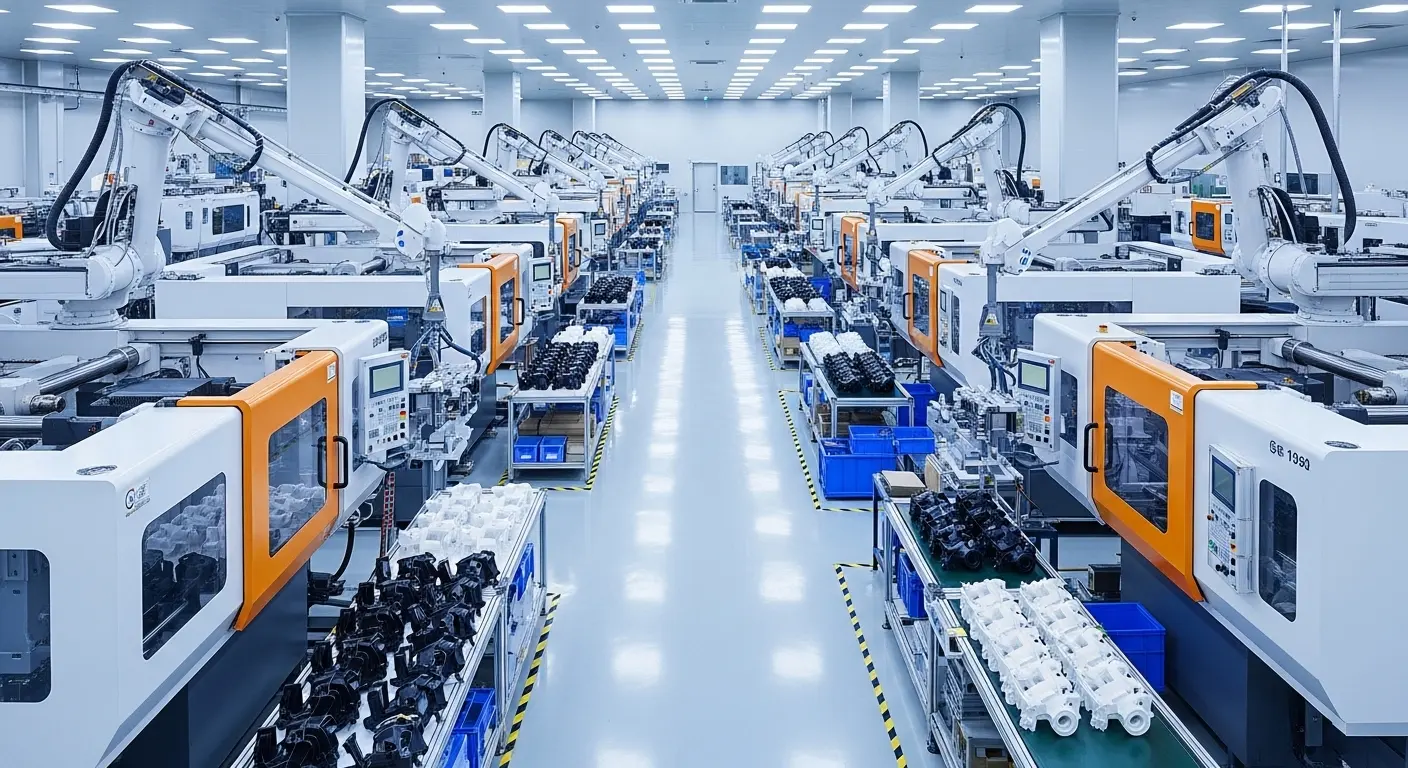
What is OEM Injection Molding? (And Why Strategy Matters)
OEM plastic injection molding services function as a strategic extension of a brand’s engineering team. Unlike generic part suppliers, an OEM partner takes full accountability for the manufacturability of a design. This partnership begins long before the first shot of plastic enters the mold. It involves a collaborative approach to material selection, part geometry optimization, and supply chain integration. By outsourcing to a specialized plastic injection molding process expert, companies leverage decades of industrial knowledge to reduce unit costs and improve part performance.
The strategy behind OEM molding is built on the concept of "contract manufacturing." The manufacturer does not own the intellectual property of the product; instead, they provide the technical expertise to realize it. In Dongguan, China’s manufacturing heartland, this service has evolved beyond simple molding. Modern OEMs now require "scientific molding" data, where sensors and software monitor every millisecond of the injection cycle. This data-driven approach ensures that even the most complex parts—such as those found in medical devices or automotive systems—remain consistent over production runs of millions of units.
For procurement leads, the decision to use contract injection molding is often a choice between localized assembly and a fully integrated overseas solution. Choosing a partner that understands the nuances of global logistics, alongside technical production, is critical. A high-performing OEM molder doesn't just produce parts; they provide a predictable, repeatable manufacturing system that mitigates risk for the brand.
Key Advantages of One-Stop OEM Manufacturing
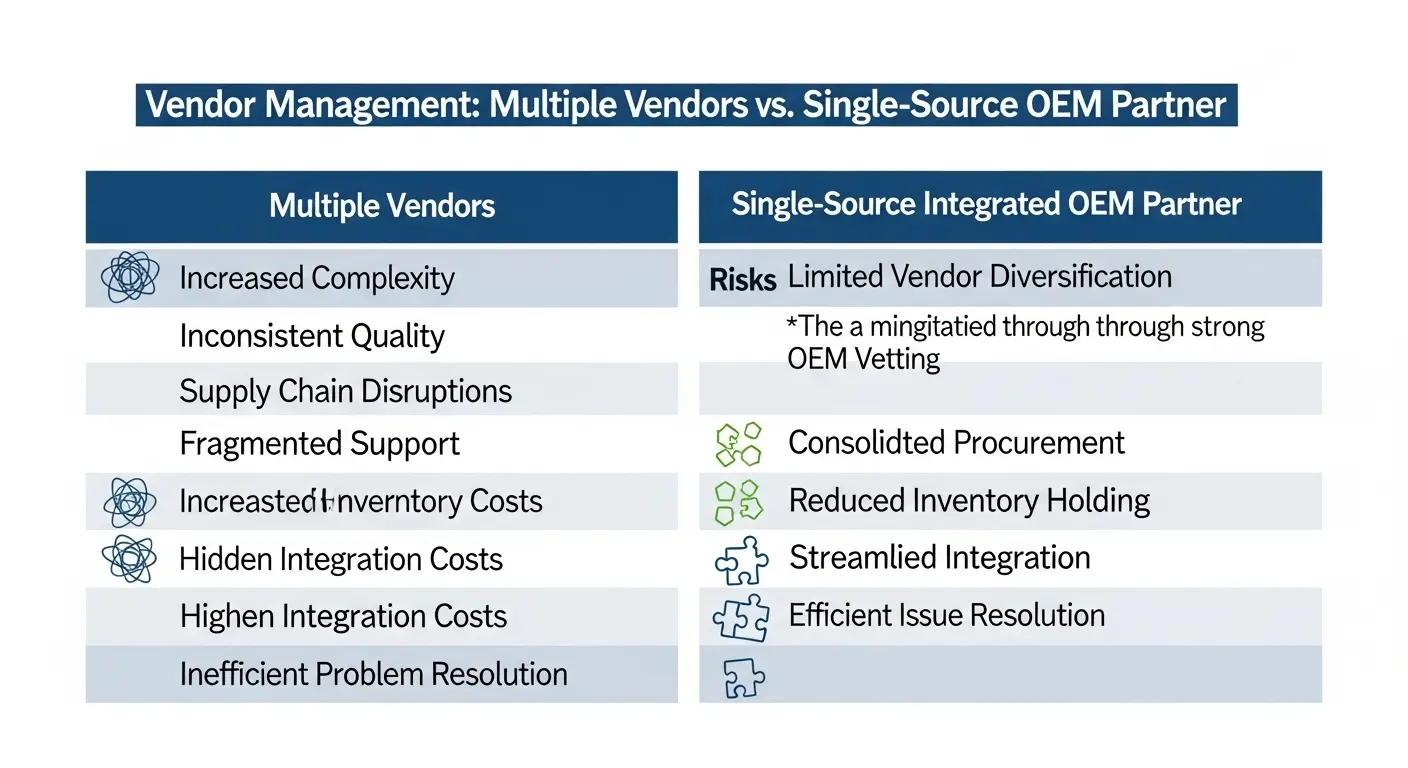
The "One-Stop" model is the gold standard for modern sourcing. When a single partner handles everything from the initial quote to the final boxed product, the overhead of supply chain management drops significantly. This integrated approach eliminates the "quality finger-pointing" that occurs when one vendor builds the tool and another runs the production. If a part fails to meet a tolerance at SunOn, our in-house tooling team adjusts the mold immediately, rather than waiting weeks for a third-party shop to coordinate a fix.
One-stop OEM manufacturing also offers massive cost-efficiency through consolidated logistics. Shipping raw parts to a separate assembly house adds time, risk, and transit costs. By contrast, an integrated molder performs secondary operations like ultrasonic welding, silk screening, and kitting under one roof. This proximity ensures that delicate surface finishes are protected and that the final assembly matches the precision of the molded components.
| Feature | In-House Assembly | One-Stop OEM Assembly |
| Tooling Coordination | High Risk (Multiple Vendors) | Low Risk (In-House Toolroom) |
| Logistics Cost | High (Multi-stage shipping) | Low (Direct to Warehouse) |
| Quality Accountability | Fragmented | Centralized |
| Lead Time | Extended by transit gaps | Streamlined production flow |
| Unit Cost | Higher due to split markups | Lower through integrated efficiency |
Export to Sheets
By centralizing these services, buyers achieve a lower "Total Cost of Ownership" (TCO). While a unit price from a generic molder might seem lower on paper, the hidden costs of managing multiple suppliers, handling defects, and paying for international shipping between facilities often erode those margins. A turnkey OEM partner provides a single PO, a single point of contact, and a single quality standard.
The SunOn Process: From CAD to Global Logistics
A successful OEM partnership is defined by a transparent, repeatable process. At SunOn, we have refined our workflow to meet the high-pressure demands of global product launches. This process is designed to catch errors during the digital phase, where they are inexpensive to fix, rather than during production, where they become catastrophic.
DFM-Led Quoting: Preventing Costly Tooling Errors
Every project begins with a rigorous Design for Manufacturability (DFM) review. Within 24 to 48 hours of an RFQ, our engineers analyze your CAD files for potential molding issues such as inadequate draft angles, thick sections prone to sink marks, or suboptimal gate locations. This phase is critical for injection molding for OEMs because it aligns the design with the realities of high-volume manufacturing. We provide technical suggestions to simplify the mold and reduce cycle times, which directly translates to a lower unit price for the buyer.
Precision Tooling: In-House CNC and Mold Fabrication
Once the design is finalized, our in-house toolroom begins fabrication. We utilize high-speed CNC machining, EDM, and precision grinding to build molds from high-quality steel (e.g., S136, H13, or NAK80). Because we manage the tooling in-house, we can guarantee the mold's lifespan and performance. Whether the project requires a standard single-cavity mold or a complex 2K injection molding guide for multi-material parts, our tooling engineers ensure the mold is built to automotive-grade tolerances.
High-Volume Production: Managing Machine Tonnage and Cycle Times
SunOn operates a diverse range of injection molding machines, with tonnages ranging from 50T to 1200T. This allows us to handle everything from small, intricate electronic connectors to large appliance housings. We employ scientific molding principles to optimize cycle times and ensure thermal stability across the mold. For clients needing multi-material components, our expertise in 2k-injection-molding-methods allows us to produce durable, high-aesthetic parts that combine hard plastics with soft-touch TPE or TPU in a single cycle.
Secondary Operations: Assembly, Pad Printing, and Packaging
The production cycle doesn't end when the part is ejected from the machine. Our secondary operations team handles the "last mile" of manufacturing. This includes pad printing and silk screening for branding, ultrasonic welding for hermetic seals, and full mechanical assembly. We also offer retail-ready packaging, ensuring that your products are kitted, labeled, and master-cartoned for direct shipment to your distribution hubs. This is the hallmark of true custom OEM molding china—delivering a finished product, not just a plastic part.
Quality Assurance Standards for Industrial OEMs
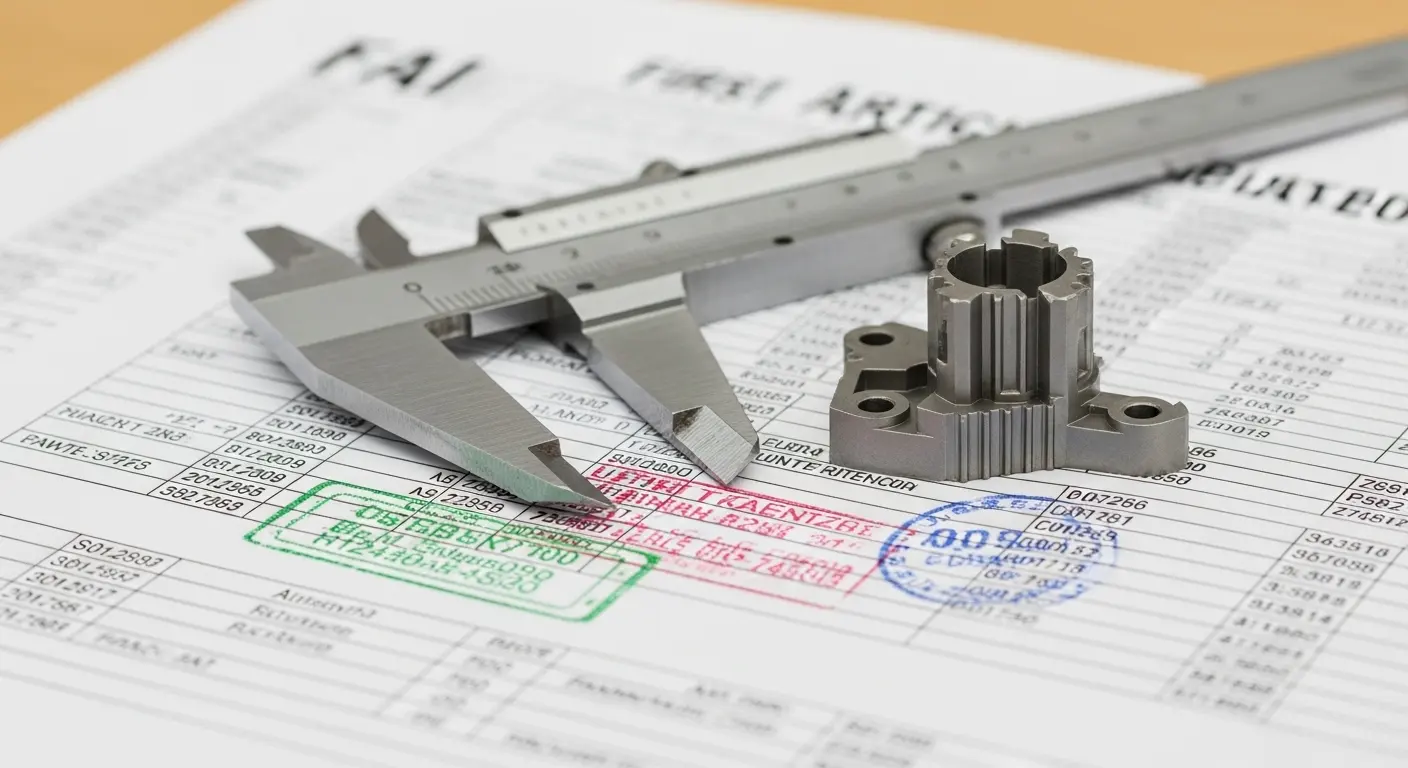
For industrial OEMs, quality is a matter of compliance and liability. Sourcing managers need more than a "visual check." They need data. At SunOn, our QA process is built on international standards, including ISO 9001 and IATF 16949 for automotive-grade projects. We use advanced measurement equipment, such as Coordinate Measuring Machines (CMM) and optical projectors, to verify that every critical dimension matches the engineering drawing.
A vital component of our quality system is the First Article Inspection (FAI) report. Before mass production begins, we provide a full dimensional audit of the T1 samples. For high-volume OEM projects, we also perform process capability studies (CPK/PPK). This statistical analysis proves that our manufacturing process is stable and capable of staying within your specified tolerances over thousands of cycles. This level of transparency is essential when producing a plastic injection mold for medical devices, where any deviation can impact patient safety.
We also focus on material traceability. Every batch of resin comes with a Certificate of Analysis (COA) and UL certification where required. We ensure that the final parts are RoHS and REACH compliant, meeting the environmental standards of the US and European markets. By providing this documentation upfront, we help our OEM partners clear customs and regulatory hurdles with ease.
Choosing the Right OEM Partner in China: 3 Critical Factors
Selecting a partner for custom OEM molding in China is a decision that affects your brand’s reputation for years. While many factories claim to be "OEM experts," few possess the engineering depth to handle complex product lifecycles. When evaluating a potential manufacturing partner, focus on these three pillars of excellence.
- Engineering-First Culture: The best OEM partners act as engineers, not just machine operators. Look for a team that provides proactive DFM feedback and understands 2k-injection-molding-process-benefits. If a factory accepts your CAD files without asking technical questions, they are likely ignoring risks that will surface later as defective parts or mold failures.
- Tonnage and Technical Range: Ensure the factory has the right machine size for your parts. A factory with only small machines cannot scale with you as your product line grows. Furthermore, verify their experience with specialized resins like PEEK, PPS, or glass-filled nylons. High-performance OEM molding requires precise thermal control that basic molding shops cannot provide.
- Logistics and Communication Readiness: Communication is the most common failure point in overseas sourcing. A professional OEM partner should provide a dedicated project manager who speaks fluent English and understands your time zone constraints. They should also have an established network of freight forwarders to manage FOB, CIF, or DDP shipping terms. Transparency in the supply chain—from mold progress photos to weekly production reports—is non-negotiable for 2026-era manufacturing.
Frequently Asked Questions (FAQ)
Does SunOn offer DFM reviews for OEM projects?
Yes, we provide a comprehensive Design for Manufacturability (DFM) review for every OEM project before tooling begins. Our engineering team analyzes wall thickness, draft angles, gate locations, and potential sink marks. This proactive review helps optimize the mold design, reduces cycle times, and prevents costly modifications during the production phase.
What is the typical lead time for OEM tooling?
Typical lead times for OEM tooling range from 3 to 6 weeks depending on complexity. A standard single-cavity mold can often be completed in 25 days, while complex multi-cavity or 2K molds may take 45 days. We provide a detailed project timeline at the start of every project to ensure our production schedule aligns with your market launch dates.
Can you handle low-volume and high-volume OEM runs?
We support the entire product lifecycle, from low-volume prototype runs (50–500 units) to high-volume mass production (100,000+ units). Our diverse machine range and modular tooling options allow us to scale our services based on your current demand, making us an ideal partner for startups and established global brands alike.
Are your materials RoHS and REACH compliant?
All materials sourced by SunOn are fully RoHS and REACH compliant. We provide material certifications and UL data sheets for every batch of resin used in production. We understand the regulatory requirements of the US and EU markets and ensure that your components meet all environmental and safety standards.
How do you protect OEM intellectual property (IP)?
We take intellectual property protection very seriously. We routinely sign Non-Disclosure Agreements (NDAs) with our clients before any files are shared. Internally, we restrict access to sensitive project data to only the essential engineering and production personnel, and our facility is monitored to ensure the security of physical molds and proprietary designs.
Do you provide assembly and retail packaging?
Yes, SunOn is a full-service provider offering mechanical assembly, ultrasonic welding, and custom retail packaging. We can deliver products that are kitted, labeled, and ready for retail shelves. This one-stop approach simplifies your supply chain by delivering finished goods directly from our facility in Dongguan to your warehouse.
Ready to scale your production with a reliable OEM partner? At SunOn Industrial Group, we bridge the gap between complex engineering and mass-market delivery. Our DFM-led approach and one-stop manufacturing capabilities ensure your product reaches the market on time and within budget. Contact our engineering team today for a 24-hour quote and a professional DFM review of your CAD design.
