


What is Precision CNC Metalwork? Benefits & Use Cases
Precision CNC metalwork is a highly accurate manufacturing process that uses pre-programmed computer software to dictate the movement of factory tools and machinery. By utilizing Computer Numerical Control (CNC), manufacturers can cut, shape, and finish metal parts with tolerances as tight as microns. This technology eliminates human error, ensuring that every component is identical, whether you produce one unit or ten thousand.
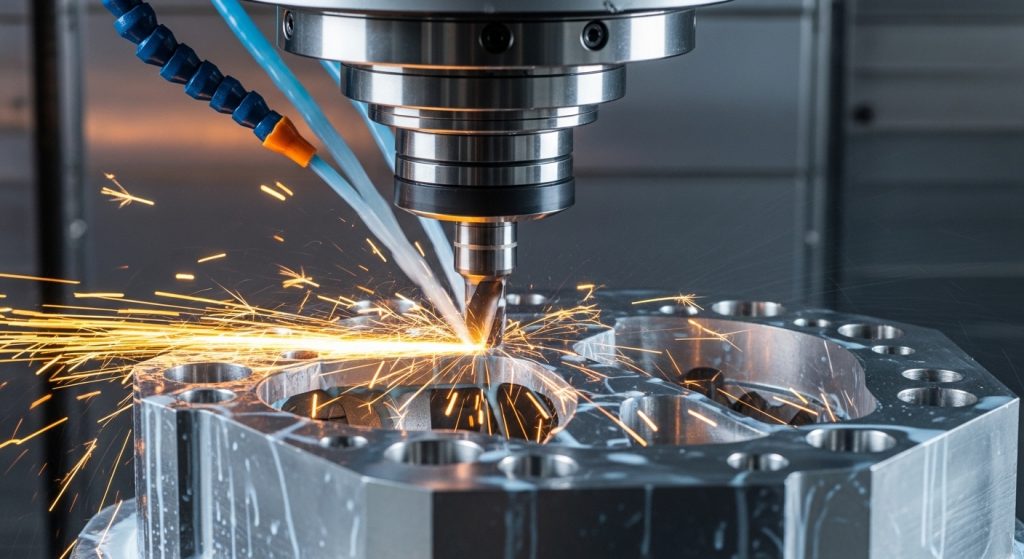
In my years working with advanced fabrication, I have seen how precision CNC metalwork transforms raw blocks of titanium and aluminum into flight-ready components. It is the backbone of modern engineering. If you are looking for parts that require extreme accuracy and repeatability, understanding this process is essential for your project's success.
What Defines Precision CNC Metalwork?
Precision CNC metalwork refers to the use of automated machines to remove material from a workpiece with extreme accuracy. It encompasses various techniques like milling, turning, and drilling, all controlled by a central computer. This method is preferred for complex geometries that manual machining simply cannot achieve, providing a level of precision manufacturing that meets rigorous industrial standards.
The "precision" aspect is what sets this apart from standard machining. While standard work might be "good enough" for a garden gate, precision work is required for fuel injectors or surgical tools. We measure success in "thous" (thousandths of an inch). When a part must fit into an assembly with zero wiggle room, CNC is the only way to go.
| Feature | Standard Machining | Precision CNC Metalwork |
| Tolerance Range | +/- 0.010" | +/- 0.001" to 0.0001" |
| Repeatability | Moderate (Human dependent) | Extremely High (Software driven) |
| Complexity | Simple shapes | Complex, multi-axis geometries |
| Automation | Manual or semi-auto | Fully automated 3, 4, or 5-axis |
What Are the Primary Benefits of CNC Metalwork?
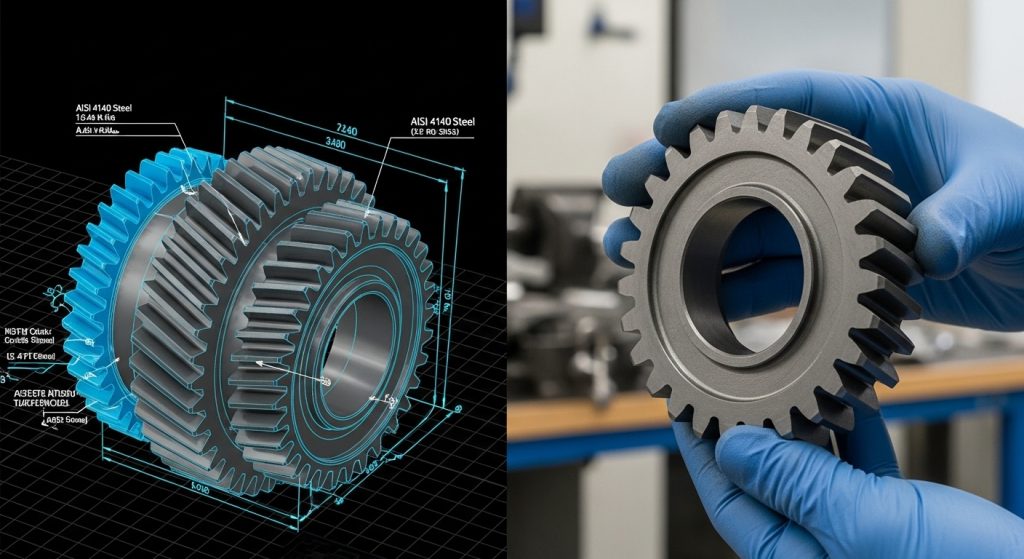
The primary benefits of precision CNC metalwork include unmatched accuracy, high production speed, and significant waste reduction. Because the process is automated, it operates 24/7 with minimal supervision, drastically lowering labor costs. Furthermore, the digital nature of CNC allows for rapid prototyping, enabling engineers to tweak designs in software before cutting any expensive metal.
One of the biggest wins I have witnessed is the "set it and forget it" reliability. Once the G-code is optimized, the machine performs exactly the same way every single time. This consistency is vital for safety-critical industries. According to recent industry benchmarks, transitioning to high-precision CNC can reduce part rejection rates by over 30% compared to traditional methods.
Increased Efficiency and Speed
Modern CNC machines can move at incredible speeds without sacrificing detail. High-speed spindles and automatic tool changers mean the machine never stops to "think."
Material Versatility
Whether you are working with hardened steel, lightweight aluminum, or exotic alloys like Inconel, CNC machines handle them all. The software adjusts the feed rates and cutting speeds automatically to suit the material’s hardness.
How Does CNC Turning Differ from Milling?
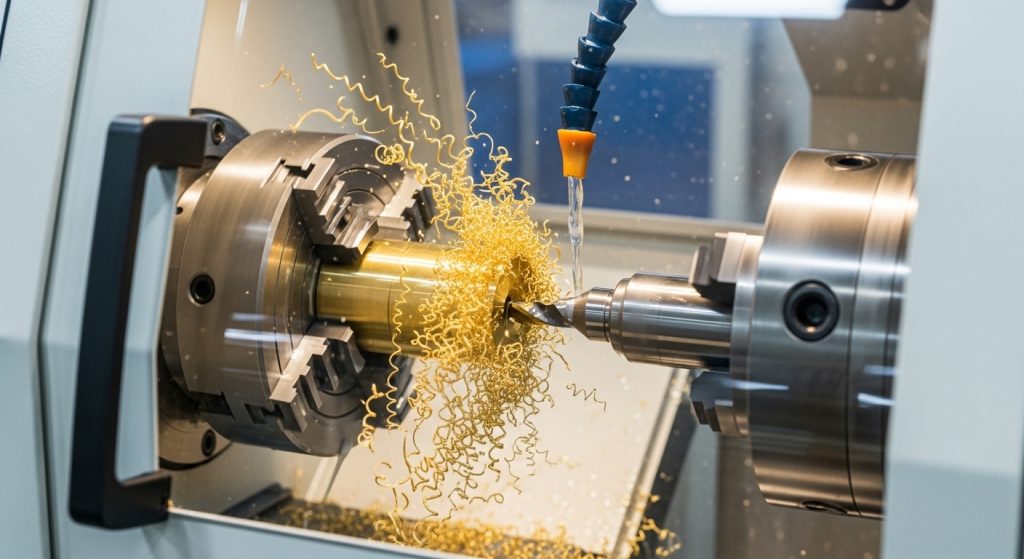
CNC turning involves rotating the workpiece against a stationary cutting tool, making it ideal for cylindrical parts like shafts and bolts. Milling, on the other hand, uses rotating tools to remove material from a stationary workpiece. While milling is best for flat surfaces and pockets, turning is the go-to method for creating perfectly round, symmetrical components.
Tip: If your part is primarily round, start with a turning process. It is often faster and more cost-effective than trying to mill a cylindrical shape from a square block.
I often see designers try to mill features that would be much cheaper to turn. By understanding the "lathe vs. mill" dynamic, you can save roughly 15-20% on your manufacturing costs simply by choosing the right machine for the geometry.
Why is Precision Critical in the Aerospace Industry?
In the aerospace sector, precision is a non-negotiable requirement because even a microscopic deviation can lead to catastrophic mechanical failure. Aircraft components must withstand extreme pressure and temperature fluctuations. CNC metalwork provides the structural integrity and tight tolerances necessary for engine parts, landing gear, and fuselage brackets that must perform under stress.
I once worked on a turbine blade project where the tolerance was less than the width of a human hair. At 30,000 feet, thermal expansion is a real threat. If that part isn't machined to exact specs, the engine won't just run poorly—it could fail entirely. This is why aerospace remains one of the largest adopters of 5-axis CNC technology.
What are the Use Cases for Precision Zinc Die Casting?
Precision zinc die casting is used for high-volume production of complex, high-strength parts that require excellent thin-wall capabilities. Zinc alloys allow for intricate details and smooth surface finishes right out of the mold. It is commonly used for automotive sensors, electronic housings, and intricate decorative hardware where durability and precision are both required.
- Automotive: Used for fuel systems and interior aesthetics.
- Electronics: Ideal for EMI/RFI shielding in delicate circuits.
- Hardware: Perfect for locks and gears that require high wear resistance.
How Do Multi-Axis Machines Improve Quality?
Multi-axis machines, such as 5-axis CNC centers, allow the cutting tool to reach the workpiece from five different directions simultaneously. This eliminates the need to manually reposition the part, which is where most errors occur. By completing a part in a "single setup," you ensure that all features are perfectly aligned with one another, resulting in superior geometric accuracy.
Tip: Use 5-axis machining for parts with contoured surfaces. It provides a better surface finish because the tool can maintain an optimal cutting angle at all times.
What Role Does Software Play in CNC Precision?
The software, specifically CAD (Computer-Aided Design) and CAM (Computer-Aided Manufacturing), acts as the "brain" of the operation. CAD creates the geometry, while CAM translates that geometry into coordinates the machine understands. High-end CAM software can simulate the entire cutting process, spotting potential tool collisions or errors before the machine even starts.
| Software Type | Primary Function | Importance to Precision |
| CAD | 3D Modeling | Defines the "perfect" theoretical part. |
| CAM | Toolpath Generation | Determines how the tool moves to stay precise. |
| ERP | Production Tracking | Ensures material quality and batch consistency. |
How to Choose the Right Precision Partner?
Choosing the right partner requires looking beyond the price tag to evaluate their quality certifications, machine fleet, and engineering expertise. A high-quality shop will hold ISO 9001 or AS9100 certifications. They should offer a DFM (Design for Manufacturing) review to help you optimize your part for the CNC process, which can lead to significant cost savings and better part performance.
In my experience, the best manufacturers are the ones who ask questions. If a shop takes your file and hits "print" without looking for potential issues, walk away. You want a partner like Sunon Mould that understands the interplay between material science and machine physics.
Final Thoughts on Precision CNC Metalwork
Precision CNC metalwork is more than just a manufacturing method; it is a critical competitive advantage for companies requiring high-performance components. By integrating advanced software with multi-axis machinery, it delivers the speed, accuracy, and repeatability needed to scale complex projects. As industries push toward tighter tolerances, CNC remains the gold standard for quality.
Looking ahead, the fusion of AI-driven optimization and 5-axis machining is set to make the process even more efficient. For businesses, the choice of a manufacturing partner is the most decisive factor in project success. Investing in precision today ensures that your products can withstand the rigorous demands of tomorrow's markets, from the depths of the ocean to the edge of space.
Whether you are developing a revolutionary medical device or a critical aerospace assembly, the reliability of your components starts with the precision of the cut.
