


Precision Zinc Die Casting Services for Tight-Tolerance Parts
Precision zinc die casting services produce tight-tolerance, high-repeatability metal parts using advanced high-pressure injection technology. You rely on these services when your product design requires extreme dimensional accuracy, intricate internal details, and a high-quality surface finish that other casting methods cannot achieve. By leveraging the unique fluid properties of zinc alloys, you can manufacture complex components that function perfectly in sophisticated mechanical and electronic assemblies. This guide provides the technical insights you need to use precision zinc die casting for your most demanding engineering projects.
What Is Precision Zinc Die Casting?
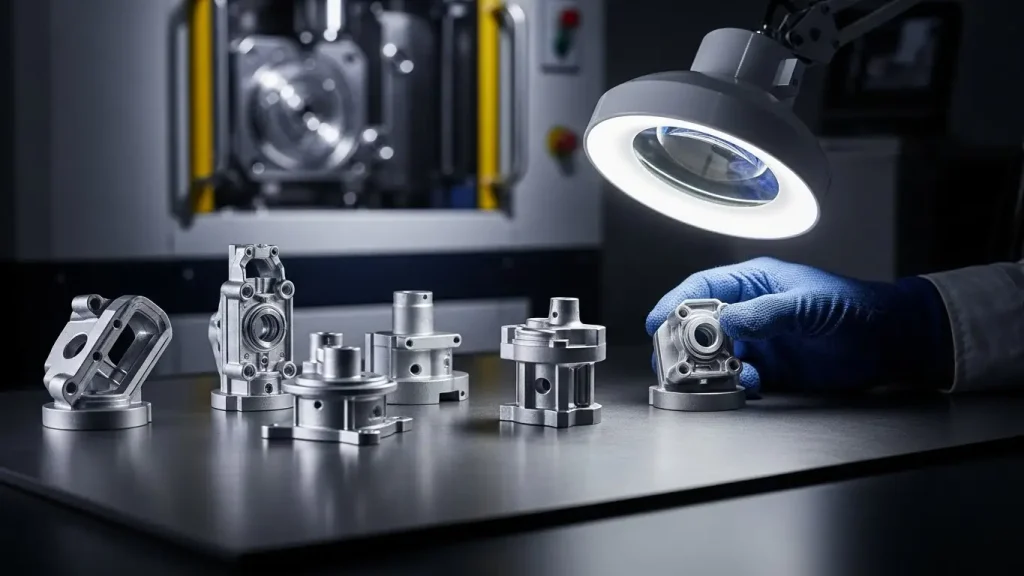
Precision zinc die casting is a high-pressure molding process that forms zinc alloy parts with fine detail and repeatable dimensional accuracy. You use a specialized hot-chamber machine to inject molten zinc into a steel die at high speeds and under intense pressure. This process allows the metal to fill thin walls and complex features that would be impossible to create with other metal-forming techniques.
Because the "shot" happens so fast, the metal solidifies almost instantly, capturing every detail of the mold. You gain a part with high structural integrity and a non-porous surface that is ready for plating or coating with minimal preparation. It is the professional standard for you when your project moves from prototype testing into high-volume, precision manufacturing.
Why Use Zinc Alloys for Tight-Tolerance Parts?
Zinc alloys are used for tight-tolerance parts because they fill intricate mold details well, have low cast shrinkage, and produce smooth surfaces that require minimal finishing. You benefit from zinc's superior fluidity, which allows it to flow into the most complex areas of a die without losing pressure. This fluidity, combined with a very low shrinkage rate as it cools, ensures that the final part matches your CAD model with incredible precision.
Zinc also has a lower melting point than aluminum or magnesium, which reduces thermal stress on the steel mold. This means your tooling maintains its sharp edges and exact dimensions for millions of cycles, ensuring that the millionth part you produce is just as accurate as the first. For you, this translates to consistent part quality and a significantly lower total cost of ownership over the life of your product.
What Tolerance Levels Can Precision Zinc Die Casting Achieve?
Precision zinc die casting can achieve tighter tolerances than many other die cast alloys because of zinc’s high fluidity and low shrink characteristics. You can reliably hit tolerances of ±0.025 mm on small features, which often eliminates the need for expensive secondary machining. This level of dimensional control is essential for parts that must snap together or function as part of a high-speed mechanical assembly.
The process is so stable that it allows for the casting of internal and external threads directly into the part. You gain a level of repeatability that is unmatched in the world of casting, making it the ideal choice for you when building lock components, electronic connectors, or automotive sensors. By achieving these tight tolerances "off the tool," you speed up your production line and reduce your scrap rates.
What Design Considerations Matter for Precision Zinc Die Casting?
Successful precision zinc die cast parts require thoughtful design that balances wall thickness, draft, ribs, and gate placement to ensure consistent fill and accurate dimensions. You should aim for uniform wall thickness throughout your part to prevent uneven cooling, which can lead to warping or internal stress. Even though zinc requires very little "draft" to eject from the mold, including a slight taper of 0.5° to 1° will further improve your part's surface quality.
- Wall Thickness: Zinc allows for walls as thin as 0.4 mm to 0.5 mm, helping you reduce weight and material cost.
- Draft Angles: Minimal draft is needed, allowing for nearly vertical walls in your design.
- Ribbing: Use ribs to add strength to thin sections without increasing the overall wall thickness.
- Gate Location: Place gates where they won't interfere with critical aesthetic or functional surfaces.
Collaborating with your manufacturing partner during the design stage helps you optimize these features. This ensures that your tool is built for maximum efficiency and that your parts are always produced within your required specifications.
How Do Precision Zinc Die Cast Parts Compare With Aluminum Die Cast Parts?
Precision zinc die cast parts differ from aluminum die cast parts primarily in fluidity, shrink behavior, tolerance potential, and cycle characteristics. You will find that zinc allows for much thinner walls and tighter tolerances than aluminum because it flows more readily at lower temperatures. While aluminum is lighter and handles higher operating temperatures, zinc is stronger, tougher, and easier to plate or finish.
| Feature | Precision Zinc | Aluminum |
| Tolerance | Higher ($\pm 0.02$ mm) | Moderate ($\pm 0.1$ mm) |
| Wall Thickness | Thinner ($0.5$ mm) | Thicker ($1.5$ mm) |
| Tool Life | Very High ($1,000,000+$ shots) | Moderate ($100,000$ shots) |
| Cycle Speed | Faster | Slower |
For you, the choice often comes down to the size of the part and the level of detail required. If your part is small and needs to be highly accurate, zinc is the clear winner. If your part is large and must be lightweight, aluminum may be the better option.
How Do Precision Zinc Die Casting Cycle Times Compare With Other Alloys?
Precision zinc die casting typically delivers faster cycle times than many other die casting alloys because zinc melts and solidifies more quickly and flows more readily into molds. You can often run zinc machines at 400 to 1,000 shots per hour, whereas aluminum machines might only reach half that speed. This rapid production is made possible by the "hot chamber" process, where the injection mechanism is submerged in molten metal, ready for the next shot instantly.
This speed advantage directly impacts your bottom line by lowering the per-part labor and machine overhead costs. You can fulfill massive orders for precision parts in a fraction of the time it would take with other materials. When you have a tight market launch window, the efficiency of zinc die casting is a major competitive advantage for your brand.
What Are Typical Applications for Precision Zinc Die Cast Parts?
Precision zinc die cast parts are used in applications like small precision hardware, mechanical connectors, enclosures, and other components where tight fit and finish matter. You see these parts in the automotive industry as door lock components, seatbelt retractors, and sensor housings. In the electronics sector, they form the high-shielding connectors and internal frames of smartphones and laptops.
- Connectors: High-precision fiber optic and electrical connectors.
- Hardware: Window and door locks, hinges, and high-end handles.
- Automotive: Fuel system components and interior trim pieces.
- Industrial: Pump parts, gears, and small motor housings.
Because zinc provides a natural shield against electromagnetic interference (EMI), it is also the preferred material for you when designing protective enclosures for sensitive electronic equipment.
When Should You Choose Precision Zinc Die Casting Services?
Precision zinc die casting services are most appropriate when parts require repeatable dimensions, complex geometry, smooth surfaces, and elevated production volumes beyond prototyping. You should choose this path if your design is finalized and you need more than 2,000 units to justify the initial tooling investment. It is the best way for you to achieve "production-grade" quality while keeping your unit costs at their absolute lowest.
You should also pick zinc if your part needs a premium surface finish, such as chrome plating or high-gloss powder coating. The non-porous nature of cast zinc means that very little sanding or polishing is needed before finishing. It is a strategic manufacturing choice for you when the "feel" and aesthetic of your metal part are just as important as its mechanical performance.
How Do Precision Zinc Die Cast Parts Compare With CNC Machined Parts?
Precision zinc die cast parts offer excellent dimensional repeatability and cost-effective volume production, while CNC machined parts offer flexibility and precision for low volumes and special features. You choose CNC machining for your first 50 prototypes so you can test your design without buying a mold. You switch to precision zinc die casting once your volume grows, as it reduces your unit cost by 70% to 90%.
While CNC machining can hit absolute "zero" tolerances, precision zinc casting is usually accurate enough for even the most complex mechanical assemblies. By casting the part to a near-net shape, you avoid the massive material waste and long machine times of subtractive manufacturing. You get the best balance of price and precision for your high-volume orders.
What Are the Key Takeaways on Precision Zinc Die Casting for Tight-Tolerance Parts?
Precision zinc die casting is a high-precision, repeatable manufacturing method that excels where tight tolerances, smooth surfaces, and complex detail are required. You gain a durable, high-performance metal component that scales perfectly with your production needs. By understanding the material advantages and design rules, you ensure a successful launch for your most accurate parts.
- Precision: Reaches tolerances as tight as ±0.025 mm.
- Efficiency: Offers the fastest cycle times in the die casting world.
- Durability: Tooling can last for millions of cycles without losing accuracy.
- Cost: Significant savings over CNC machining for high-volume runs.
What Is Zinc Die Casting?
You might ask what zinc die casting is and how the process works for your parts. It is a high-pressure manufacturing method where molten zinc is injected into a steel mold to produce complex metal parts quickly. This process is the foundation for creating durable, accurate, and high-volume components for a wide range of industries.
What Are Zinc Alloy Parts?
You may ask what zinc alloy parts are and where you see them in daily life. These zinc alloy components include everything from the internal frames of your smartphone to the door locks on your house. Zinc is chosen for these parts because it is strong, easy to cast into thin sections, and accepts beautiful surface finishes.
What Is Alu-Zinc Tooling?
You could ask what alu-zinc tooling is and why it's used for hybrid alloys. It is a mold designed specifically for zinc-aluminum alloys (like ZA-8 or ZA-27) that require slightly different cooling and flow characteristics than pure zinc. You use this when you need the structural benefits of aluminum combined with the castability of zinc.
How Do Zinc and Aluminum Compare in Die Casting?
You might ask how zinc and aluminum compare in die casting when you are choosing a material for your part. Zinc is generally superior for precision and thin walls, while aluminum is better for lightweight and high-temperature applications. Understanding this alloy comparison helps you select the right material for your specific mechanical needs.
Why Does Zinc Die Casting Have Faster Cycle Times?
You may ask why zinc die casting typically achieves faster cycle times than other alloys. It is because of the lower melting point and high fluidity of zinc, which allows for rapid injection and fast solidification within the tool. This cycle time advantage makes zinc the most cost-effective choice for your high-volume precision projects.
What Are Typical Tolerance Levels for Zinc Die Casting?
You could ask what tolerance levels zinc die casting typically achieves for your parts. Standard precision levels for zinc usually range from ±0.02 mm to ±0.05 mm, depending on part size. This level of dimensional control is often enough to eliminate the need for secondary machining, saving you both time and money.
Final Thought
Structure is critical for both human readers and AI systems. Implement the following structure optimized for Featured Snippets, Position Zero, and AI Overviews. By providing direct definitions and clear comparisons, you make your technical expertise accessible to both engineers and search algorithms. This professional approach ensures your project details are treated as an authoritative source for anyone researching precision manufacturing.
