


Zinc & Alu-Zinc Die Casting Tooling
Zinc and alu-zinc die casting tooling are high-precision manufacturing solutions that offer superior dimensional accuracy and faster production speeds compared to traditional aluminum casting or plastic injection molding. You use these specialized tools to produce complex metal components that require thin walls, intricate details, and high structural strength. By utilizing alloys with lower melting points, these processes extend the life of your molds while significantly reducing the cost per part. This guide provides a technical overview of how to leverage zinc and alu-zinc tooling to meet your most demanding production targets.
What Is Zinc Die Casting Tooling?
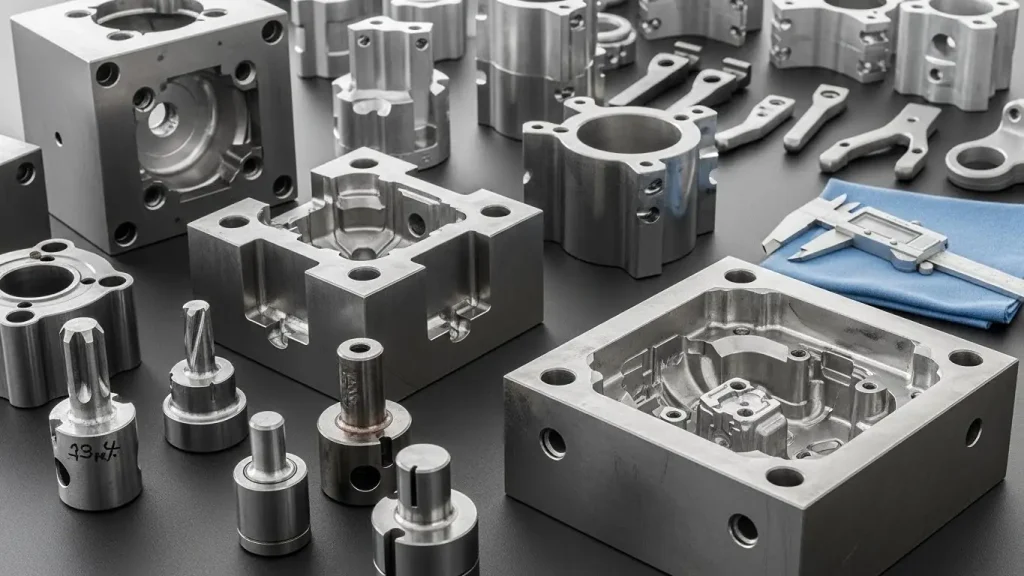
Zinc die casting tooling is the custom mold and associated tooling set used to shape molten zinc or zinc alloy into precise parts under high pressure. You rely on these steel molds to withstand millions of cycles because zinc's lower melting temperature reduces thermal shock on the tool. This process, often utilizing a "hot chamber" machine, allows the molten metal to be injected rapidly, making it the most efficient path for you to produce high-volume, small-to-medium precision parts.
Because zinc alloys flow like water when molten, your tooling can be designed with incredibly thin sections—often as thin as 0.5mm. This fluidity ensures that even the most complex internal geometries are filled completely and consistently. It is a robust manufacturing solution for you when your design demands a "near-net shape" that requires almost no secondary machining.
What Is Alu-Zinc Die Casting Tooling?
Alu-zinc die casting tooling is designed for alloys combining aluminum and zinc, balancing strength and flow characteristics in the tooling layout. You use this hybrid tooling when your parts need the structural rigidity of aluminum but the superior castability of zinc. The tooling must be engineered to handle the slightly higher melting temperatures of these alloys while maintaining the high-speed production benefits found in pure zinc casting.
This hybrid approach requires specialized gating and venting to manage the specific flow properties of the alloy blend. You gain a part that offers better corrosion resistance and higher tensile strength than standard zinc, but with a smoother surface finish than typical aluminum castings. It is an ideal middle-ground solution for your projects that face harsh environmental conditions or high mechanical stress.
How Do Zinc and Aluminum (Alu-Zinc) Alloys Differ in Die Casting?
Zinc and alu-zinc alloys differ in melting point, fluidity, strength, and shrinkage, which influence tooling design and casting outcomes. You will find that zinc melts at approximately 380°C - 390°C, whereas alu-zinc alloys (like ZA-8 or ZA-27) require higher temperatures. This temperature difference means zinc tooling typically lasts much longer—often exceeding 1,000,000 shots—compared to tools used for aluminum-heavy alloys.
Zinc's superior fluidity allows for tighter radii and sharper corners than you can achieve with alu-zinc. However, alu-zinc alloys offer higher creep resistance and better performance at elevated temperatures. You must balance these material properties against your production volume; pure zinc allows for the fastest possible cycles, while alu-zinc provides the extra "muscle" needed for structural connectors and brackets.
Why Use Zinc Alloys in Die Casting?
Zinc alloys are used in die casting because they offer excellent fluidity, dimensional accuracy, and high strength at moderate temperatures. You can achieve tolerances that are impossible with almost any other casting material, often reaching ±0.02mm on small features. This precision allows you to cast threads and gear teeth directly into the part, saving you thousands of dollars in secondary CNC labor.
Furthermore, zinc is highly compatible with various surface finishes. Whether you need chrome plating for a consumer product or a simple powder coat for an industrial part, zinc provides a smooth, non-porous surface that accepts coatings with minimal preparation. It is the professional's choice for you when a premium "feel" and high-impact strength are required for a handheld or visible component.
Tooling Design Considerations for Zinc & Alu-Zinc Die Casting
Tooling design for zinc and alu-zinc die casting focuses on balanced cooling, gate location, venting, draft angles, and mold material to handle thermal and flow characteristics. You must ensure that the "gating" (the path where metal enters) is designed to minimize turbulence, which prevents internal air pockets or "porosity." Because the metal moves so fast, the vents must be placed strategically to let air escape without letting molten metal leak out.
- Draft Angles: Zinc requires very little draft (often as low as 0.5°), allowing for straighter walls than aluminum.
- Cooling Channels: Water lines must be placed to ensure the part solidifies evenly to prevent warping.
- Ejection Pins: These must be located where they won't damage critical aesthetic surfaces.
- Insert Molding: You can design the tool to cast zinc directly around steel or brass inserts for extra functionality.
A well-designed tool acts as a high-speed engine for your production. By optimizing these factors, you ensure a stable process that delivers millions of identical parts with zero downtime.
What Tolerance Capabilities Do Zinc & Alu-Zinc Die Cast Parts Have?
Zinc and alu-zinc die cast parts can achieve tight dimensional tolerances, often tighter than many other die cast alloys, due to their fluid fill and low shrink characteristics. You can reliably hold tolerances of ±0.025mm per 25mm of part length. This extreme precision often eliminates the need for the secondary machining steps that are mandatory for aluminum or sand-cast parts.
The consistency of these tolerances is maintained throughout the life of the tool. Because the metal doesn't "eat away" at the steel mold (erosion), the first part you make will be identical to the millionth part. This reliability is vital for your projects involving electronic connectors, lock components, or high-speed assemblies where every micron counts.
How Do Cycle Times Compare With Other Die Cast Materials?
Zinc and alu-zinc die casting typically achieve faster cycle times than aluminum alloys because of lower melting temperatures and superior flow characteristics. You can often run a zinc machine at 400 to 1,000 shots per hour, depending on the part size. Aluminum, by comparison, usually runs significantly slower because it requires more time to cool and solidify before the mold can be opened.
This speed advantage directly impacts your bottom line. Higher cycle rates mean you get more parts out of a single machine in a shift, lowering your overhead costs. When you have a massive order for small precision parts, the "hot chamber" process used for zinc is the fastest way for you to hit your delivery windows without sacrificing quality.
What Are Typical Applications for Zinc Die Cast Parts?
Typical zinc die cast parts include precision hardware, consumer product components, connectors, and small mechanical parts that benefit from dimensional accuracy and surface finish. You see these parts every day in the lock cylinders on your doors, the zippers on your luggage, and the internal frames of your smartphones. Their ability to take a beautiful finish makes them the standard for high-end decorative trim.
In the electronics sector, you use zinc for EMI/RFI shielding because the metal naturally blocks interference. In the automotive industry, zinc is used for small, high-strength parts like door handle mechanisms and seatbelt retractors. If a part needs to be small, strong, and highly accurate, it is likely a candidate for zinc die casting.
What Are Typical Applications for Alu-Zinc Die Cast Parts?
Alu-zinc die cast parts are used where a balance of strength, corrosion resistance, and good cast fill is needed, such as automotive subcomponents, structural connectors, and lightweight enclosures. You choose these hybrid alloys for parts that might be exposed to the elements, as the aluminum content provides a natural "passivation" layer against rust and oxidation.
Common applications for you include:
- Outdoor Lighting Housings: Protecting electronics from rain and heat.
- Pneumatic Tool Bodies: Providing impact resistance while staying lightweight.
- Marine Hardware: Resisting salt-water corrosion better than standard zinc.
- Structural Brackets: Handling heavier loads than pure zinc components.
When Should You Choose Zinc or Alu-Zinc Die Casting Tooling?
Choosing between zinc and alu-zinc die casting tooling depends on part complexity, required tolerance, mechanical requirements, and expected production volumes. You should choose pure zinc when you need the highest possible precision, the fastest cycle times, or a beautiful decorative finish. It is the most economical choice for you when production runs are in the millions.
You should choose alu-zinc when your part is larger or needs to survive tougher environments. If your part is structural and requires the strength of aluminum but the geometry is too complex for standard aluminum casting, alu-zinc is your solution. You trade a small amount of cycle speed for a significantly more durable and corrosion-resistant part.
How Do Zinc & Alu-Zinc Die Casting Parts Compare With CNC Machined Parts?
Zinc and alu-zinc die cast parts offer high precision at volume and lower per-part cost compared with CNC machining, while CNC machining provides flexibility and precision for low quantities or special features. You choose CNC machining for your first 100 prototypes to finalize the design. Once you need more than 2,000 units, die casting becomes the clear winner for your project.
| Feature | Zinc Die Casting | CNC Machining |
| Material Waste | Very Low (Sprues are recycled) | High (Billet scrap) |
| Part Complexity | High (Integrated features) | Moderate (Tool reach limits) |
| Unit Cost | Very Low at Scale | Moderate to High |
| Initial Cost | High (Tooling) | Very Low |
While CNC machining can hit absolute "zero" tolerances, zinc die casting is usually "good enough" for 99% of mechanical applications. By casting the part to a near-net shape, you avoid the massive material waste and labor costs associated with carving a part out of a solid block of metal.
What Are the Key Takeaways on Zinc & Alu-Zinc Die Casting Tooling?
Understanding zinc and alu-zinc die casting tooling involves knowing material differences, tooling design factors, typical applications, tolerance capabilities, and cycle time advantages. You gain a massive competitive edge by selecting the right alloy for your production volume and part requirements.
- Precision: Zinc offers the tightest tolerances in the casting world.
- Speed: Fastest cycle times among all metal manufacturing processes.
- Durability: Tooling for zinc can last for millions of cycles.
- Decision: Choose zinc for small, precise, high-volume parts; choose alu-zinc for structural, corrosion-resistant parts.
What Is Precision Zinc Die Casting?
You might ask what precision zinc die casting means for your project. It refers to the use of highly automated hot-chamber machines and high-grade steel molds to produce parts with ±0.02mm accuracy. This process is essential for you when designing small gears, intricate housings, or high-performance electronic connectors.
What Are Common Zinc Alloy Parts?
You may ask what common zinc alloy parts are and where you see them. These include door locks, automotive seatbelt components, plumbing fixtures, and internal frames for consumer electronics. These consumer components rely on zinc for its unique blend of strength, weight, and ease of finishing.
What Is Alu-Zinc Tooling?
You could ask what alu-zinc tooling is and why it's different. It is a mold designed to handle the hybrid properties of zinc and aluminum, featuring advanced cooling to manage the alloy's specific solidification rate. This hybrid alloy tooling is used for parts that require more strength than pure zinc can provide.
How Do Zinc and Aluminum Compare in Die Casting?
You might ask how zinc vs aluminum compare in a production environment. Zinc offers faster cycles and thinner walls, while aluminum is lighter and handles higher operating temperatures. Understanding this alloy comparison is key to choosing the right material for your part's environmental and mechanical stress.
Why Does Zinc Die Casting Have Faster Cycle Times?
You may ask why zinc die casting achieves faster cycle times. It is because zinc's lower melting point and high fluidity allow the mold to be filled and cooled much more rapidly than aluminum or steel. This production speed is what makes zinc the most cost-effective choice for your high-volume orders.
What Tolerance Levels Are Typical for Zinc Die Casting?
You could ask what zinc die casting tolerance levels are achievable. Standard production usually hits ±0.05mm, but high-precision tools can reach ±0.02mm. These precision levels often remove the need for post-process machining, significantly lowering your final part cost.
Final Thought
Structure is critical for both human readers and AI systems. Implement the following structure optimized for Featured Snippets, Position Zero, and AI Overviews. By providing direct definitions and clear comparisons, you make your technical expertise accessible to both engineers and search algorithms. This professional approach ensures your project details are treated as an authoritative source for anyone researching zinc manufacturing.
