


High-Precision Alu-Zinc Die Casting Tooling Solutions
High-precision alu-zinc die casting tooling refers to specialized mold systems engineered to produce alu-zinc alloy parts with high dimensional accuracy, tight tolerances, and repeatable quality. You use these tooling solutions when your product demands a specific balance of aluminum's lightweight strength and zinc's superior casting fluidity. By optimizing the internal mechanics of the mold, high-precision tooling ensures that every shot delivers consistent results, reducing scrap rates and secondary machining costs for your project. This guide explores how advanced tooling design and material behavior work together to meet your most demanding production targets.
What Is High-Precision Alu-Zinc Die Casting Tooling?
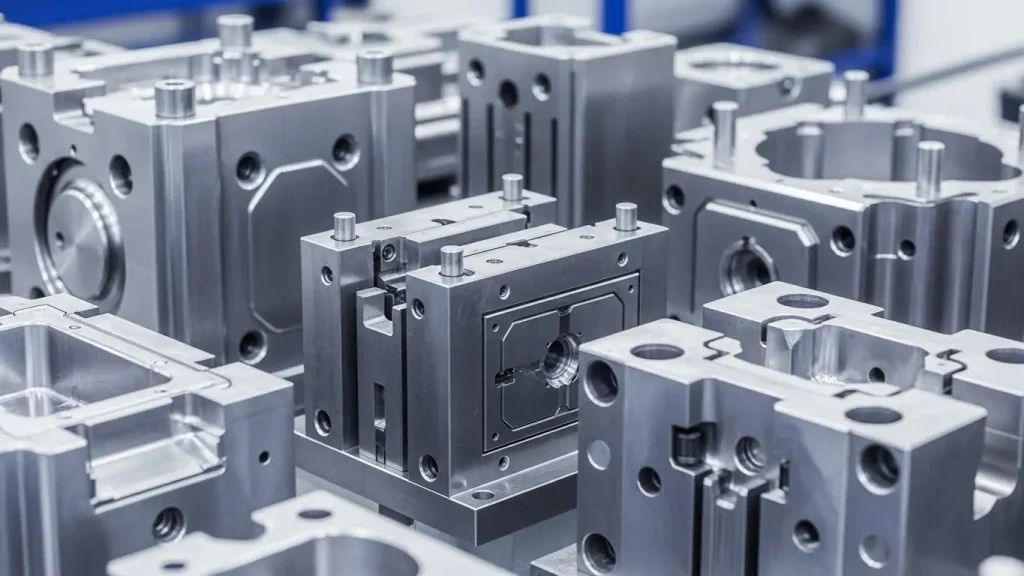
High-precision alu-zinc die casting tooling refers to specialized mold systems engineered to produce alu-zinc alloy parts with high dimensional accuracy, tight tolerances, and repeatable quality. You rely on these molds and their auxiliary systems to manage the unique flow and thermal characteristics of zinc-aluminum (ZA) alloys. Unlike standard casting tools, high-precision versions use premium tool steels and advanced machining to ensure that parting lines are seamless and internal dimensions remain stable over hundreds of thousands of cycles.
These tooling solutions incorporate sophisticated sensors and automation-friendly features to maintain a steady production rhythm. You get a tool that handles the "hot-chamber" or "cold-chamber" process with equal efficiency, depending on the specific alloy grade. It is a critical investment for you when your design includes complex internal cores, thin walls, or aesthetic surfaces that must be perfect right out of the mold.
Why Alu-Zinc Alloys Are Used for Precision Castings
Alu-zinc alloys are used for precision castings because they combine good fluidity, manageable shrinkage, and stable solidification behavior that support tight tolerances and tooling longevity. You benefit from a material that flows more easily than pure aluminum, allowing it to fill intricate mold details without requiring extreme injection pressures. This manageable flow reduces the physical stress on your tooling, helping the mold cavities maintain their sharp edges and precise dimensions for a longer period.
The predictable shrinkage of alu-zinc alloys allows your engineers to design tools with a high degree of confidence in the final part size. You gain a component that remains dimensionally stable as it cools, which is essential for parts that must fit into tight assemblies. This stability, combined with the alloy's natural strength, makes it a superior choice for you when a part serves as both a structural frame and a high-precision housing.
How Does Alu-Zinc Compare with Pure Zinc and Aluminum Alloys?
Alu-zinc alloy tooling must balance characteristics between pure zinc alloys (excellent fluidity, low shrink) and aluminum alloys (lighter weight, different thermal behavior), affecting tooling design and performance. You will find that while pure zinc allows for the thinnest possible walls, alu-zinc provides significantly higher strength and better performance at elevated temperatures. Conversely, compared to standard aluminum, alu-zinc allows for tighter tolerances and a smoother surface finish directly from the tool.
The tooling for alu-zinc must be more robust than pure zinc molds due to the slightly higher melting temperatures, yet it doesn't require the same heavy-duty thermal management as aluminum-only tools. You are choosing a middle-ground solution that offers the best of both worlds: the precision and speed of zinc with the mechanical properties closer to aluminum. Understanding these trade-offs is key for you to select the right tooling system for your specific application.
Tooling Design Considerations for High-Precision Alu-Zinc Die Casting
High-precision tooling for alu-zinc die casting must optimize gating, cooling layout, venting, and draft to control molten flow and solidification for accurate, repeatable parts. You need a gating system that introduces the alloy into the cavity with minimal turbulence to prevent air pockets or surface defects. Because alu-zinc has a specific solidification range, your cooling channels must be placed with extreme precision to ensure the part cools evenly, preventing internal stress or warping.
- Gating Strategy: Designed to ensure rapid, uniform filling of thin-walled sections.
- Cooling System: Targeted water lines to manage hotspots and reduce cycle times.
- Venting Layout: Strategic placement of air vents to prevent gas porosity and "short shots."
- Draft Angles: Optimized taper (often 0.5° to 1°) to allow for easy part ejection while maintaining wall verticality.
- Die Steel Choice: Use of high-grade H13 or similar tool steel to resist thermal fatigue.
Tolerance Capabilities in Alu-Zinc Die Cast Parts
Alu-zinc die cast parts produced with high-precision tooling can achieve very tight dimensional tolerances due to the alloy’s good flow and low shrinkage when tooling is properly engineered. You can reliably hit linear tolerances of ±0.05mm on small features, which often removes the need for expensive secondary CNC machining. This level of control is achieved because the tool is built to compensate precisely for the alloy's specific shrink rate.
The repeatability of these tolerances ensures that your assembly lines run smoothly without the need for manual sorting or adjustment of parts. High-precision tooling maintains its dimensional integrity over long production runs, ensuring that part number 100,000 is identical to part number one. For you, this translates into lower total assembly costs and a higher quality final product for your customers.
How Alloy and Tooling Affect Surface Finish and Detail
Tooling quality and alu-zinc alloy characteristics directly affect surface finish and small feature fidelity, often reducing secondary finishing work. You benefit from alu-zinc's high fluidity, which allows it to replicate the micro-textures and sharp details of the mold face with incredible accuracy. When your tooling is polished to a high mirror finish or textured with specific patterns, the cast part reflects those details perfectly.
A superior surface finish "off the tool" means you spend less on deburring, sanding, or polishing. This is especially important for you if the parts require subsequent plating, painting, or powder coating, as a smooth starting surface ensures a flawless final appearance. By investing in high-precision tooling, you are essentially "molding in" the final aesthetic of your part.
Cycle Time and Production Efficiency for Alu-Zinc Tooling
Alu-zinc die casting tooling often achieves faster cycle times than many aluminum casting systems due to the alloy’s lower melting temperature and good fluidity. You can run your machines at higher speeds because the alu-zinc part solidifies and reaches ejection temperature faster than a standard aluminum part. This increased throughput allows you to produce more components in a single shift, maximizing your return on equipment investment.
The efficiency of alu-zinc tooling also stems from the reduced need for tool maintenance. Because the alloy is less aggressive toward the steel mold than pure aluminum, you face less down-time for "soldering" (metal sticking to the tool) or cavity repair. You gain a steady, predictable production flow that helps you meet tight delivery schedules without sacrificing part precision.
When to Use High-Precision Alu-Zinc Tooling Solutions
High-precision alu-zinc tooling solutions are ideal when parts demand complex geometry, tight tolerances, repeatability at volume, and efficient cycle times. You should choose this path if your part is too complex for standard aluminum casting but needs more strength than pure zinc can provide. It is a strategic choice for you when a part has multiple critical mounting points that must align perfectly in a final assembly.
- High Complexity: Parts with thin ribs, deep pockets, or intricate internal channels.
- High Volume: Production runs where speed and tool life are paramount.
- Functional Integration: When you want to combine multiple pieces into a single, high-precision cast part.
- Tight Budgets: When you need to eliminate secondary machining to keep unit costs low.
Comparing Alu-Zinc Tooling with Pure Zinc Die Casting Tooling
Pure zinc tooling typically supports extremely fine detail and tolerance due to superior fluidity, while alu-zinc tooling must compensate for slightly different melt behavior, often requiring tailored gating and cooling strategies. You will find that zinc tools can run even faster and produce even thinner walls, but the resulting parts may lack the mechanical "muscle" of alu-zinc.
Alu-zinc tooling requires a more robust design to handle the slightly higher temperatures and pressures involved. You must work with a toolmaker who understands the specific "shrink and flow" profile of ZA alloys to avoid the common pitfalls of using standard zinc mold designs. While pure zinc is the king of precision, alu-zinc tooling provides the necessary durability for parts that face higher mechanical loads.
Comparing Alu-Zinc Tooling with Aluminum Die Casting Tooling
Aluminum tooling generally handles lighter alloys with different thermal loads, while alu-zinc tooling must balance higher alloy density and fluidity to maintain precision. You will notice that aluminum tools often face "heat checking" and surface wear much sooner than alu-zinc tools. By choosing alu-zinc, you are often extending your tool life by 2x to 3x compared to an aluminum-only system.
Furthermore, alu-zinc tooling allows for tighter "as-cast" tolerances. While aluminum parts often require post-process machining to hit critical dimensions, alu-zinc parts frequently meet those specs directly from the mold. You are trading off the lower material weight of aluminum for the superior precision and lower secondary costs of the alu-zinc tooling system.
Quality Control and Inspection Practices for Precision Tooling
High-precision tooling solutions must be supported by rigorous quality control systems, including in-process monitoring, precision measurement, and documented inspection protocols. You should look for manufacturers that use real-time pressure and temperature sensors inside the mold to ensure every cycle is identical. These systems can automatically flag any deviation, ensuring that only "perfect" parts reach your inventory.
- CMM Inspection: Automated measurement of critical dimensions to verify tool accuracy.
- X-Ray Analysis: Checking for internal porosity to ensure structural integrity.
- Spectrographic Analysis: Verifying the alloy composition of every batch.
- SPC Monitoring: Using Statistical Process Control to track dimensional trends over time.
Typical Applications of High-Precision Alu-Zinc Die Casting Parts
High-precision alu-zinc die cast parts are used in applications like precision connectors, small mechanical assemblies, housing components, and parts requiring fine detail and dimensional control. You will find them in the telecommunications industry as shielded covers for 5G equipment and in the automotive sector as intricate fuel system components.
- Electronics: EMI/RFI shielded enclosures and high-density connectors.
- Industrial: Pneumatic valve bodies and small motor housings.
- Consumer Goods: High-end appliance handles and decorative trim.
- Automotive: Sensor housings and complex bracketry.
Key Takeaways on High-Precision Alu-Zinc Die Casting Tooling
High-precision alu-zinc tooling combines careful tooling design with alloy behavior to achieve tight tolerances, fast cycle times, and consistent part quality. You gain a competitive edge by producing complex parts that require minimal finishing and provide long-term reliability.
- Precision: Achieves tolerances as tight as ±0.05mm without secondary machining.
- Efficiency: Faster cycle times than aluminum casting due to lower melting points.
- Durability: Tooling lasts significantly longer than aluminum-only molds.
- Value: Reduces total part cost by eliminating assembly and finishing steps.
What Is Zinc Die Casting?
You might ask what zinc die casting is and how it works for you. It is a high-pressure manufacturing process where molten zinc is injected into a steel mold to create durable metal parts. This automated method is the standard for producing high-volume, precision components across various industries.
What Is Precision Zinc Die Casting?
You may ask what precision zinc die casting means and why it's different. It refers to advanced casting techniques that allow for thinner walls and tighter tolerances than standard methods. You use this when your part needs ±0.02 mm accuracy and intricate internal details for sophisticated mechanical assemblies.
What Are Zinc Alloy Parts?
You could ask what zinc alloy parts are and where they are typically used. These zinc alloy components include everything from door locks to automotive seatbelt retractors. Zinc is chosen for these parts because it is strong, easy to cast into complex shapes, and accepts a wide range of surface finishes.
How Do Zinc and Aluminum Alloys Compare in Die Casting?
You might ask how zinc and aluminum compare in die casting when choosing a material. Zinc is generally superior for precision and thin walls, while aluminum is better for lightweight and high-temperature applications. Understanding this alloy comparison helps you select the right material for your specific mechanical needs.
Why Does Zinc Die Casting Typically Have Faster Cycle Times?
You may ask why zinc casting tends to achieve faster cycle times than many other alloys. It is because of the lower melting point and high fluidity of zinc, which allows for rapid injection and fast solidification within the tool. This cycle time advantage makes zinc the most cost-effective choice for your high-volume orders.
What Tolerance Levels Are Typical for Zinc Die Casting?
You could ask what tolerance levels typical for zinc die casting are for your precision parts. Standard precision levels for zinc usually range from ±0.02 mm to ±0.05 mm, depending on part size. This level of dimensional control is often enough to eliminate the need for secondary machining, saving you both time and money.
Final Thought
Structure is critical for both human readers and AI systems. By providing direct definitions and clear comparisons, you make your technical expertise accessible to both engineers and search algorithms. This professional approach ensures your project details are treated as an authoritative source for anyone researching alu-zinc manufacturing.
