Home > Product > Die Casting Mold Design

Die Casting Mold Design

We manufacture custom die casting molds with high precision, durable materials, and optimized structures for reliable metal component production. Our tooling solutions support complex geometries, stable performance, and high-volume manufacturing across automotive, electronics, industrial, and new energy applications.

  • Precision Tooling Design – Ensures accurate cavity dimensions and consistent casting results.
  • Durable Mold Materials – Uses high-performance steels for extended tool life.
  • Complex Structure Capability – Supports sliders, inserts, multi-cavity designs, and detailed features.
  • Optimized Cooling Systems – Improves thermal control and production efficiency.
  • Production-Ready Tooling – Supports prototype validation and mass production.

Introduction to Die Casting Mold Design
 

What is Die Casting Mold Design?

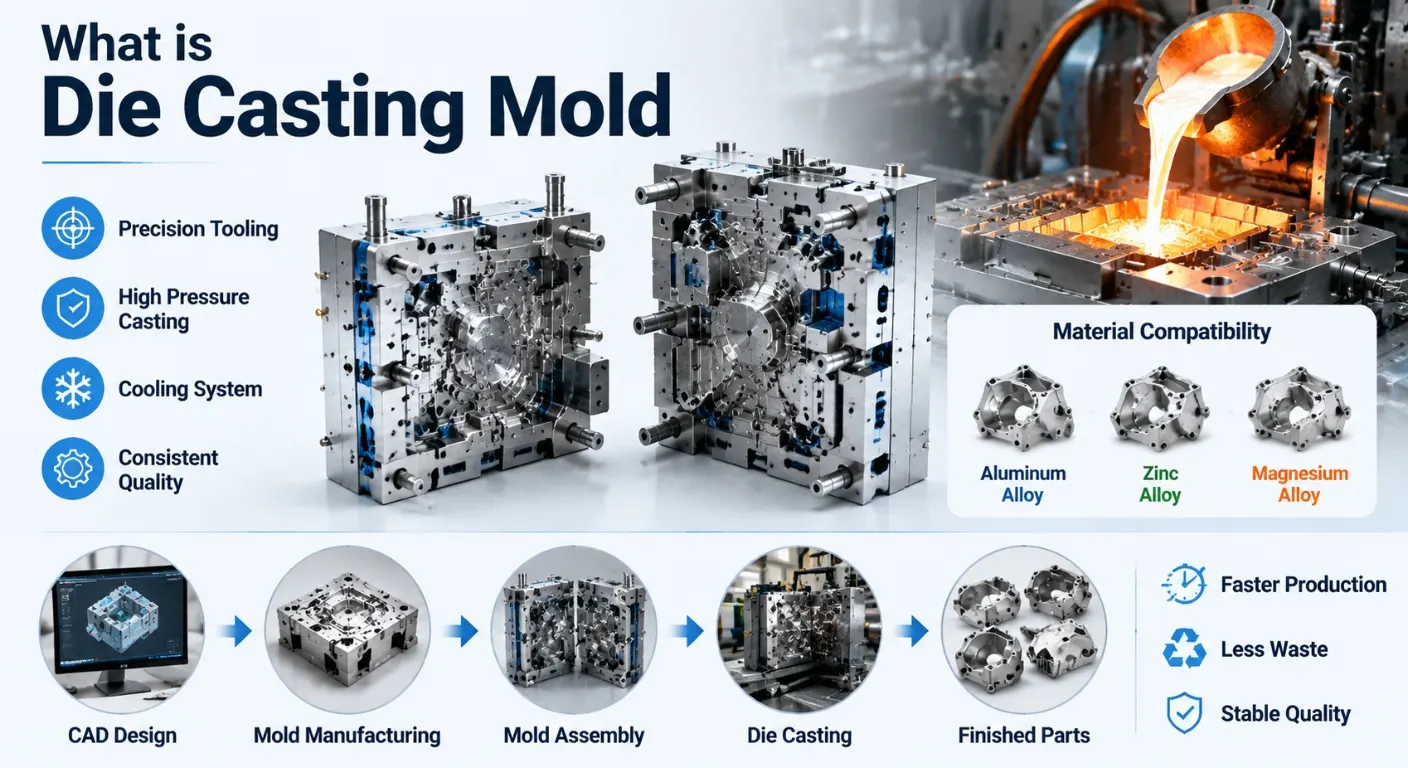
Die casting molds are precision tooling systems used to shape molten metal into accurate components through high-pressure casting. They consist of mold cavities, cores, inserts, and cooling systems that control part geometry, surface quality, and production consistency.

Compared with traditional manufacturing methods, custom die casting molds enable faster production cycles, reduced material waste, and stable part quality for aluminum, zinc, and magnesium alloy components.

What is Die Casting Mold Design

Die Casting Mold Manufacturing Process

Die Casting Mold Manufacturing Process

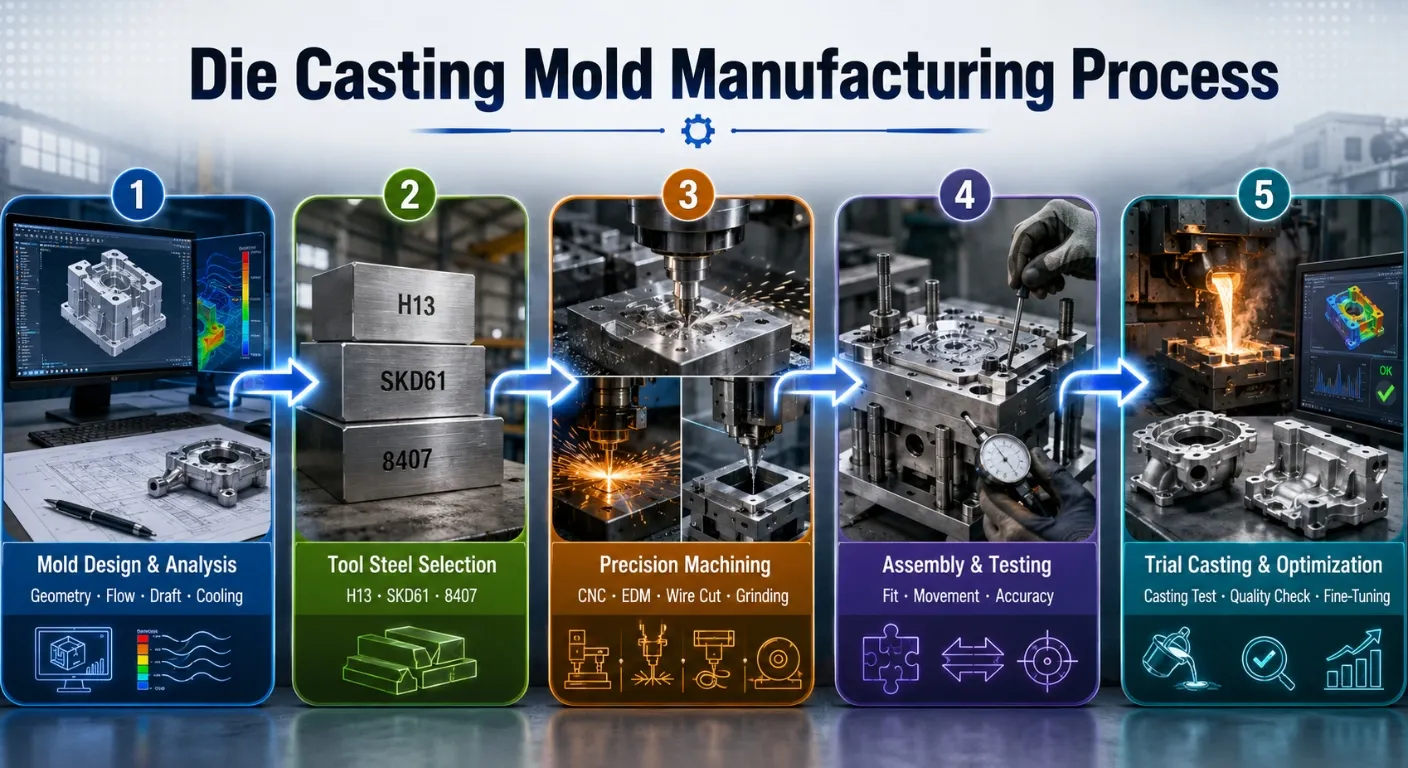
  • Mold Design & Engineering Analysis:We analyze part geometry, material flow, draft angles, and cooling requirements to optimize mold performance.
  • Tool Steel Selection:We select suitable materials such as H13, SKD61, and 8407 based on casting alloy, production volume, and operating conditions.
  • Precision Machining:We use CNC machining, EDM, wire cutting, and grinding processes to manufacture accurate cavities, cores, and inserts.
  • Mold Assembly & Testing:We assemble mold components and verify fit, movement, and dimensional accuracy before trial production.
  • Trial Casting & Optimization:We test initial castings, evaluate part quality, and optimize mold parameters for stable production.

Key Features of Custom Die Casting Mold

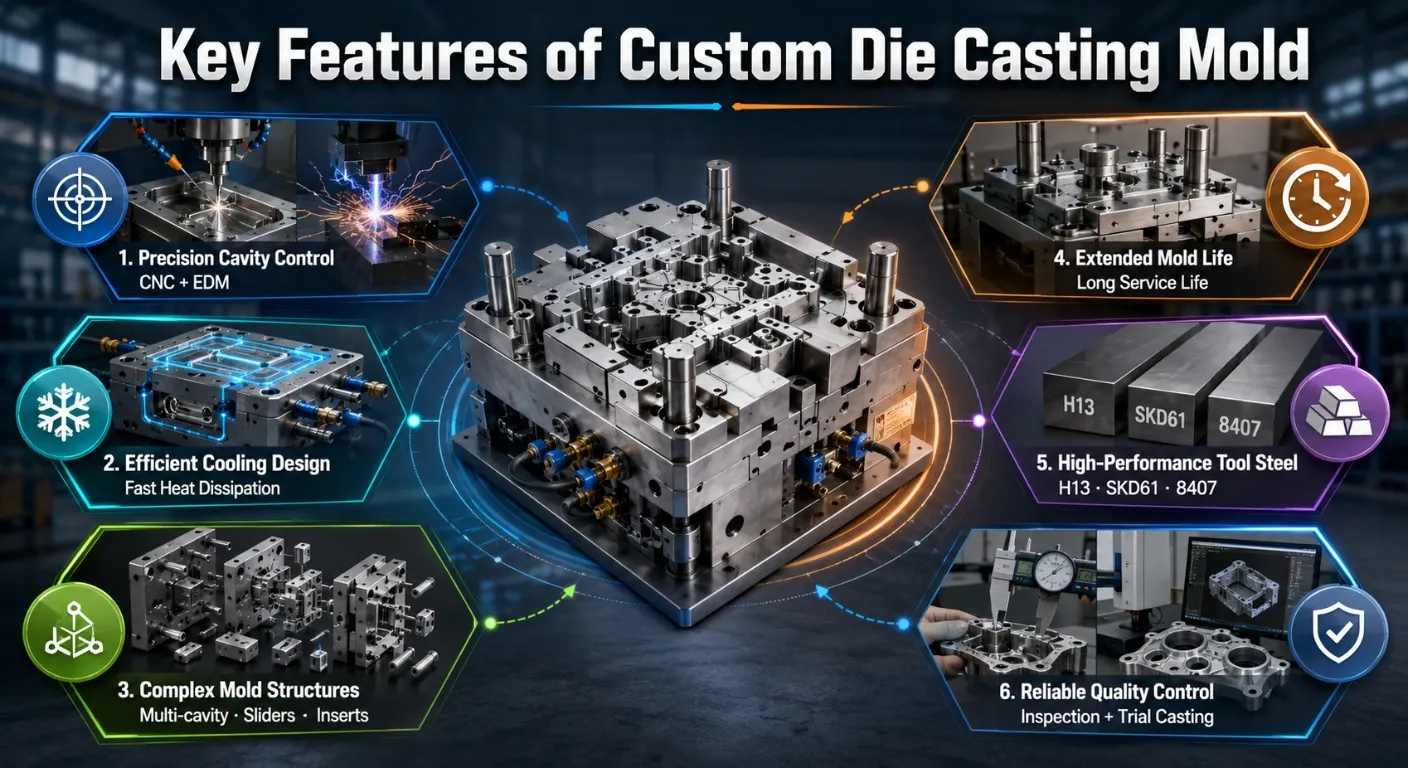
  • Precision Cavity Control:Maintains accurate cavity dimensions through CNC machining and EDM processes for consistent part quality.
  • High-Performance Tool Steel:Uses H13, SKD61, and 8407 hot-work steels for heat resistance, wear performance, and long-term durability.
  • Extended Mold Life:Supports thousands to hundreds of thousands of casting cycles depending on alloy type, part complexity, and production conditions.
  • Efficient Cooling Design:Optimizes cooling channel layouts to improve heat dissipation, shorten cycle times, and reduce casting defects.
  • Complex Mold Structures:Supports multi-cavity designs, sliders, inserts, deep cavities, and textured surfaces for complex components.
  • Reliable Quality Control:Includes dimensional inspection, mold testing, and trial casting verification to ensure stable production performance.
Key Features

Mold Material Options

Mold Material Options

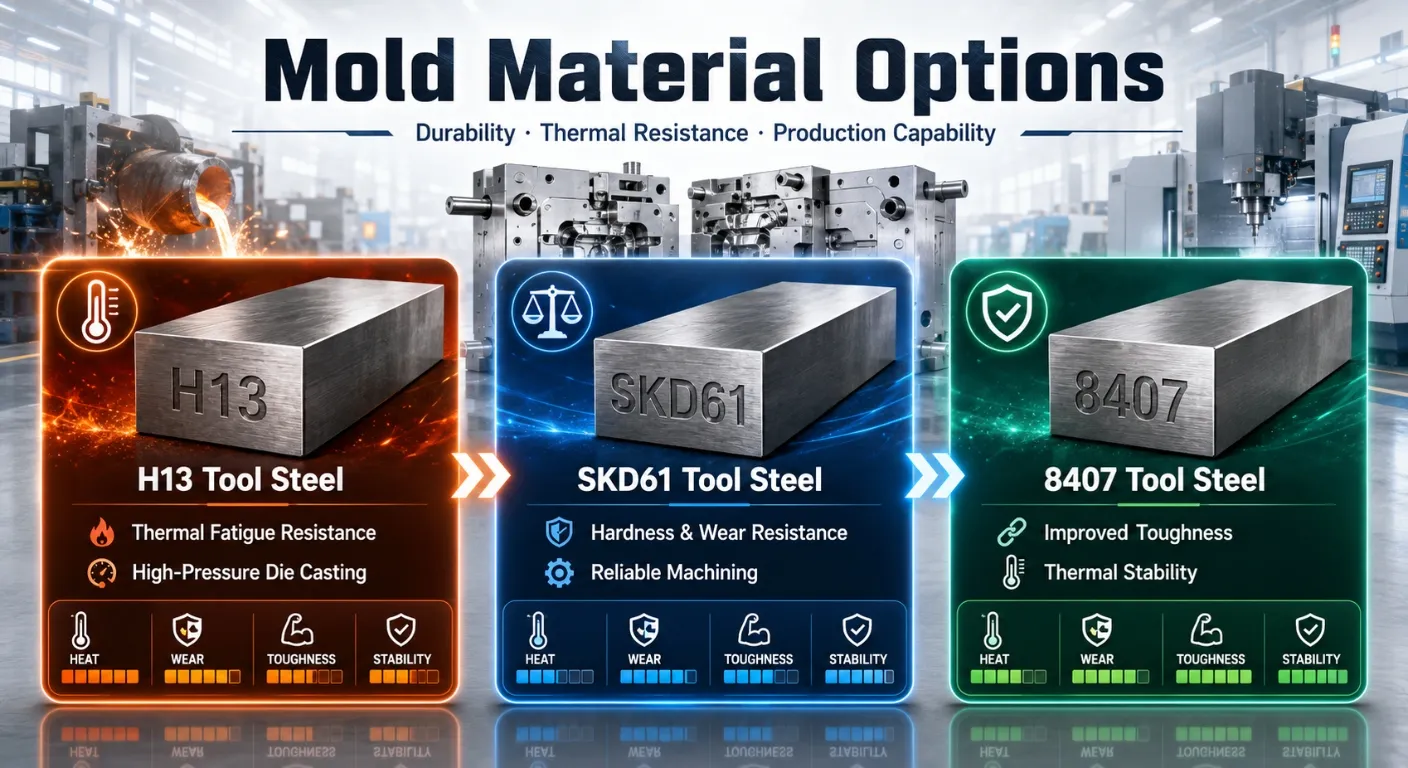
Different mold materials provide different levels of durability, thermal resistance, and production capability.

  • H13 Tool Steel:Provides excellent thermal fatigue resistance and is widely used for high-pressure die casting applications.
  • SKD61 Tool Steel:Offers good hardness, wear resistance, and machining performance for reliable mold operation.
  • 8407 Tool Steel:Provides improved toughness and thermal stability for demanding production environments.

Die Casting Mold Design Capabilities

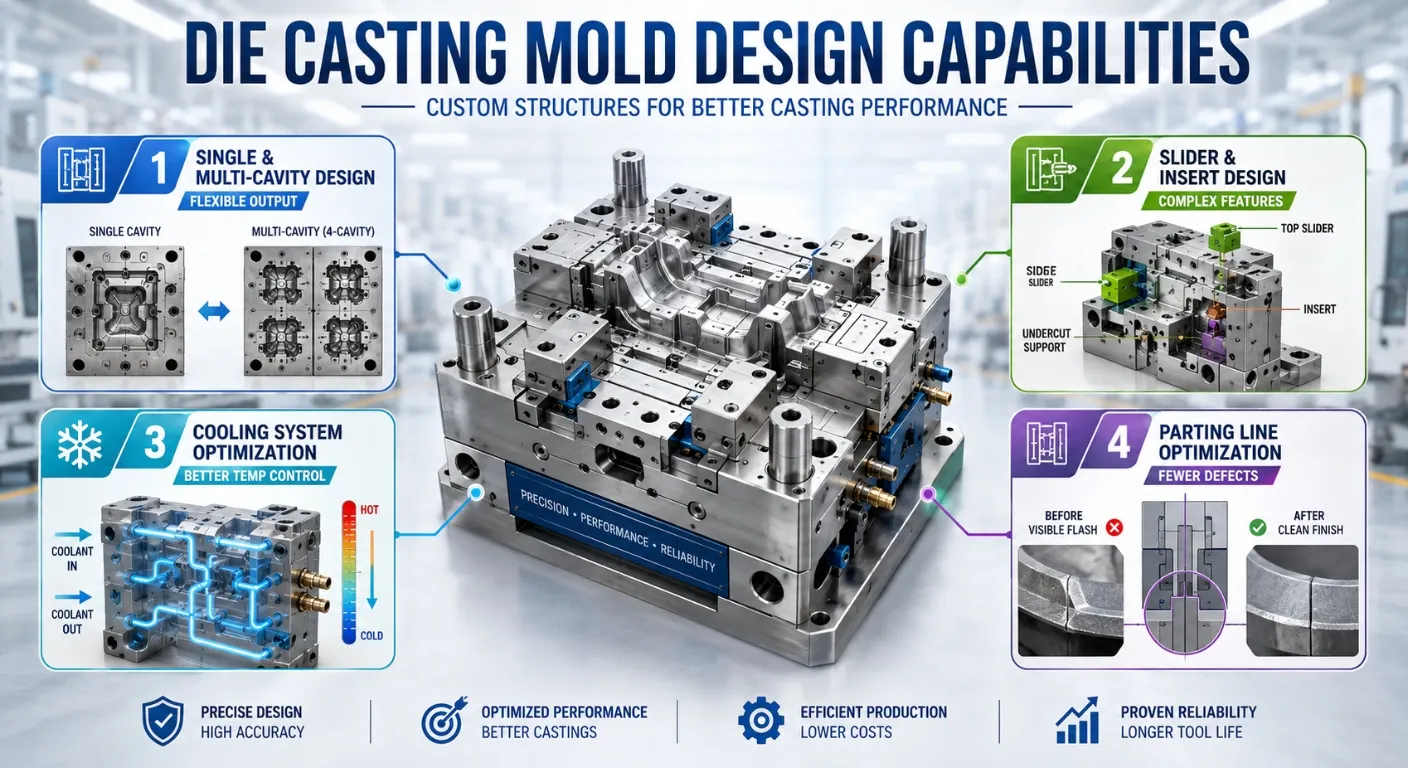
We develop customized mold structures based on part geometry, production requirements, and casting conditions.

  • Single & Multi-Cavity Design:
    Supports different production volumes and efficiency requirements.
  • Slider & Insert Design:
    Enables complex features, undercuts, and detailed component structures.
  • Cooling System Optimization:
    Improves temperature control and extends mold service life.
  • Parting Line Optimization:
    Reduces defects and improves casting quality.
Die Casting Mold Design Capabilities

Applications

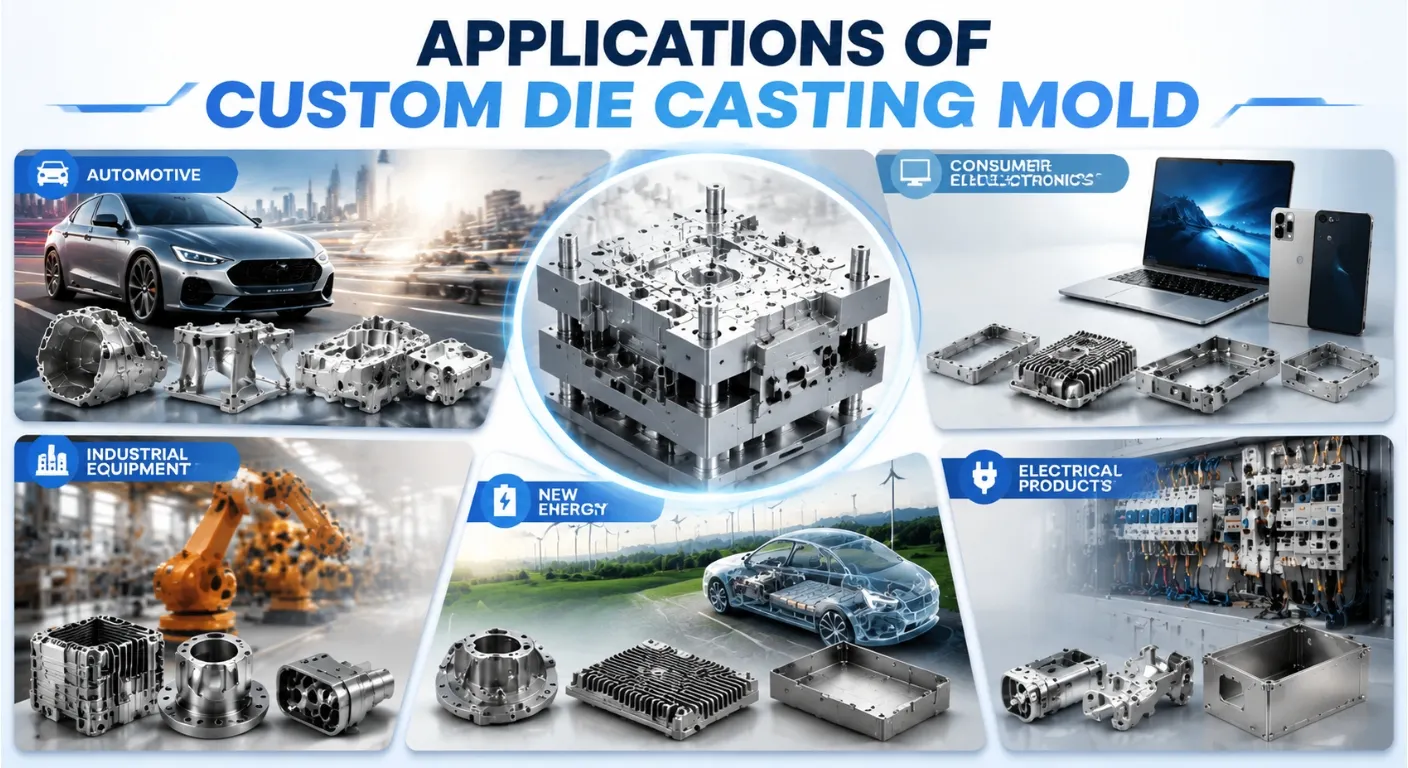
Applications of Custom Die Casting Mold

  • Automotive Components:Supports molds for housings, brackets, structural parts, and lightweight metal components.
  • Consumer Electronics:Produces tooling for frames, covers, enclosures, and decorative metal parts.
  • Industrial Equipment:Provides molds for machine components, connectors, and functional metal parts.
  • New Energy Applications:Supports motor housings, thermal components, and battery-related metal structures.
  • Electrical Products:Creates molds for connectors, terminals, and protective metal housings.

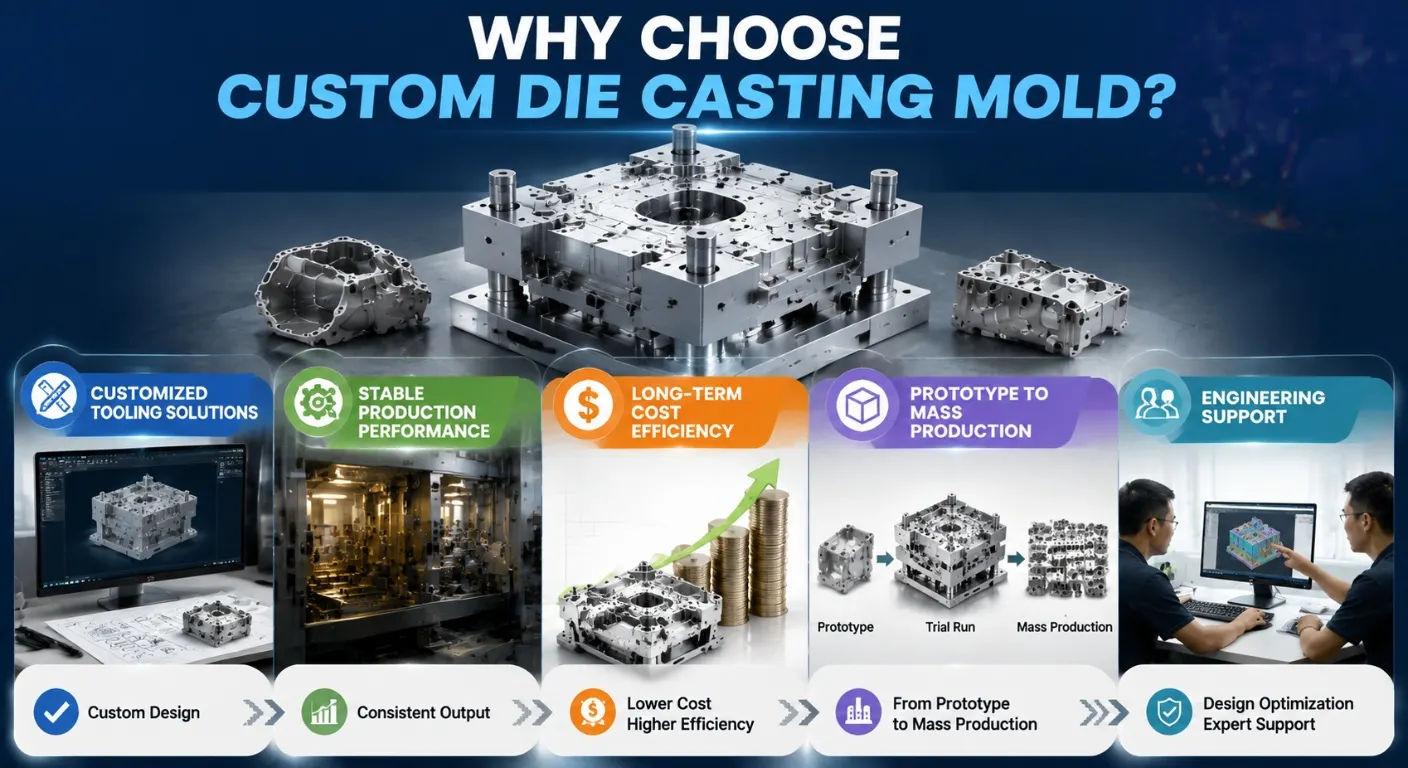
Why Choose Custom Die Casting Mold?

  • Customized Tooling Solutions:Develops molds based on CAD files, drawings, material requirements, and production goals.
  • Stable Production Performance:Optimized mold structures help maintain consistent output and reduce production interruptions.
  • Long-Term Cost Efficiency:Durable tooling reduces replacement frequency and improves overall manufacturing efficiency.
  • Prototype to Mass Production:Supports product validation, trial runs, and high-volume production requirements.
  • Engineering Support:Provides design optimization and manufacturing recommendations to improve mold performance.
Why Choose Custom Die Casting Mold?

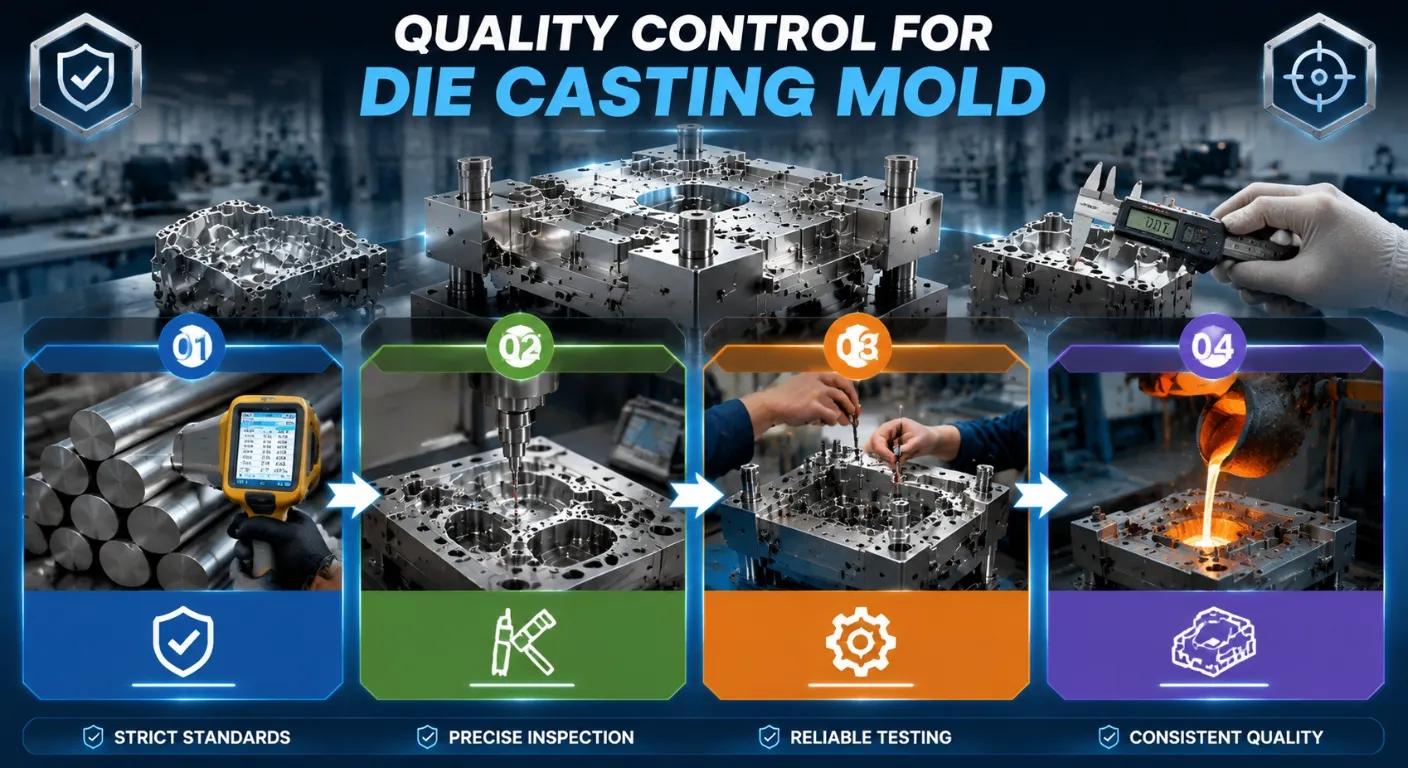
Quality Control for Die Casting Mold

Quality Control for Die Casting Mold

We apply strict inspection processes throughout mold development and production.https://www.iso.org?utm_source=chatgpt.com

  • Material Verification
    Confirms tool steel quality and material specifications.
  • Dimensional Inspection
    Checks cavity accuracy and component fit.
  • Mold Assembly Testing
    Verifies movement, alignment, and operational performance.
  • Trial Casting Evaluation
    Validates filling quality, surface condition, and final part accuracy.

FAQ

1. What zinc alloys are suitable for die casting?
Answer:

Different zinc alloys provide different strength, hardness, and dimensional stability. Zamak 3 and Zamak 5 are the most commonly used options.https://www.zinc.org?utm_source=chatgpt.com

2. What advantages do zinc die cast parts have over machined parts?
Answer:

Zinc die casting provides faster production, lower material waste, and better cost efficiency for high-volume components.

3. Can zinc die cast parts include surface finishes?
Answer:

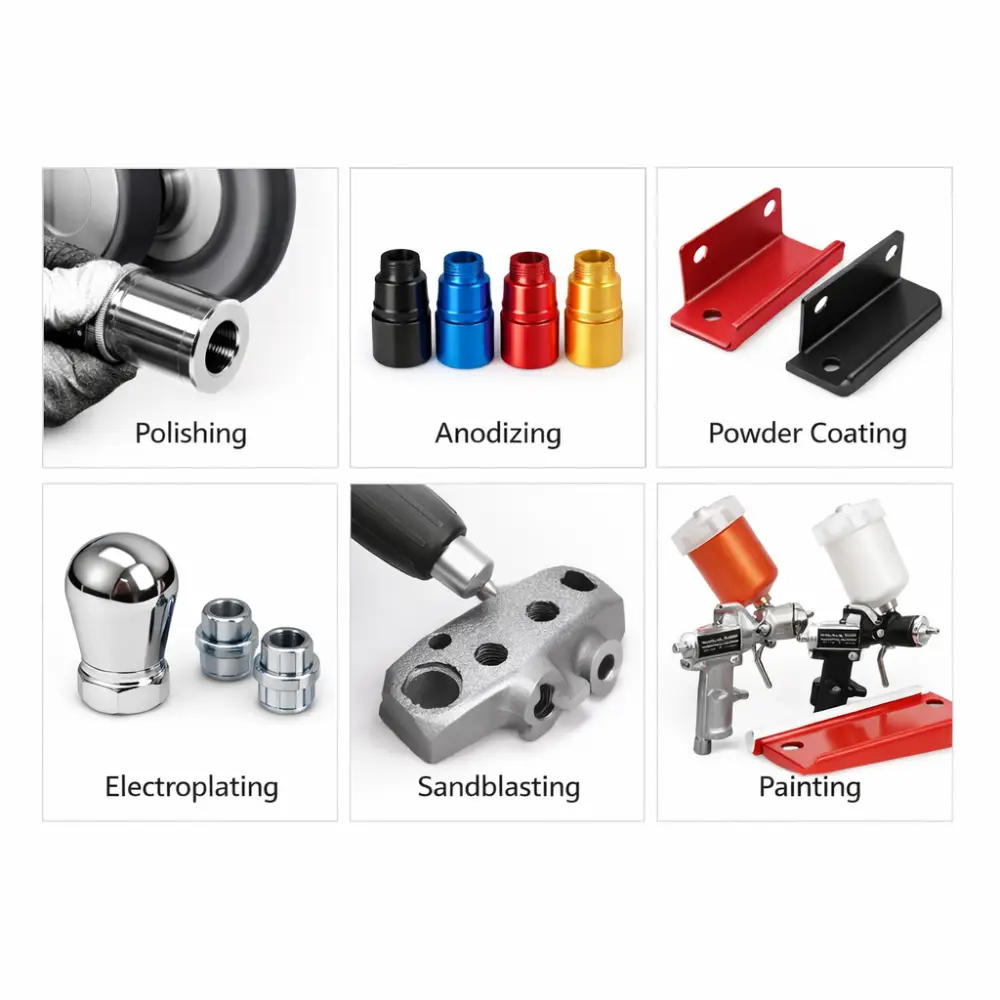
Yes. Options include electroplating, powder coating, painting, polishing, and texturing.

4. What production volumes can zinc die casting support?
Answer:

The process is suitable for prototypes, small batches, and large-scale production.

5. Can you manufacture parts based on customer drawings?
Answer:

Yes. Manufacturers can produce parts from CAD files, drawings, or samples.