Custom die casting molds with high precision, durable materials, and reliable performance for efficient metal component production.
What is Die Casting Mold?
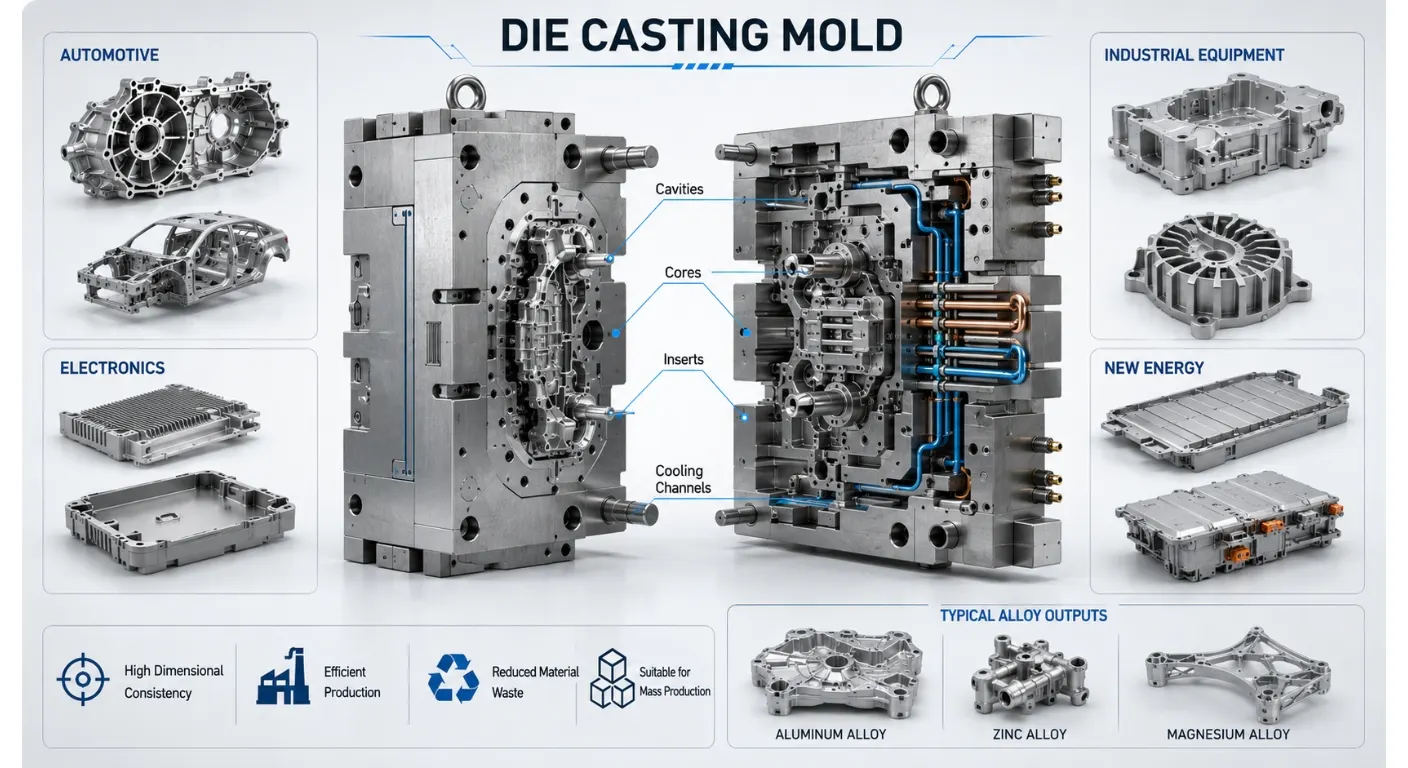
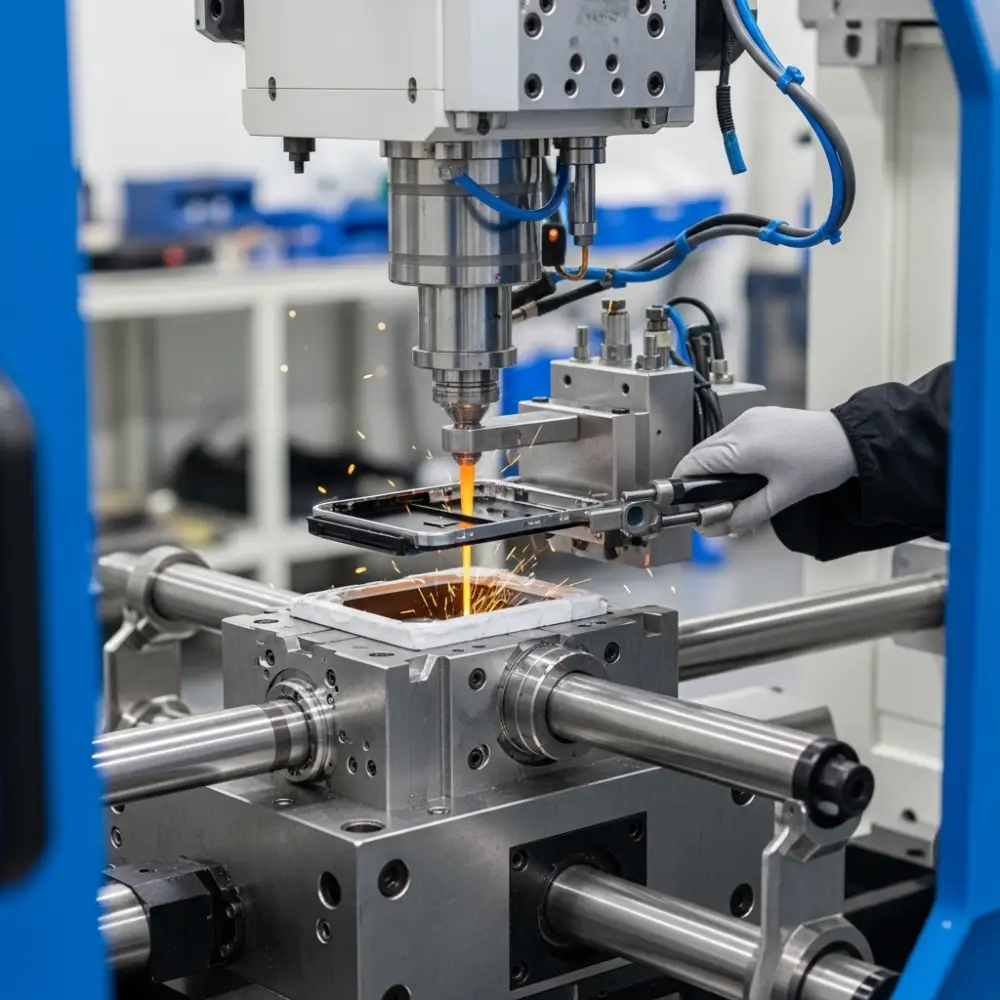
A die casting mold is a precision tool that shapes molten metal into high-quality components through high-pressure casting. It contains mold cavities, cores, inserts, and cooling systems, which work together to control part geometry and production consistency.
Unlike machining processes, die casting enables faster production with lower material waste. Therefore, manufacturers use custom die casting molds to produce large volumes of aluminum, zinc, and magnesium parts with stable quality and repeatable performance.
|
 |
 |
Die Casting Mold Manufacturing Process
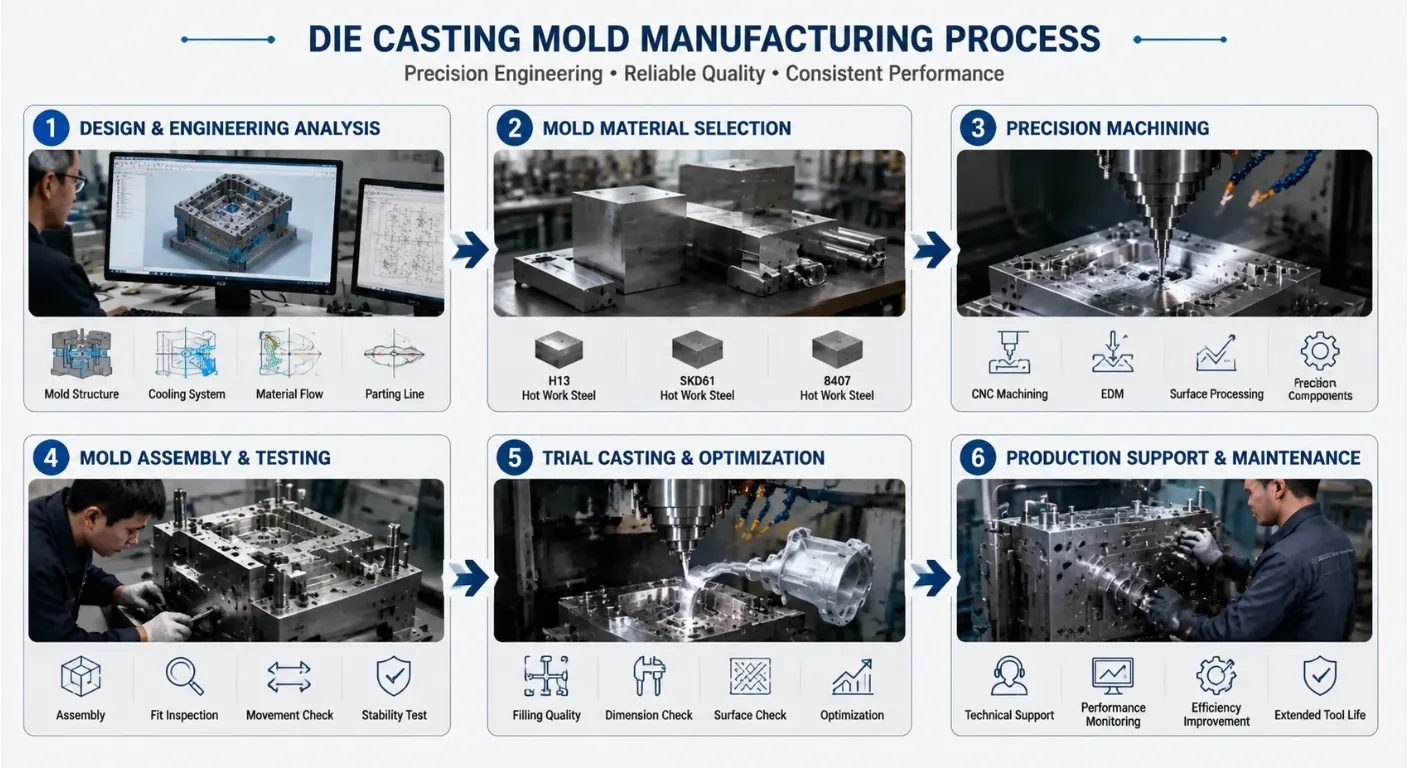
- Design & Engineering Analysis:First, our engineers review part drawings and 3D models to optimize mold structure, material flow, parting lines, and cooling layouts. As a result, the mold achieves better casting performance and longer service life.
- Material Selection:Next, we select suitable mold steels such as H13, SKD61, and 8407 based on casting materials, production volume, and operating conditions. This approach improves wear resistance and thermal stability.
- Precision Machining:After that, our machining team uses CNC machining, EDM, wire cutting, and grinding to produce mold cavities, cores, and inserts with high dimensional accuracy.
- Mold Assembly & Testing:Then, we assemble each mold and check component fit, movement accuracy, and overall performance. Meanwhile, our quality team verifies critical dimensions before testing.
- Trial Casting & Optimization:Finally, we perform trial casting to evaluate filling performance, surface quality, and part dimensions. Based on test results, we optimize the mold before mass production.
|
Key Features of Custom Die Casting Mold
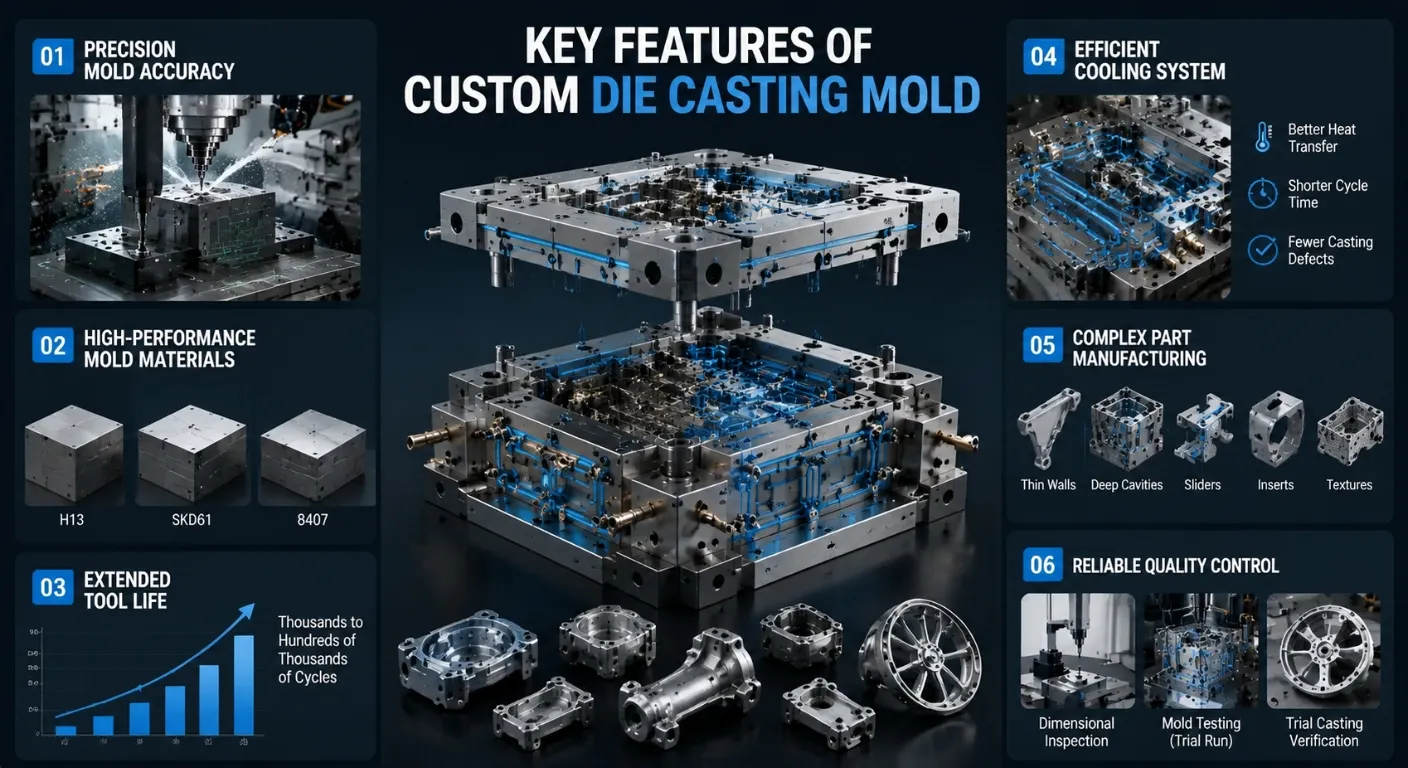
- Precision Cavity Control:We use advanced CNC machining and EDM technology to achieve tight cavity tolerances and maintain consistent part dimensions during production.
- High-Performance Mold Materials:We select H13, SKD61, and 8407 hot-work tool steels to improve heat resistance, wear performance, and mold durability.
- Long Mold Service Life:Through optimized structure design and heat treatment, our molds support thousands to hundreds of thousands of casting cycles depending on alloy type and production conditions.
- Efficient Cooling System:We optimize cooling channel layouts to improve heat transfer, shorten cycle times, and reduce defects caused by uneven temperatures.
- Complex Part Manufacturing:Our molds support thin walls, deep cavities, precision inserts, sliders, and textured surfaces for demanding metal components.
- Reliable Quality Control:We perform dimensional inspection, mold testing, and trial casting verification to ensure stable production performance.
|
 |
|
Applications of Custom Die Casting Mold
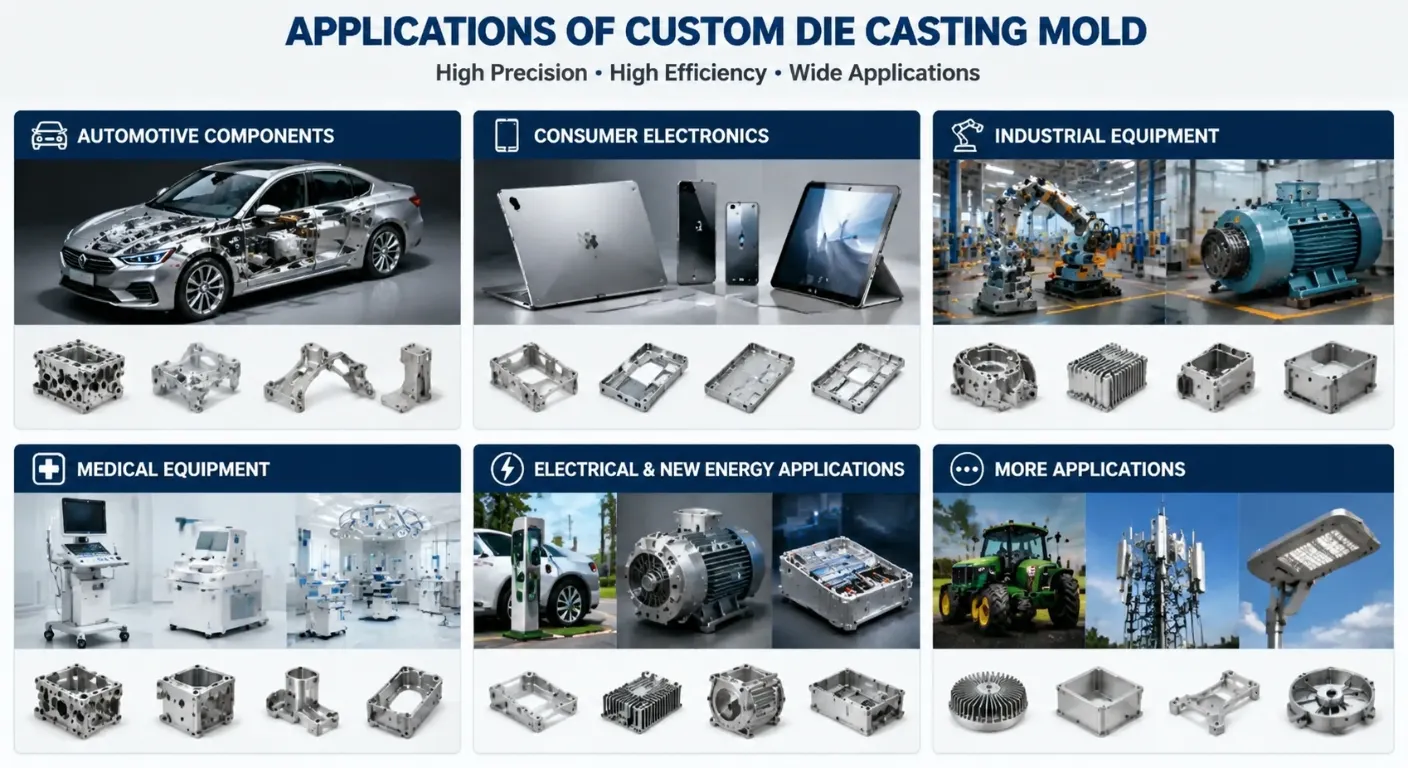
- Automotive Components:We produce molds for housings, brackets, structural parts, and lightweight metal components that require strength and repeatability.
- Consumer Electronics:Our molds support metal frames, covers, enclosures, and decorative components with precise dimensions and smooth finishes.
- Industrial Equipment:Manufacturers use our molds for machine parts, connectors, protective housings, and functional components.
- Medical Equipment:We provide tooling solutions for non-critical medical components that require stable quality and accurate dimensions.
- New Energy Industry:Our molds support motor housings, thermal management parts, and battery-related metal structures.
|
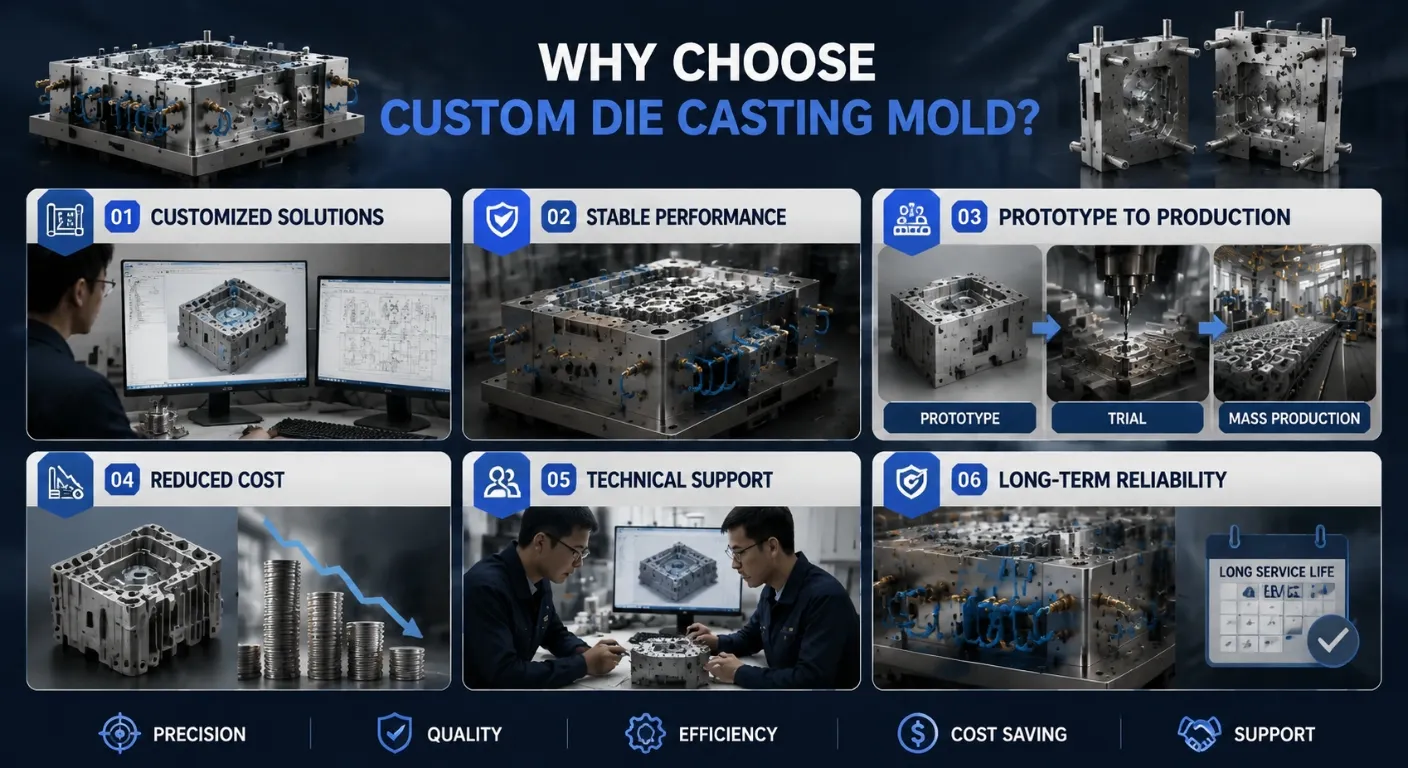
Why Choose Custom Die Casting Mold?
- Customized Tooling Solutions:We develop molds based on customer drawings, CAD models, material requirements, and production goals.
- Stable Production Performance:With optimized designs and quality-controlled manufacturing, our molds maintain consistent output throughout production.
- Prototype to Mass Production:We support the complete process from early validation and trial production to high-volume manufacturing.
- Reduced Manufacturing Cost:Efficient mold design helps reduce material waste, cycle time, and long-term production expenses.
- Professional Technical Support:Our engineers provide design optimization and process recommendations to improve manufacturability.
|
|