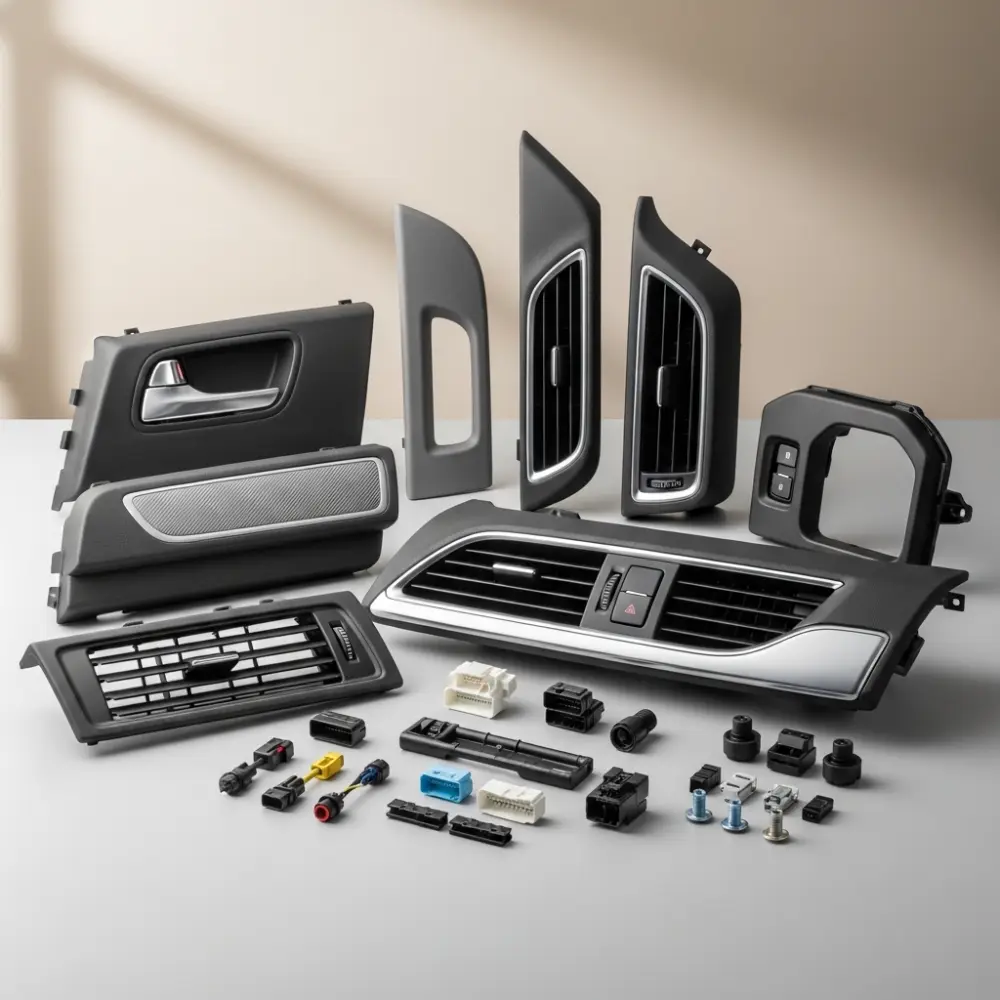


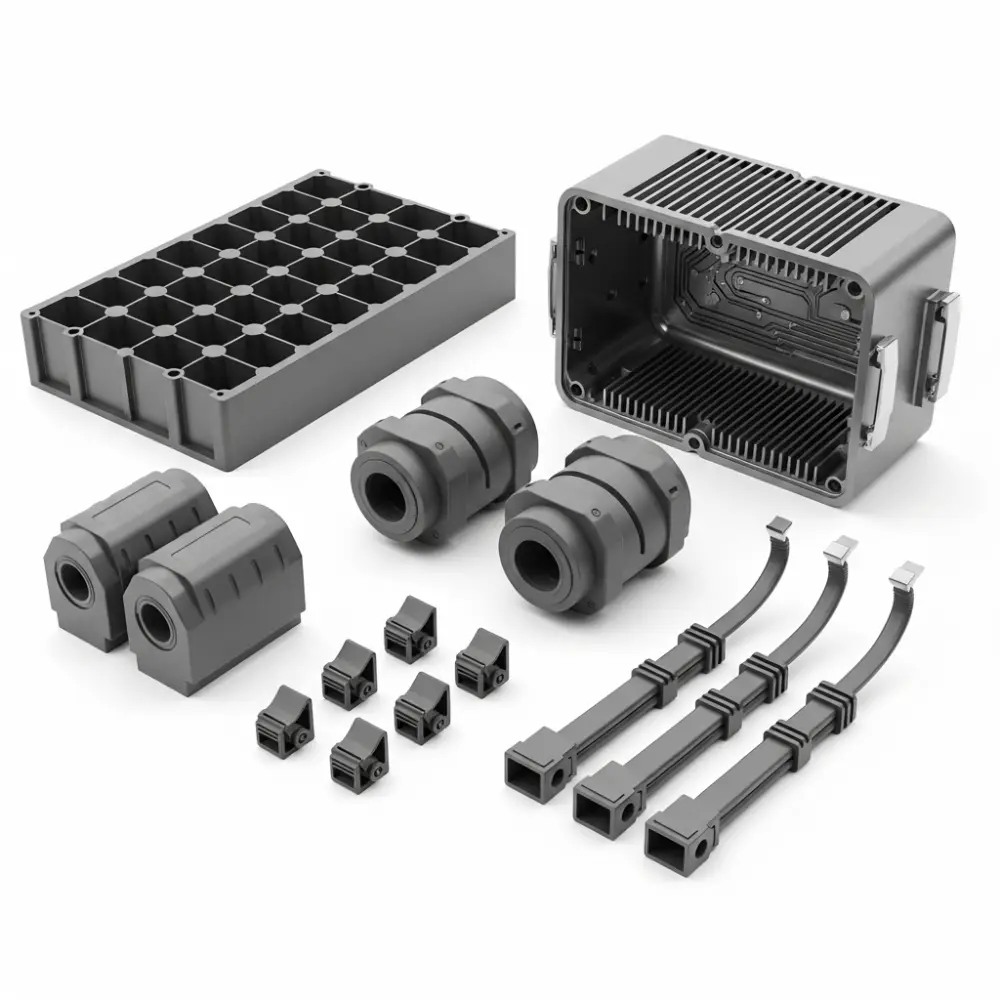
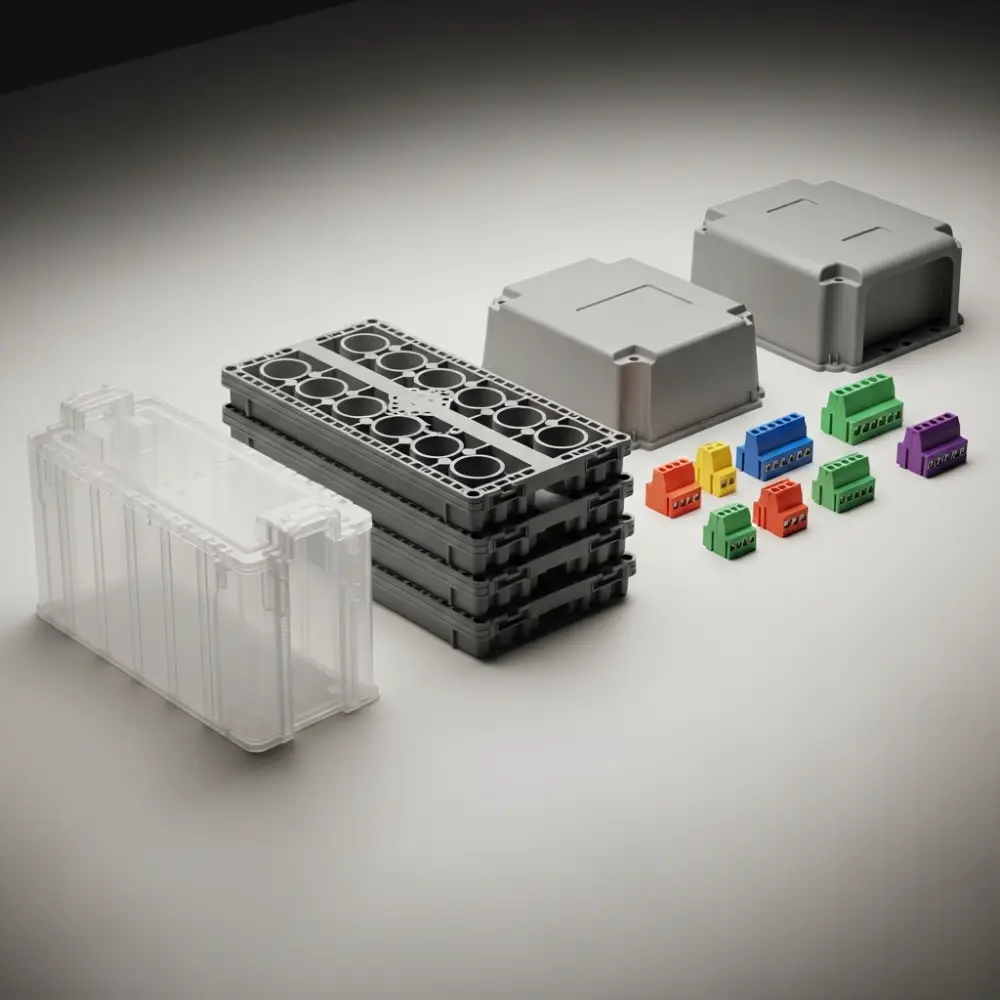
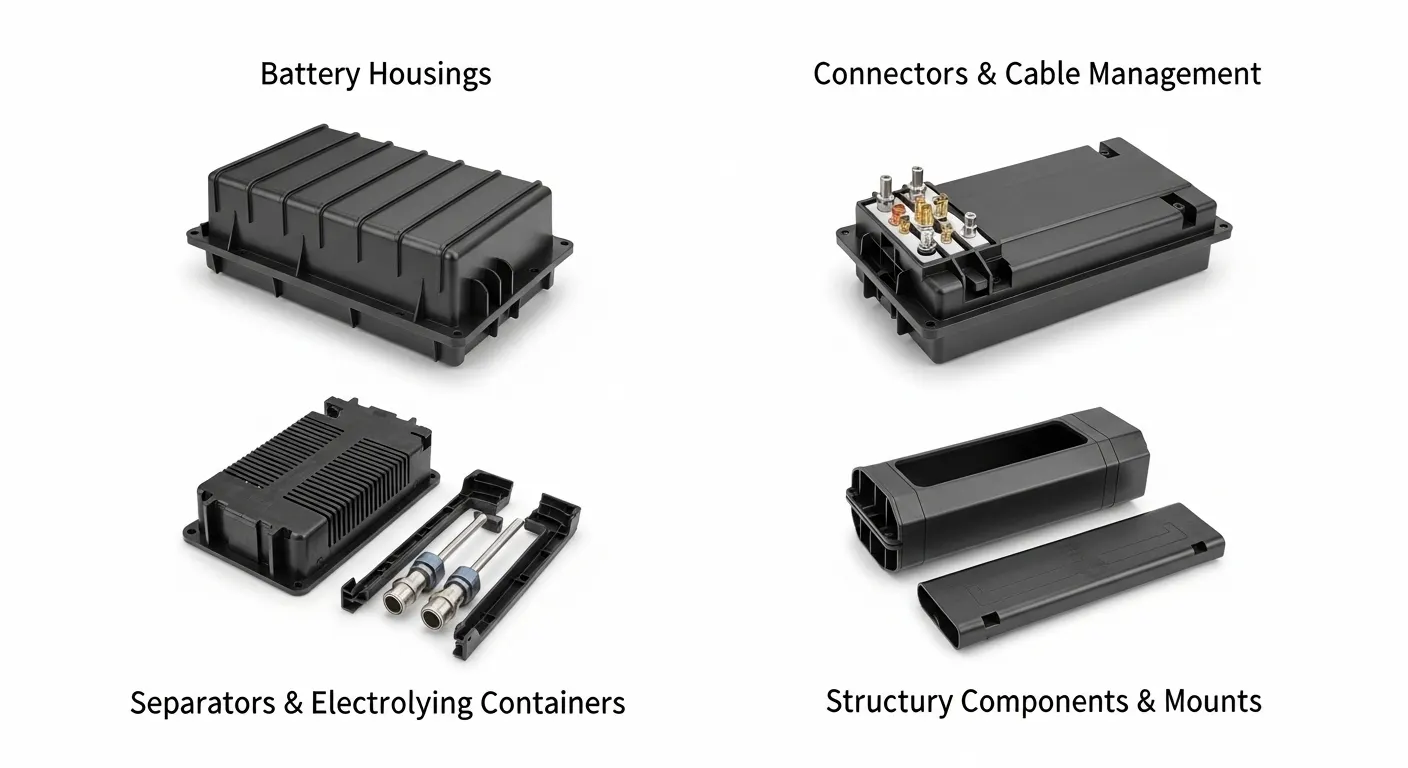
These polymer components provide containment and support for energy modules, ensuring secure positioning, minimal mechanical interference, and stable performance across industrial and commercial installations.
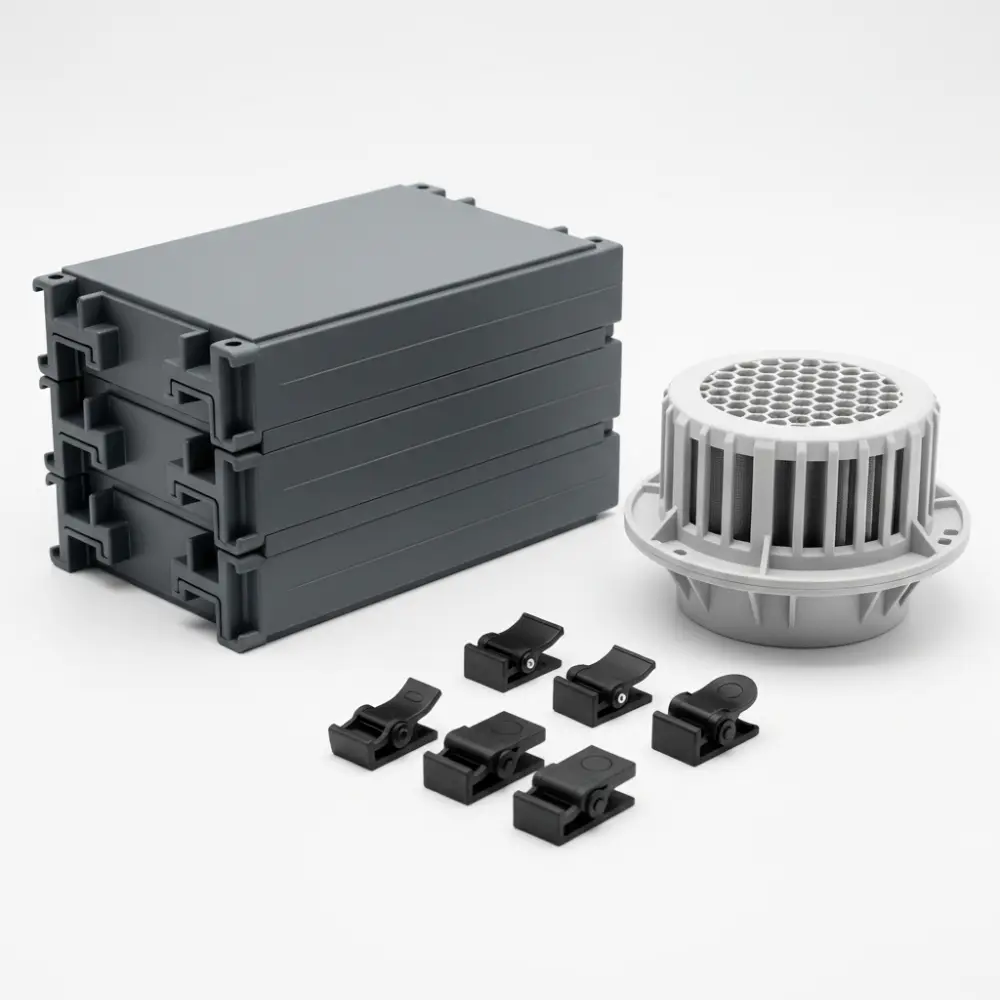
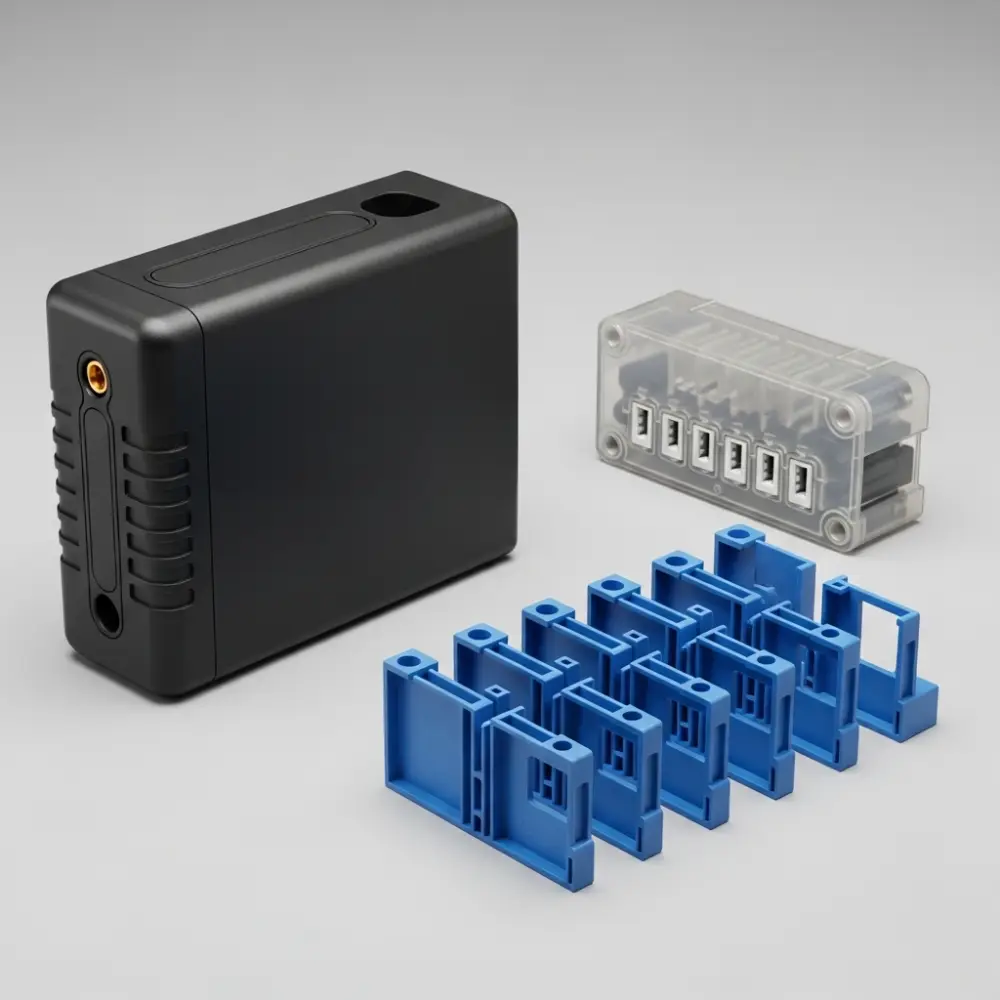
Plastic Parts for Energy Storage Systems
- Streamlined Connectivity – Facilitates organized routing of modules and linkages.
- Mechanical Buffering – Absorbs stress from assembly movement or operational shifts.
- Installation Simplicity – Reduces complexity when integrating multiple energy units.
- Compact Arrangement – Allows tighter packing without compromising accessibility.
- Operational Visibility – Supports easy inspection and monitoring of system components.
Introduction to Plastic Parts for Energy Storage Systems
Plastic parts for energy storage systems are engineered polymer components that provide structural support and environmental protection for energy modules. They help maintain performance stability and ensure safe operation under demanding conditions.
FAQ
1. Which materials are used?
Answer:
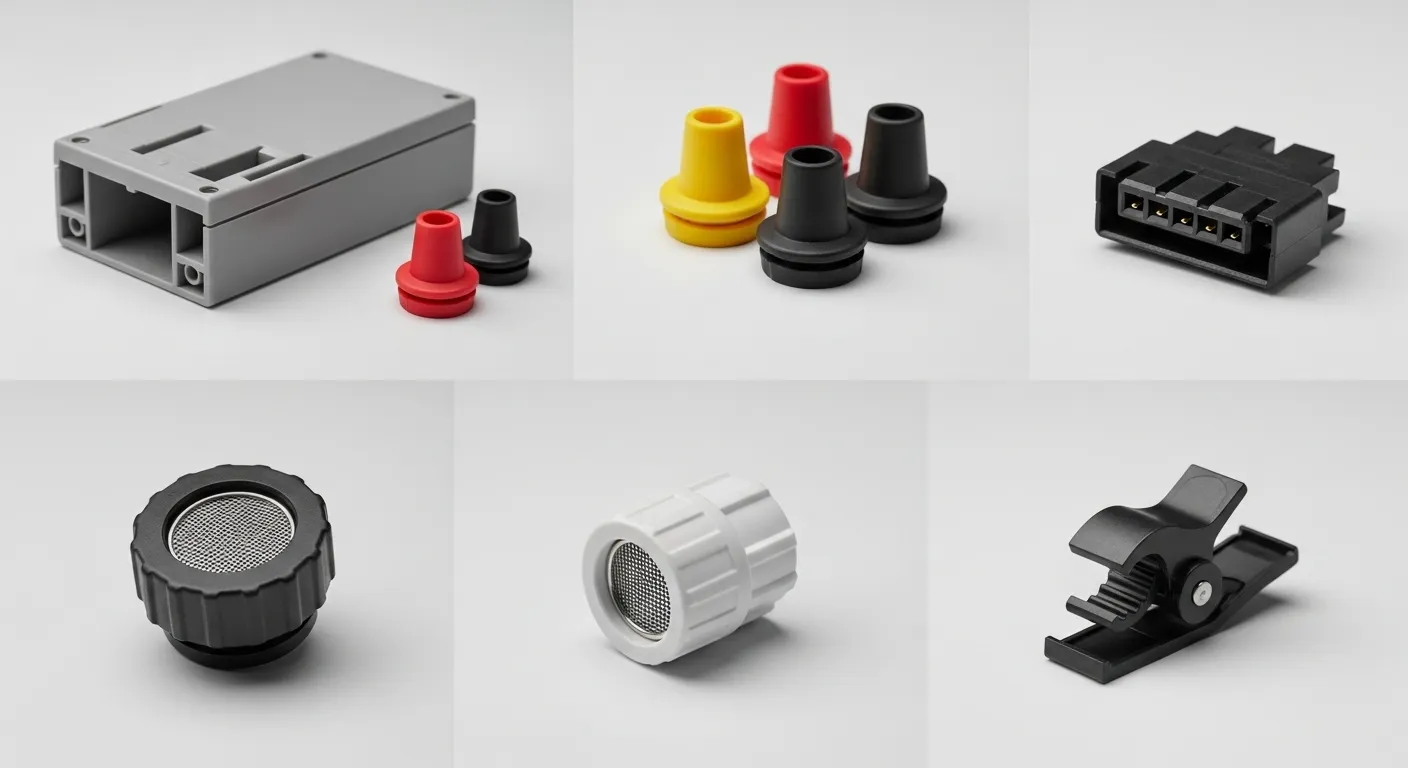
ABS, polycarbonate, nylon, and polypropylene are common for durability and resistance.
2. Why use plastic over metal?
Answer:
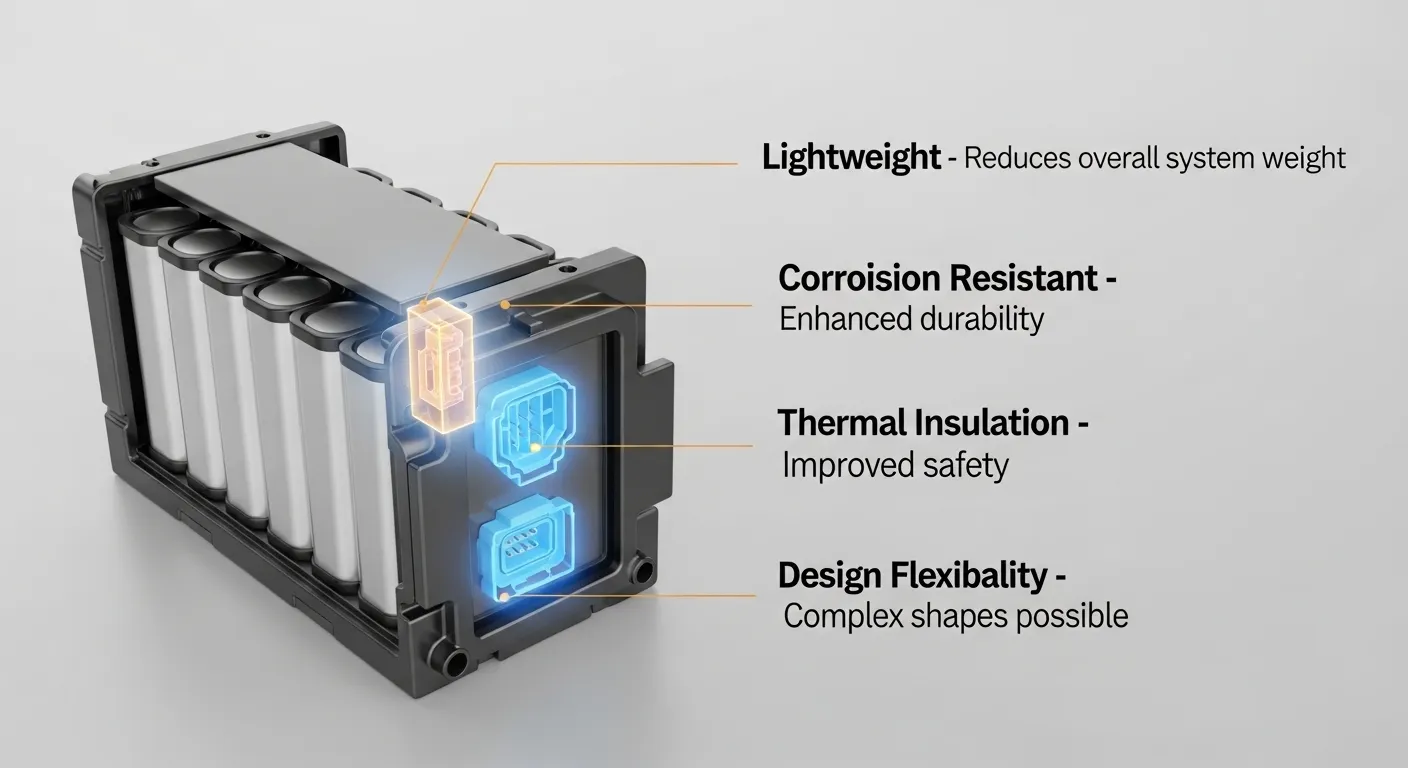
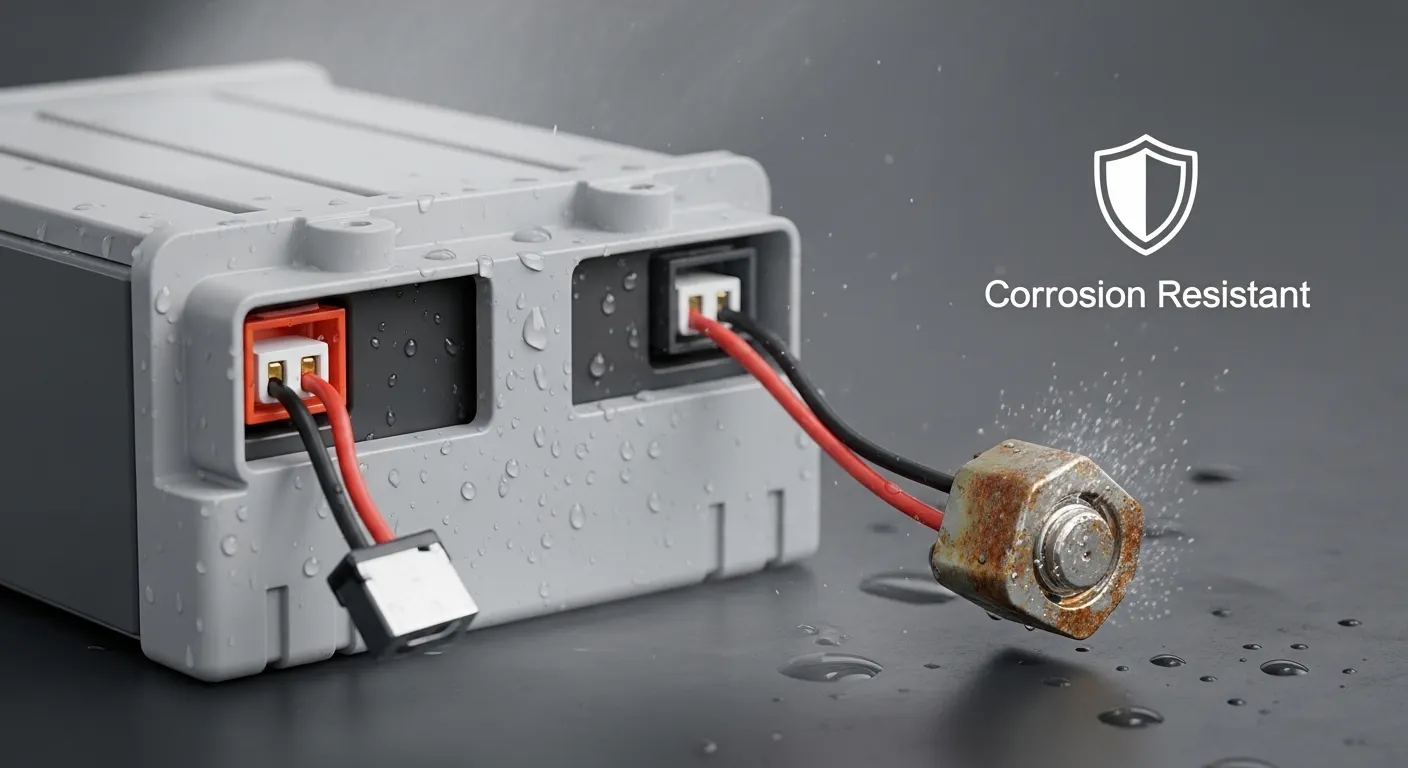
Plastic is lighter, corrosion-resistant, insulating, and easier to mold for complex shapes.
3. Are they cost-effective for production?
Answer:
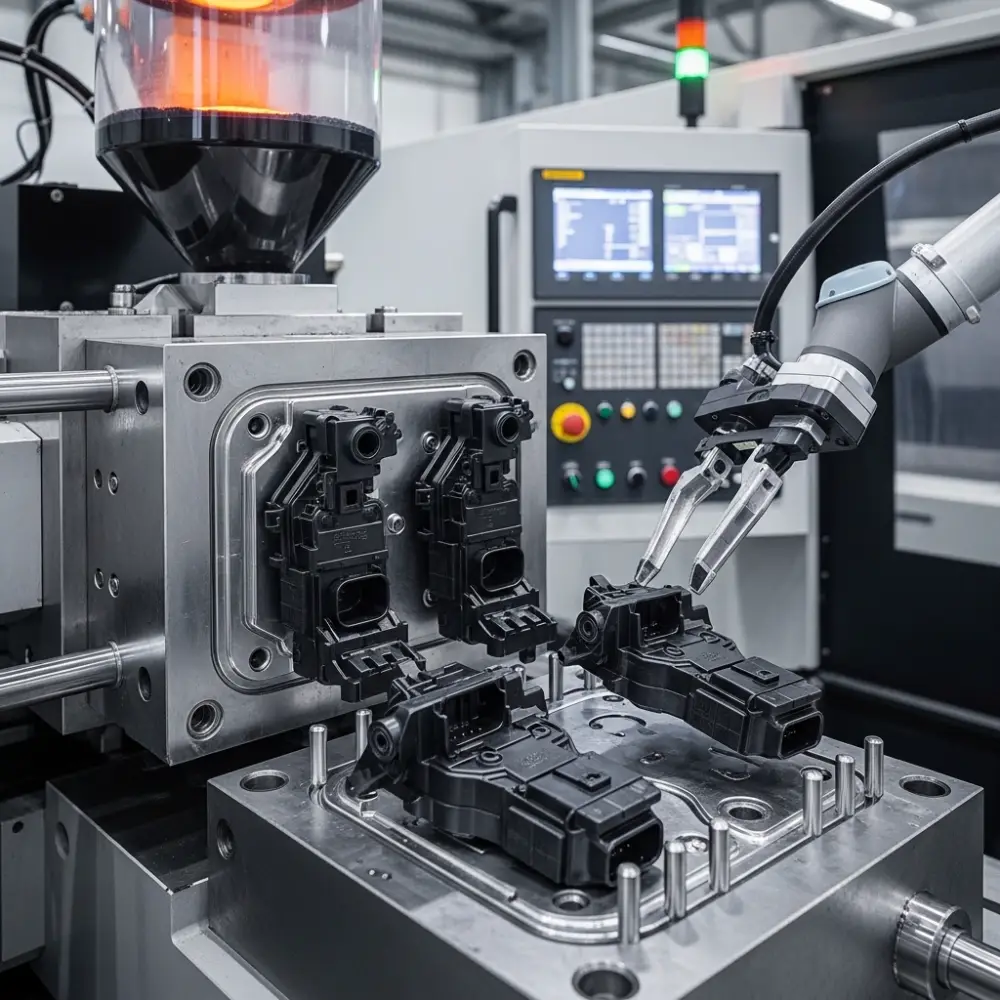
Yes, injection molding allows consistent high-volume or small-batch manufacturing.
4. Can these parts be used for capacitors?
Answer:
Yes, providing insulation and structural support for energy storage devices.
5. Why are plastic parts important in energy storage systems?
Answer:
They ensure structural stability, protection, and long-term reliable operation of energy modules.