Home > Product > Rapid Injection Mold Tooling

Rapid Injection Mold Tooling

Rapid injection mold tooling provides fast and flexible solutions for prototype development, functional testing, and low-volume plastic production. It supports quick validation with production materials and reduced tooling investment.

  • Tooling Materials:Aluminum, P20 steel, hardened steel, and customized tooling materials.
  • Molding Materials:ABS, PC, PP, PA, TPU, POM, and engineering plastics.
  • Tool Capability:Prototype molds, bridge tooling, single-cavity, and multi-cavity molds.
  • Production Volume:Prototype parts, low-volume production, and pre-production runs.
  • Manufacturing Process:CNC machining, EDM, injection molding, and inspection.
  • Application Support:Automotive, electronics, medical, industrial, and consumer products.

Introduction to Rapid Injection Mold Tooling
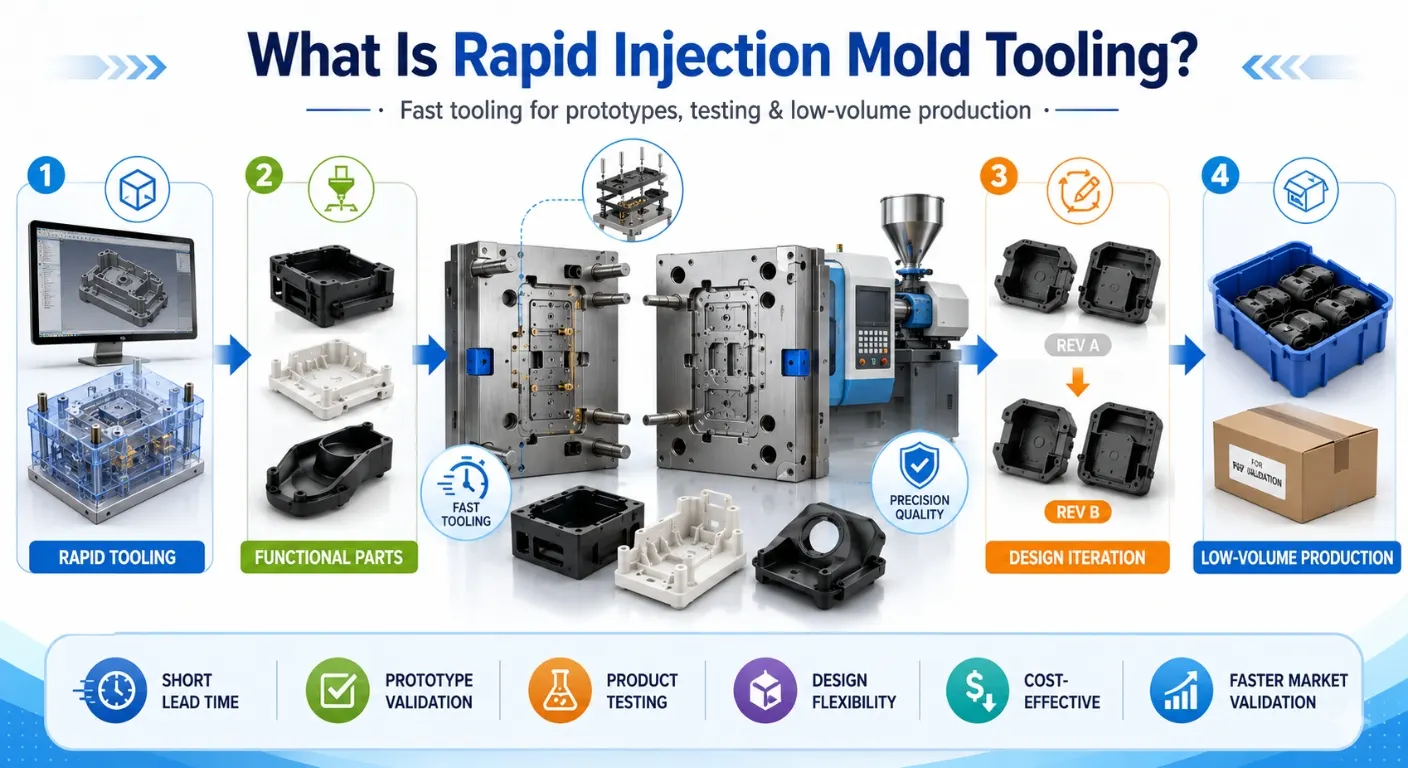
What is Rapid Injection Mold Tooling?

Rapid injection mold tooling is a fast-turnaround tooling solution used to create injection molds for prototype validation, product testing, and low-volume production. It enables manufacturers to quickly produce functional plastic parts while reducing development time before full-scale manufacturing.

Compared with traditional tooling methods, rapid injection mold tooling shortens lead times, supports design iterations, and provides cost-effective solutions for early product development and market validation.

What is Rapid Injection Mold Tooling

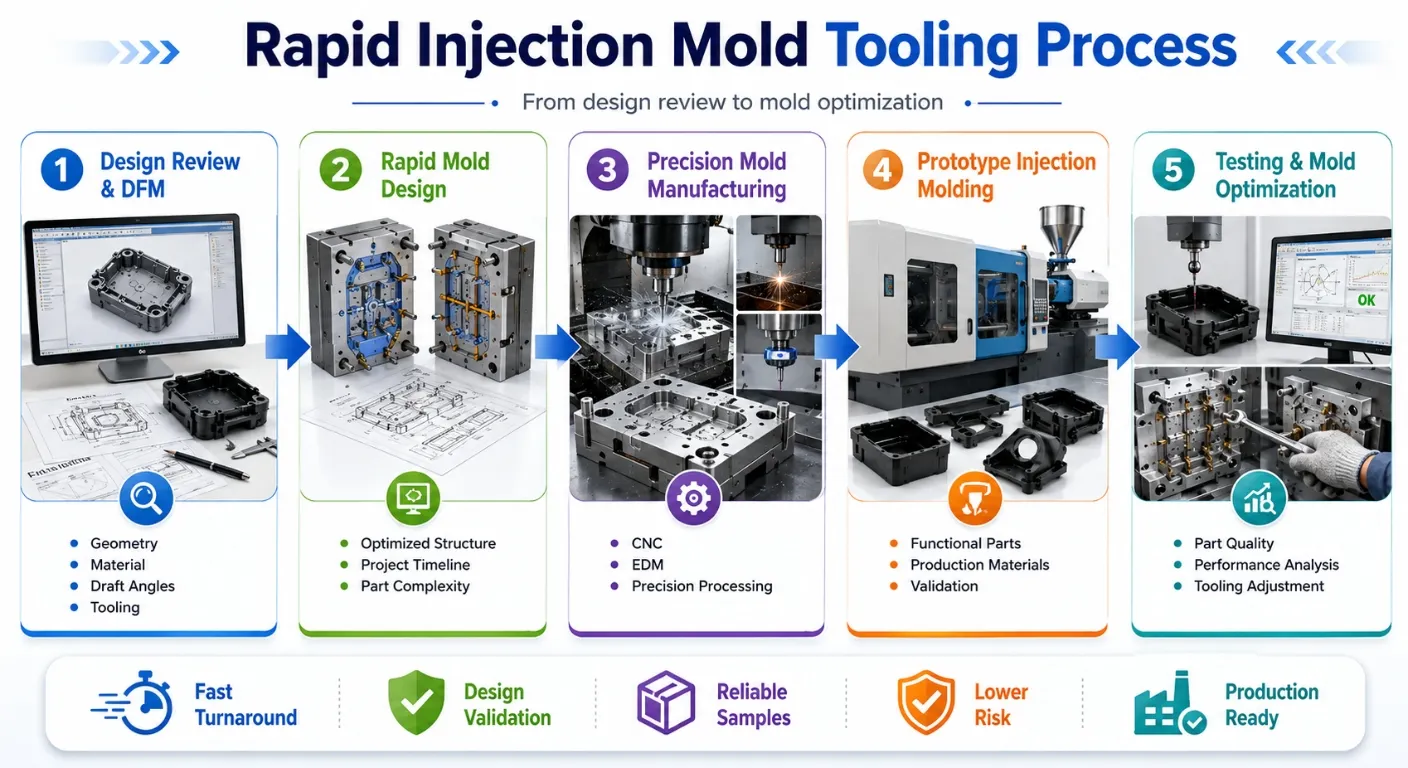
Rapid Injection Mold Tooling Process

Rapid Injection Mold Tooling Process

  • Design Review & DFM Analysis:We evaluate part geometry, material selection, draft angles, and tooling requirements to improve manufacturability and reduce design risks.
  • Rapid Mold Design:We develop simplified and optimized mold structures based on project timeline, part complexity, and production requirements.
  • Precision Mold Manufacturing:We use CNC machining, EDM, and precision processing methods to create accurate mold components.
  • Prototype Injection Molding:We produce functional plastic parts using selected production materials for testing and validation.
  • Testing & Mold Optimization:We inspect part quality, analyze performance, and adjust tooling to support final production requirements.

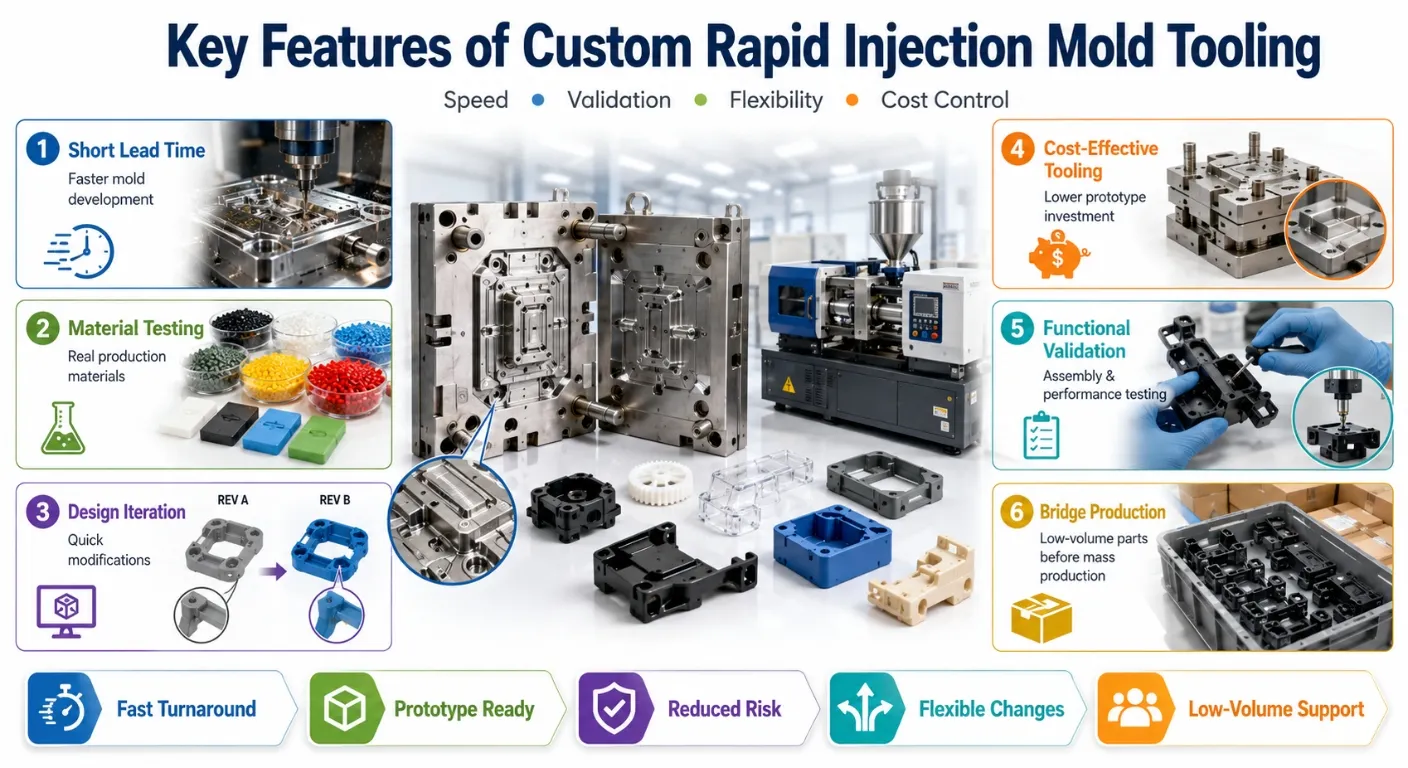
Key Features of Custom Rapid Injection Mold Tooling

  • Short Tooling Lead Time:Accelerates mold development and enables faster transition from product design to functional prototypes.
  • Production Material Testing:Allows manufacturers to evaluate real materials and molded parts before mass production.
  • Design Iteration Capability:Supports quick modifications to validate product improvements and engineering changes.
  • Cost-Effective Prototype Tooling:Reduces initial tooling investment compared with full production molds.
  • Functional Part Validation:Produces usable plastic parts for assembly testing, performance evaluation, and market feedback.
  • Bridge Production Support:Provides low-volume manufacturing before full-scale production begins.
Key Features

Rapid Injection Mold Design Capabilities

Rapid Injection Mold Design Capabilities

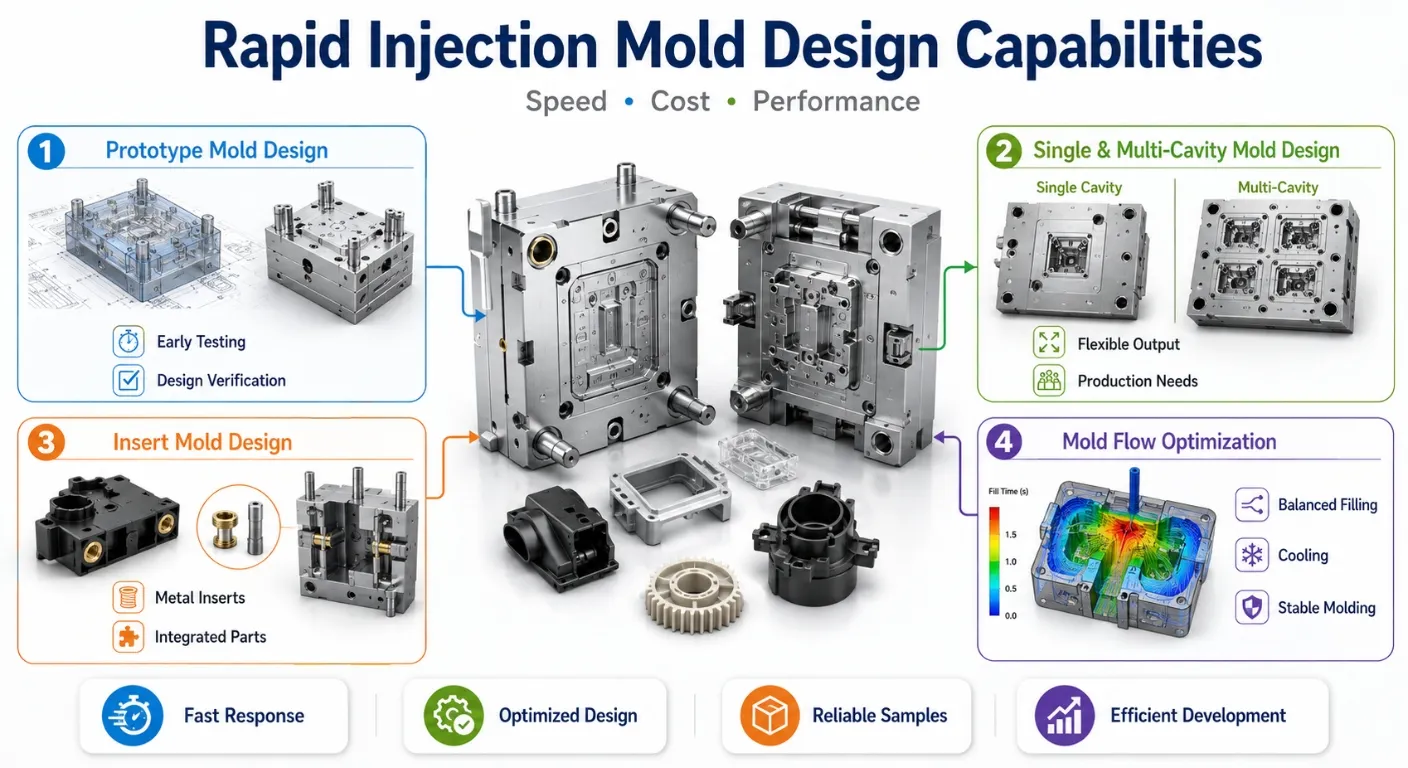
Rapid tooling requires a balance between speed, cost, and performance. We optimize mold structures according to project requirements.

  • Prototype Mold Design:Creates tooling solutions for early-stage product testing and design verification.
  • Single & Multi-Cavity Mold Design:Supports different part quantities and production requirements.
  • Insert Mold Design:Integrates metal inserts or additional components into plastic parts.
  • Mold Flow Optimization:Improves filling performance, cooling efficiency, and molding stability.

Rapid Injection Mold Materials & Mold Base Options

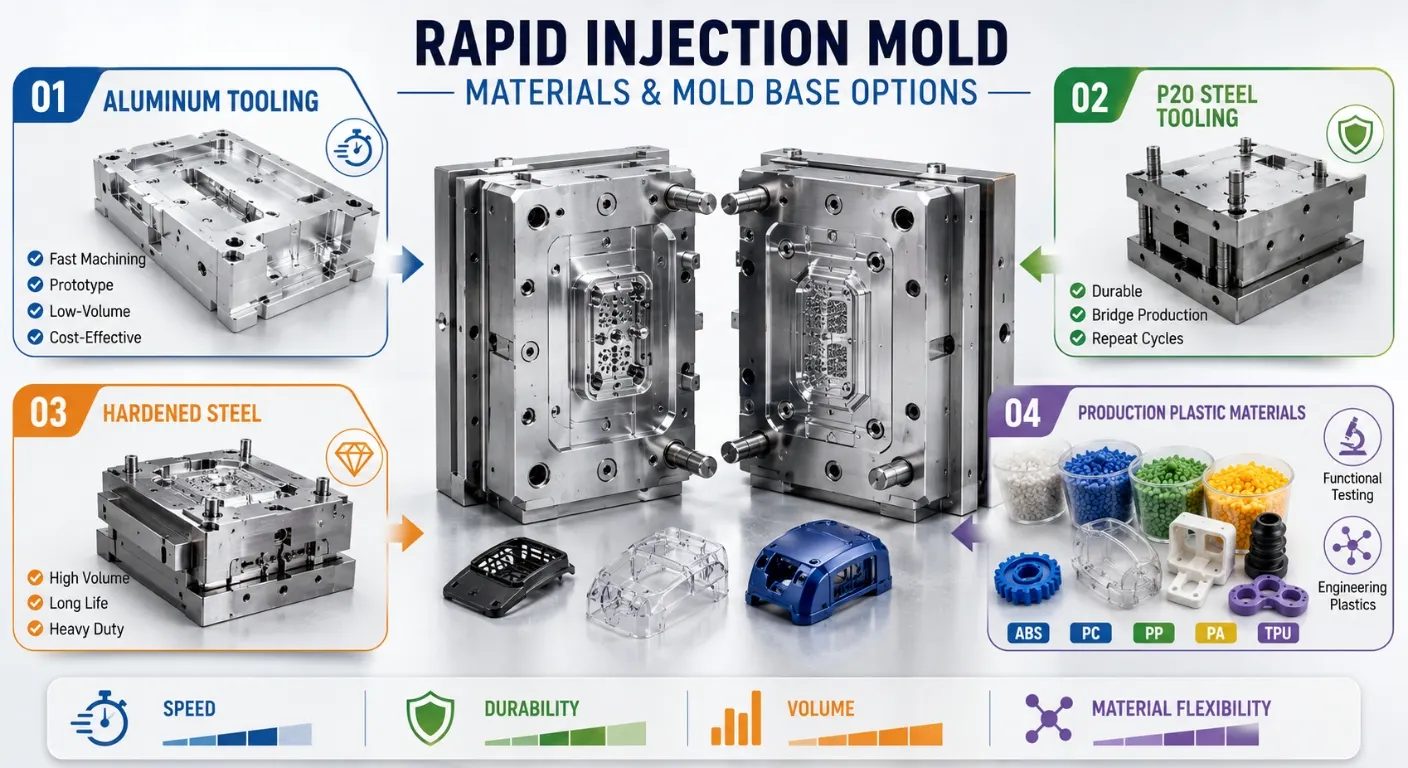
Different tooling materials provide different balances between speed, durability, and production capability.

  • Aluminum Mold Tooling:Provides fast machining and cost-effective solutions for prototypes and low-volume production.
  • P20 Steel Mold Tooling:Offers improved durability for bridge production and repeated molding cycles.
  • Hardened Steel Tooling:Provides extended service life for projects requiring higher production volumes.
  • Production Plastic Materials:Supports ABS, PC, PP, PA, TPU, and other engineering plastics for functional testing.
Rapid Injection Mold Materials & Mold Base Options

Applications

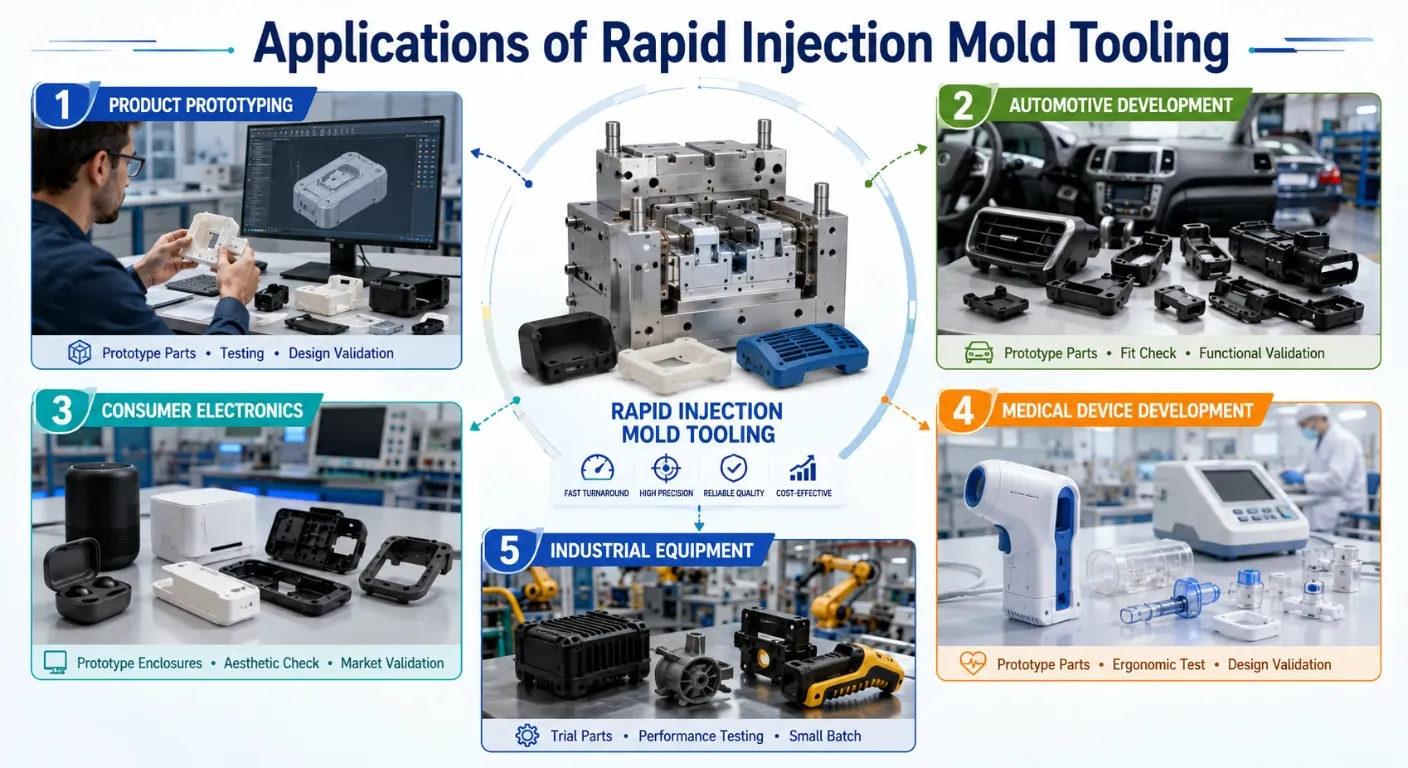
Applications of Rapid Injection Mold Tooling

  • Product Prototyping:Supports functional testing, design verification, and engineering improvements.
  • Automotive Development:Produces prototype interior parts, housings, clips, and functional components.
  • Consumer Electronics:Supports testing of enclosures, covers, and product structures.
  • Medical Device Development:Provides prototype plastic components for design validation and evaluation.
  • Industrial Equipment:Produces trial parts, functional prototypes, and small batch components.

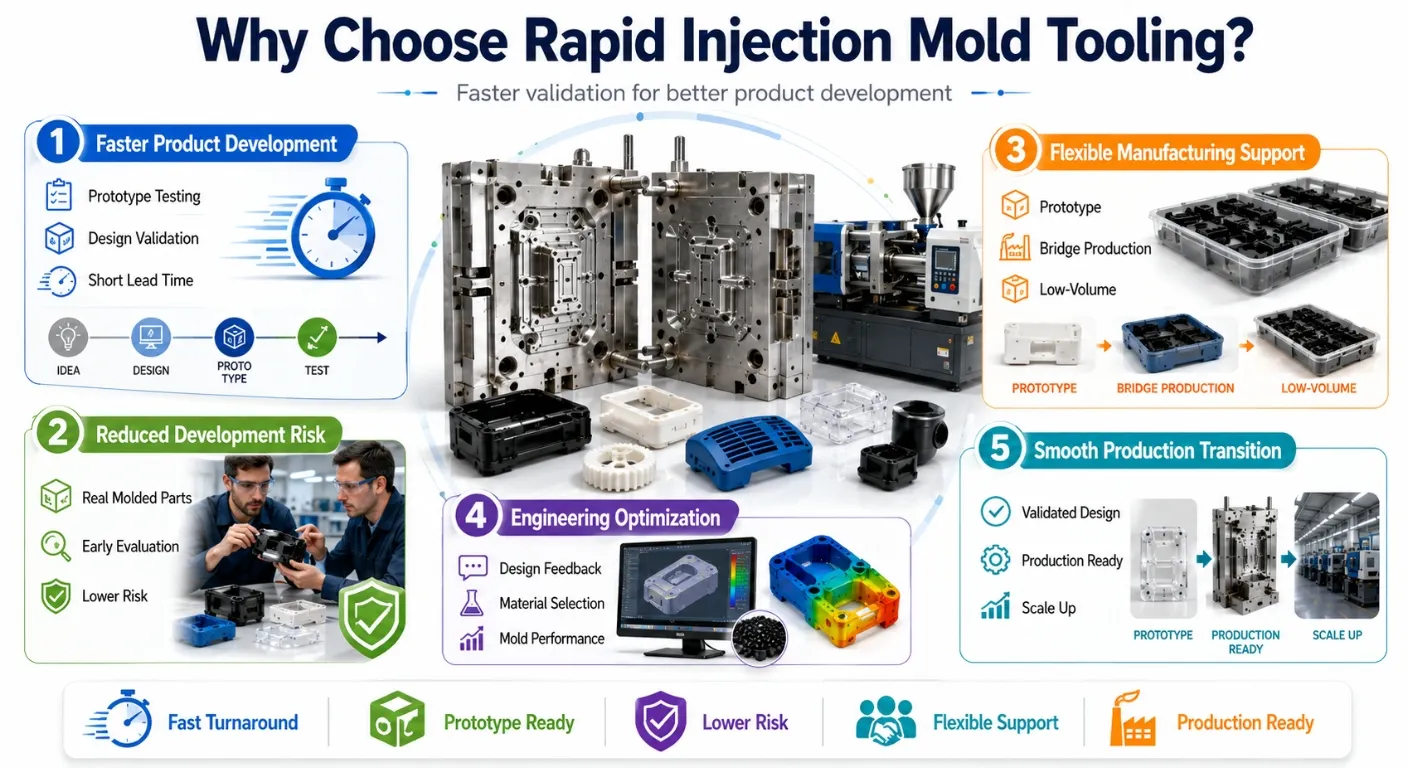
Why Choose Rapid Injection Mold Tooling?

  • Faster Product Development:Shortens the time required for prototype testing and design validation.
  • Reduced Development Risk:Allows engineers to evaluate real molded parts before investing in production tooling.
  • Flexible Manufacturing Support:Supports prototypes, bridge production, and low-volume manufacturing.
  • Engineering Optimization:Provides feedback on part design, material selection, and mold performance.
  • Smooth Production Transition:Helps move validated designs from prototype stages to mass production.

Why Choose Rapid Injection Mold Tooling?

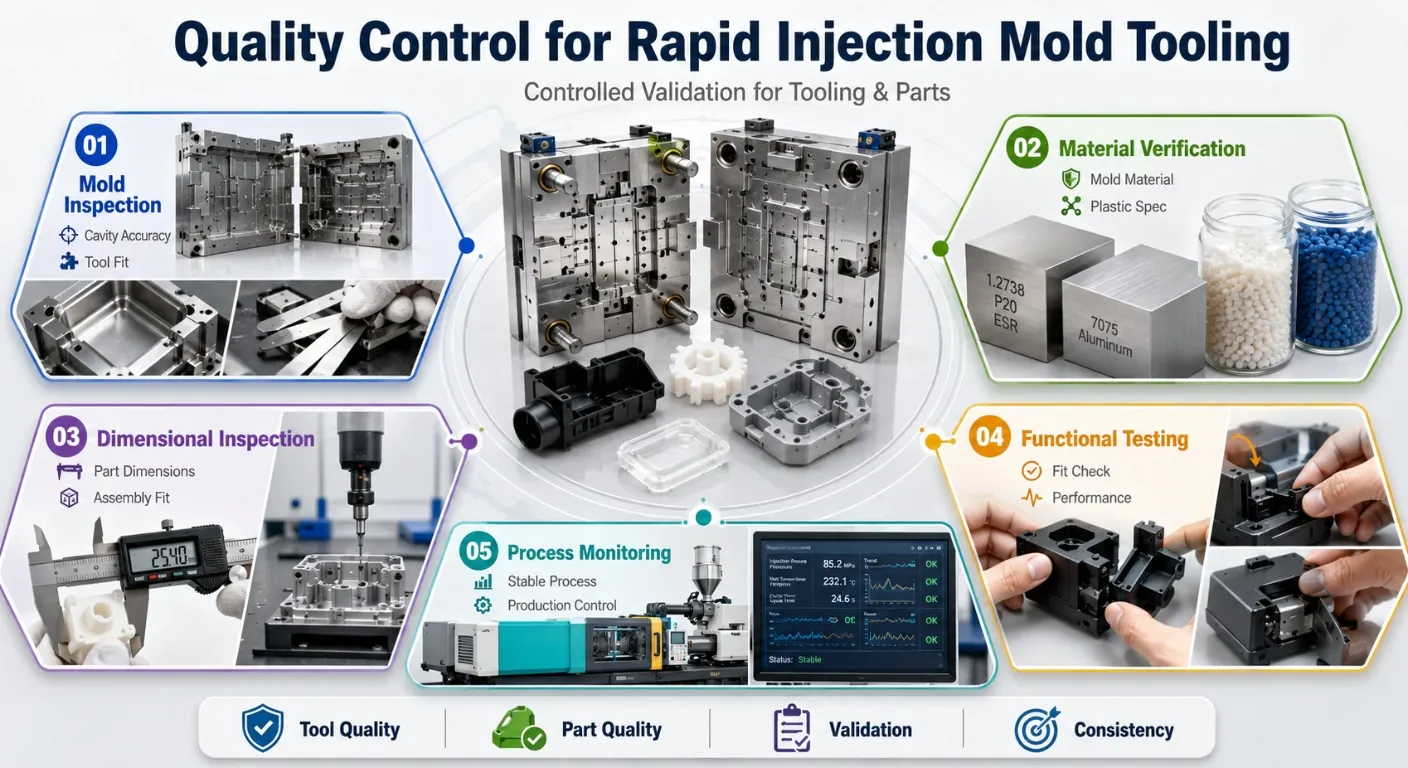
Quality Control for Rapid Injection Mold Tooling

Quality Control for Rapid Injection Mold Tooling

We maintain tooling and part quality through controlled validation processes.

  • Mold Inspection:Checks cavity accuracy, tooling structure, and component fit.
  • Material Verification:Confirms mold materials and plastic material specifications.
  • Dimensional Inspection:Verifies prototype part dimensions and assembly requirements.
  • Functional Testing:Evaluates fit, performance, and product usability.
  • Process Monitoring:Maintains consistent molding conditions during production.

FAQ

1. What is rapid injection mold tooling used for?
Answer:

Rapid injection mold tooling is used for prototype validation, functional testing, bridge production, and low-volume manufacturing before full production tooling.

2. How is rapid tooling different from production tooling?
Answer:

Rapid tooling focuses on faster development and lower initial cost, while production tooling prioritizes maximum mold life and high-volume output.

3. How quickly can rapid injection molds be produced?
Answer:

Yes. Engineering plastics provide lightweight solutions that can reduce component weight while maintaining required mechanical performance.

4. Can rapid tooling use production-grade plastics?
Answer:

Yes. Rapid injection molds can use materials such as ABS, PC, PP, PA, and TPU for realistic product testing.

5. What parts are suitable for rapid injection molding?
Answer:

Suitable parts include housings, covers, brackets, enclosures, functional components, and prototype assemblies.