


Stainless Steel 304 Machining
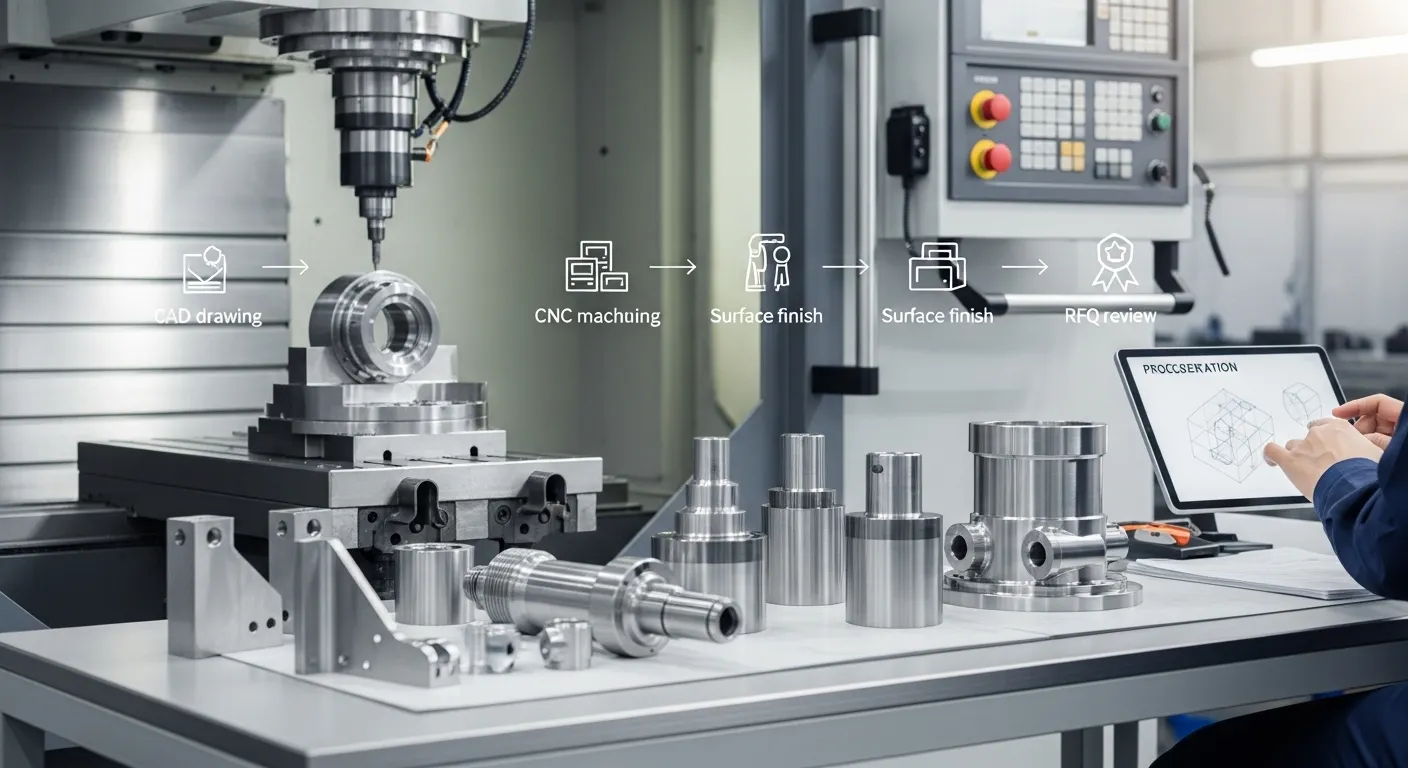
For many projects, 304 is a strong default choice. However, it is not always the easiest or best option. 303 may be better when machinability and high-volume turning are the main priorities. 316 may be better when the part will face chloride, marine, chemical, or harsher corrosion conditions.
Before requesting a quote, buyers should confirm material grade, quantity, CNC milling or turning needs, tolerance requirements, surface finish, passivation, inspection expectations, 2D drawings, and 3D CAD files. These details help SunOn review manufacturability and prepare a more accurate machining quotation.
When Should Buyers Choose Stainless Steel 304?
Stainless steel 304 is commonly used for machined parts that need a balance of corrosion resistance, mechanical strength, appearance, and cost control. It is suitable for many general industrial and commercial applications where the part may contact moisture, cleaning processes, or normal indoor and outdoor environments.
Buyers often consider 304 for:
- Equipment brackets and mounting parts
- Housings, covers, blocks, and plates
- Shafts, pins, spacers, and sleeves
- Fittings, connectors, and threaded components
- Food equipment and cleanable hardware parts
- Automation and machinery components
- Electronics and industrial device parts
- Medical-related mechanical components where material choice must be reviewed carefully
304 is useful when a part needs better corrosion resistance than plain carbon steel or some easier-machining metals. It also offers a professional appearance after brushing, polishing, bead blasting, or passivation.
However, buyers should not select 304 only because it is familiar. The working environment, machining complexity, tolerance, surface finish, and cost target should guide the final grade decision.
304 vs 303 vs 316 Stainless Steel for CNC Machining
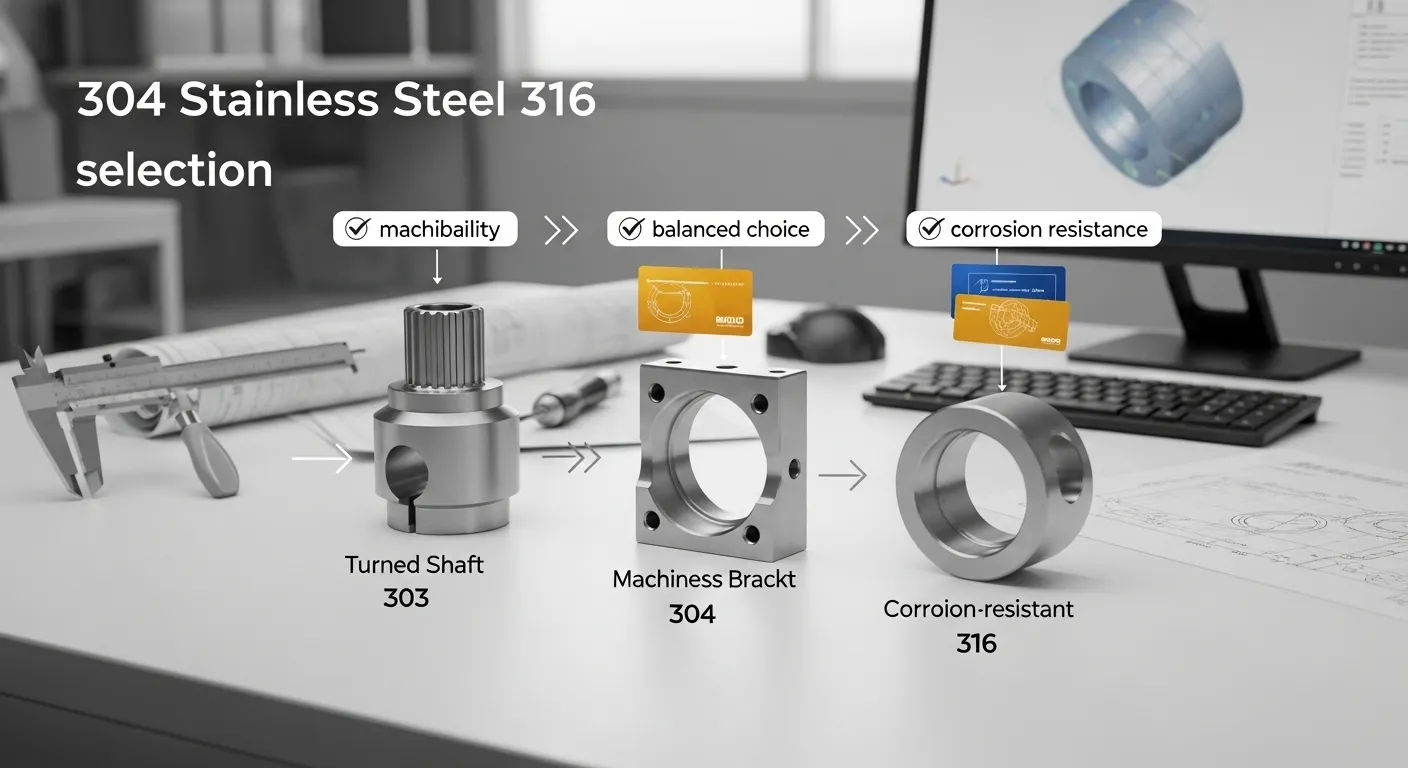
The most common buyer question is whether 304 is the right grade or whether 303 or 316 would perform better. Each grade has a different balance of machinability, corrosion resistance, and application fit.
| Stainless steel grade | Best for | Machinability | Corrosion resistance | Buyer decision point |
|---|---|---|---|---|
| 303 stainless steel | High-machinability turned parts, shafts, fasteners, fittings, and high-volume precision components | Easier to machine than 304 | Lower than 304 in many conditions | Choose 303 when machining speed and part complexity matter more than maximum corrosion resistance |
| 304 stainless steel | General corrosion-resistant CNC parts, cleanable components, equipment hardware, brackets, housings, and industrial parts | More challenging than 303 because it can work harden | Good general corrosion resistance | Choose 304 when you need a balanced stainless grade for strength, appearance, and general corrosion resistance |
| 316 stainless steel | Marine, chloride, chemical, and harsher corrosion environments | Similar or more demanding than 304 depending on part design | Better than 304 in many harsh environments | Choose 316 when the application needs stronger corrosion resistance than 304 can provide |
If the part is mainly a turned component with many features, 303 may reduce machining difficulty. If the part will face saltwater, chloride exposure, or chemical contact, 316 may be safer. If the part needs a balanced stainless material for general industrial use, 304 is often a practical choice.
For easier-machining metal alternatives, buyers can also compare materials such as brass. SunOn’s related page on brass CNC machining may help when corrosion resistance, conductivity, appearance, and machinability need to be compared.
How 304 Stainless Steel Behaves During Machining
304 stainless steel can be machined successfully, but it requires more control than free-machining grades. It can work harden when tools rub instead of cut cleanly. It can also generate heat, increase tool wear, and affect surface finish if feeds, speeds, tooling, and coolant are not controlled properly.
For buyers, this means the part design and drawing requirements matter. Thin walls, deep pockets, small holes, sharp internal corners, long threads, and very tight tolerances can increase machining difficulty.
During DFM review, buyers should discuss:
- Critical dimensions and functional surfaces
- Internal corner radius requirements
- Deep hole or deep pocket features
- Threading, tapping, and insert needs
- Thin-wall sections that may deform
- Cosmetic surfaces that need controlled finishing
- Areas requiring passivation, polishing, or inspection
A clear drawing helps separate functional requirements from non-critical dimensions. This prevents over-tight specifications from increasing cost or machining risk without improving part performance.
CNC Milling and CNC Turning for 304 Parts
SunOn supports custom CNC machining projects where 304 stainless steel may require milling, turning, or a combination of both. The right process depends on part geometry, tolerance, quantity, and surface requirements.
CNC milling is often used for:
- Plates, blocks, brackets, and housings
- Slots, pockets, steps, and flat surfaces
- Complex profiles and mounting features
- Parts with multiple faces or angled details
- Components that may need 3-axis or 5-axis machining review
CNC turning is often used for:
- Shafts, pins, spacers, and sleeves
- Bushings, fittings, and round connectors
- Threaded components
- Cylindrical parts with grooves or shoulders
- Precision parts that need concentric features
Some parts need both milling and turning. For example, a round stainless steel fitting may need turning first, then milling for slots, flats, cross holes, or side features. Sharing both 2D drawings and 3D CAD files allows the engineering team to review the best machining route.
For broader CNC manufacturing support, buyers can also visit SunOn’s CNC machining parts manufacturer page.
Tolerance, Surface Finish, and Passivation Requirements
Tolerance should be connected to the function of the part. Not every surface needs a tight tolerance. Buyers should mark critical dimensions clearly, especially for mating surfaces, press-fit areas, bearing positions, threads, alignment holes, sealing surfaces, and assembly interfaces.
For 304 stainless steel parts, surface finish can affect appearance, corrosion resistance, cleanability, and assembly performance. Common finish discussions include:
- As-machined: Suitable for many functional parts where appearance is not the main concern.
- Brushed finish: Useful when a consistent directional appearance is needed.
- Polishing: Suitable for parts that need a smoother or more cosmetic surface.
- Bead blasting: Creates a matte surface and can reduce visible machining marks.
- Passivation: Helps remove surface contamination and supports corrosion resistance after machining.
- Plating or coating: Should be specified when the part has special appearance, wear, or protection needs.
Passivation is especially important when corrosion resistance and cleanliness matter. If the part will be used in food equipment, medical-related products, cleanable assemblies, or moisture-prone environments, buyers should confirm whether passivation is required.
Application Examples for Machined 304 Stainless Steel Parts
304 stainless steel CNC parts are used across many product and equipment categories. SunOn can review part drawings for different industries and help buyers confirm whether 304 is suitable for the application.
Common application areas include:
- Industrial equipment and machinery parts
- Automation fixtures and mechanical hardware
- Electronics housings, connectors, and brackets
- Food equipment components and cleanable hardware
- Automotive-related metal components
- New energy, EV, and battery equipment parts
- Consumer product metal components
- Medical-related device parts and mechanical assemblies
For medical-related projects, buyers should be careful with specifications, documentation, material requirements, surface finish, and inspection expectations. SunOn’s page on CNC machining for medical devices can support related manufacturing discussions, but project-specific requirements should always be confirmed before production.
What Should Buyers Send for a 304 Machining Quote?
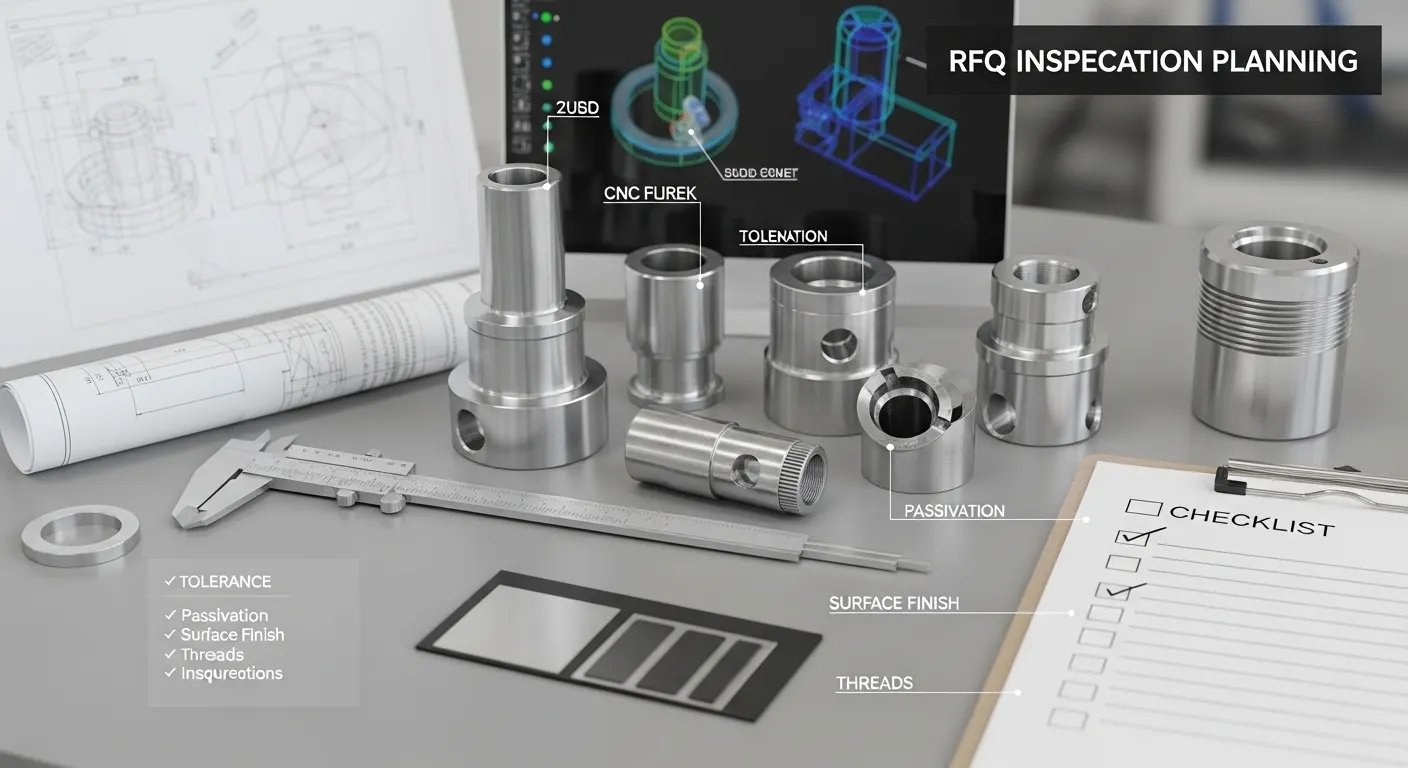
A complete RFQ helps reduce back-and-forth communication and improves quote accuracy. For 304 stainless steel machining, buyers should prepare as many of the following details as possible:
- Product or part name
- Application or industry
- Prototype, small-batch, or production stage
- Estimated quantity
- 3D CAD model
- 2D technical drawing
- Material grade, such as 304 or 304L if required
- Critical tolerances and general tolerances
- Surface finish requirement
- Passivation, polishing, bead blasting, plating, or coating needs
- Threading, holes, slots, inserts, undercuts, or assembly features
- Inspection report or measurement requirements
- Functional testing needs if relevant
- Delivery destination
- Target schedule
- NDA, BOM, or project specification if available
If you are not sure whether 304, 303, or 316 is the right material, mention the application environment in the RFQ. SunOn can review the part requirements and discuss possible material or process options.
Prototype, Small-Batch, and Production Planning
304 stainless steel is suitable for functional prototypes when the final part must behave like a real production component. CNC machining can help buyers test fit, strength, assembly, surface finish, and functional performance before moving forward.
For small-batch production, buyers should focus on repeatability, fixture planning, inspection points, and finish consistency. For larger production needs, the part design should be reviewed early to reduce unnecessary machining time, simplify difficult features, and confirm whether CNC machining is still the right process.
SunOn also supports broader custom manufacturing needs, including rapid prototyping, mold making, injection molding, die casting, finishing, mechanical assembly, and OEM/ODM production support. This helps buyers who need more than one process during product development.
Common Project Risks to Avoid
Many machining issues can be reduced before production starts. The biggest risks usually come from unclear drawings, unrealistic tolerances, missing finish notes, or choosing the wrong stainless steel grade.
Buyers should avoid:
- Selecting 304 when 316 is needed for harsh corrosion exposure
- Choosing 303 when corrosion resistance is more important than machinability
- Marking every dimension as tight tolerance
- Leaving surface finish or passivation unclear
- Sending only screenshots instead of CAD files and drawings
- Ignoring thin walls, deep pockets, small holes, and sharp internal corners
- Requesting cosmetic surfaces without defining inspection expectations
- Asking for a quote without quantity or production stage
A better RFQ gives the supplier enough information to review manufacturability, cost drivers, and quality expectations before machining begins.
Why Work With SunOn for 304 Stainless Steel CNC Parts?
SunOn Mould supports global buyers that need custom manufacturing from prototype development to production planning. For 304 stainless steel parts, our team can review drawings, machining features, material requirements, surface finish, tolerance needs, and inspection expectations before quotation.
Buyers can work with SunOn for:
- Custom metal CNC machining
- CNC milling and CNC turning support
- 5-axis machining review for complex parts
- Prototype and small-batch CNC machining
- Surface finishing and post-processing
- Mechanical assembly support
- OEM/ODM manufacturing coordination
- DFM communication before production
The goal is not only to machine the part. It is to help buyers confirm the right material, process, tolerance, finish, and production path before committing to manufacturing.
Frequently Asked Questions
Is 304 stainless steel good for CNC machining?
Yes. 304 stainless steel is suitable for CNC machining when the part needs strength, corrosion resistance, and cleanability. It requires controlled tooling, cutting strategy, and cooling because it can work harden during machining.
Is 304 harder to machine than 303?
Yes. 303 is generally easier to machine because it is designed for better machinability. 304 is often chosen when corrosion resistance and general performance are more important than machining speed alone.
When should I choose 316 instead of 304?
Choose 316 when the part may face chloride, marine, chemical, or harsher corrosion exposure. 304 is suitable for many general industrial uses, but 316 offers better corrosion resistance in more demanding environments.
Should 304 parts be passivated after machining?
Passivation is often useful when corrosion resistance and clean surface condition matter. Buyers should specify passivation on the drawing or RFQ if the application requires improved corrosion protection after machining.
What files are needed for a 304 machining quote?
Send a 3D CAD model, 2D drawing, quantity, material grade, tolerance, surface finish, passivation needs, inspection requirements, application details, and delivery destination. These details help SunOn review manufacturability and quote accurately.
Can SunOn support both prototypes and production?
Yes. SunOn can support CNC prototypes, small-batch machining, finishing, assembly, and production planning. Buyers should share the current project stage so the team can review the most suitable manufacturing route.
Request a Quote for Stainless Steel 304 Machined Parts
Share your 304 stainless steel part drawings with SunOn for CNC machining review, DFM discussion, and quotation. Please send your product or part type, quantity, prototype or production stage, application, 2D drawing, 3D CAD model, material grade, tolerance requirements, surface finish, passivation needs, threading or assembly details, inspection requirements, delivery destination, target schedule, and any NDA, BOM, or project specification.
SunOn can help review your 304 stainless steel machining project and discuss the right CNC process, material choice, finish requirement, and manufacturing path before production begins.
