


What is a T1 Sample in Injection Molding? Timeline Explained
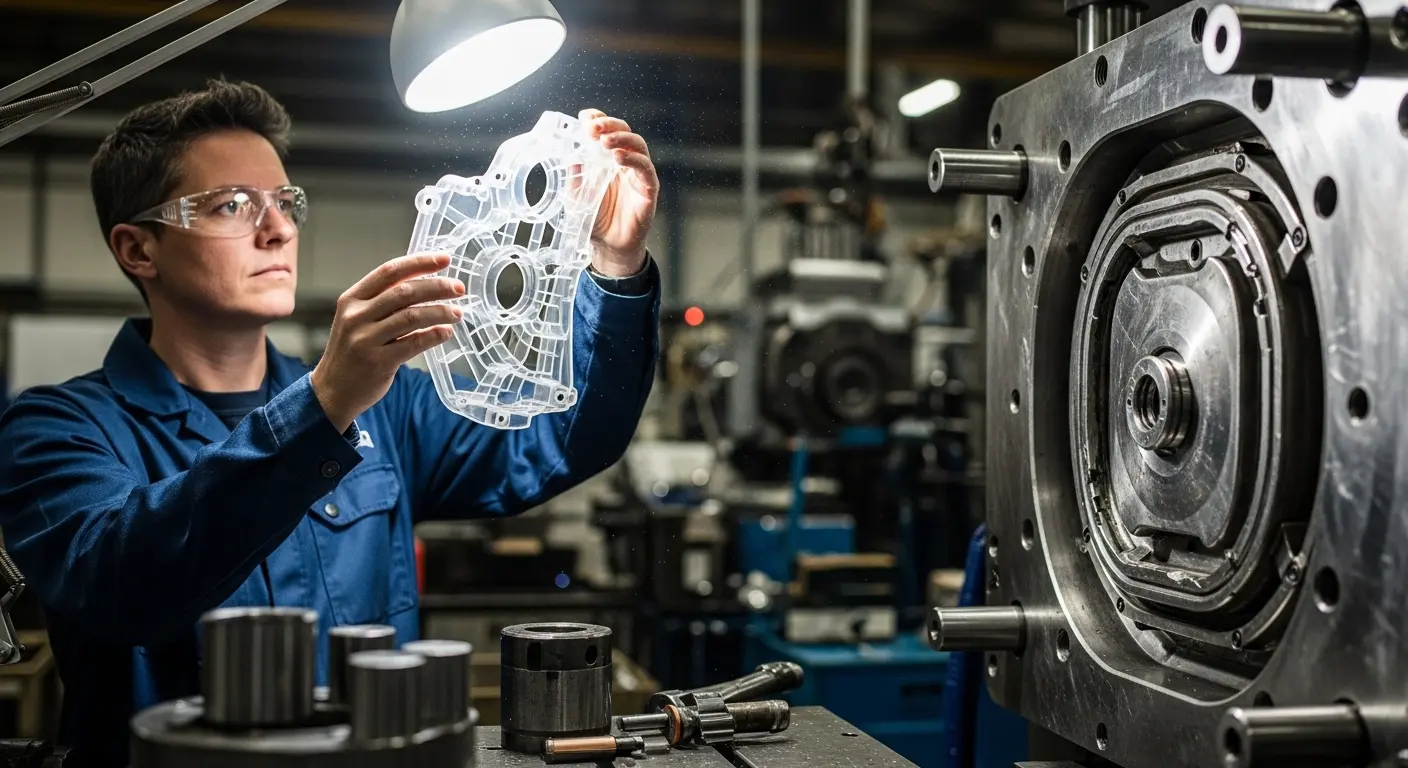
In plastic injection molding, a T1 sample is the first functional part produced from a completed production mold. The "T" stands for "Trial," and the number "1" signifies the first iteration of parts sent to the customer for evaluation. While T0 represents the manufacturer’s internal testing phase to ensure the mold opens and closes correctly, the T1 sample serves as the official benchmark for dimensional accuracy, aesthetic quality, and material performance. For procurement managers and product designers, a successful T1 stage is the most critical milestone in transitioning from a digital CAD design to a tangible, mass-producible product.
The Stages of Mold Trials: From T0 to T1 and Beyond
The journey from a finished tool to a mass-produced part involves several iterative "T" stages. Understanding the difference between these trials helps sourcing teams manage expectations and project timelines more effectively. While some simple parts may achieve approval at T1, complex components often require subsequent adjustments.
Understanding the Internal T0 Trial
Before you ever see a physical part, your manufacturer performs a T0 trial. This is a strictly internal process. During T0, engineers test the mold’s mechanical movements, cooling systems, and ejection pins. They identify catastrophic failures, such as the mold not filling completely (short shots) or parts sticking to the cavity. At SunOn, we use the T0 phase to calibrate the injection parameters so that the T1 samples you receive are as close to the final specification as possible.
The Role of T1 Samples in Customer Validation
The T1 sample is the first time the client reviews the physical output of the tool. It is not expected to be 100% perfect, but it must be functional enough for a thorough plastic injection molding process audit. At this stage, the focus shifts from "does the mold work?" to "does the part meet the design intent?" Engineers use these samples to check critical tolerances and assembly fitment.
Moving Toward T2 and Final Approval
If the T1 review reveals that a dimension is slightly off or a surface finish needs more texture, the mold is modified. The resulting parts from the next trial are called T2 samples. Most professional projects aim for "Golden Sample" approval by T2 or T3. By following a structured 2K injection molding guide, manufacturers can often minimize the number of trials needed, saving both time and cost.
How Long Does the T1 Sample Process Take?
The T1 sample lead time is a combination of mold fabrication time and the logistics of the trial itself. Generally, for a standard high-quality steel mold, the T1 trial occurs 4 to 7 weeks after the design is finalized and the deposit is paid. However, the complexity of the part significantly influences this window.
Standard Tooling Timelines
For simple, single-cavity molds using standard materials like ABS or Polypropylene, the T1 samples are typically ready within 30 to 35 days. This includes the time required for CNC machining, EDM (Electrical Discharge Machining), and manual polishing of the mold cavities. If your project involves 2K injection molding methods, the timeline may extend to 8 or 9 weeks due to the complexity of the secondary injection unit and the rotating mold base.
Factors That Delay T1 Delivery
Several variables can push back your T1 date. If the part design has complex undercuts requiring multiple side-actions or lifters, the tool build takes longer. Furthermore, sourcing specialty engineering resins or medical-grade materials can add 1 to 2 weeks to the lead time if the material is not readily available in stock. Working with a supplier that offers integrated plastic injection mold for medical devices ensures that cleanroom requirements and material certifications are handled in parallel with tooling, preventing unnecessary bottlenecks.
Common Issues Identified During a T1 Mold Trial
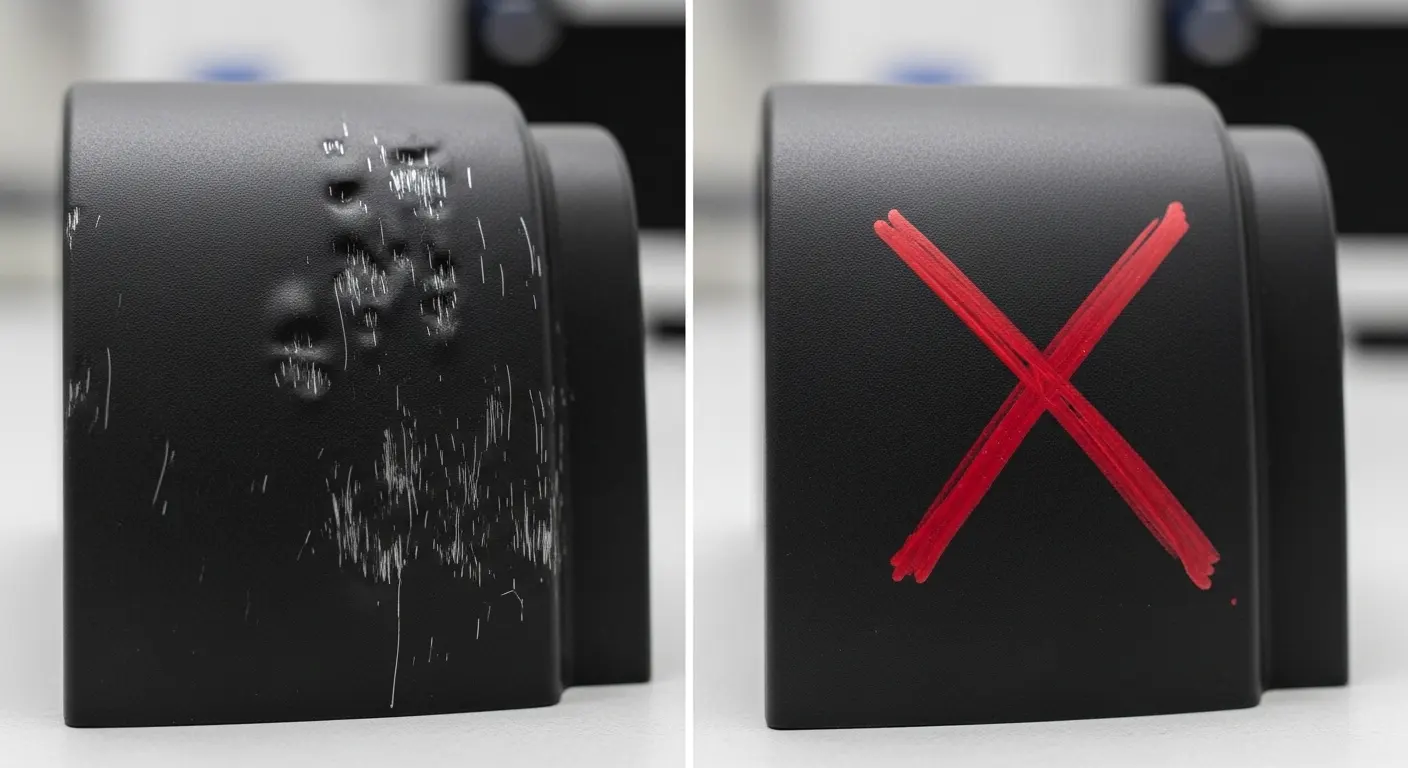
The T1 trial is designed to expose flaws. It is rare for a mold to produce a perfect part on the first shot because plastic behaves differently under high pressure and heat than it does in a digital simulation. Identifying these issues early prevents expensive failures during mass production.
Dimensional Accuracy and Tolerance Check
The most frequent issue at T1 is dimensional deviation. Even with accurate Moldflow analysis, different cooling rates can cause the plastic to shrink more or less than predicted. Quality assurance teams use Coordinate Measuring Machines (CMM) to compare the T1 sample against the 3D CAD model. If a hole is 0.1mm too small, the "steel-safe" approach allows the manufacturer to remove more metal from the mold to enlarge the hole for T2.
Visual Defects: Sink Marks, Flash, and Warpage
Aesthetic failures are common in the first trial. Sink marks—small depressions on the surface—often occur where thick ribs meet thin walls. Flash happens when plastic leaks between the mold halves, indicating that the clamping pressure is too low or the mold fit needs adjustment. Warpage is a sign of uneven cooling or internal stress. At SunOn, we analyze these defects during the 2K injection molding process and benefits evaluation to ensure that multi-material parts bond correctly without warping.
Material Flow and Gate Vestige
The T1 stage also checks if the "gate"—the point where plastic enters the cavity—is positioned correctly. If the gate leaves a prominent mark (vestige) on a visible surface, or if it causes "jetting" (snake-like patterns), the gating system may need to be redesigned or relocated before T2.
What Should a T1 Sample Report Include?
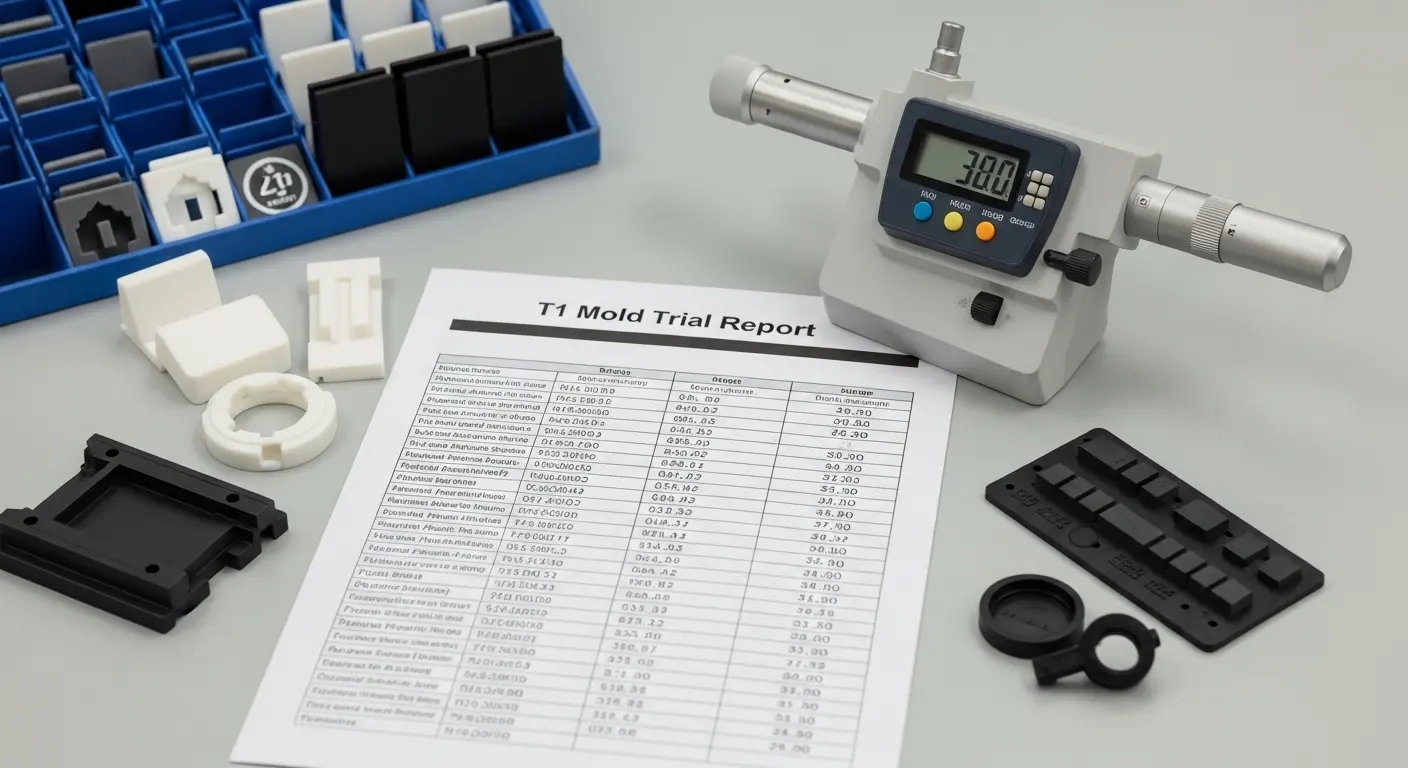
A T1 sample is useless without the supporting data. Professional B2B buyers should expect a comprehensive "Trial Report" alongside the physical parts. This documentation acts as a roadmap for the corrections required to reach mass production.
Detailed Injection Parameter Logs
The report should list every setting used during the trial, including melt temperature, mold temperature, injection speed, and holding pressure. These parameters are crucial because they must be replicable during the final production run. If a part only looks good under extreme, unsustainable pressures, the mold design itself may need a fundamental change.
Dimensional Inspection Report (FAI)
A First Article Inspection (FAI) report is a standard requirement for T1. It maps out the critical-to-quality (CTQ) dimensions defined in your engineering drawing. Each measurement is marked as "Pass" or "Fail." This clarity allows the design engineer to decide which deviations are acceptable and which require a tool modification.
Defect Analysis and Corrective Action Plan
A high-quality supplier won't just tell you there is a sink mark; they will provide a solution. The T1 report should include photos of any defects and a clear engineering plan to fix them. For example, if warpage is detected, the plan might involve increasing the cooling cycle or adjusting the gate size.
Why SunOn’s DFM-Led Approach Shortens T1 Approval
At SunOn Industrial Group, we believe the best way to handle T1 issues is to prevent them during the design phase. Our "Design for Manufacturability" (DFM) process is a mandatory step before we ever cut steel. By simulating the injection process early, we can identify potential thin walls, sharp corners, or inadequate draft angles that would otherwise cause a T1 failure.
Reducing Iterations Through Simulation
Using advanced Moldflow software, we simulate how the plastic will fill the cavity. This allows us to predict air traps and weld lines before the mold is even built. For our clients, this often means that the T1 sample is already 95% of the way to final approval, significantly reducing the time spent in T2 or T3 cycles.
Expertise in Complex Tooling
Whether you need a high-precision medical component or a multi-material automotive part, our engineering team applies decades of experience to the tooling process. By integrating post-processing and assembly considerations into the T1 phase, we ensure that your parts aren't just dimensionally correct, but are also ready for the secondary stages of your manufacturing workflow.
Summary Checklist for T1 Sample Success
To ensure your T1 trial goes smoothly, procurement and engineering teams should follow this checklist:
- Verify Material: Ensure the T1 is shot using the exact grade of resin specified for the final product.
- Review DFM: Confirm that all DFM suggestions were implemented in the final mold design.
- Define CTQs: Clearly mark critical dimensions on your drawings so the QA team knows what to prioritize during inspection.
- Request Documentation: Do not accept samples without a full parameter log and dimensional report.
- Plan for Iteration: Budget time in your project schedule for at least one round of mold modifications (T2) following the T1 review.
Frequently Asked Questions (FAQ)
What is the primary goal of a T1 sample?
The primary goal of a T1 sample is to verify the mold's functionality and the part's basic dimensions against the original CAD design. It serves as a physical proof of concept that allows engineers to identify any necessary adjustments in tooling or injection parameters before moving toward mass production.
How many T1 samples will I receive?
Most manufacturers provide between 5 and 10 T1 samples for initial testing and measurement. If you require a larger quantity for functional testing or market validation, this should be negotiated during the quoting stage, as it may require a longer trial run and additional material costs.
Can I use T1 samples for final product assembly?
T1 samples are generally intended for inspection and fitment testing rather than final assembly. While they are often functional, they may lack the final surface texture or have slight dimensional variances that could affect long-term performance in a finished product.
Is the T1 sample made of the final production material?
Yes, T1 samples should always be produced using the final production resin to ensure accurate results. Using a substitute material would lead to incorrect shrinkage data and misleading performance tests, making the trial results invalid for production planning.
What happens if the T1 sample fails inspection?
If a T1 sample fails to meet specifications, the manufacturer performs "tool tuning." This involves modifying the mold—such as widening a gate or removing steel to adjust a dimension—and then conducting a T2 trial to verify that the corrections were successful.
How does T1 differ from a prototype?
A T1 sample is produced from the actual hard-tooling (steel or aluminum mold) intended for production, whereas a prototype is typically made via 3D printing, CNC machining, or vacuum casting. T1 samples represent the actual chemistry and structural integrity of the final manufactured part.
Ready to move your project from CAD to T1? At SunOn Industrial Group, we specialize in high-precision tooling and DFM-led manufacturing that gets you to market faster. Contact our engineering team today for a comprehensive DFM review or to request a quote for your next injection molding project.
