


Turnkey Mold Development: From Design to Packaging
Turnkey mold development is a comprehensive manufacturing solution where a single supplier manages the entire product lifecycle, from initial CAD design and mold fabrication to mass production, assembly, and final retail packaging. By integrating these fragmented stages into a unified workflow, businesses reduce supply chain complexity, lower logistics costs, and eliminate the "quality finger-pointing" common when using multiple vendors. For B2B buyers and product engineers, turnkey injection molding solutions provide a streamlined path to market, ensuring that the final delivered product matches the original design intent without the overhead of managing separate tooling shops, molders, and assembly houses.
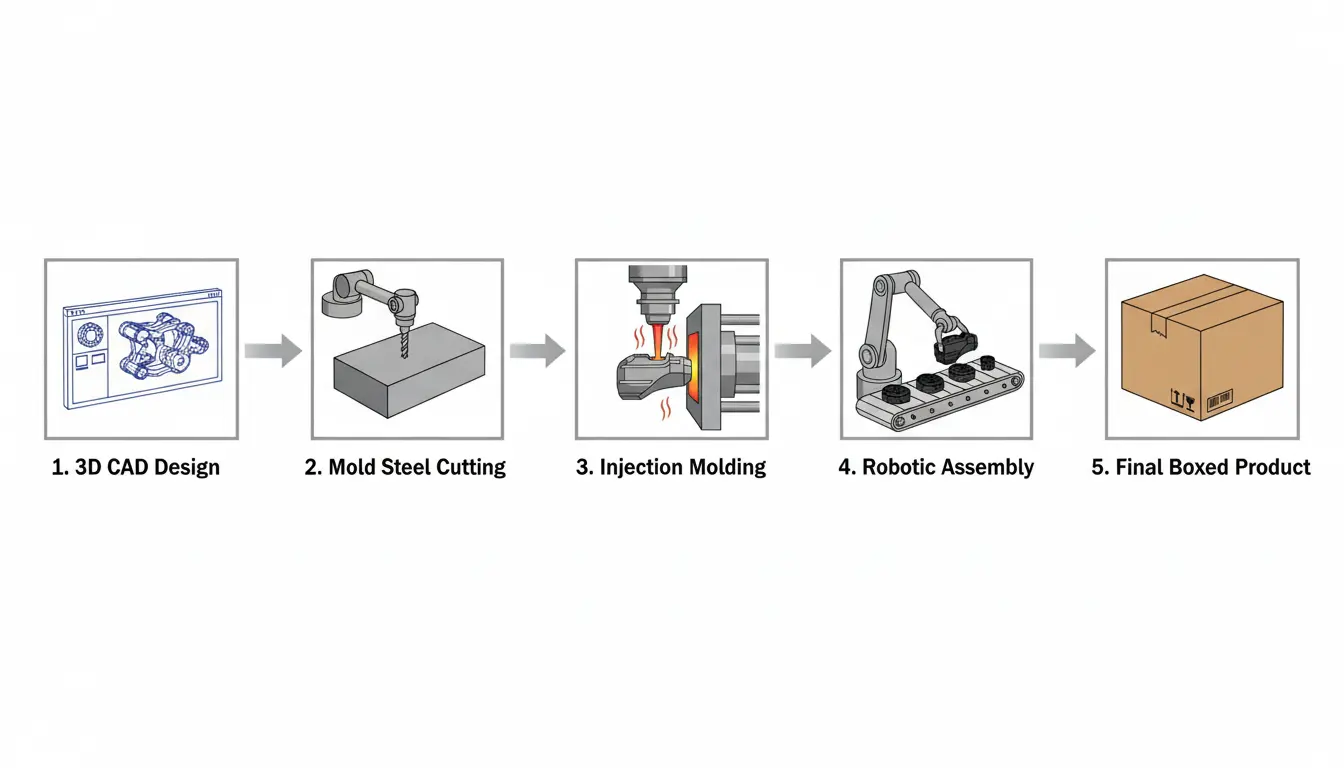
What is Turnkey Mold Development in Manufacturing?
In the industrial sourcing world, the term "turnkey" refers to a project that is ready for immediate use or sale upon delivery. In the context of plastic manufacturing, this means the supplier provides end-to-end mold manufacturing services. Instead of merely shipping raw plastic parts in bulk, a turnkey partner like SunOn delivers completed, assembled, and packaged products. This model is particularly beneficial for Original Equipment Manufacturers (OEMs) and hardware startups that need to focus on marketing and distribution rather than micro-managing factory floors.
Integrated plastic product development encompasses several high-stakes engineering phases. It starts with a rigorous Design for Manufacturability (DFM) review to ensure the part can be molded efficiently. From there, it moves into high-precision tooling, the plastic injection molding process, and specialized post-processing. By centralizing these tasks, the manufacturer maintains total accountability for the final result. If a tolerance issue arises during assembly, the turnkey provider can immediately adjust the mold in-house, rather than waiting weeks for two different vendors to coordinate a fix.
For global procurement managers, this service model acts as a risk mitigation strategy. Managing a toolmaker in one city and an injection molder in another creates a "black hole" of responsibility. If parts don't fit during final assembly, each vendor blames the other’s tolerances. Turnkey mold development closes this gap, placing the burden of precision and compatibility squarely on the shoulders of a single, integrated partner.
Key Benefits of an Integrated Turnkey Solution
The shift toward full service mold making is driven by the need for speed and cost-efficiency in a competitive global market. When a single partner handles the transition from a 3D model to a retail-ready box, several hidden costs of manufacturing vanish. These efficiencies are not just about lower unit prices; they are about the "total cost of ownership" for the product.
First, lead times drop significantly. In a traditional multi-vendor setup, shipping raw parts from the molder to an assembly facility can add weeks to the timeline. A turnkey provider performs secondary operations like ultrasonic welding, pad printing, or silk screening under one roof. This proximity allows for a continuous production flow. Furthermore, because the engineering team that built the mold is the same team running the production, T1 samples are approved faster, and mass production stabilizes sooner.
Second, quality assurance becomes much more robust. An integrated provider develops a holistic quality plan that covers the part from the molten plastic stage to the final click-of-an-assembly. This is especially critical for high-stakes industries, such as when developing a plastic injection mold for medical devices. In such cases, traceability and consistency are non-negotiable. A turnkey partner provides a single point of documentation for every certification, material datasheet, and inspection report required for compliance.
The Turnkey Mold Development Process Steps
Understanding the technical journey of a turnkey project helps sourcing leads set realistic milestones. This end-to-end mold manufacturing process is a series of interconnected phases where the output of one step is perfectly optimized for the next.
Phase 1: Product Design and DFM Review
The process begins with an engineering handshake. Before a single piece of steel is cut, the manufacturer performs a DFM review. This audit checks for wall thickness consistency, draft angles, and potential gate locations. The goal is to optimize the part for the specific 2K injection molding methods or standard molding techniques being used. Early detection of molding risks at this stage prevents expensive tool modifications later and ensures the assembly process will be seamless.
Phase 2: High-Precision Tooling and Fabrication
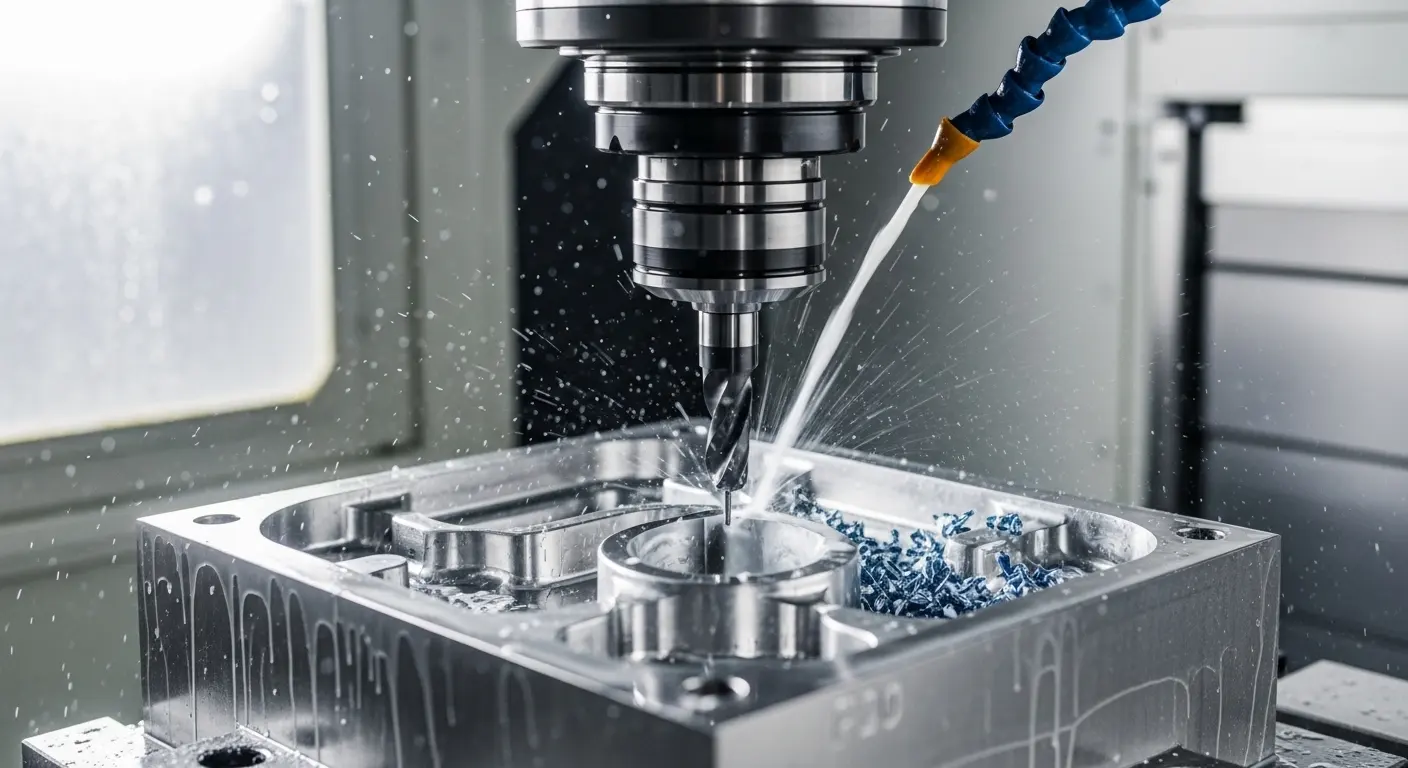
Once the design is validated, the toolroom takes over. This phase involves CNC machining, EDM (Electrical Discharge Machining), and precision grinding of the mold cavities. In a turnkey environment, the tooling engineers work closely with the assembly leads. They might add specific features to the mold to facilitate automated assembly or post-processing fixtures. This level of foresight is only possible when the toolmaker knows exactly how the part will be handled after it leaves the press.
Phase 3: Mass Production and Quality Control
With the mold verified through T1 and T2 trials, mass production begins. The manufacturer monitors critical parameters like injection pressure, melt temperature, and cycle time to ensure part-to-part consistency. For complex parts, utilizing the 2K injection molding guide helps in managing multi-material bonds or overmolding requirements. Quality control isn't just a final check; it is an ongoing process of statistical monitoring to ensure every batch meets the agreed-upon tolerances.
Phase 4: Secondary Operations and Assembly
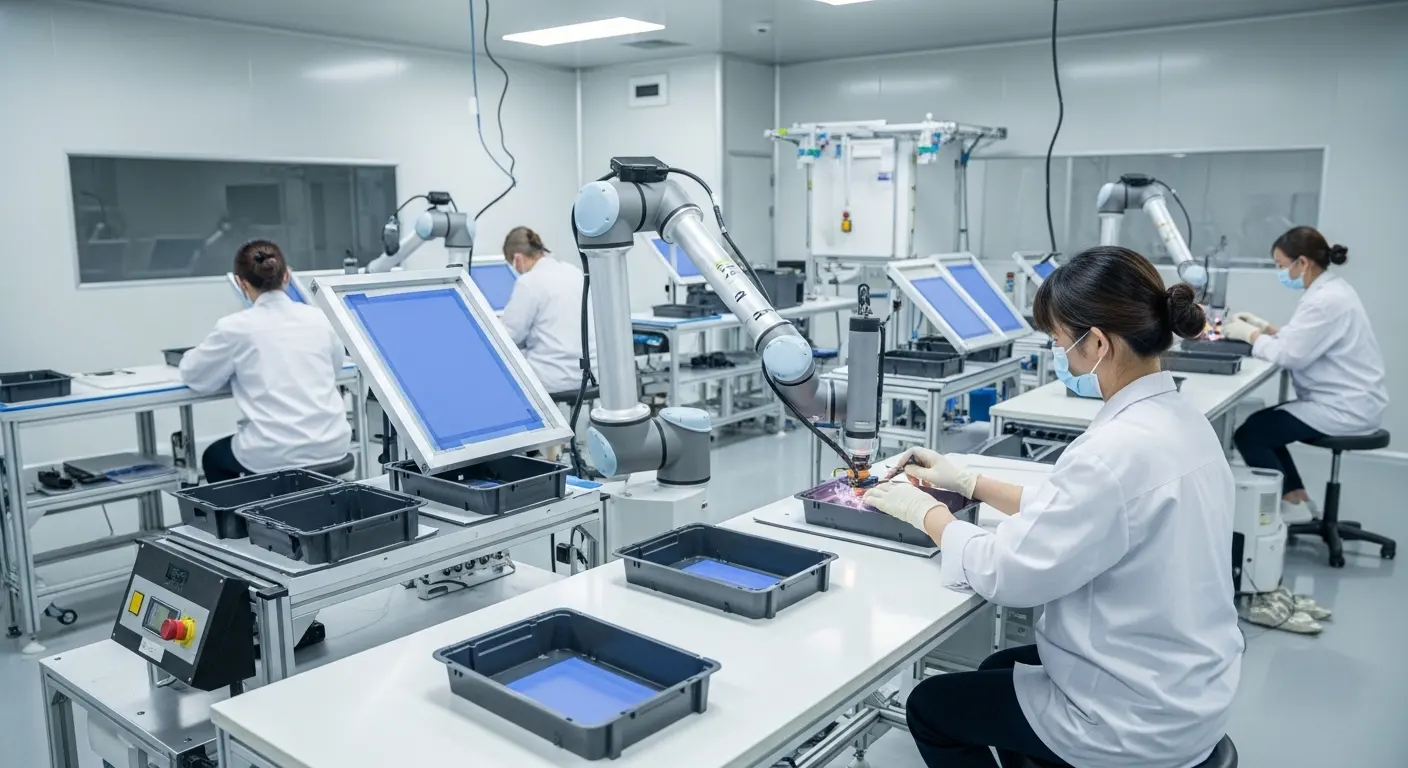
This is where turnkey services truly diverge from standard molding. Custom molding and assembly services include a variety of "post-molding" tasks. These may include heat staking, ultrasonic welding to join plastic components, or the installation of metal inserts. Aesthetic finishes such as painting, electroplating, or laser etching are also applied at this stage. By performing these tasks in-house, the manufacturer ensures that the delicate surface finishes are not damaged during transit between different service providers.
Final Phase: Custom Retail Packaging and Global Logistics
The final step in integrated plastic product development is often the most overlooked: packaging. A true turnkey partner provides retail-ready packaging solutions, ranging from simple polybagging to complex blister packs or custom-printed corrugated boxes. For a hardware founder, receiving "master cartons" ready to be shipped directly to an Amazon warehouse or a retail distributor is a massive logistical advantage.
Packaging design must be as precise as the part design. It needs to protect the product during international transit while also meeting the aesthetic standards of the brand. SunOn’s turnkey approach includes sourcing packaging materials that match your branding requirements and ensuring that labeling—such as barcodes, SKU data, and country-of-origin markings—is compliant with global trade regulations.
Logistics management completes the turnkey cycle. Being based in a major manufacturing hub like Dongguan allows for efficient export and shipping. Whether you require FOB (Free On Board) or DDP (Delivered Duty Paid) shipping, a turnkey provider manages the freight forwarding and customs documentation. This "factory-to-door" service allows procurement teams to treat the manufacturer as a local warehouse, simplifying the entire sourcing experience.
Why Choose SunOn for End-to-End Turnkey Molding?
SunOn Industrial Group stands out as a senior-level partner by offering more than just capacity; we offer engineering-led solutions. Our facilities are designed to handle the complexity of multi-stage projects without the "hand-off" errors common in the industry. By leveraging the 2K injection molding process and benefits, we can often consolidate multi-part assemblies into a single, high-efficiency molding cycle, further reducing your assembly costs and bill of materials (BOM).
Our expertise across various verticals, from automotive to electronics, means we understand the specific packaging and assembly standards of your industry. We don't just mold plastic; we build products. Our team acts as an extension of your engineering department, providing the technical feedback necessary to make your product more durable, aesthetic, and cost-effective.
When you partner with SunOn, you gain access to a transparent, ISO-certified workflow. We provide detailed project timelines and regular updates, ensuring you are never in the dark about your project’s status. From the first DFM report to the final shipping container, we maintain a focus on precision and reliability. This commitment to being a single-source solution is why global brands trust us for their most critical product launches.
Frequently Asked Questions (FAQ)
Is turnkey injection molding more expensive than sourcing parts and assembly separately?
Turnkey injection molding often results in a lower "total cost of ownership" even if individual line items appear higher. You save significantly on internal management time, multiple shipping costs, and the risk of defective parts that don't fit together. By consolidating the supply chain, you eliminate the markup that separate assembly houses charge on parts they didn't manufacture.
What are the benefits of a single-source mold supplier?
A single-source supplier provides total accountability. If a product fails, there is no confusion about whether the mold, the molding process, or the assembly was at fault. This leads to faster problem-solving and higher quality consistency. Additionally, communication is streamlined through a single project manager rather than multiple points of contact at different companies.
How long does the turnkey development process take?
The timeline for a turnkey project typically ranges from 8 to 16 weeks, depending on complexity. This includes 4-7 weeks for mold fabrication and T1 samples, 2 weeks for part validation and testing, and 2-4 weeks for mass production, assembly, and packaging. Choosing a turnkey partner usually saves 3-5 weeks compared to a multi-vendor approach.
Does SunOn offer retail-ready packaging?
Yes, SunOn provides complete retail-ready packaging services. This includes custom box design, blister packaging, labeling, and kitting. We can package your products to be shelf-ready for major retailers or optimized for direct-to-consumer e-commerce shipping, including all necessary compliance and branding elements.
Can I provide my own CAD design for turnkey services?
You can absolutely provide your own CAD design. Our engineering team will perform a detailed DFM review of your files to ensure they are optimized for injection molding and assembly. If we find areas where the design could be improved to save cost or increase durability, we provide those recommendations before tooling begins.
What materials can be used in turnkey molding?
We work with a vast range of materials, including standard plastics (ABS, PP, PE), engineering resins (PC, Nylon, POM), and high-performance materials like PEEK or Ultem. Because we manage the assembly, we also handle the sourcing of non-plastic components, such as metal inserts, springs, or electronic PCBs, to ensure a fully functional final product.
Ready to simplify your supply chain and accelerate your product launch? At SunOn, we turn complex designs into retail-ready products through our integrated engineering and manufacturing services. Request a turnkey quote and DFM review today and let us handle the journey from your CAD file to the final package.
