


How 24-Hour Rapid 3D Printing Services Work
A 24-hour rapid 3D printing service is an industrial manufacturing process that delivers physical prototypes from digital CAD files within a single business day. This speed is achieved through automated Design for Manufacturability (DFM) software, high-speed additive manufacturing technologies like SLA or SLS, and 24/7 factory operations. For B2B buyers, these services provide a critical bridge for urgent design iterations, allowing engineers to test form, fit, and function without the traditional weeks-long lead times of conventional molding.
How Fast Turnaround 3D Printing Services Meet Tight Deadlines
In modern hardware development, the ability to fail fast and iterate faster is a competitive necessity. Fast turnaround 3D printing removes the logistics bottlenecks that usually plague industrial sourcing. The process begins the moment a designer uploads a CAD file. Unlike traditional workshops that rely on manual reviews, an express service utilizes digital workflows to move a project from the "quoting" phase to the "printing" phase in hours.
Meeting a 24-hour deadline requires a high level of technical synchronization. The factory must manage a constant intake of files while balancing machine availability. At SunOn, we achieve this by maintaining a vast array of industrial-grade printers that are calibrated and ready for immediate deployment. This infrastructure ensures that even if one machine is occupied, another is available to pick up a high-priority "express" order.
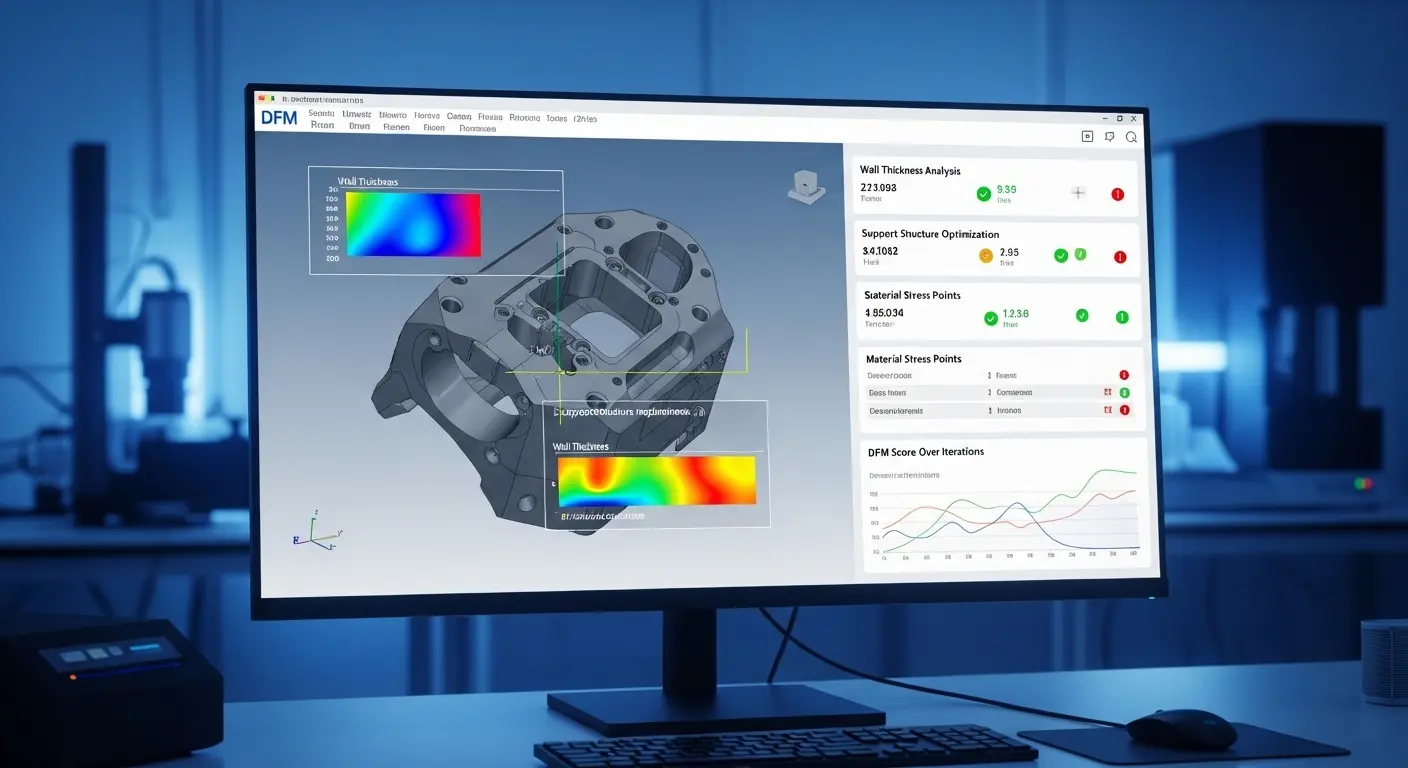
Automated DFM Analysis: The Key to Instant Production
Design for Manufacturability (DFM) is often the stage where production slows down. In an overnight 3D printing service, DFM is heavily automated. As soon as an STP or STEP file is received, algorithms check for common 3D printing errors such as non-manifold geometry, wall thicknesses that are too thin for the chosen material, or internal cavities that would trap powder or resin.
This automated check provides immediate feedback. If the system detects a risk—for instance, a wall that is 0.4mm when the material requires 0.8mm—it flags the user. This prevents the "failed print" cycle that typically wastes 12 to 24 hours in a standard production environment. By ensuring the file is "print-ready" instantly, the actual manufacturing can begin within sixty minutes of order confirmation.
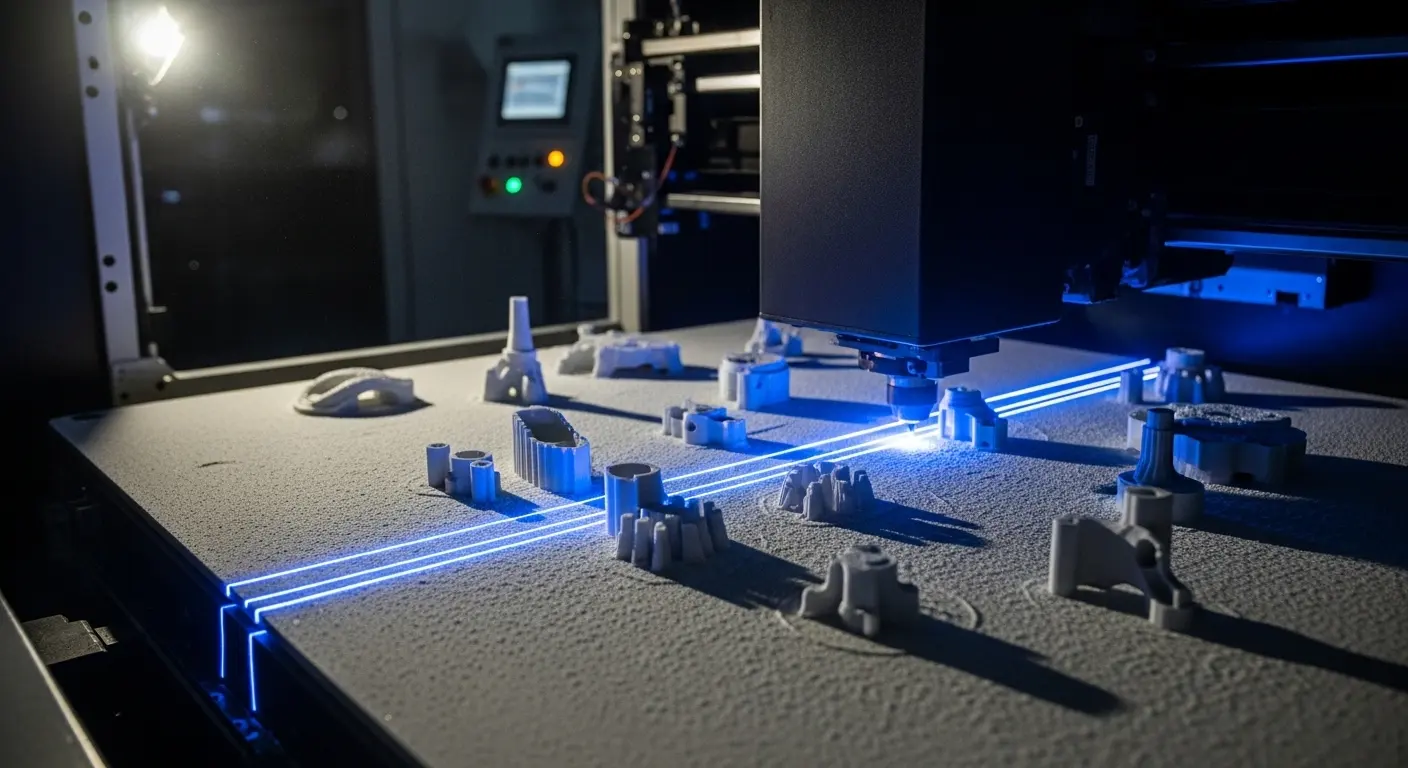
24/7 Machine Utilization and Batch Optimization
The physical printing process is the most time-consuming part of the journey. To offer quick turn additive manufacturing, industrial facilities in Dongguan operate on a 24/7 rotation. This means that machines do not sit idle overnight. A part uploaded at 5:00 PM can be nested into a print bed by 7:00 PM and finished by the time the morning shift arrives for post-processing and quality control.
Batch optimization further enhances this speed. We use nesting software to pack as many parts as possible into a single print volume. This is particularly effective for SLS (Selective Laser Sintering), where the powder supports the parts, allowing for a three-dimensional "stacking" of various orders. This efficiency lowers costs for the buyer and ensures that small business prototypes are processed with the same urgency as large-scale industrial components.
Which Technologies Support Overnight 3D Printing Service?
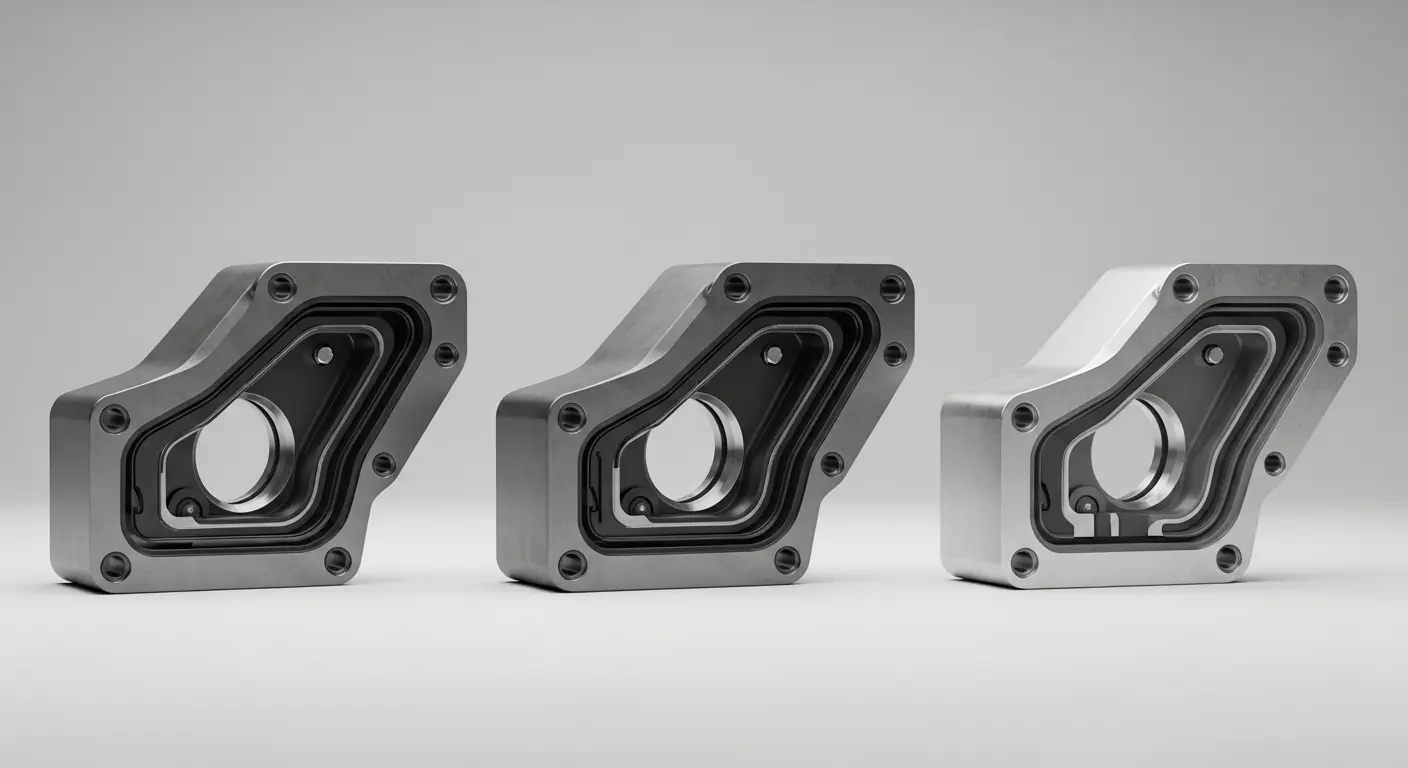
While many technologies fall under the "3D printing" umbrella, not all are suitable for a 24-hour turnaround. Speed is often a factor of layer height, material cooling times, and the amount of post-processing required. To maximize the chances of next-day success, engineers should select technologies that offer the best balance of build speed and structural integrity.
SunOn provides a range of high-precision 3D printing options specifically optimized for speed. Understanding these differences helps procurement managers choose the right tool for their specific deadline.
SLA for High-Detail Resin Prototypes
Stereolithography (SLA) uses a UV laser to cure liquid photopolymer resin. It is one of the fastest technologies for parts with complex visual details or smooth surfaces. Because the laser can move rapidly across the surface of the resin, SLA is ideal for medical model 3D printing where anatomical accuracy is vital. Most SLA parts can be cleaned, cured, and ready for shipping within hours of finishing the print.
SLS for Functional Nylon Parts Without Supports
Selective Laser Sintering (SLS) uses a laser to sinter powdered Nylon. The primary speed advantage of SLS is that it requires no support structures. This eliminates the labor-intensive "support removal" phase required by other methods. For express rapid prototyping, SLS is the preferred choice for functional, durable parts that need to be shipped immediately after the cooling cycle is complete.
Maximizing Speed: Tips for Express Rapid Prototyping Success
For a 24-hour rapid 3D printing service to be successful, the collaboration between the engineer and the supplier must be seamless. The buyer can take several steps to ensure their project doesn't hit a roadblock. First, always provide clean CAD data in standard industrial formats like STEP or IGES. These formats are easier for DFM software to process than mesh-based STL files, which often contain "holes" in the geometry.
Second, consider the material choice. Standard resins and Nylon 12 powders are always "on-tap" and ready for printing. Requesting a specialized or exotic material that isn't currently loaded into a machine can add 4 to 8 hours to the lead time as the machine must be cleaned and recalibrated. If speed is the priority, sticking to "house" materials is the safest path to a 24-hour dispatch.
Finally, keep post-processing to a minimum. While SunOn offers extensive post-processing like painting, vapor smoothing, and EMI shielding, these processes take time. A "raw" finish—directly from the printer after cleaning—is the only way to guarantee an overnight turn. If your prototype is for internal mechanical testing rather than a marketing photoshoot, opting for a raw finish will save you a full day of production time.
Why Global Brands Source 24-Hour 3D Printing from SunOn in China
Sourcing next-day 3D printing from China might seem counterintuitive due to the distance, but the industrial ecosystem in Dongguan offers unique speed advantages. Because we are located in the world's most dense manufacturing hub, our supply chain for materials, machine parts, and logistics is instantaneous. This allows us to offer quick turn additive manufacturing that rivals local western shops in both speed and price.
Our facility integrates 3D printing with our broader expertise in molding vs 3D printing comparisons. We don't just print a part; we analyze it for its future life in mass production. If we see a feature in your "express" prototype that will cause issues during eventual injection molding, we flag it during the 24-hour window. This consultative approach prevents costly redesigns later in the product development lifecycle.
Furthermore, the logistics infrastructure in Southern China is built for velocity. We work closely with international couriers like DHL, FedEx, and UPS. Once a part is dispatched within our 24-hour production guarantee, it is placed on a direct flight to major global hubs. For many of our clients in the USA and Europe, the time-zone difference actually works in their favor, allowing parts to be printed while they sleep and shipped as they begin their next workday.
The Role of DFM in Small Business 3D Printing
For startups and small businesses, the stakes of a failed prototype are high. There is often no budget for a "do-over." This is why SunOn emphasizes DFM even for custom 3D-printed prototypes. By providing a technical review of the CAD file before the print starts, we ensure that the buyer's capital is used effectively.
Small business owners often act as their own procurement managers. They need a partner who can speak "engineering" but also understand the business urgency of a product launch. Our 24-hour service isn't just about speed; it's about providing a reliable, repeatable process that small businesses can trust as they scale from their first prototype to their first 10,000 units.
Frequently Asked Questions About Rapid 3D Printing
What is the fastest 3D printing service available?
The fastest 3D printing services typically offer a 24-hour turnaround for production, followed by express shipping. This is achieved through automated DFM, 24/7 machine operations, and specialized technologies like SLA or SLS that require minimal setup time compared to traditional manufacturing.
Can you 3D print and ship overnight?
Yes, with an overnight 3D printing service, parts are printed during the night shift and processed for shipment the following morning. While the production time is 24 hours, total delivery time to the customer depends on the courier's transit speed and the customer's geographic location.
Does 24-hour 3D printing cost more?
Generally, express services carry a "rush fee" because they require dedicated machine time and priority handling by the engineering and post-processing teams. However, for many B2B projects, the cost of a delay in the R&D cycle far outweighs the premium paid for a 24-hour turn.
What file formats are needed for express 3D printing?
For the fastest results, use STEP (.stp) or IGES (.igs) files. These high-fidelity CAD formats allow for more accurate DFM analysis and better print quality than STL files. Providing clean data reduces the time spent on manual file repairs.
What is the typical tolerance for a 24-hour 3D print?
Standard industrial 3D printing tolerances are typically around ±0.1mm to ±0.2mm. While high-speed printing is fast, it does not sacrifice the precision needed for functional testing and assembly fit-checks.
Are there size limits for 24-hour 3D printing?
Yes, very large parts may take longer than 24 hours to print due to the physical limits of the machine's build speed. For a 24-hour guarantee, it is best to stick to parts that fit within a standard build volume (typically under 300mm x 300mm x 300mm).
Does next-day printing include post-processing?
Next-day services usually cover basic post-processing like support removal, cleaning, and UV curing. Advanced finishes like painting, plating, or vapor smoothing typically require an additional 24 to 48 hours to ensure the finish reaches the required quality standards.
How do I start a 24-hour rapid 3D printing project?
To start, upload your CAD file via our RFQ portal. Ensure you select "Express" or "24-Hour" lead time options. Our engineers will perform a rapid DFM check and provide a quote within hours so production can begin immediately.
Conclusion: Accelerate Your Innovation with SunOn
A 24-hour rapid 3D printing service is more than just a convenience; it is a strategic tool for modern engineering teams. By condensing the prototyping phase into a single day, businesses can significantly reduce their time-to-market and respond to design challenges with unprecedented agility.
SunOn Industrial Group is committed to being the speed-leader in the Dongguan manufacturing hub. Our combination of automated DFM, industrial capacity, and global logistics expertise ensures that your most urgent projects are delivered with precision and speed. We don't just provide parts; we provide the momentum your business needs to succeed.
Do you have an urgent prototype requirement? Contact SunOn today for an express DFM review and see how our 24-hour rapid 3D printing services can transform your development timeline.
