


How Rapid Assembly Services Work: Achieving 48-Hour Turnarounds
A 48-hour rapid assembly service is a specialized B2B manufacturing workflow designed to transform a completed Bill of Materials (BOM) into a fully assembled, tested, and packaged product within two business days. Achieving this speed requires an integrated ecosystem where Design for Manufacturability (DFM), in-house component production, and pre-staged logistics converge. For hardware founders and procurement managers, this service acts as a critical bridge between the final prototype stage and full-scale market entry.
In traditional contract manufacturing, assembly lead times often stretch into weeks due to fragmented supply chains. A rapid service eliminates these bottlenecks by utilizing vertical integration. When a manufacturer controls the injection molding, CNC machining, and final assembly lines under one roof, they remove the transit delays that typically plague complex hardware projects.
What Defines a 48-Hour Rapid Assembly Service?
Speed in the industrial sector is not merely about working faster; it is about working smarter through process optimization. A true 48-hour turnaround begins the moment the technical drawing is finalized and the DFM review is approved. This service is most effective for low-to-medium volume production runs, bridge manufacturing, and emergency replacement parts.
Standard assembly providers often wait for external vendors to ship fasteners, housings, or electronic components. In contrast, an accelerated provider maintains a deep inventory of standard hardware and utilizes rapid tooling to produce custom plastic or metal parts in record time. This proactive approach ensures that the assembly line is ready to move the moment the first components exit the production machines.
Speed vs. Standard Contract Manufacturing Lead Times
The primary difference between rapid and standard assembly lies in the "parallel processing" of tasks. In a standard model, tasks occur linearly: sourcing follows design, and assembly follows sourcing. A rapid model overlaps these stages. While the toolroom is finishing an injection mold, the procurement team is already staging the secondary components and specialized jigs.
By choosing a turnkey mechanical assembly partner, buyers reduce the administrative burden of managing multiple vendors. This consolidation is the only way to reliably hit a 48-hour window, as it removes the risk of one vendor’s delay cascading through the entire project timeline.
The Core Components of an Accelerated Assembly Workflow
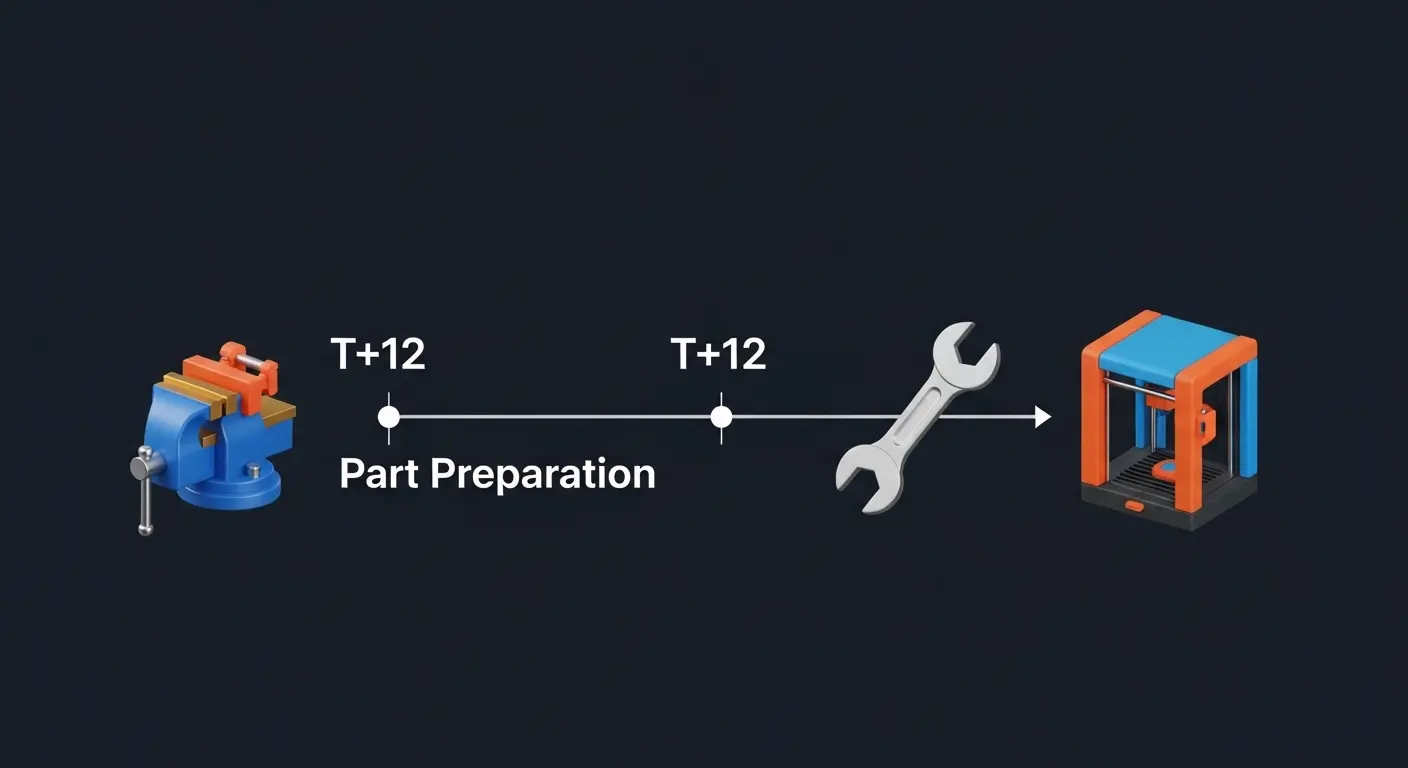
To hit a 48-hour target, the manufacturing floor must operate with surgical precision. This requires a synchronized effort across three specific departments: engineering, production, and quality assurance. Every second saved during the setup phase translates to more time available for rigorous functional testing.
DFM Review: The 2-Hour Window for Success
The foundation of every fast-turn project is the Design for Manufacturability (DFM) and Design for Assembly (DFA) review. In a 48-hour sprint, engineers must identify potential assembly risks within the first two hours of receiving the RFQ. They look for "assembly killers" such as overly complex fastener orientations, fragile snap-fits, or parts that require specialized curing times for adhesives.
If a design requires a 24-hour epoxy cure, a 48-hour total turnaround is impossible without design modifications. Our engineering team suggests alternatives, such as mechanical fasteners or ultrasonic welding, to keep the project on track. This early intervention ensures the precision component assembly remains feasible within the requested timeframe.
Tooling and Part Availability: In-House vs. Outsourced
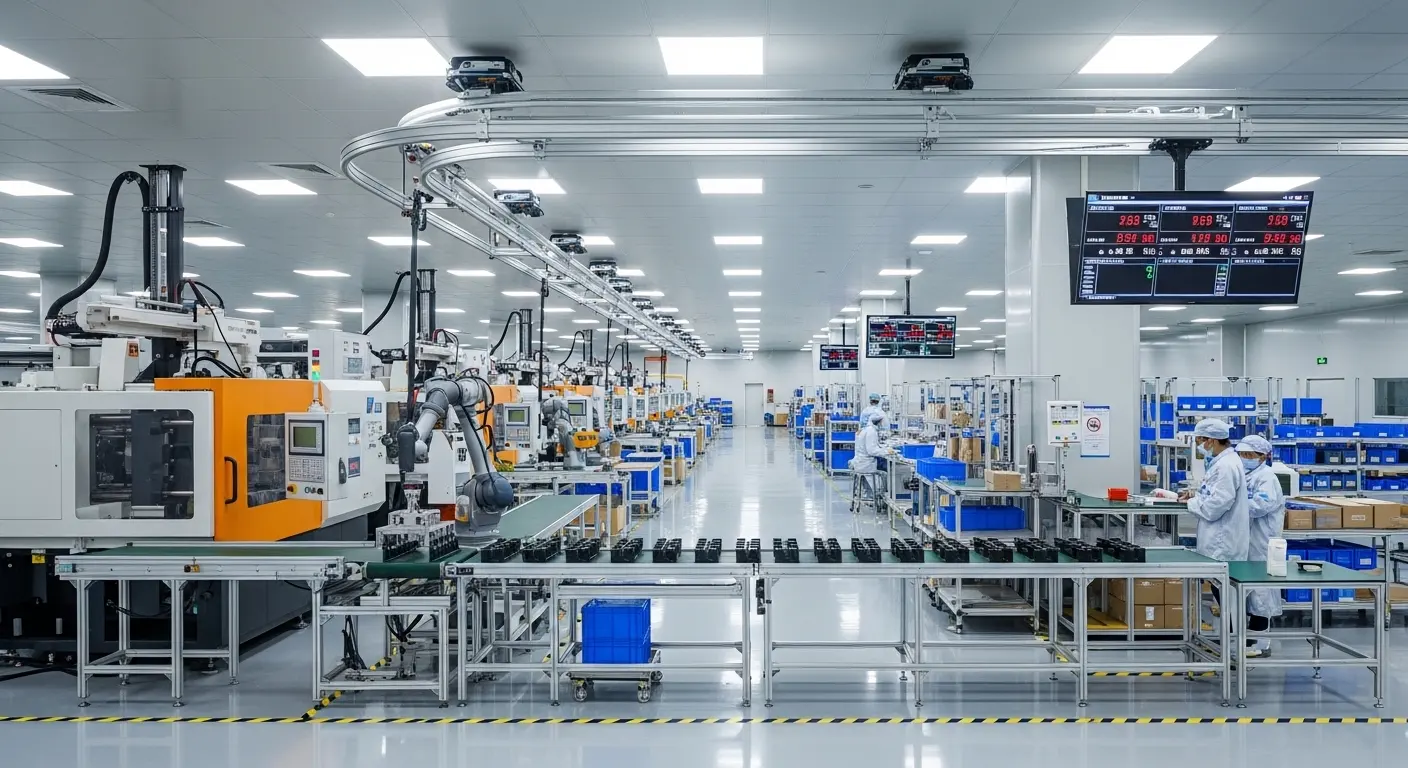
Vertical integration is the "secret sauce" of rapid delivery. When the assembly house also operates the injection molding and CNC departments, they can prioritize the production of "critical path" parts. For example, if a box-build requires a custom plastic housing, the mold can be optimized for rapid cooling and ejection.
Furthermore, maintaining an in-house stock of common inserts, screws, and electronic connectors eliminates the 24-hour wait for local delivery. By leveraging mechanical assembly expertise that spans from the mold to the final screw, manufacturers can bypass the most common causes of industrial delays.
48-Hour vs. Standard Lead Times: A Comparison
Understanding the trade-offs between speed and cost is essential for sourcing managers. While rapid services carry a premium, the ROI is often found in the "cost of delay"—the lost revenue or market opportunity that occurs when a product launch is pushed back.
| Feature | 48-Hour Rapid Service | Standard Assembly (2-4 Weeks) |
| Quoting & DFM | 2-4 Hours | 2-5 Business Days |
| Tooling Type | Aluminum or P20 Rapid Tools | Hardened Steel Multi-Cavity |
| Part Sourcing | In-stock or Next-Day Express | Bulk Sea Freight / LCL |
| Assembly Method | Manual / Flexible Cells | Dedicated Automated Lines |
| Best Use Case | Prototypes / Bridge Production | Mass Market Saturation |
Rapid assembly relies heavily on flexible manufacturing cells. Unlike automated lines that require days of programming and jig fabrication, flexible cells use skilled technicians and universal fixtures to begin work immediately. This makes manual vs. automated assembly a strategic choice based on the total volume and the urgency of the deadline.
Critical Industries for 48-Hour Assembly Turnarounds
Not every product requires a 48-hour turnaround, but for certain sectors, speed is a regulatory or competitive necessity. In these industries, the ability to iterate on a physical design in two days can save millions in development costs.
Medical Device Prototypes and Emergency Runs
The medical sector often requires small batches of specialized equipment for clinical trials or surgical planning. In these scenarios, the [48-hour rapid assembly service] must adhere to strict ISO 13485 standards while maintaining extreme speed. Whether it is a handheld diagnostic tool or a complex ventilator manifold, the assembly process must be documented and repeatable even at high speeds.
Automotive and New Energy Hardware Iterations
Automotive engineers often face "line-down" situations where a single modified component is needed to keep a testing phase on schedule. Rapid assembly allows for the quick integration of post-processing services, such as EMI shielding or specialized coating, followed by immediate assembly. This is particularly vital for the New Energy Vehicle (NEV) market, where battery housing designs and charging interface components change rapidly.
How SunOn Ensures Quality in a High-Speed Environment

A common misconception among procurement leads is that rapid turnaround implies a sacrifice in quality. In a professional B2B environment, the opposite is true. Speed requires more robust quality protocols because there is no time to redo work. Error prevention is the only way to maintain the schedule.
Automated Optical Inspection (AOI) and Testing
To maintain 48-hour timelines, we utilize Automated Optical Inspection (AOI) and high-speed functional testing rigs. These systems check for component orientation, fastener torque, and cosmetic defects in seconds, rather than minutes. By automating the validation phase, technicians can focus on the physical assembly without worrying about missed steps or human error in the QC process.
ISO 9001 and IATF 16949 Compliance Protocols
Every project, regardless of its speed, must follow the framework of ISO 9001. For automotive-grade projects, IATF 16949 protocols ensure that risk management is baked into the assembly flow. This includes full traceability for every component in the BOM. If a sourcing manager needs to know exactly which batch of resin was used for a housing assembled 24 hours ago, the digital records are immediately available. This level of transparency builds the trust necessary for long-term B2B partnerships.
Frequently Asked Questions About Rapid Assembly
Can you do 48-hour assembly for complex box builds?
Direct Answer: Yes, provided the Bill of Materials (BOM) consists of in-stock components or parts that can be produced in-house via CNC or rapid molding. Complex box builds require an early DFM review to ensure that internal wire routing and fastener placement do not create assembly bottlenecks.
What file formats are needed for a rapid assembly quote?
Direct Answer: We require 3D CAD files (typically in STP or IGS format) along with a complete Bill of Materials (BOM) in Excel format. Providing clear 2D drawings for parts with tight tolerances or specific torque requirements helps accelerate the quoting and DFM phase.
Is 48-hour turnaround available for ISO 13485 medical parts?
Direct Answer: Yes, we offer rapid assembly for medical devices within our controlled environments. However, the 48-hour clock begins only after the design is frozen and the materials have passed our internal receiving inspection to ensure full regulatory compliance.
Does rapid assembly include functional testing?
Direct Answer: Most rapid assembly projects include basic functional testing, such as power-on checks or pneumatic leak tests. If your project requires complex, long-duration burn-in testing, this may extend the lead time beyond the 48-hour window.
What is the MOQ for a 48-hour assembly run?
Direct Answer: There is typically no Minimum Order Quantity (MOQ) for our rapid service, as it is designed for prototypes and low-volume bridge production. However, the service is most cost-effective for quantities ranging from 1 to 500 units.
Conclusion: Partnering for Market Velocity
Choosing a 48-hour rapid assembly service is a strategic decision that prioritizes market velocity and engineering flexibility. By integrating DFM expertise, in-house component manufacturing, and rigorous quality control, SunOn Industrial Group Limited helps global brands turn complex designs into physical products in record time.
If your project is facing a critical deadline or requires a high-fidelity prototype for an upcoming stakeholder review, the "Mould + Assembly" integrated model is your most reliable path forward. Speed should never be a gamble; it should be a calculated engineering outcome.
Ready to accelerate your project? [Request a 24-Hour DFM Review and Assembly Quote] today to see how our integrated facility can hit your 48-hour deadline without compromising on ISO-certified quality.
