


Aluminum vs Steel Enclosures: Which is Right for Your Project?
Aluminum enclosure manufacturing is a critical process for engineers and product designers who need a balance of strength and weight. Choosing the right material for your protective housing determines your product's lifespan, cost, and overall performance. While steel offers undeniable ruggedness, aluminum provides superior corrosion resistance and thermal conductivity, making it the go-to choice for many modern applications.
Selecting between these two metals isn't just about price; it’s about the environment where your enclosure will live. I have spent years on the production floor seeing how different materials react to salt spray and heat. If you pick the wrong one, you might see rust in weeks or heat-induced failure in months. This guide will help you navigate the specific properties of each to ensure your project succeeds.
Why Should You Choose Aluminum for Your Enclosure?
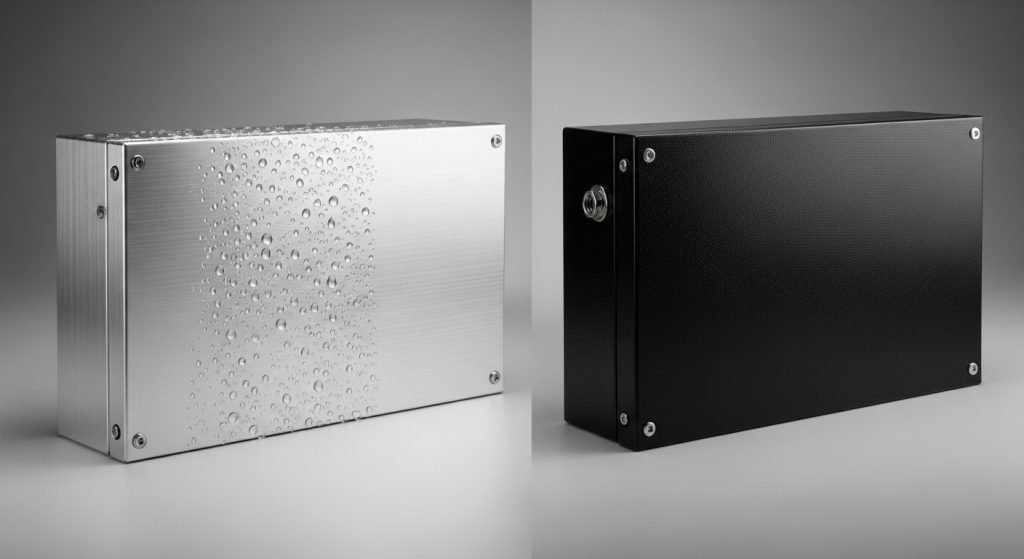
Aluminum is the ideal choice for enclosures that require a lightweight profile, natural corrosion resistance, and excellent heat dissipation. It is significantly lighter than steel, which reduces shipping costs and makes installation easier. Aluminum also creates a natural oxide layer that protects it from the elements, making it perfect for outdoor or marine environments without needing heavy coatings.
In my experience, aluminum is the "problem solver" for electronics. Because it is non-magnetic, it provides excellent EMI/RFI shielding without interfering with internal components. Furthermore, aluminum die casting allows for complex shapes that are impossible to achieve with folded steel. This flexibility allows designers to integrate cooling fins directly into the enclosure body.
| Feature | Aluminum Benefits |
| Weight | ~33% the weight of steel |
| Corrosion | Naturally resistant to rust and salt |
| Conductivity | High thermal and electrical conductivity |
| Customization | Easier to machine and die-cast |
When is Steel the Better Option for Enclosures?
Steel is the superior choice when your project demands maximum structural integrity, impact resistance, and a lower initial material cost. It is much harder than aluminum, making it resistant to dents, scratches, and intentional tampering. In heavy industrial settings where machinery might collide with the enclosure, steel’s density provides a level of protection that aluminum simply cannot match.
However, steel requires a secondary finish like powder coating or galvanization to prevent rust. If that coating is scratched, the underlying metal will begin to oxidize immediately. We often recommend stainless steel for food-grade or chemical environments, but be prepared for a higher price point and increased weight.
How Does Aluminum Enclosure Manufacturing Compare to Steel?
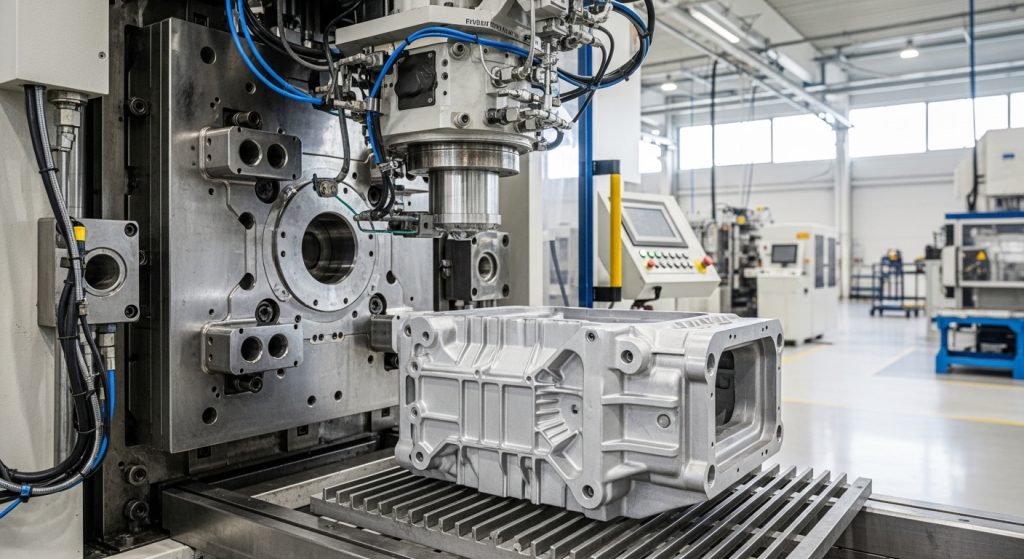
Aluminum enclosure manufacturing typically involves processes like die casting or extrusion, whereas steel is often fabricated through bending and welding. Aluminum die casting parts are produced by forcing molten metal into a mold, allowing for high-volume production of intricate parts with consistent dimensions. Steel fabrication is more manual, often requiring individual cuts and welds that can increase labor costs.
| Manufacturing Method | Best For... |
| Die Casting | High-volume, complex aluminum parts |
| Sheet Metal Fabrication | Low-to-medium volume steel or aluminum |
| Stamping | Rapid production of aluminum stamping parts |
| CNC Machining | Ultra-precise CNC turning for prototypes |
Tip: If your project involves thousands of units, aluminum die casting is almost always more cost-effective than steel fabrication because it reduces the number of assembly steps and secondary operations.
Which Material Offers Better Thermal Management?
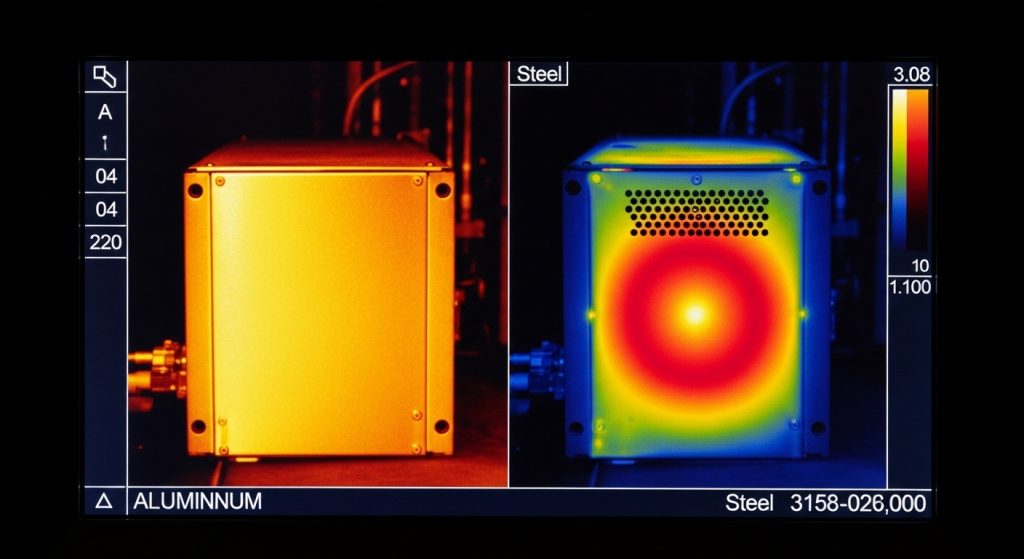
Aluminum is the clear winner for thermal management because its thermal conductivity is roughly three times higher than that of carbon steel. This allows the enclosure itself to act as a giant heat sink, drawing heat away from sensitive internal electronics and dissipating it into the surrounding air. Steel tends to trap heat inside, which can lead to component failure if fans are not used.
I recently consulted on a telecommunications project where the switch from steel to aluminum dropped internal temperatures by 15°C without adding any active cooling. This move extended the lifespan of the electronics by nearly 40%. When you use an aluminum zinc die casting mould, you can even design internal ribs to further increase the surface area for cooling.
What Are the Cost Differences Between Aluminum and Steel?
While raw aluminum is generally more expensive than carbon steel per pound, the total cost of ownership is often lower due to reduced shipping weight and no need for expensive anti-corrosion coatings. Steel is cheaper upfront but requires more maintenance and secondary finishing. Additionally, the labor saved in manufacturing aluminum parts—especially through die casting—can offset the higher material cost.
- Initial Cost: Steel is usually cheaper.
- Finishing Cost: Aluminum is cheaper (often requires no finish).
- Shipping Cost: Aluminum is significantly cheaper due to weight.
- Maintenance Cost: Aluminum is lower in harsh environments.
How Do Environmental Factors Influence Your Choice?
The environment is the most important factor in your decision. For coastal or outdoor applications, aluminum is the standard because it does not rust. In high-impact industrial zones or areas prone to high heat/fire, steel’s higher melting point and density make it the safer choice. Always analyze the "Exposure Level" of your project before finalizing the material spec.
Tip: In highly acidic environments, neither standard steel nor aluminum may be enough. You might need 316-grade stainless steel, though it is the most difficult and expensive to manufacture.
Can You Combine Aluminum and Steel in One Design?
Yes, you can combine both, but you must be careful about "galvanic corrosion." When aluminum and steel touch in the presence of moisture, a chemical reaction can cause the aluminum to corrode rapidly. To prevent this, engineers use plastic washers or specialized coatings to keep the metals electrically isolated while still benefiting from the strengths of both.
Which Material is More Sustainable for Manufacturing?
Aluminum is one of the most sustainable materials on earth because it is 100% recyclable without losing its properties. Recycling aluminum requires only 5% of the energy needed to produce "virgin" aluminum from ore. While steel is also highly recyclable, the energy footprint of aluminum recycling is significantly lower, making it the preferred choice for eco-conscious brands.
Comprehensive Comparison: Aluminum vs. Steel
Choosing the right enclosure material involves weighing several technical performance factors. This table provides a direct comparison to help you identify the best fit for your specific operating conditions.
| Property | Aluminum (6061/ADC12) | Carbon Steel (Mild Steel) | Stainless Steel (304/316) |
| Density (Weight) | Low (Approx. 2.7 g/cm³) | High (Approx. 7.85 g/cm³) | High (Approx. 8.0 g/cm³) |
| Corrosion Resistance | Excellent (Self-healing oxide) | Poor (Requires coating) | Excellent (Passive layer) |
| Thermal Conductivity | High (~160-200 W/m·K) | Moderate (~50 W/m·K) | Low (~15 W/m·K) |
| Impact Strength | Moderate (Ductile) | High (Tough) | Very High |
| EMI/RFI Shielding | Excellent | Good | Moderate |
| Ease of Machining | High | Moderate | Low (Work hardens) |
Final Thoughts on Enclosure Material Selection
The choice between aluminum and steel ultimately hinges on the specific stresses your product will face. If your priority is thermal efficiency, weight reduction, and long-term durability in outdoor settings, aluminum is the superior engineering choice. However, if your project is budget-sensitive for indoor use or requires extreme physical protection against heavy impact, steel remains the traditional workhorse.
In the modern manufacturing landscape, the shift toward aluminum enclosure manufacturing is accelerating due to the rise of portable electronics and renewable energy systems. Partnering with a manufacturer that understands both die casting and precision machining ensures that your enclosure isn't just a box, but a high-performance component. By selecting the right material today, you prevent costly maintenance and product failure tomorrow.
