


Electronics Component Assembly: SMT vs Through-Hole Explained
Electronics component assembly involves two primary methods for attaching components to a Printed Circuit Board (PCB): Surface Mount Technology (SMT) and Through-Hole Technology (THT). SMT involves soldering components directly onto the surface of the board, allowing for higher density and automation, while THT involves inserting component leads through drilled holes, offering superior mechanical strength for heavy or high-stress parts. Choosing between SMT and Through-Hole depends on your production volume, the mechanical requirements of the device, and the precision needed for the final enclosure fit.
For B2B buyers and product design engineers, understanding these methods is critical not just for electrical performance, but for the overall manufacturability of the final product. At SunOn, we view electronics assembly through the lens of integrated manufacturing. A successful project requires a seamless transition from the PCBA (Printed Circuit Board Assembly) to the final mechanical housing, ensuring that tolerances, thermal management, and structural integrity align perfectly across all subsystems.
Understanding the Modern PCBA Manufacturing Process
The modern PCBA manufacturing process is a multi-stage workflow that transforms a bare board into a functional electronic heart for industrial, medical, or consumer products. This process begins with a comprehensive Design for Manufacturability (DFM) review, where engineers analyze the board layout to identify potential risks in soldering, component placement, or material compatibility.
For a turnkey partner like SunOn, this process is deeply intertwined with turnkey mechanical assembly. Once the PCB is populated, it must interface with plastic or metal housings that often require specific post-processing steps such as EMI shielding or ultrasonic welding. High-quality assembly requires a controlled environment, often utilizing ESD-safe workstations and cleanroom standards to prevent latent defects in sensitive microelectronics.
Surface Mount Technology (SMT): Benefits and Use Cases
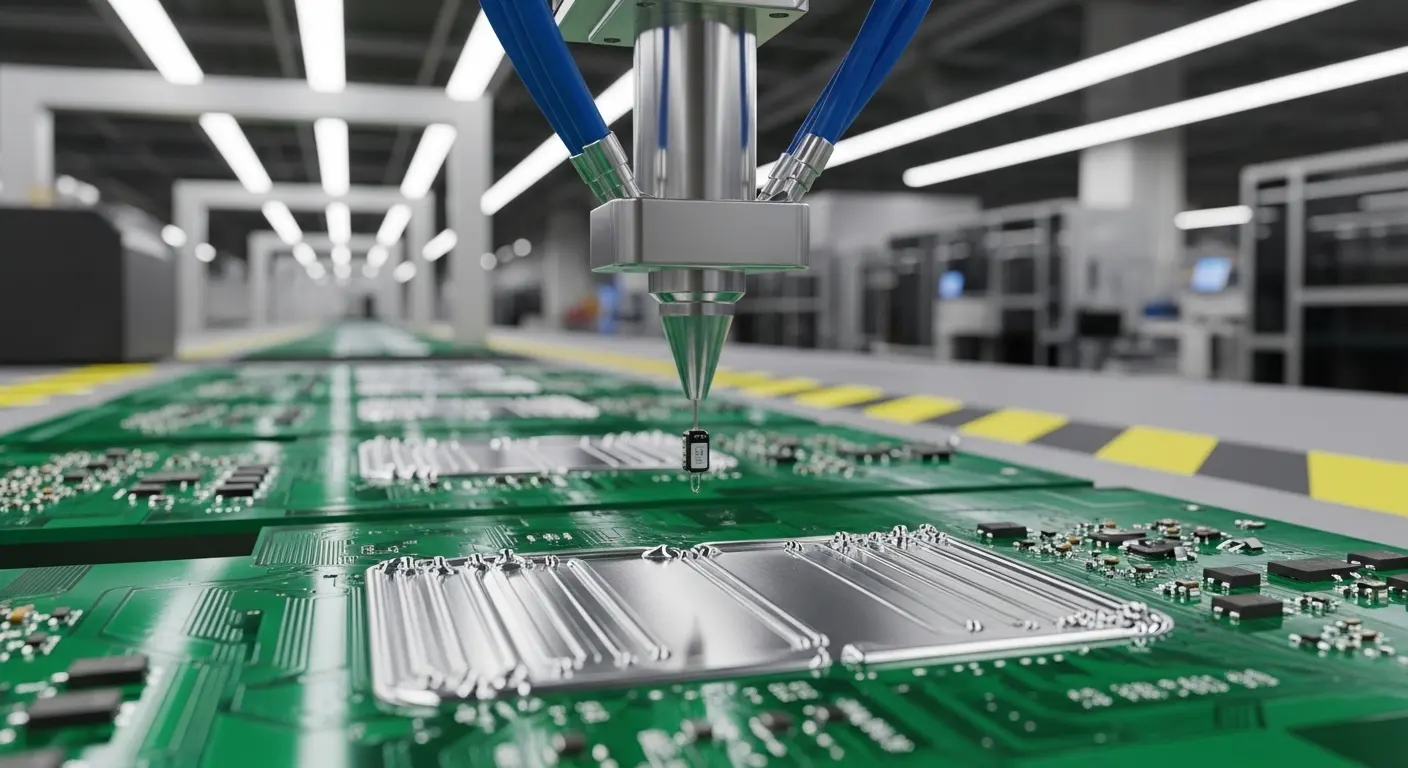
Surface Mount Technology (SMT) is the industry standard for the vast majority of modern electronics. By eliminating the need for drilled holes for every component, SMT allows for significantly smaller PCBs and higher component density. In an SMT line, solder paste is applied via a stencil, components are placed by high-speed pick-and-place machines, and the entire assembly is passed through a reflow oven to create secure electrical bonds.
Advantages of SMT for High-Density Electronics
The primary advantage of SMT is space efficiency. Because components can be placed on both sides of the board, engineers can design incredibly compact devices without sacrificing functionality. This is essential for modern wearables, medical sensors, and high-performance computing modules. Additionally, the high degree of automation in SMT lines reduces manual labor costs and minimizes the human error associated with repetitive component placement, making it the preferred choice for mass production.
Automated SMT Line Capabilities (0201, BGA, QFN)
Today’s automated SMT lines can handle microscopic components, such as the 0201 package size, which is barely visible to the naked eye. Advanced assembly services also include the placement of Ball Grid Array (BGA) and Quad Flat No-lead (QFN) components. These packages require specialized inspection techniques, such as Automated Optical Inspection (AOI) and X-ray, because the solder joints are located underneath the component body. Maintaining a high yield with these parts requires strict precision mechanical assembly services and climate-controlled storage for moisture-sensitive devices (MSD).
Through-Hole Technology (THT): When is it Necessary?
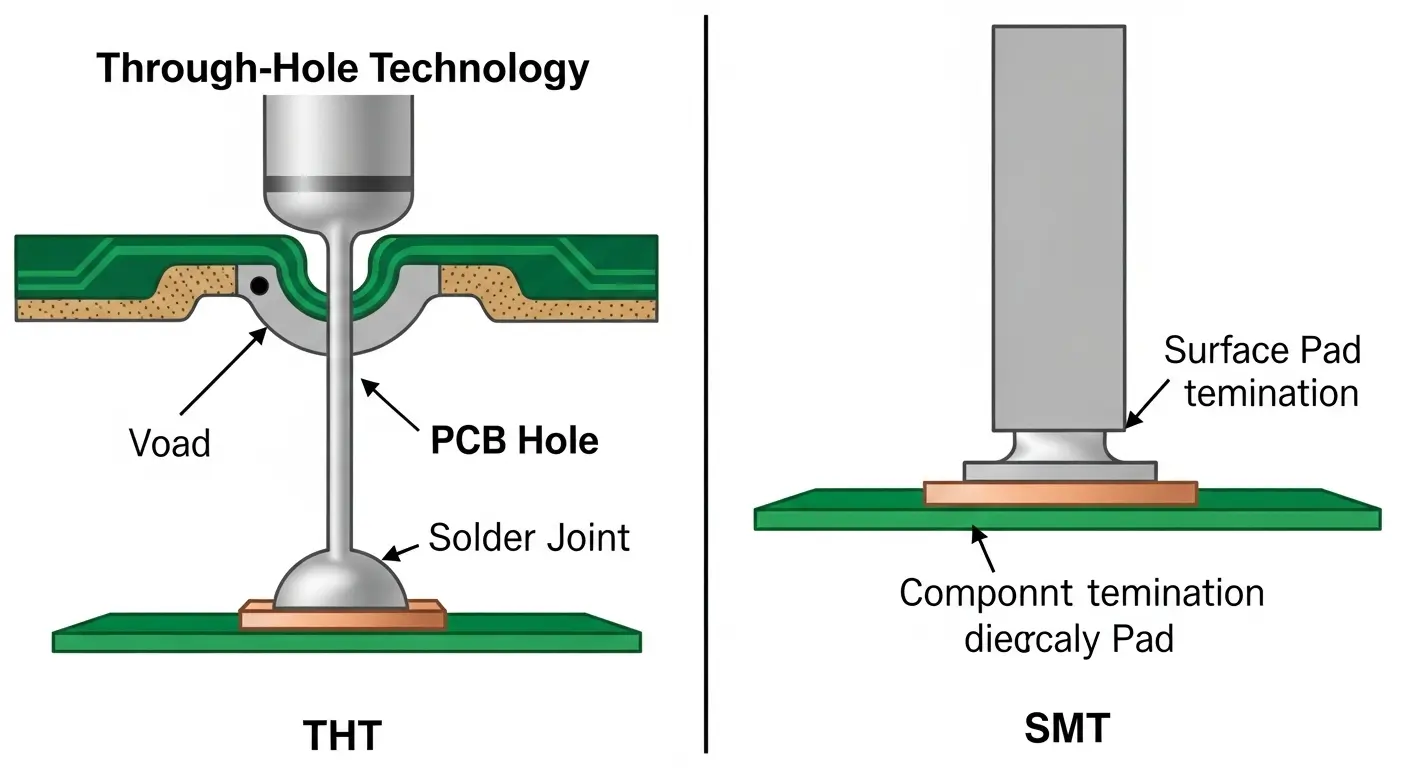
Despite the rise of SMT, Through-Hole Technology remains indispensable for specific industrial and high-reliability applications. THT involves component leads that pass through the PCB and are soldered on the opposite side, creating a "rivet-like" bond. This physical connection provides a level of durability that surface mounting cannot match, particularly for components subject to mechanical stress, vibration, or extreme heat.
Mechanical Strength and Power Component Reliability
Components such as large capacitors, transformers, and heavy-duty connectors often rely on THT. In automotive electronics or industrial power supplies, the mechanical bond ensures that the component remains attached even under heavy vibration or thermal expansion. When designing for these environments, engineers must account for assembly tolerance stack-up, ensuring that the leads align perfectly with the drilled holes and that the soldering process does not compromise the board's structural integrity.
Manual Soldering vs. Wave Soldering for THT
THT assembly can be performed using manual soldering or automated wave soldering. Manual soldering is often utilized for low-volume prototypes or extremely complex boards where specific components require a delicate touch. Conversely, wave soldering is an efficient manual vs automated assembly middle ground for higher volumes. The board passes over a molten wave of solder, which wicks into the through-holes to create simultaneous joints. At SunOn, we analyze the production volume and reliability requirements to determine which soldering method offers the best balance of cost and quality.
SMT vs Through-Hole: Key Comparison Factors
Choosing the right assembly method requires a trade-off between production speed, cost, and physical durability. Most modern devices actually utilize a "Mixed Technology" approach, where SMT handles the logic and memory while THT is reserved for connectors and power management.
Production Cost and Setup Time Differences
The cost structure of SMT and THT differs significantly. SMT has a higher initial setup cost due to the need for custom stencils and complex machine programming. However, once the line is running, the cost per unit drops rapidly. THT, especially when manual labor is involved, has lower setup costs but a higher variable cost per unit. For mid-to-high volume runs in China, SMT is almost always the more economical choice, whereas THT may be more viable for small batches of specialized industrial equipment.
Impact on PCB Size and Device Weight
SMT components are generally 60% to 80% smaller than their THT counterparts. This reduction in size directly impacts the final enclosure design. A smaller PCB allows for thinner plastic walls and more compact internal layouts, which can reduce material costs in mechanical assembly. However, if a device requires high-power connectors, the space saved by SMT may be offset by the clearance needed for larger THT components.
Reliability in Automotive and Medical Applications
In the medical and automotive sectors, reliability is the paramount metric. Medical instrument assembly standards often dictate specific soldering certifications and cleanliness levels. While SMT is reliable for most applications, THT is still favored for critical fail-safe connectors. Manufacturers must ensure that all processes meet international quality benchmarks, such as ISO 13485 for medical devices or IATF 16949 for automotive components, to guarantee long-term performance in the field.
| Feature | Surface Mount Technology (SMT) | Through-Hole Technology (THT) |
| Component Size | Very Small (0201, 0402) | Large / Robust |
| Assembly Speed | High (Automated) | Lower (Often Manual/Semi) |
| Mechanical Bond | Moderate | Very High |
| Cost (High Vol) | Low per unit | Higher per unit |
| Board Density | High (Double-sided) | Low (Usually Single-sided) |
DFM for Electronics: Integrating PCBA with Plastic Enclosures
A frequent mistake in hardware development is treating the electronics and the housing as two separate entities. Effective Design for Manufacturability (DFM) bridges this gap by considering the precision mechanical assembly services required to bring the two together. At SunOn, our DFM-led quoting process identifies potential conflicts before they become costly manufacturing errors.
Managing Heat Dissipation in Closed Housings
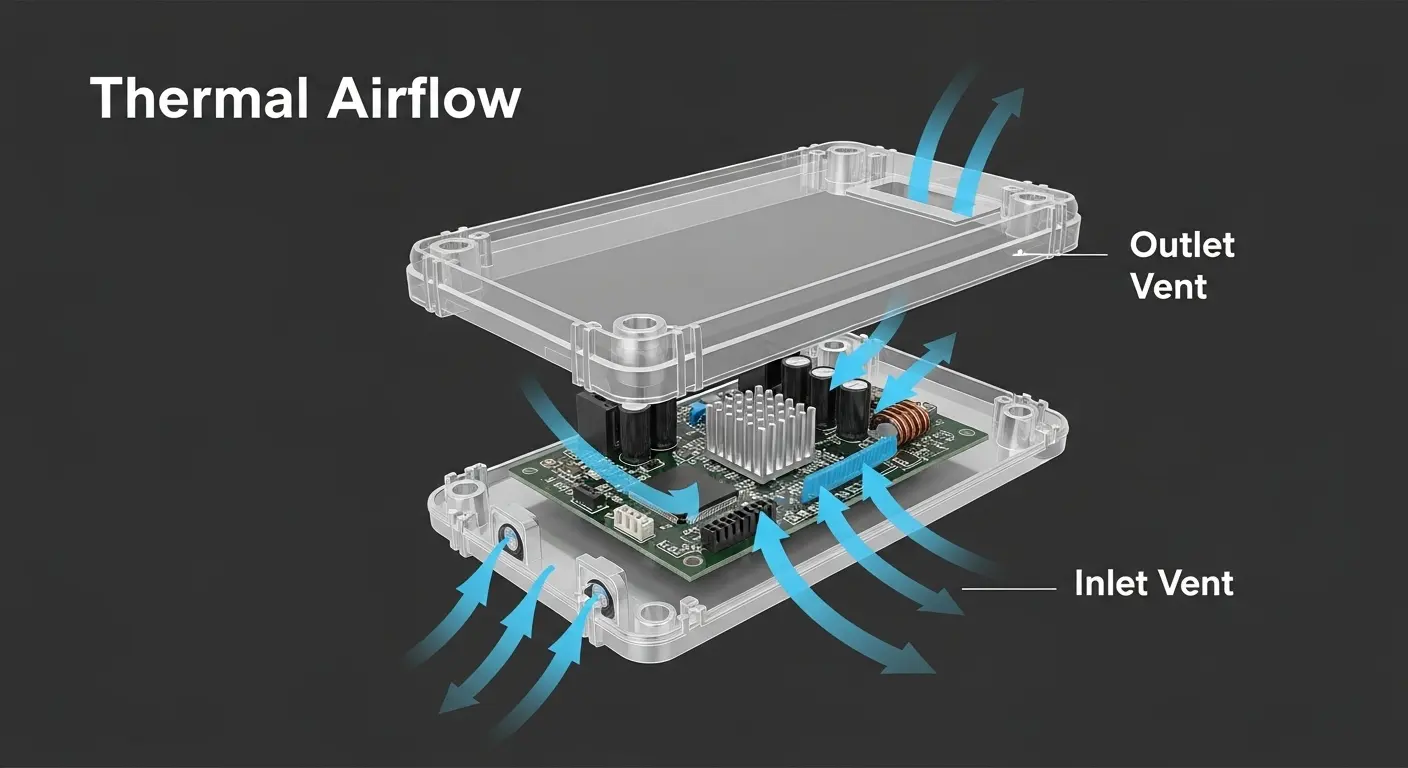
Electronic components, especially power-dense SMT parts, generate heat that must be managed to prevent premature failure. When we design the plastic injection mold for your enclosure, we calculate the necessary airflow and vent placement. In some cases, we may recommend specific thermally conductive plastics or the integration of heat sinks that interface directly with the PCB through a hybrid assembly process.
Designing PCB Standoffs for Automated Assembly
To ensure a high-quality turnkey mechanical assembly, the PCB must be mounted securely within the housing. We use ISO 2768-1/2 standards to govern the tolerances of our molded standoffs and screw bosses. If the tolerances are too loose, the PCB may rattle or misalign with external ports. If they are too tight, the board may flex, leading to cracked solder joints—a common failure point in SMT-heavy designs.
Instrument Quality Control (QC) and Testing
Quality control does not end at the soldering station. For complex instruments, we implement instrument quality control (QC) protocols that include Functional Circuit Testing (FCT) and In-Circuit Testing (ICT). These tests ensure that every component is oriented correctly and performing within its specified electrical parameters. By conducting these tests in-house alongside our molding operations, we provide a closed-loop quality system that reduces the risk of field failures for our global OEM clients.
Why Sourcing Integrated Assembly from SunOn Saves Costs
Sourcing your electronics component assembly and your plastic molding from a single integrated partner like SunOn eliminates the "vendor gap." When multiple suppliers are involved, a slight shift in a mold's tolerance can lead to an assembly failure that neither party takes responsibility for. By consolidating these services, you ensure that the PCBA and the enclosure are designed to fit together from day one.
Our facility in Dongguan provides a "one-stop" solution from prototype to mass production. We handle the complexities of SMT and THT assembly while simultaneously managing the post-processing and final packaging. This integrated approach not only reduces shipping costs and lead times but also provides a single point of accountability for your entire bill of materials (BOM).
FAQ: Common Questions About Electronics Component Assembly
Which is cheaper: SMT or Through-Hole?
For high-volume production, SMT is significantly cheaper because it is almost entirely automated. Through-Hole assembly often requires manual labor or more expensive wave soldering setups, making the cost per joint higher. However, for very small prototype runs, THT can sometimes be cheaper because it doesn't require expensive stencils.
Can you mix SMT and Through-Hole on the same board?
Yes, this is called Mixed Technology assembly. Most modern consumer and industrial electronics use SMT for the majority of components and Through-Hole for connectors, switches, or power components that require extra mechanical strength.
Is SMT more reliable than Through-Hole?
SMT is highly reliable for standard operating conditions and offers better performance in high-frequency applications. However, Through-Hole is more reliable for components that will experience heavy physical stress, frequent plugging/unplugging, or extreme mechanical vibrations.
What are the 5 steps of the SMT assembly process?
The standard SMT process includes: 1. Solder paste printing (using a stencil), 2. High-speed pick-and-place component mounting, 3. Reflow soldering (melting the paste in an oven), 4. Automated Optical Inspection (AOI), and 5. Final testing/cleaning.
How do I know which assembly method to choose for my product?
The choice depends on your device's size, power requirements, and expected production volume. If your device is small and battery-powered, SMT is the likely choice. If it is a large industrial power converter, you will likely need a mix of both. Our engineering team can help you decide during a DFM review.
Conclusion: Achieving Precision in Integrated Manufacturing
The choice between SMT and Through-Hole technology is a foundational decision that impacts every subsequent step of the manufacturing process. By understanding the strengths of each—and how they interact with the mechanical enclosure—you can design a product that is both high-performing and cost-effective to produce at scale.
SunOn Industrial Group remains dedicated to helping global buyers navigate these technical decisions. Whether you require high-density SMT for a medical wearable or robust THT for an automotive component, our integrated facility provides the precision and reliability you need to succeed.
