


Hybrid Assembly Lines: Combining Manual and Automated Processes
Hybrid assembly lines represent a strategic manufacturing middle ground, integrating the cognitive flexibility of human workers with the repeatable precision of automated systems. In modern production, a hybrid approach allows manufacturers to optimize for both high-quality output and the agility needed for complex, evolving product designs. By balancing manual dexterity with robotic speed, companies can achieve a scalable production model that mitigates the high capital expenditure of full automation while surpassing the speed limitations of purely manual labor.
For global procurement managers and product engineers, selecting a hybrid model is often the most cost-effective path to market. It provides a buffer against the rigid constraints of "lights-out" manufacturing, allowing for real-time quality adjustments and easier design iterations during the transition from prototype to mass production.
What is a Hybrid Assembly Line in Modern Manufacturing?
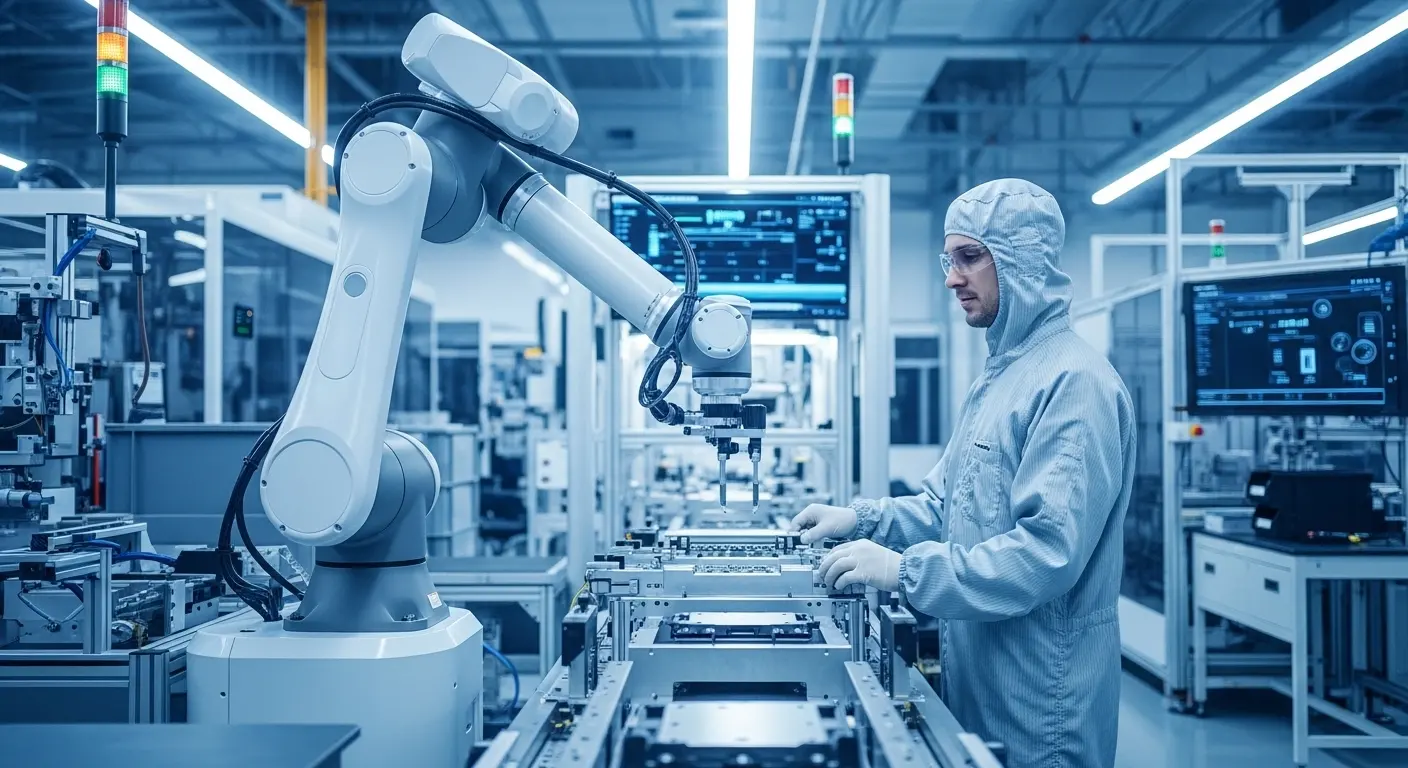
A hybrid assembly line is a production configuration where human operators and automated machinery, such as collaborative robots (cobots) or automated guided vehicles (AGVs), work in tandem within a single workflow. Unlike traditional lines that are either strictly manual or fully automated, the hybrid model assigns tasks based on the specific strengths of each resource.
Robots handle the "3Ds"—tasks that are dull, dirty, or dangerous—such as high-torque screw driving, heavy lifting, or repetitive pick-and-place operations. Meanwhile, human workers focus on intricate tactile assemblies, complex visual inspections, and decision-making processes that require high levels of adaptability. This synergy results in a flexible assembly system that can pivot between different product variants with minimal downtime.
Why Choose Hybrid Assembly Over Full Automation?
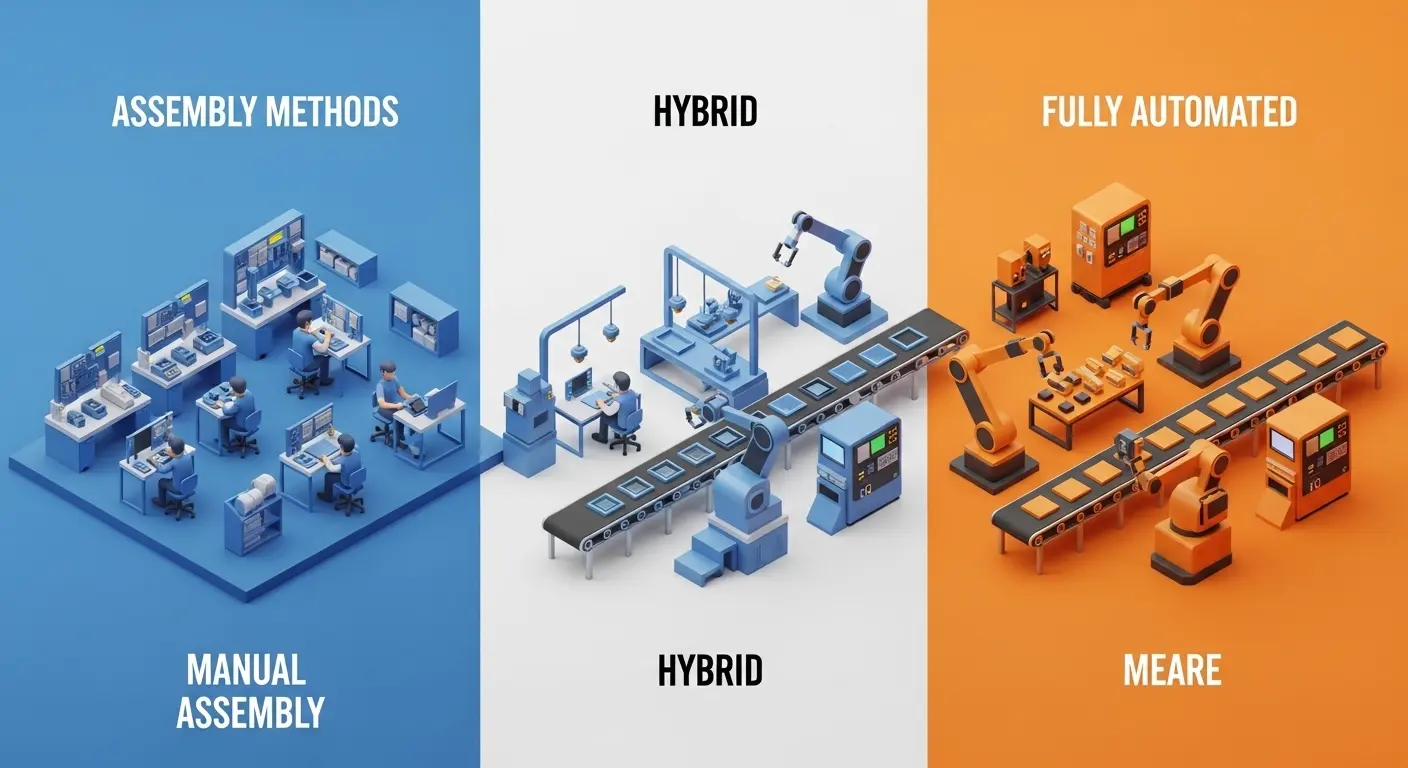
The decision between manual vs automated assembly often comes down to the "Production Sweet Spot." While full automation offers the lowest unit cost at massive volumes, it requires a significant upfront investment in custom tooling and long lead times for programming. Conversely, manual assembly is fast to set up but difficult to scale without increasing the risk of human error and labor costs.
The Flexibility of Human Labor for Complex Tasks
Humans remain unmatched in their ability to handle non-rigid materials, such as cables, gaskets, and delicate fabrics. In a manual vs automated assembly comparison, a human operator can detect a slight misalignment or a tactile defect that a standard sensor might miss. For products with high SKU variance or frequent design updates, the cost of reprogramming a robot every few months is often prohibitive. Human workers provide the immediate flexibility required to accommodate these changes.
The Precision and Speed of Automated Systems
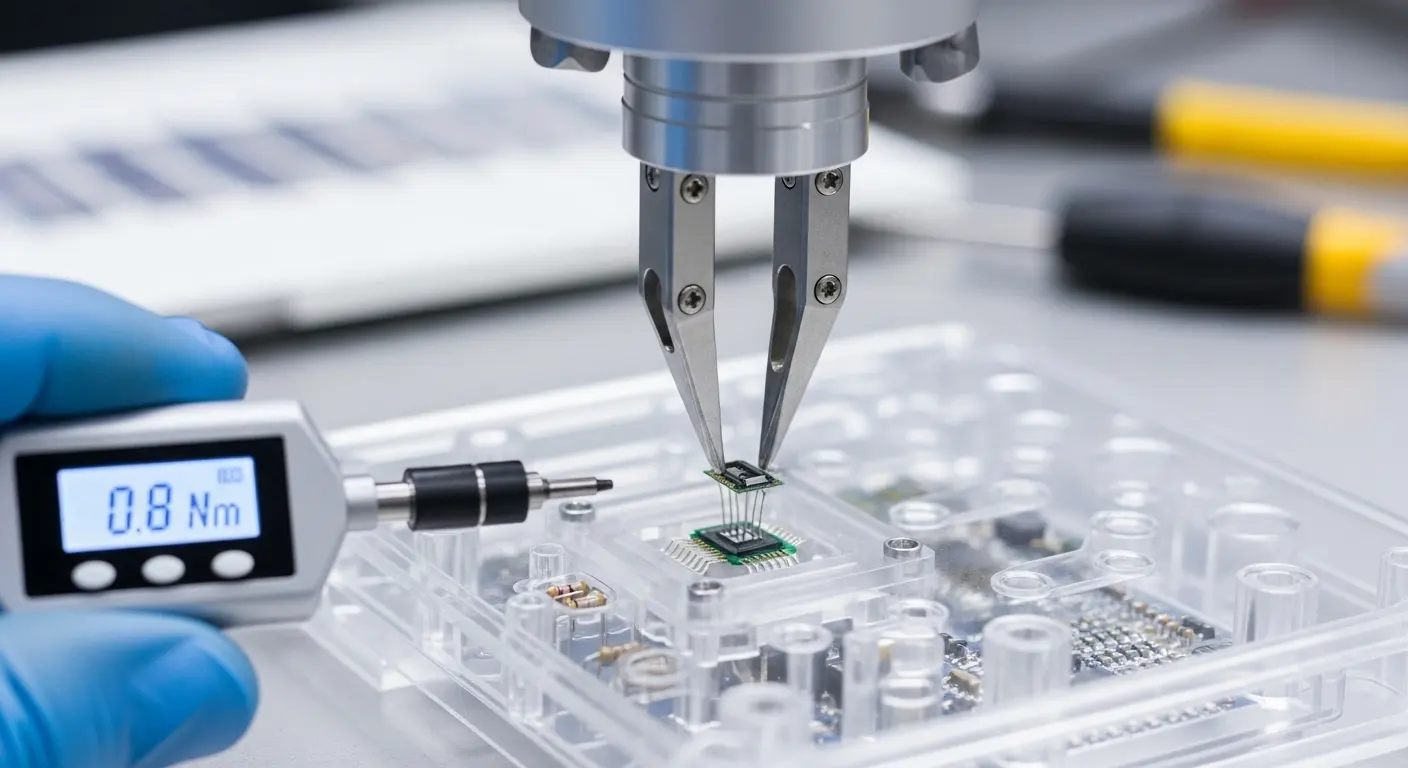
Automation excels where consistency is non-negotiable. For precision component assembly, automated stations ensure that every fastener is tightened to the exact Newton-meter and every adhesive bead is dispensed with sub-millimeter accuracy. Integrating semi-automated manufacturing stations into a line allows a brand to maintain tight tolerances across millions of cycles, reducing the rate of scrap and secondary rework.
Cost-Benefit Analysis: ROI for Mid-Volume Production
For most B2B hardware brands, the "Mid-Volume" range (5,000 to 50,000 units) is where hybrid lines shine. The ROI is realized through:
- Reduced Tooling Costs: You only automate the most critical or high-risk steps, keeping the rest of the line flexible.
- Faster Time-to-Market: You can begin production with a manual line and gradually introduce automated cells as volumes grow.
- Lower Maintenance: Fewer complex robotic systems mean less specialized maintenance staff is required on-site.
Key Components of an Effective Hybrid Assembly System
Building a high-performance hybrid line requires more than just placing a robot next to a person; it requires a structured integration of hardware and digital SOPs.
Collaborative Robots (Cobots) and Safety Standards
The hallmark of a modern hybrid line is the use of Collaborative Robots (HRC). Unlike industrial robots that must be caged, cobots are designed with force-sensing technology to stop immediately upon contact with a human. This allows for a "fence-less" environment where a worker can hand a part directly to a robot for a high-precision welding or fastening task, maximizing floor space and workflow efficiency.
Intelligent Workstations and Digital SOPs
In a semi-automated manufacturing environment, workstations are often equipped with "pick-to-light" systems or digital overhead displays. These tools guide the human operator through complex sequences, ensuring that even if a worker is new to the line, the quality remains consistent. Digital integration also allows for real-time data logging, which is essential for QA tracking and traceability in medical or automotive sectors.
Conveyor Systems and Material Handling
The flow of materials between manual and automated stations must be seamless. Intelligent conveyor systems can buffer parts between stations, ensuring that a slight delay at a manual inspection point doesn't shut down the entire automated section. This decoupling of stations is vital for maintaining a steady "Takt time" across the facility.
| Production Factor | Manual Assembly | Hybrid Assembly | Full Automation |
| Initial Investment | Low | Medium | High |
| Setup Time | 1–2 Weeks | 4–8 Weeks | 4–6 Months |
| Scalability | Linear (Add Labor) | Exponential | High |
| Error Rate | Moderate | Low | Very Low |
| Flexibility | Highest | High | Low |
DFM Strategies for Hybrid Assembly Success
Design for Manufacturability (DFM) is the bridge between a great CAD model and a successful production run. When designing for a hybrid environment, engineers must consider how both machines and humans will interact with the part.
Part Orientation and Gripper Compatibility
For an automated station to pick up a part, that part must have "pickable" features. This might mean adding a flat surface for a vacuum gripper or a specific rib for a mechanical jaw. If a part is designed only for human hands, a robot may struggle to orient it correctly, leading to expensive custom sensor requirements. Early DFM reviews help identify these needs before the mold is cut.
Standardizing Fasteners for Human/Robot Interchangeability
One of the simplest ways to optimize a hybrid line is to use standardized fasteners across the entire assembly. If a human operator and an automated arm are both installing screws, using the same head type and torque spec allows for interchangeable tools. This redundancy ensures that if an automated station requires maintenance, a human can temporarily step in to keep the line moving without a total stoppage.
Assembly Line Optimization: Continuous Improvement (Kaizen)
Optimization in a hybrid setting is a continuous process of balancing the line. If the automated station finishes its task in 10 seconds but the subsequent manual check takes 30 seconds, a bottleneck is created. Manufacturers use time-motion studies to redistribute tasks. This might involve splitting a complex manual task into two smaller steps or upgrading a manual jig to a semi-automated fixture to shave off vital seconds.
Furthermore, post-processing steps such as ultrasonic welding or pad printing are often integrated directly into the hybrid flow. By performing these tasks in-line rather than in batches, the total lead time from raw part to finished product is significantly reduced.
How SunOn Optimizes Hybrid Lines for Global OEM Projects
At SunOn, we understand that our clients aren't just looking for parts; they are looking for a reliable supply chain. Our approach to mechanical assembly starts at the quoting stage. We perform a comprehensive DFM review to determine which elements of your project are best suited for our automated cells and which require the high-touch attention of our skilled technicians.
Our facility in Dongguan utilizes advanced turnkey mechanical assembly processes that scale with your brand. Whether you are moving from a 500-unit pilot run to a 50,000-unit market launch, our hybrid lines provide the necessary flexibility. We emphasize quality assurance at every junction, utilizing both automated sensors and manual visual inspections to ensure that every finished product meets the rigorous standards required by the automotive, medical, and consumer electronics industries.
FAQ: Common Questions About Hybrid Assembly Lines
What are the main advantages of hybrid assembly?
Hybrid assembly offers a balance of cost, speed, and flexibility. It allows for lower upfront investment than full automation while providing higher consistency and lower long-term labor costs than purely manual production. It is particularly effective for products with moderate volumes or high complexity.
When should you choose a hybrid assembly line over a manual one?
You should transition to a hybrid line when your production volume increases to a point where human error impacts your yield, or when the physical demands of a task (like repetitive heavy lifting) pose a safety risk to workers. It is also ideal when specific steps require precision that humans cannot consistently replicate.
What is the difference between semi-automated and hybrid assembly?
While often used interchangeably, "semi-automated" usually refers to a single machine that requires a human to load/unload parts. "Hybrid assembly" refers to the entire line's philosophy, where multiple manual and automated stations are strategically linked to create a continuous, optimized workflow.
How does hybrid assembly affect production lead times?
Initially, the setup for a hybrid line takes longer than a manual line due to the need for robot programming and jig fabrication. However, once operational, the lead time per unit is significantly lower because automated stations can operate at higher speeds without fatigue, leading to a faster overall time-to-market for large orders.
Can hybrid assembly accommodate design changes mid-production?
Yes, this is one of its primary strengths. Because the line still utilizes human operators for key segments, you can often implement minor design changes by updating manual SOPs and adjusting robotic programming, rather than rebuilding an entire automated system.
Conclusion: Securing Your Supply Chain with Hybrid Agility
In an era of rapid product cycles and global supply chain volatility, the ability to remain flexible is a competitive advantage. Hybrid assembly lines offer the most resilient path for B2B brands to scale their hardware products. By leveraging the precision of machines where it matters most and the adaptability of humans where it counts, you can maintain high quality without sacrificing the ability to innovate.
SunOn Industrial Group is committed to being more than just a vendor; we are your manufacturing partner. From the first 3D-printed prototype to the final assembled product, we provide the technical expertise to optimize your production for the global market.
