


What is Metal Profiling? Laser Cutting vs. Plasma Cutting
Metal profiling services are the cornerstone of modern manufacturing, providing the precise shapes needed for everything from delicate medical instruments to massive structural beams. This process involves cutting flat sheets of metal into specific 2D shapes using computer-controlled machinery. By leveraging technologies like laser and plasma cutting, manufacturers can achieve incredible accuracy, minimize material waste, and speed up production timelines for complex industrial projects.
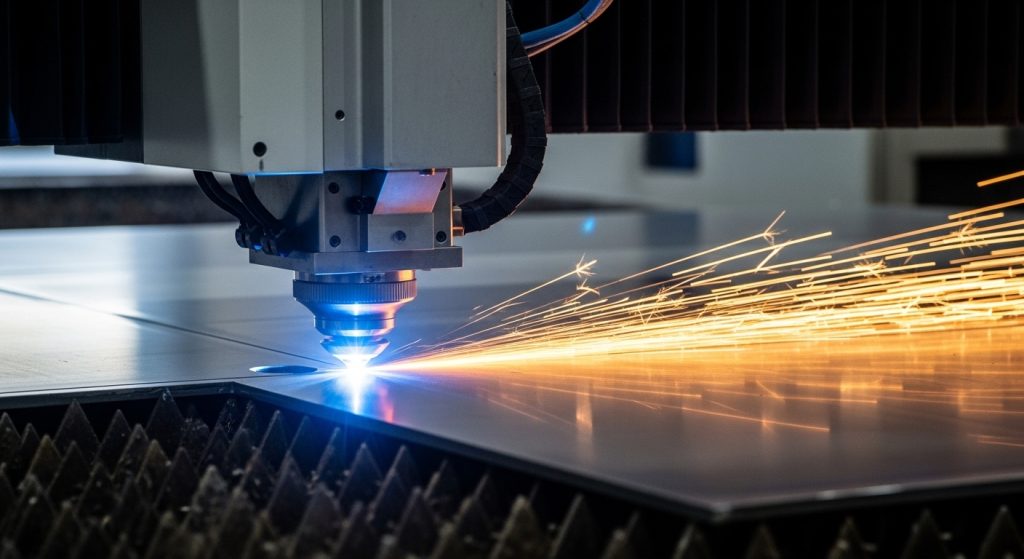
I have spent years navigating the loud, sparks-flying reality of fabrication floors. I have seen how a single wrong choice in cutting technology can ruin a batch of high-grade steel. Choosing between laser and plasma isn't just about speed; it is about edge quality, heat zones, and the thickness of your material. This guide will break down these technical nuances so you can make the right call for your next build.
What is Metal Profiling in Modern Manufacturing?
Metal profiling is an industrial process that uses CNC (Computer Numerical Control) technology to cut 2D shapes from flat metal sheets. It serves as the initial stage for most sheet metal fabrication projects. By following digital blueprints, profiling machines can replicate intricate designs with millimetric precision, ensuring that every part produced is identical and ready for further assembly or welding.
Think of profiling as the "digital scissors" of the metal world. Before a part can become a metal stamping parts component, it often starts as a profiled blank. High-authority shops use this to reduce secondary machining. Data shows that automated profiling can reduce material scrap by up to 25% compared to manual layout methods (Source: [Industry Data Placeholder]).
| Feature | Description |
| Technology | CNC-driven Laser, Plasma, Waterjet, or Flame |
| Material Types | Steel, Aluminum, Stainless, Copper, Brass |
| Primary Output | 2D Flat Patterns and Blanks |
| Key Industries | Automotive, Aerospace, Construction, Signage |
How Does Laser Cutting Work for Metal Profiling?
Laser cutting uses a high-powered, focused light beam to melt or vaporize material along a programmed path. This method is famous for its extreme precision and exceptionally clean edge finish. Because the beam is so narrow, it can cut complex geometries and tiny holes that other methods would struggle to reproduce without distorting the metal.
In my experience, laser is the "scalpel" of the industry. It is perfect when you need to choose metal for stamping and require a clean starting point. However, it can be sensitive to material reflectivity. For example, cutting high-grade copper with an older CO2 laser used to be a nightmare because the beam would bounce back. Modern fiber lasers have solved this, making them the gold standard for thin-to-medium gauge metals.
Benefits of Laser Cutting
- Superior Accuracy: Achieving tolerances within +/- 0.1mm.
- Minimal Heat Zone: Prevents warping in thin materials.
- Speed on Thin Sheets: Drastically faster than plasma for gauges under 6mm.
When Should You Use Plasma Cutting for Your Project?
Plasma cutting uses a high-velocity jet of ionized gas (plasma) to conduct electricity through the workpiece, melting the metal away. This technology is the "powerhouse" of profiling, designed specifically for thicker materials where lasers might lose their efficiency. It is a cost-effective solution for heavy-duty industrial parts like base plates, brackets, and structural components.
Tip: If your material is thicker than 25mm, plasma is almost always the more economical choice. It cuts through heavy plate like a hot knife through butter, though you may need to account for a slightly wider "kerf" (cut width).
I often see clients try to force a laser to cut 30mm steel. It is slow and expensive. When we switch them to a high-definition plasma system, the cost-per-part often drops by 40%. While the edge is slightly rougher, it is perfectly acceptable for structural applications where a secondary grind is already planned.
Laser vs. Plasma: Which One is Right for You?
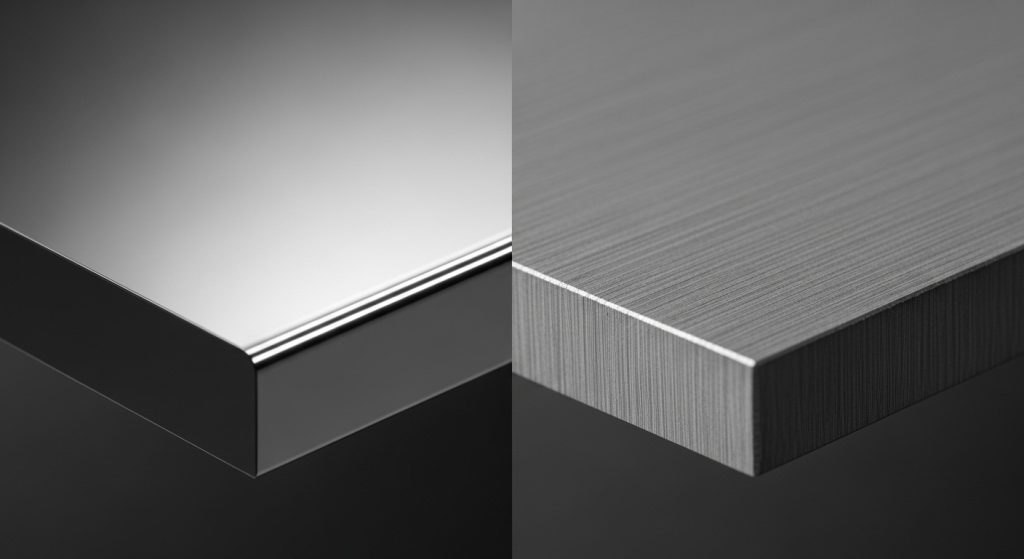
The choice between laser and plasma cutting depends on your material thickness, required tolerance, and budget. Laser is better for precision work on thinner sheets, while plasma excels at cutting thick plates at a lower cost. If your part needs to fit into precision metal stamping services downstream, the tighter tolerances of a laser are usually necessary.
| Specification | Laser Cutting | Plasma Cutting |
| Ideal Thickness | 0.5mm to 20mm | 6mm to 50mm+ |
| Edge Quality | Smooth, polished look | Slightly rough, matte finish |
| Tolerance | +/- 0.1mm | +/- 0.5mm to 1.0mm |
| Operating Cost | Higher (Gas & Power) | Lower (Consumables) |
How Does Metal Profiling Differ from CNC Machining?
While profiling cuts shapes out of flat sheets, CNC machining removes material from a solid block to create 3D forms. When looking at metal stamping vs cnc machining, profiling sits somewhere in the middle as a high-speed preparation tool. Profiling is much faster for flat parts, whereas machining is reserved for parts requiring depth, threads, or varying thicknesses.
I have seen many engineers over-engineer a part by requesting it be machined from a solid block. Often, we can profile a flat shape and then use metal stamping parts techniques to form it, saving the client thousands in machining time. Always ask: "Can this be made from a flat sheet?"
What Factors Affect the Cost of Metal Profiling Services?
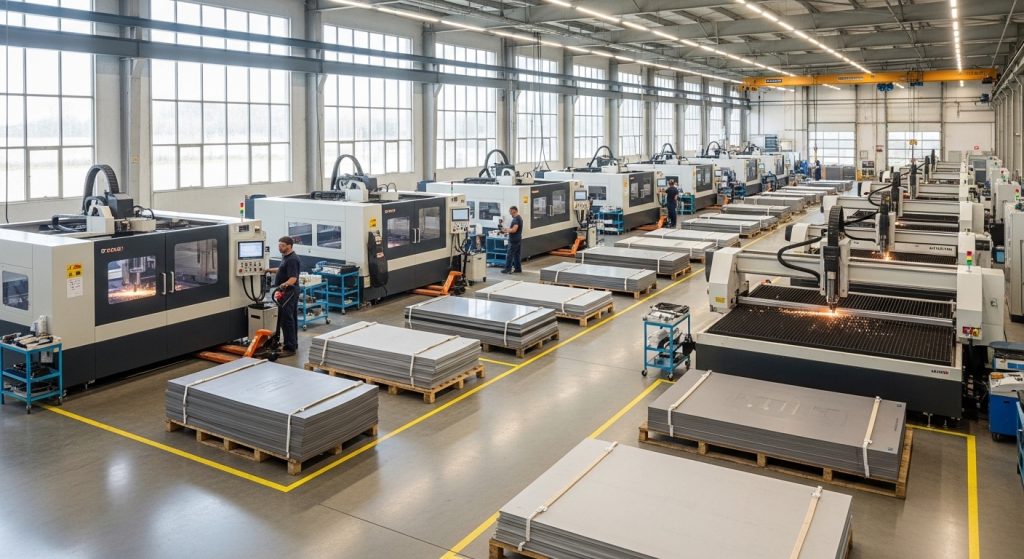
The cost of metal profiling services is influenced by material type, thickness, total cut length, and the number of "pierces" (holes). Each time the cutting head has to start a new hole, it adds time and wear. Additionally, harder materials like stainless steel require more power and specialized assist gases (like Nitrogen), which increases the hourly rate of the machine.
- Cut Path Length: More intricate shapes take longer to navigate.
- Gas Usage: Nitrogen for clean edges costs more than Oxygen or Air.
- Setup Time: Frequent material changes can increase lead times.
Why is Edge Quality Critical in Metal Profiling?
Edge quality refers to the smoothness and squareness of the cut surface. High-quality profiling minimizes "dross" (hardened slag) at the bottom of the cut. If dross is present, it requires manual de-burring, which adds labor costs. For parts that will be powder-coated, a smooth edge is vital for paint adhesion and prevents premature rusting at sharp points.
Tip: If you are profiling aluminum, always ask for a "Nitrogen cut." This prevents the edge from oxidizing during the cut, which makes welding much easier later on.
What are the Frequently Asked Questions (FAQ)?
1. Can laser cutting handle all types of metal?
Most modern fiber lasers can handle steel, stainless steel, aluminum, brass, and copper. However, highly reflective metals require specialized fiber laser technology to prevent damage to the machine’s optics.
2. Is plasma cutting safe for thin materials?
While possible, plasma generates significant heat. On thin sheets (less than 3mm), this heat can cause "heat-affected zones" (HAZ) that lead to warping or changing the metal's temper. Laser is preferred here.
3. How accurate are metal profiling services?
Accuracy depends on the machine type. Laser cutting typically offers tolerances of +/- 0.1mm. High-definition plasma is usually within +/- 0.5mm.
4. Does metal profiling require secondary finishing?
For laser-cut parts, finishing is rarely needed. For plasma-cut parts, you may need to grind the edges to remove slag or improve the surface for painting.
5. What is the maximum thickness a laser can cut?
Most industrial fiber lasers max out around 25mm for carbon steel. Beyond that, the cut quality degrades, and plasma or flame cutting becomes more efficient.
6. Can I profile a part that is already bent?
No. Profiling is a process for flat sheets. If you need holes or cuts in a pre-formed part, you would typically use 5-axis CNC machining or 3D laser cutting.
Final Thoughts on Metal Profiling Technology
The evolution of metal profiling services has fundamentally changed how we approach design. By understanding the strengths of laser and plasma cutting, you can optimize your production for both quality and cost. Laser provides the surgical precision required for high-tech industries, while plasma offers the raw power needed for heavy infrastructure.
In my years of experience, the most successful projects are those where the designer consults with the fabricator early. By aligning your design with the right cutting technology—be it for sheet metal fabrication or preparation for stamping—you ensure a smoother transition from digital concept to physical reality. Choose your "scissors" wisely, and the rest of the assembly will fall perfectly into place.
