


What is the Difference Between Metal Stamping and CNC Machining? (2026 Guide)
The primary difference between metal stamping and CNC machining lies in the fabrication method: metal stamping is a cold-forming process that uses dies and high-pressure presses to shape sheet metal, while CNC machining is a subtractive process that uses computer-controlled cutting tools to remove material from a solid block. Choosing between them depends on your production volume, part complexity, and required tolerances.
In this guide, you will learn to:
- Identify the cost-efficient "break-even" point between processes.
- Evaluate which method meets your specific tolerance requirements.
- Determine material waste implications for sustainability goals.
- Select the right fabrication path for your 2026 production timeline.
Fundamental Process: Shaping vs. Subtraction
To understand the core difference, imagine the difference between a cookie cutter and a wood carver. Metal stamping is a forming process. A flat sheet of metal is placed into a press where a custom-made tool and die set applies immense force to "stamp" the metal into a specific shape. It is incredibly fast and produces consistent parts from thin-gauge materials.
CNC (Computer Numerical Control) Machining is a subtractive process. It starts with a solid "blank" or workpiece. A high-speed rotating tool then moves along multiple axes (typically 3, 4, or 5 axes) to shave away material until the final geometry is achieved. While stamping is limited to the thickness of the sheet metal, CNC machining can create complex 3D shapes out of thick, solid blocks of metal or plastic.
Key Comparison Factors: Cost, Volume, and Speed
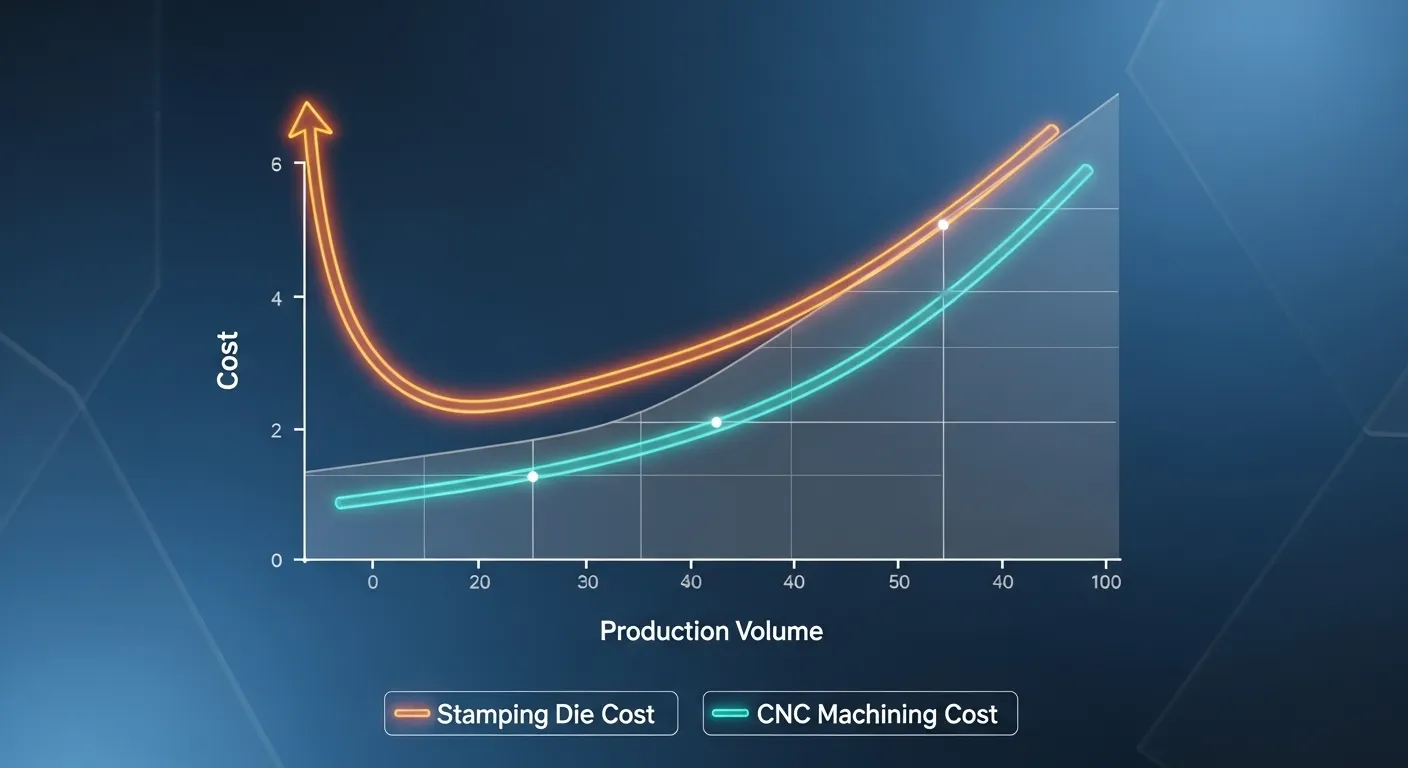
Financial feasibility is often the deciding factor for procurement managers. The two methods have inverse cost structures regarding setup and unit price.
Tooling and Setup Costs
Metal stamping requires a significant upfront investment. Custom dies must be designed and machined from hardened steel, often costing between $2,000 and $50,000 (needs verification) depending on complexity. Conversely, CNC machining has minimal setup costs, usually involving only the programming of the G-code and basic work-holding fixtures.
The Production "Cross-over" Point
Because of the high tooling cost, metal stamping is rarely cost-effective for small batches. However, once the die is created, the "per-part" cost is exceptionally low. For most industrial applications, the break-even point occurs between 1,000 and 5,000 units. For high-scale requirements, such as automotive metal stamping components oem quality, stamping is the undisputed leader in cost efficiency.
Common Mistakes to Avoid:
- Choosing CNC for a 50,000-unit run, which results in massive labor and machine-hour costs.
- Choosing stamping for a 50-unit prototype run, where the die cost will never be recovered.
Precision and Geometric Complexity
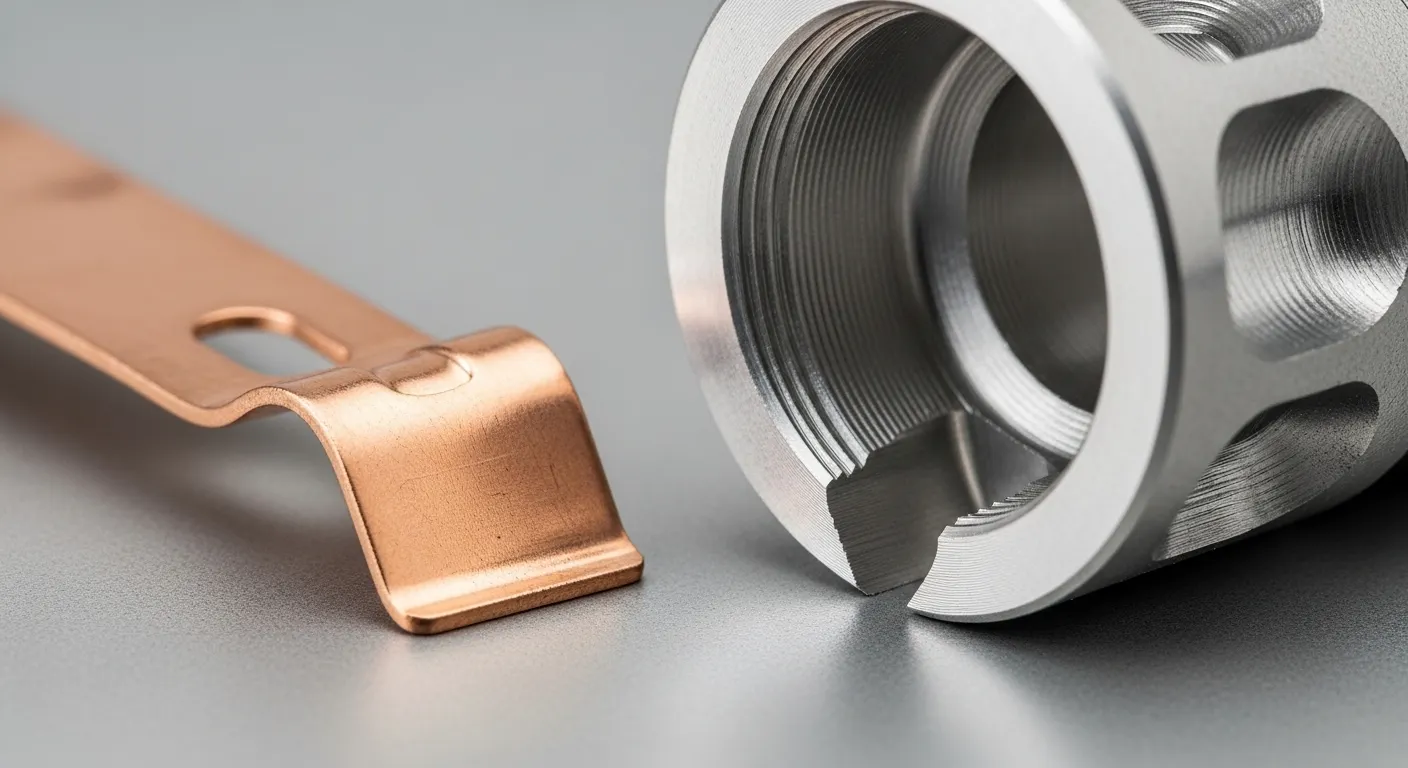
CNC machining is the gold standard for precision. Modern CNC centers can achieve tolerances as tight as ±0.005mm. This makes it the preferred choice for aerospace, medical, and high-end electronic components that require perfect fits.
Metal stamping is precise but limited by the behavior of the metal as it bends and stretches (springback). Standard stamping tolerances typically range from ±0.1mm to ±0.2mm. While stamping is excellent for 2D or "folded" 3D shapes like brackets and enclosures, it cannot produce the deep, intricate internal cavities or variable thicknesses that a CNC mill can.
For projects requiring lightweight yet durable frames, such as aluminum stamping parts lightweight applications, stamping provides the best balance of speed and structural integrity for thin-walled designs.
Material Suitability and Waste
Material utilization is a critical metric for 2026 sustainability standards and bottom-line protection.
- Stamping: This process is highly efficient with material. Since it uses sheet metal, the "scrap" is limited to the skeleton left over after the parts are punched out. This is particularly beneficial when working with expensive materials, such as copper and brass metal stamped components electrical, where minimizing waste is essential.
- CNC Machining: This process generates significant waste. In some cases, up to 60-80% of the initial metal block is turned into "swarf" or chips. While these chips can be recycled, the energy and cost associated with the initial material purchase and subsequent recycling are much higher.
The "Hybrid" Solution: Stamping + Secondary Machining
In modern manufacturing, you don't always have to choose just one. Many high-precision, high-volume parts utilize a hybrid workflow. A part may be stamped initially to create the general form at high speed and low cost, then moved to a CNC machine to drill high-tolerance holes or mill a perfectly flat mating surface. This approach combines the speed of forming with the precision of subtraction, offering a middle ground for complex industrial designs.
Frequently Asked Questions (FAQ)
Metal stamping is cheaper only at high volumes (typically 1,000+ units) because the high initial cost of the die is spread across many parts. For low volumes or prototypes, CNC machining is significantly more cost-effective.
Yes, CNC machines (specifically CNC mills or laser/plasma cutters) can process sheet metal, but it is generally slower than stamping. CNC is used for sheet metal when the design is likely to change or when the volume does not justify a stamping die.
Metal stamping is significantly faster for large orders. Once the press is set up, it can produce dozens or even hundreds of parts per minute, whereas a CNC machine must cut each part individually over several minutes.
Stamping is generally limited to metals between 0.5mm and 6mm thick (needs verification). For materials thicker than 10mm, CNC machining or other heavy-duty fabrication methods are usually required.
Not necessarily. CNC parts are machined from solid stock, which maintains the material's original grain structure. Stamping, however, involves "work hardening" as the metal is formed, which can actually increase the strength of certain areas of the part.
Both are excellent for aluminum. Use CNC for thick, high-precision blocks and stamping for thin-gauge housings, brackets, or heat sinks where weight reduction is a priority.
Conclusion
The choice between metal stamping and CNC machining hinges on the intersection of volume, precision, and budget. If you are developing a new prototype or require extreme tolerances for a small batch, CNC machining is your best path. However, for scaled production where unit cost and material efficiency are paramount, metal stamping is the superior industrial solution.
