
Home > Product > Automotive Plastic Injection Parts

Automotive Plastic Injection Parts

Automotive plastic injection parts provide lightweight, precision components with flexible material options and scalable production capabilities. They support interior, exterior, and functional vehicle applications requiring consistent quality and reliable performance.

  • Material Options:ABS, PC/ABS, PP, PA, TPE, TPU, and automotive-grade engineering plastics.
  • Part Capability:Panels, housings, clips, brackets, covers, ducts, and integrated components.
  • Molding Process:Injection molding, insert molding, and overmolding.
  • Surface Finish:Texture, painting, coating, printing, and decorative finishes.
  • Production Volume:Prototype, low-volume production, and high-volume manufacturing.
  • Quality Control:Material testing, dimensional inspection, and production validation.

Introduction to Automotive Plastic Injection Parts
 

What is Automotive Plastic Injection Parts?

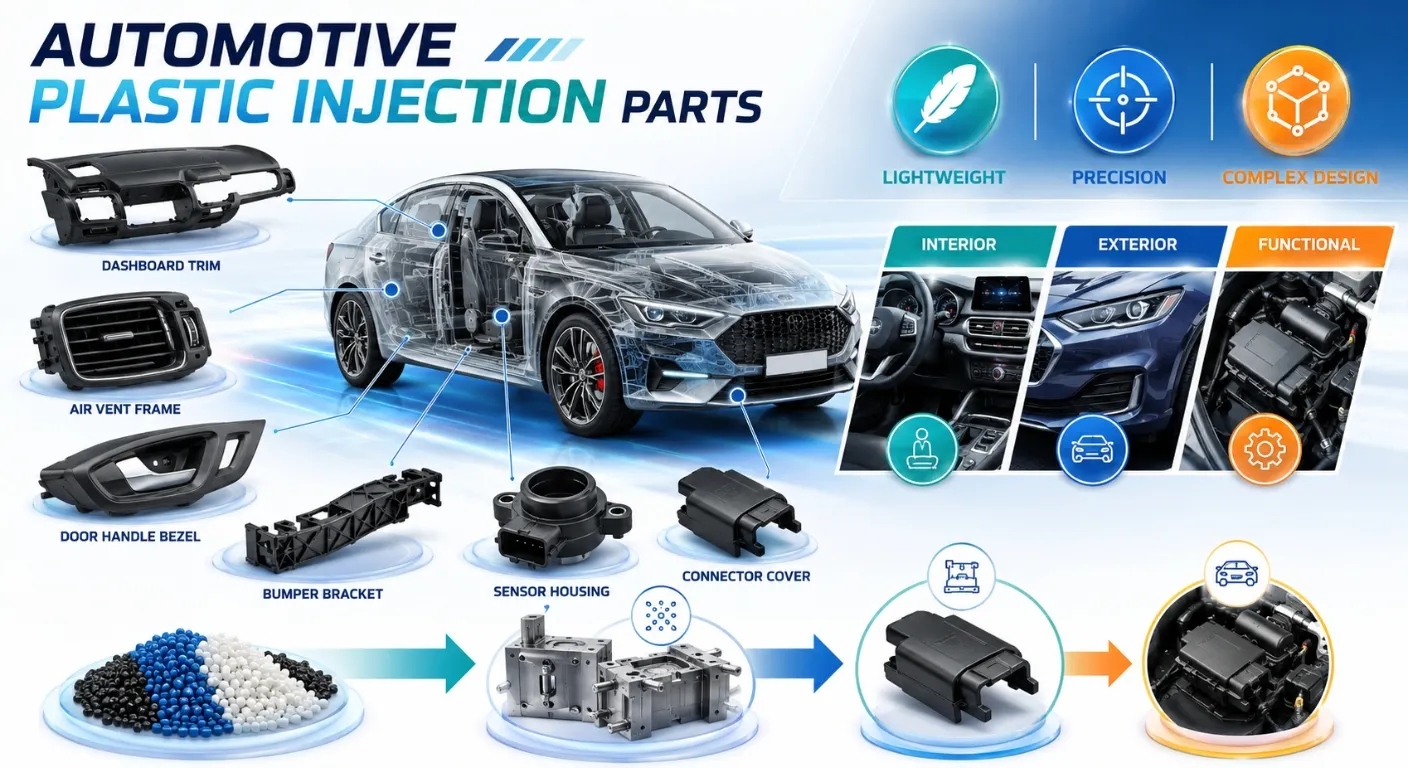
Automotive plastic injection parts are precision components produced through injection molding processes using engineered polymers. These parts provide lightweight structures, dimensional consistency, and design flexibility for modern vehicle systems.

Compared with traditional metal components, automotive plastic parts help reduce weight, improve manufacturing efficiency, and support complex designs for interior, exterior, and functional automotive applications.

What is Automotive Plastic Injection Parts
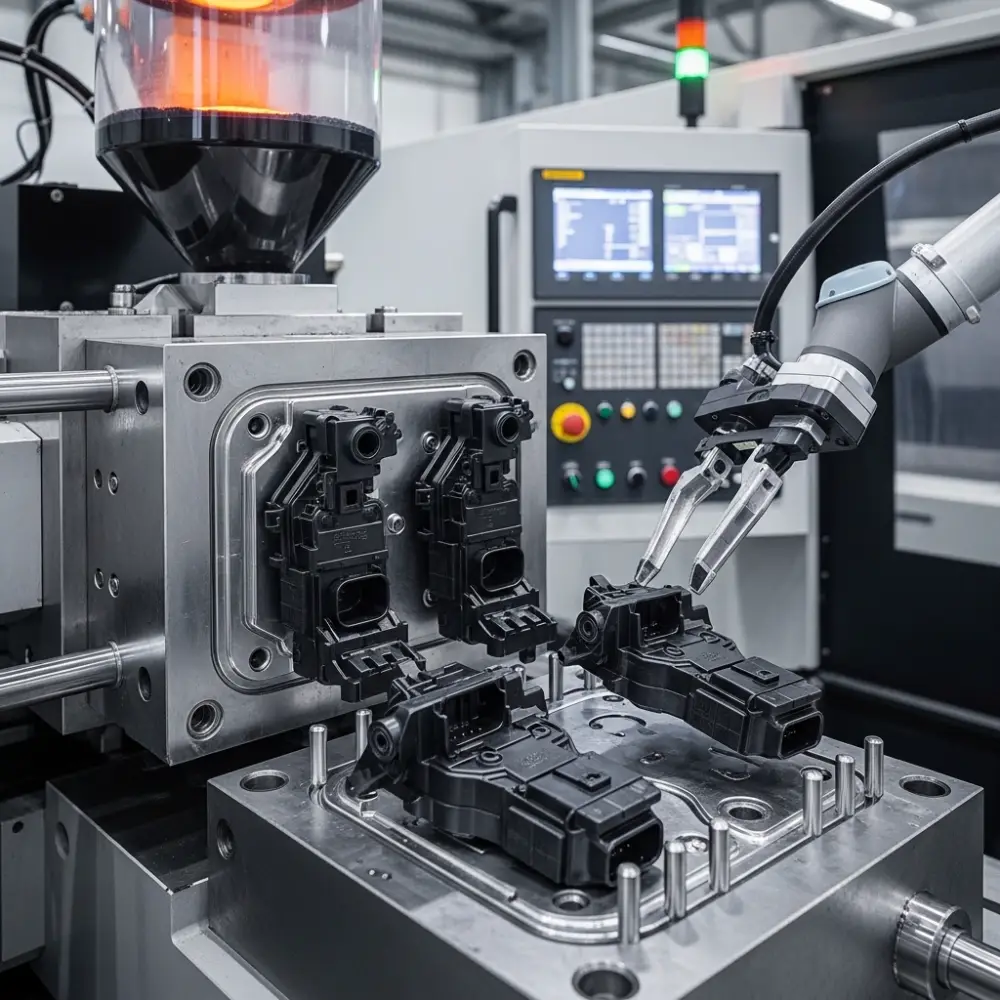
Automotive Plastic Injection Molding Process

Automotive Plastic Injection Molding Process

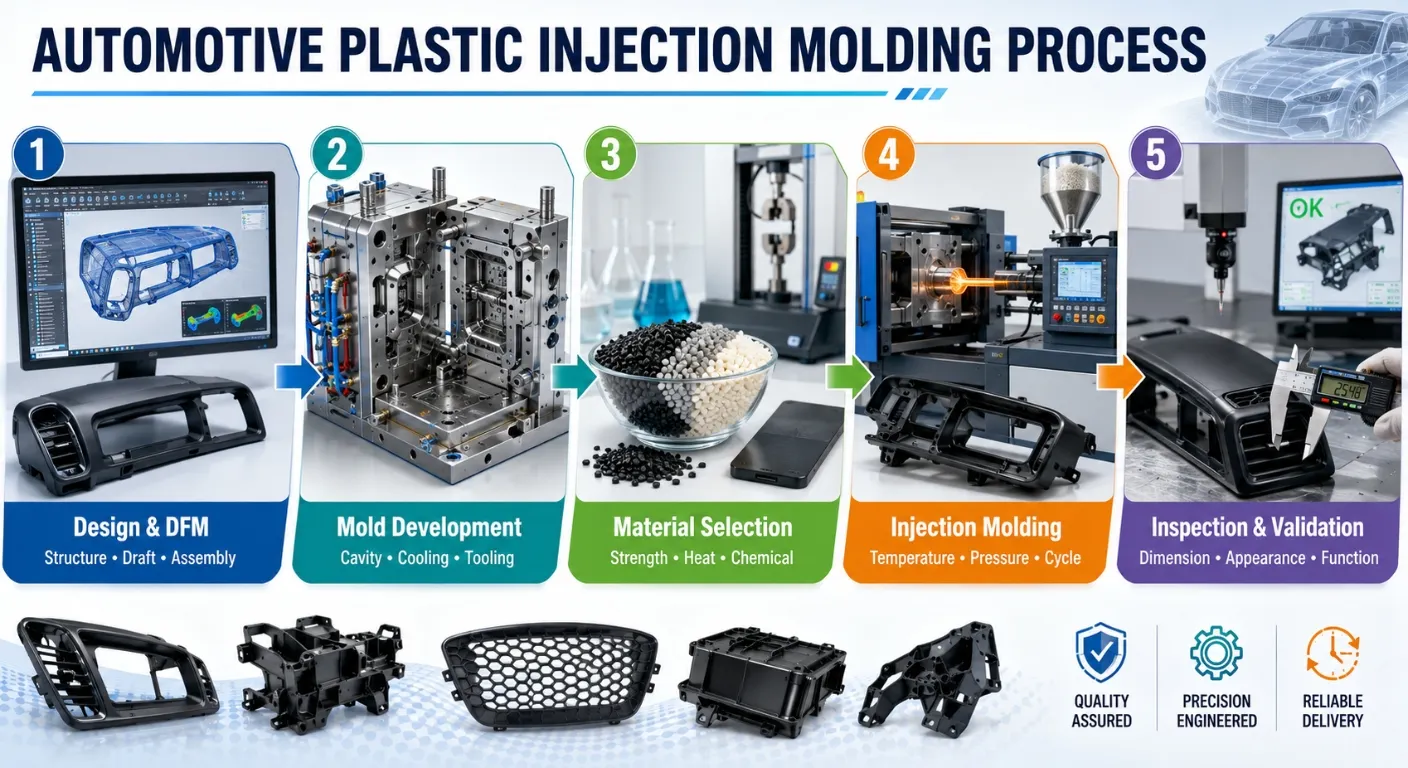
  • Product Design & DFM Analysis:We evaluate part structures, wall thickness, draft angles, and assembly requirements to improve manufacturability and reduce production risks.
  • Mold Design & Manufacturing:We develop precision injection molds with optimized cavity layouts, cooling systems, and tooling structures for stable production.
  • Material Selection & Testing:We select suitable automotive plastics based on strength, heat resistance, chemical resistance, and application conditions.
  • Injection Molding Production:We control molding parameters including temperature, pressure, and cycle time to maintain consistent part quality.
  • Inspection & Validation:We verify dimensions, appearance, and functional requirements to ensure components meet automotive production standards.

Key Features of Automotive Plastic Injection Parts
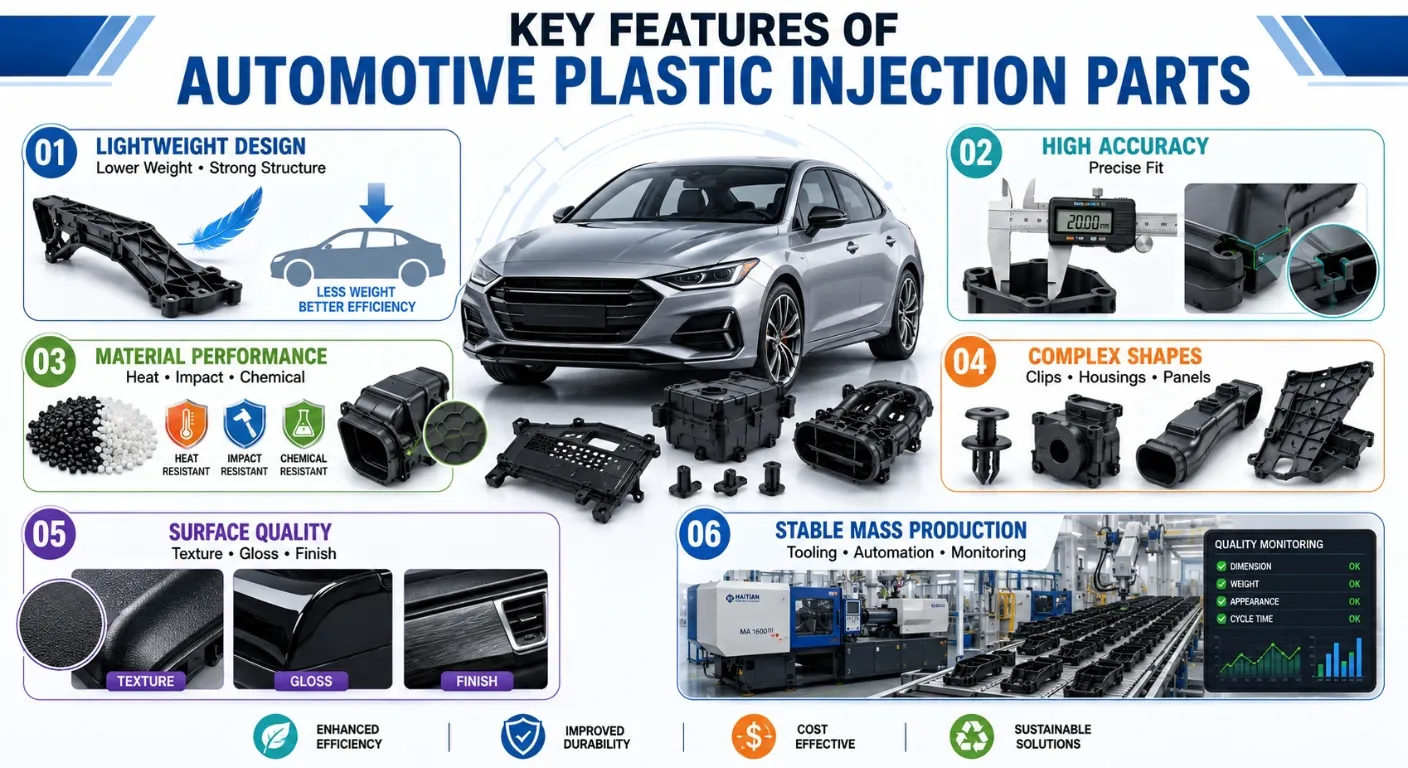
  • Lightweight Design Capability:Produces plastic components that reduce overall vehicle weight while maintaining required mechanical performance.
  • High Dimensional Accuracy:Maintains consistent dimensions for precise assembly with vehicle structures and adjacent components.
  • Automotive Material Performance:Supports engineering plastics with resistance to heat, impact, chemicals, and long-term environmental exposure.
  • Complex Component Manufacturing:Produces clips, housings, panels, covers, ducts, and integrated structures with detailed features.
  • Surface Quality & Appearance Control:Provides textured, painted, coated, and decorative finishes for interior and exterior components.
  • Stable Mass Production:Ensures repeatable quality through optimized tooling, automated molding, and process monitoring.
Key Features

Automotive Plastic Material Options

Automotive Plastic Material Options

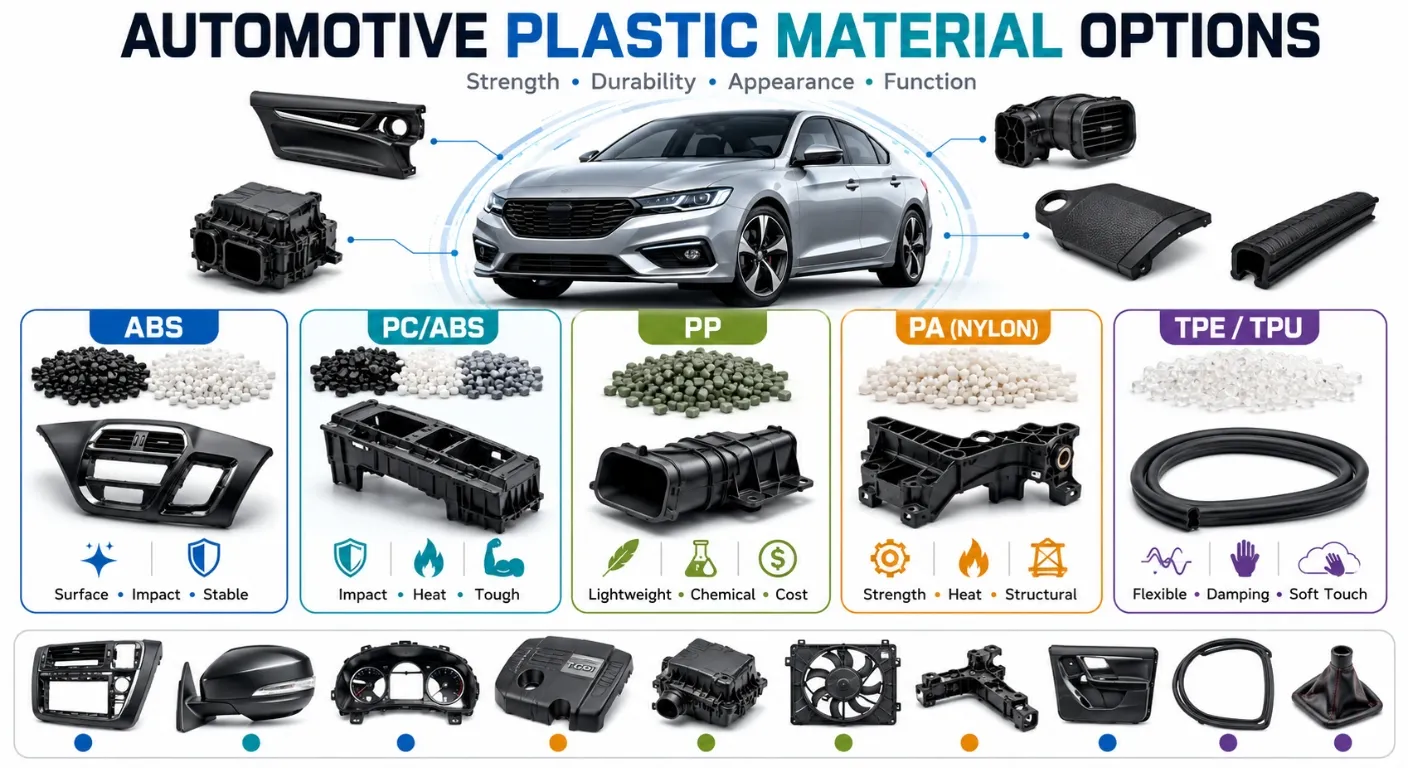
Different automotive plastics provide specific advantages for strength, durability, appearance, and functional performance.

  • ABS:Provides excellent surface quality, impact resistance, and dimensional stability for interior components.
  • PC/ABS:Combines impact strength and heat resistance for demanding automotive applications.
  • PP:Offers lightweight performance, chemical resistance, and cost efficiency for functional parts.
  • PA (Nylon):Provides high mechanical strength and heat resistance for structural and under-hood components.
  • TPE / TPU:Provides flexibility, vibration absorption, and soft-touch performance.

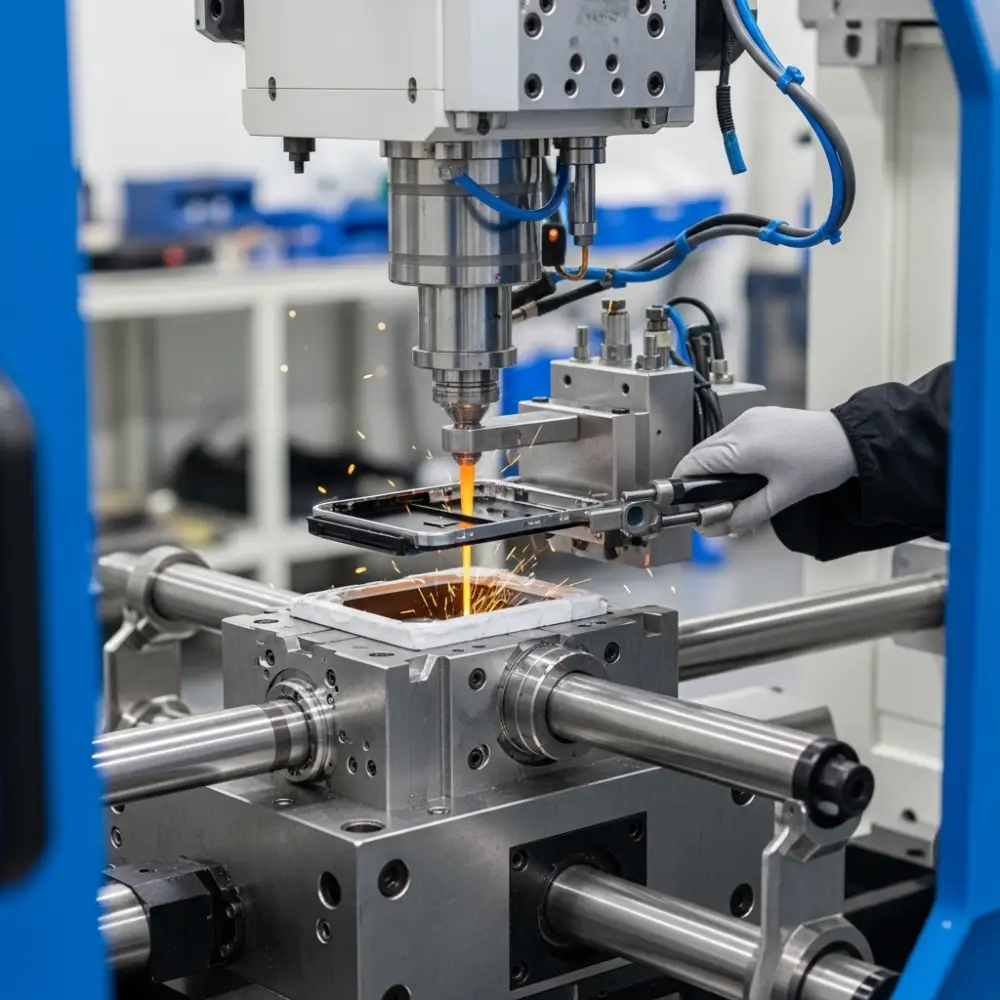
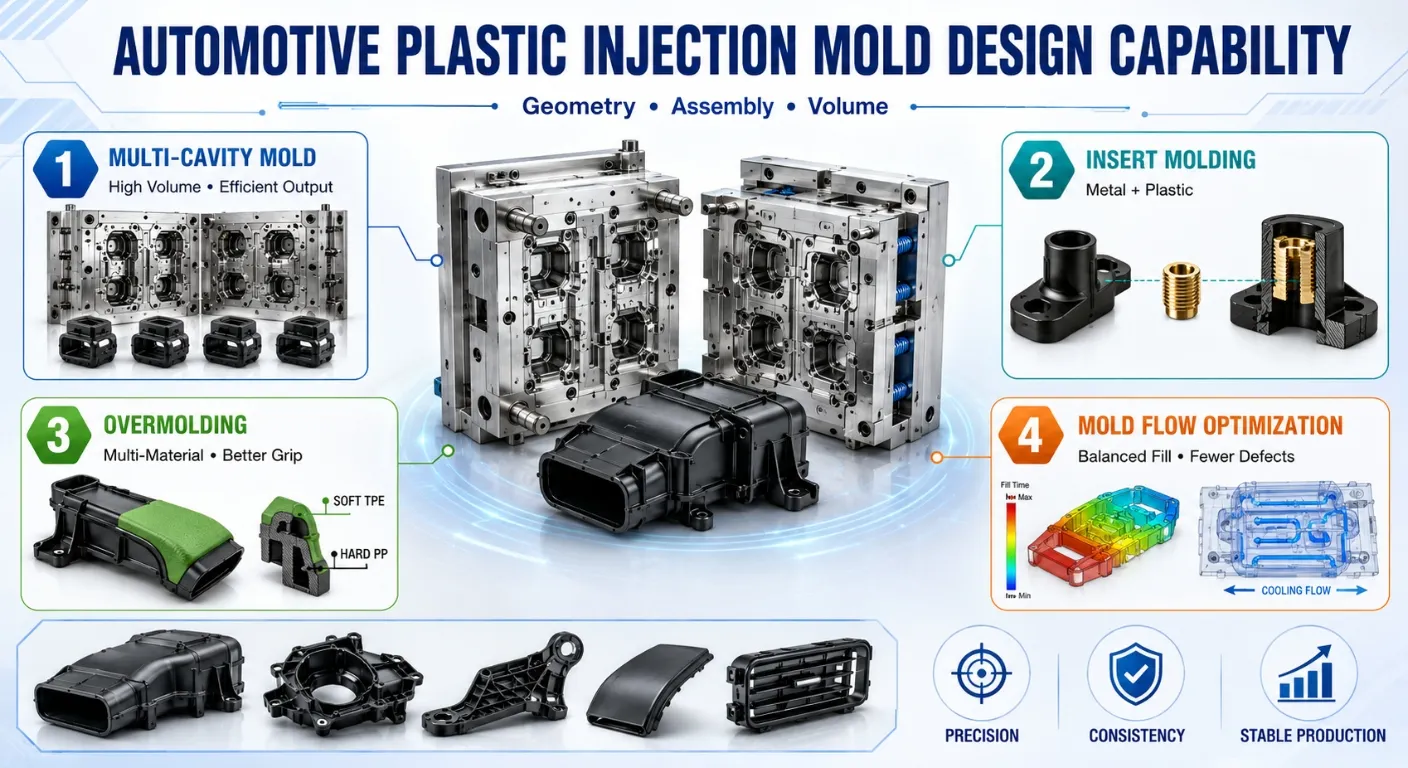
Automotive Plastic Injection Mold Design Capability

Automotive components often require complex structures and high production consistency. We optimize mold design based on part geometry, assembly requirements, and production volume.

  • Multi-Cavity Mold Design:Supports efficient production for high-volume automotive components.
  • Insert Molding:Integrates metal inserts or additional components into plastic parts.
  • Overmolding Solutions:Combines multiple materials to improve functionality, grip, and product performance.
  • Mold Flow Optimization:Improves filling balance, cooling performance, and reduces molding defects.
Automotive Plastic Injection Mold Design Capability

Applications

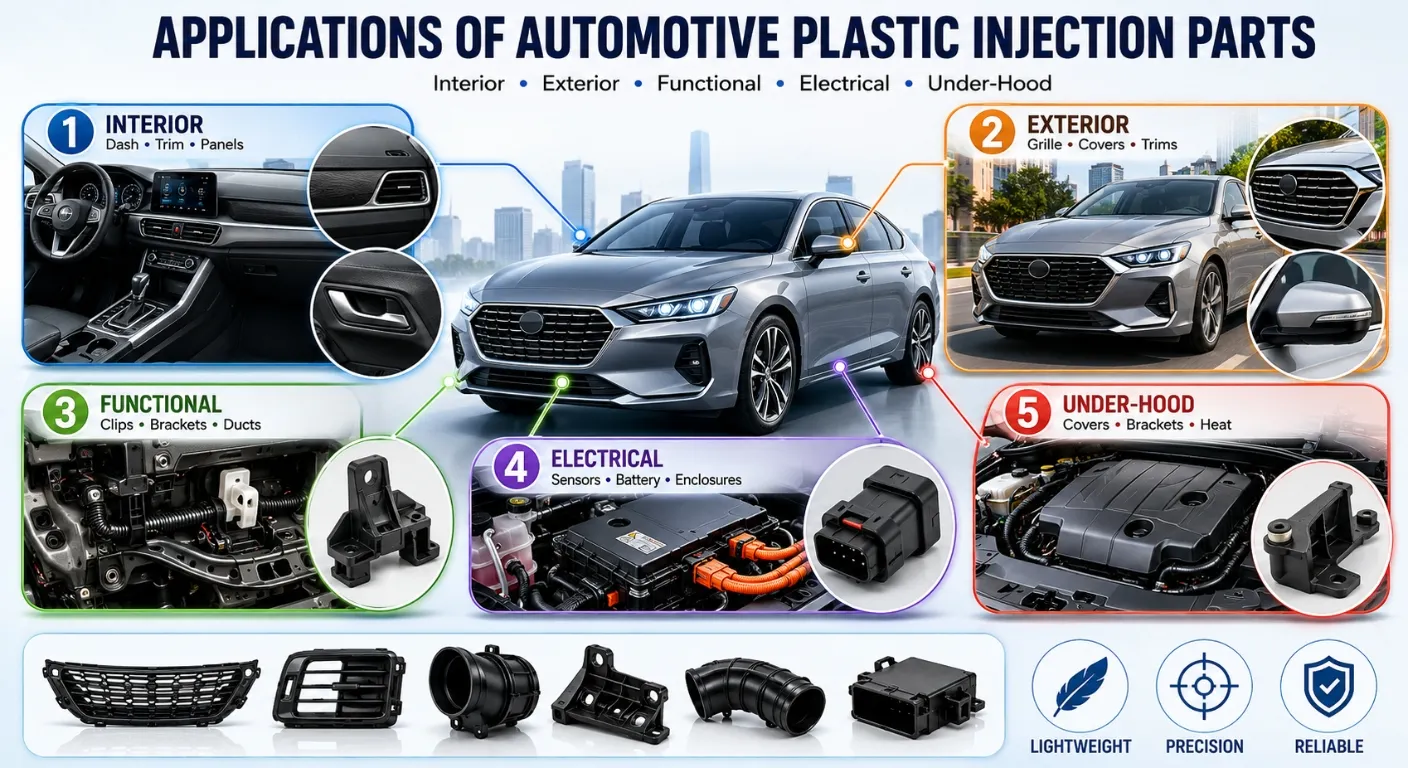
Applications of Automotive Plastic Injection Parts
  • Interior Components:Dashboard parts, trims, panels, handles, and decorative components.
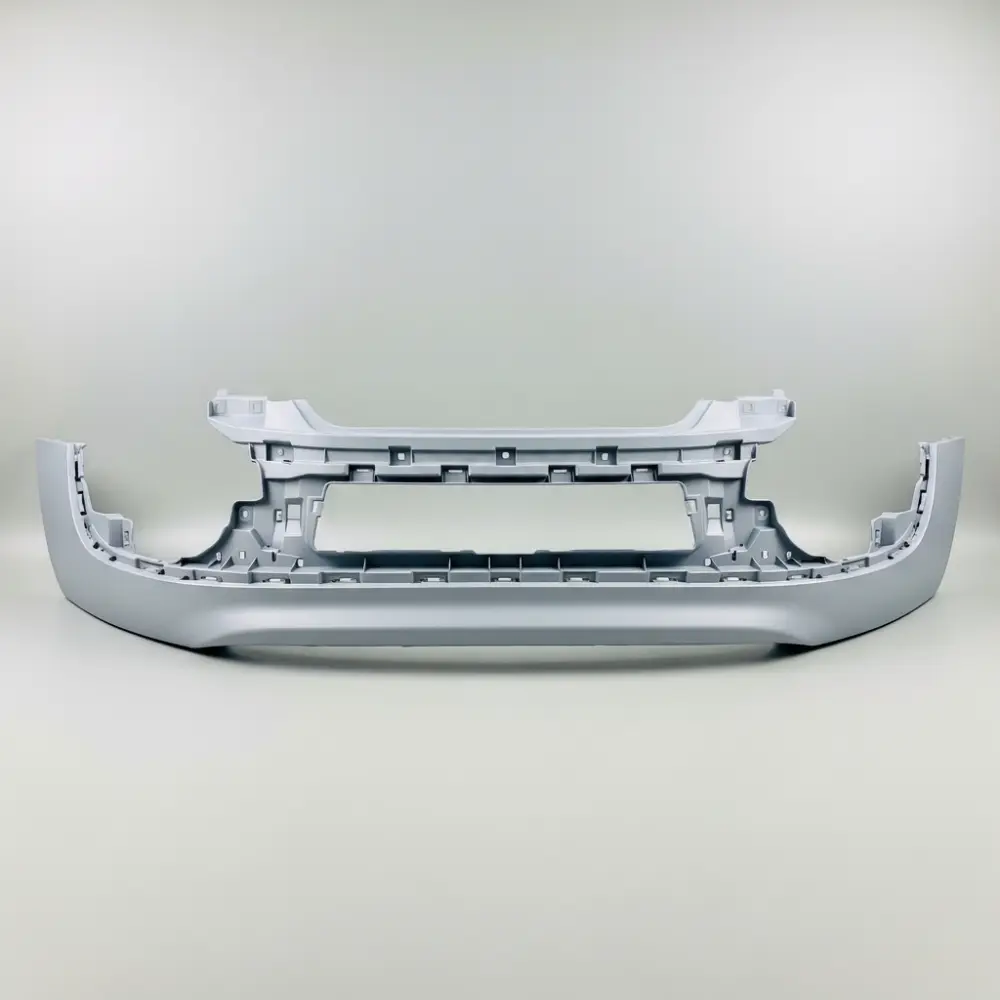
  • Exterior Components:Grilles, covers, trims, protective housings, and exterior plastic structures.
  • Functional Components:Clips, brackets, connectors, ducts, and support components.
  • Electrical & Electronic Systems:Sensor housings, battery-related plastic parts, and protective enclosures.
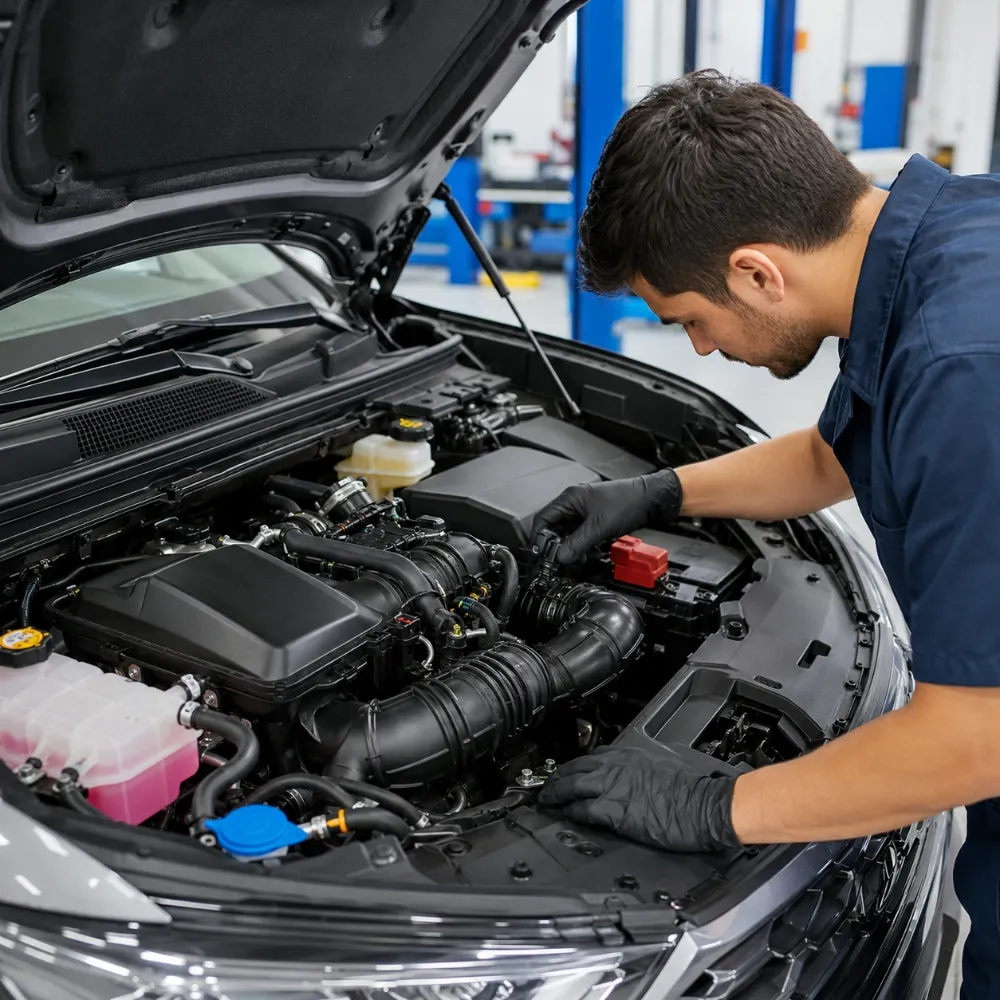
  • Under-Hood Components:Heat-resistant covers, brackets, and functional plastic components.

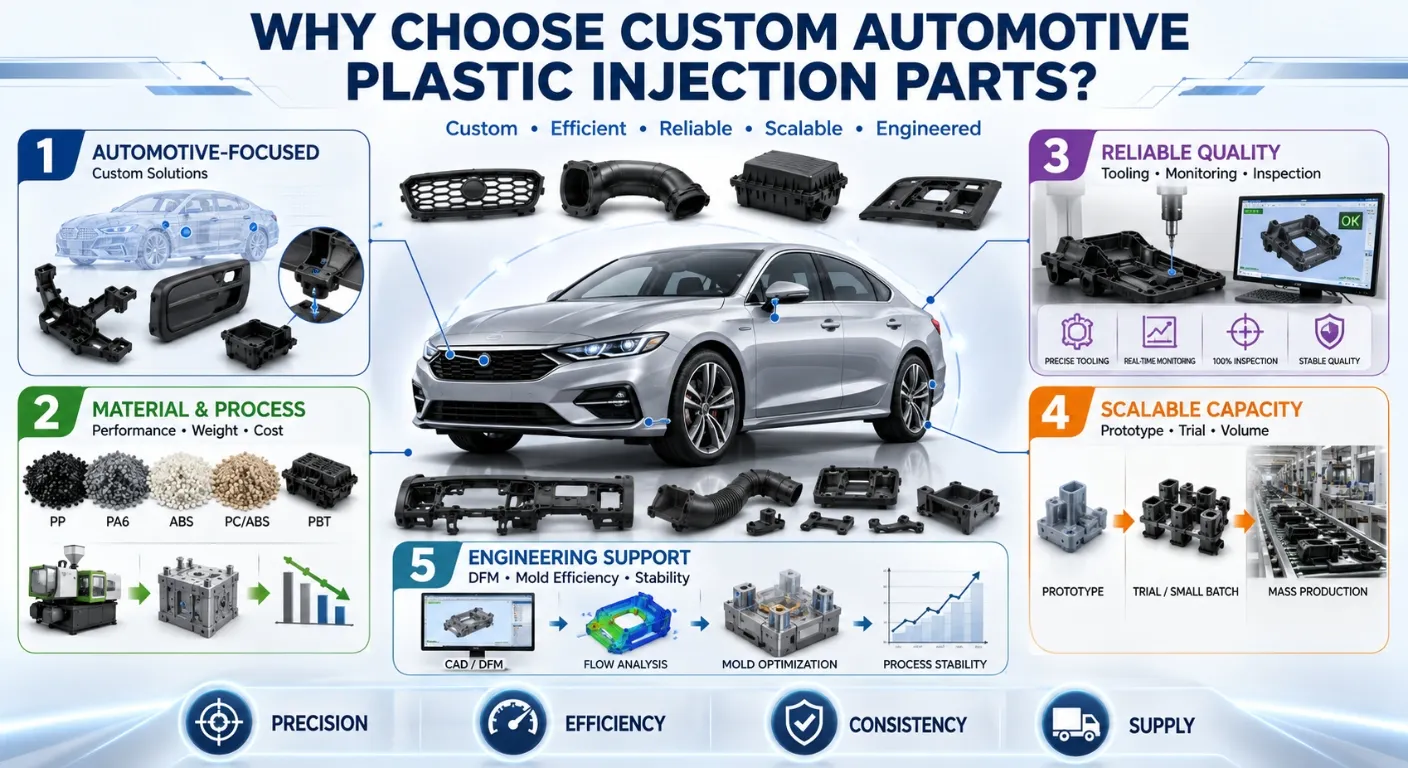
Why Choose Custom Automotive Plastic Injection Parts?

  • Automotive-Focused Manufacturing:Provides customized solutions for vehicle components based on performance and assembly requirements.
  • Material & Process Optimization:Selects suitable plastics and molding processes to balance performance, weight, and cost.
  • Reliable Production Quality:Maintains consistent output through tooling control, process monitoring, and inspection.
  • Scalable Manufacturing Capability:Supports prototype validation, trial production, and high-volume automotive supply.
  • Engineering Support:Provides DFM recommendations to improve part design, mold efficiency, and production reliability.
Why Choose Custom Automotive Plastic Injection Parts
Quality Control for Automotive Plastic Injection Parts

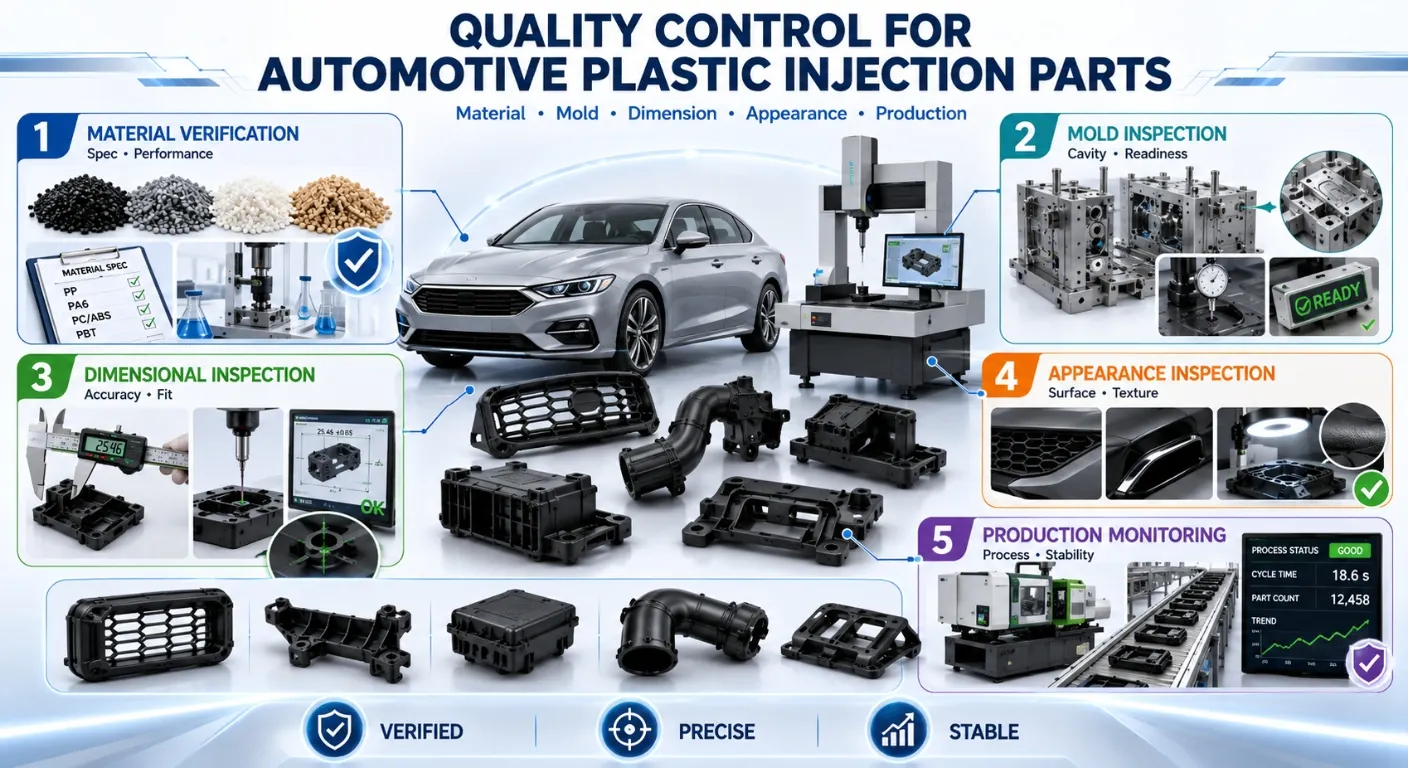
Quality Control for Automotive Plastic Injection Parts

We maintain quality throughout tooling development and production.

  • Material Verification:Confirms plastic material specifications and performance requirements.
  • Mold Inspection:Checks cavity accuracy, tooling condition, and production readiness.
  • Dimensional Inspection:Verifies critical dimensions and assembly compatibility.
  • Appearance Inspection:Checks surface defects, texture consistency, and cosmetic quality.
  • Production Monitoring:Maintains stable molding conditions during continuous production.

FAQ

1. What automotive components can be produced with plastic injection molding?
Answer:

Automotive injection molding can produce interior parts, exterior components, functional clips, housings, brackets, and electronic system components.

2. Which plastics are commonly used for automotive injection parts?
Answer:

Common materials include ABS, PC/ABS, PP, PA, TPE, and TPU, selected based on strength, heat resistance, flexibility, and application requirements.

3. Can automotive plastic parts replace metal components?
Answer:

Yes. Many automotive plastic components replace metal parts when lightweight design, corrosion resistance, and manufacturing efficiency are required.

4. What factors affect automotive plastic injection part costs?
Answer:

Main factors include material selection, part complexity, mold design, surface finish, production volume, and quality requirements.

5. Do you support automotive prototypes before mass production?
Answer:

Yes. We support prototype development, mold testing, design validation, and transition to volume production.