

Plastic Connector Molding
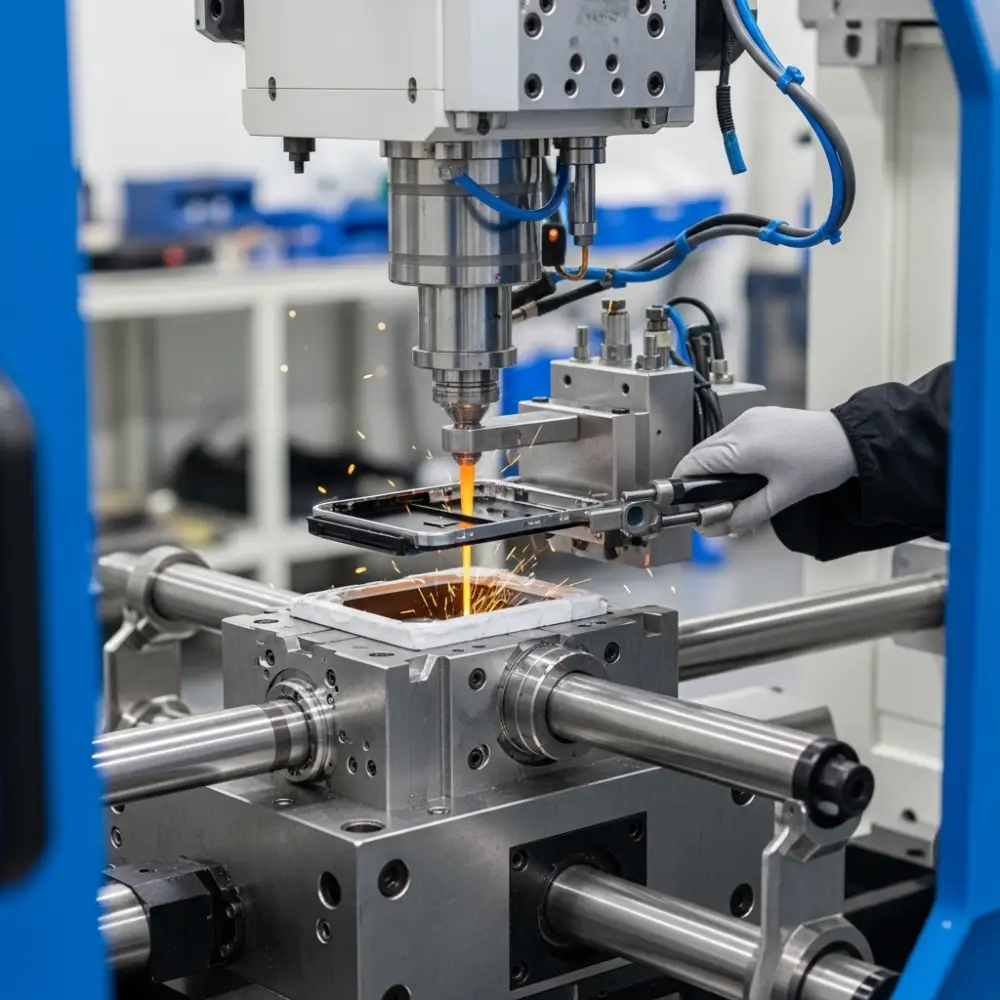
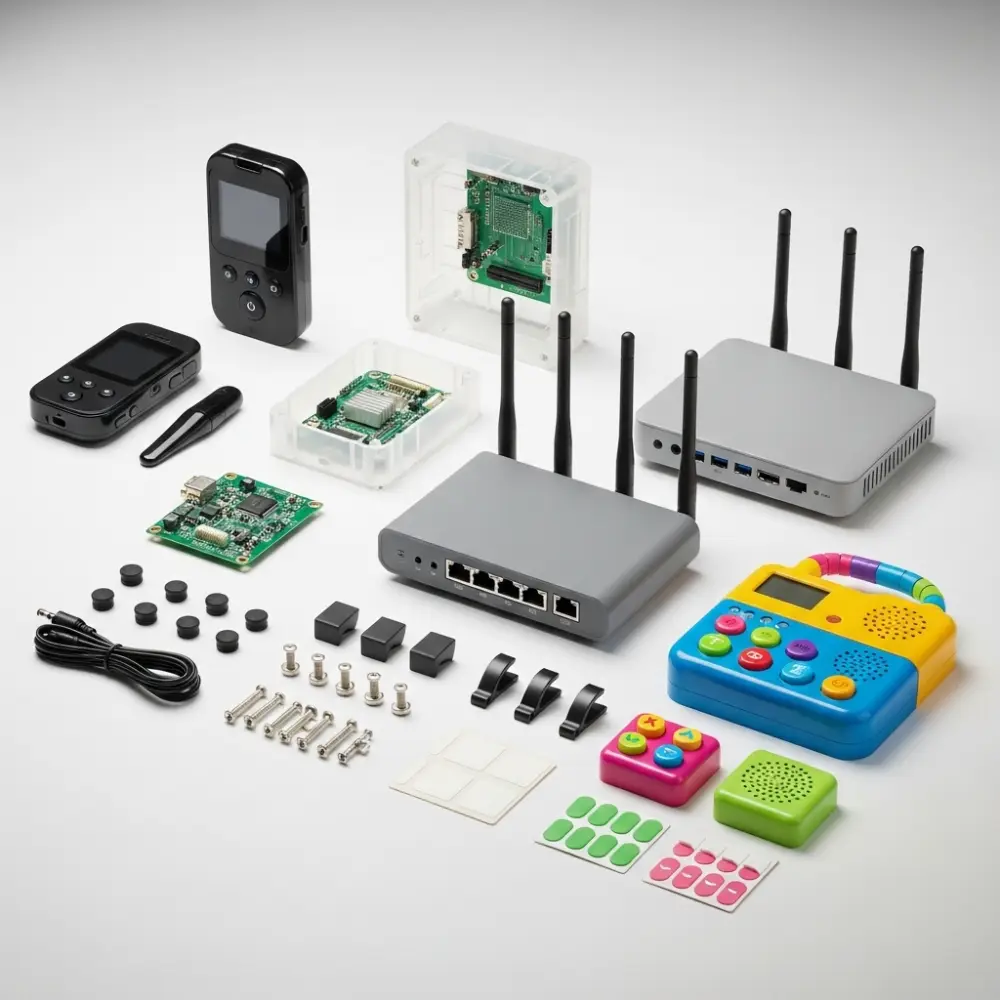
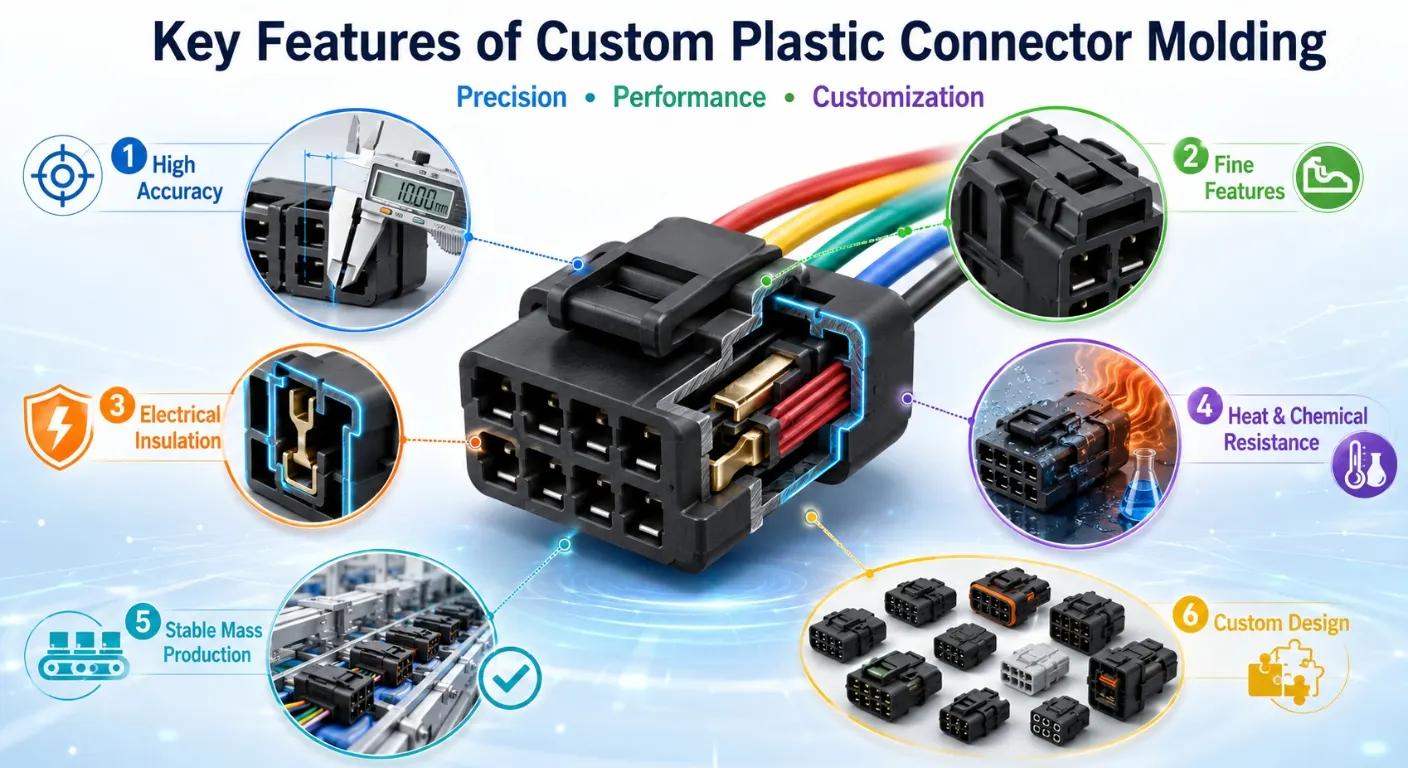
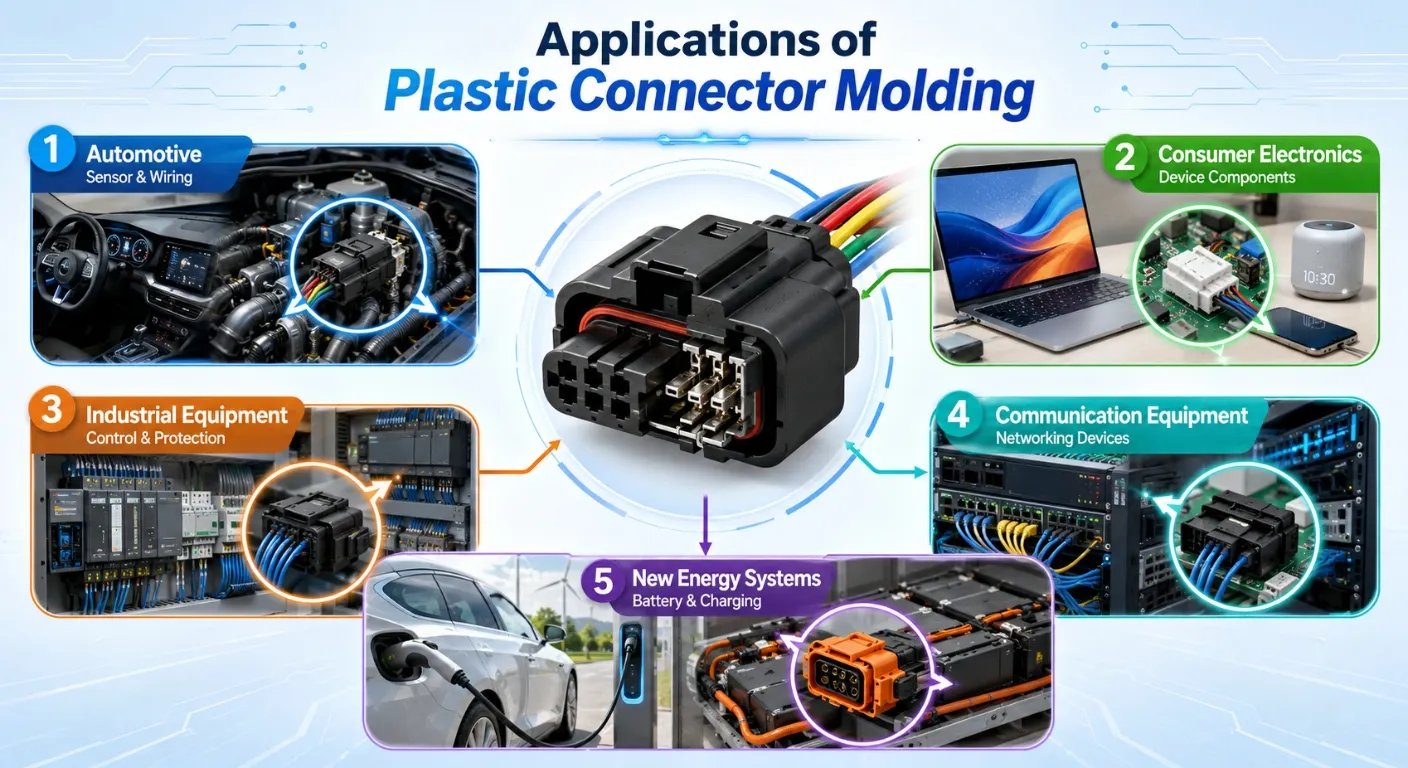
Plastic connector molding provides precision plastic components with excellent insulation performance, dimensional stability, and scalable production capability. It supports electrical, automotive, industrial, and communication applications requiring reliable connector performance.
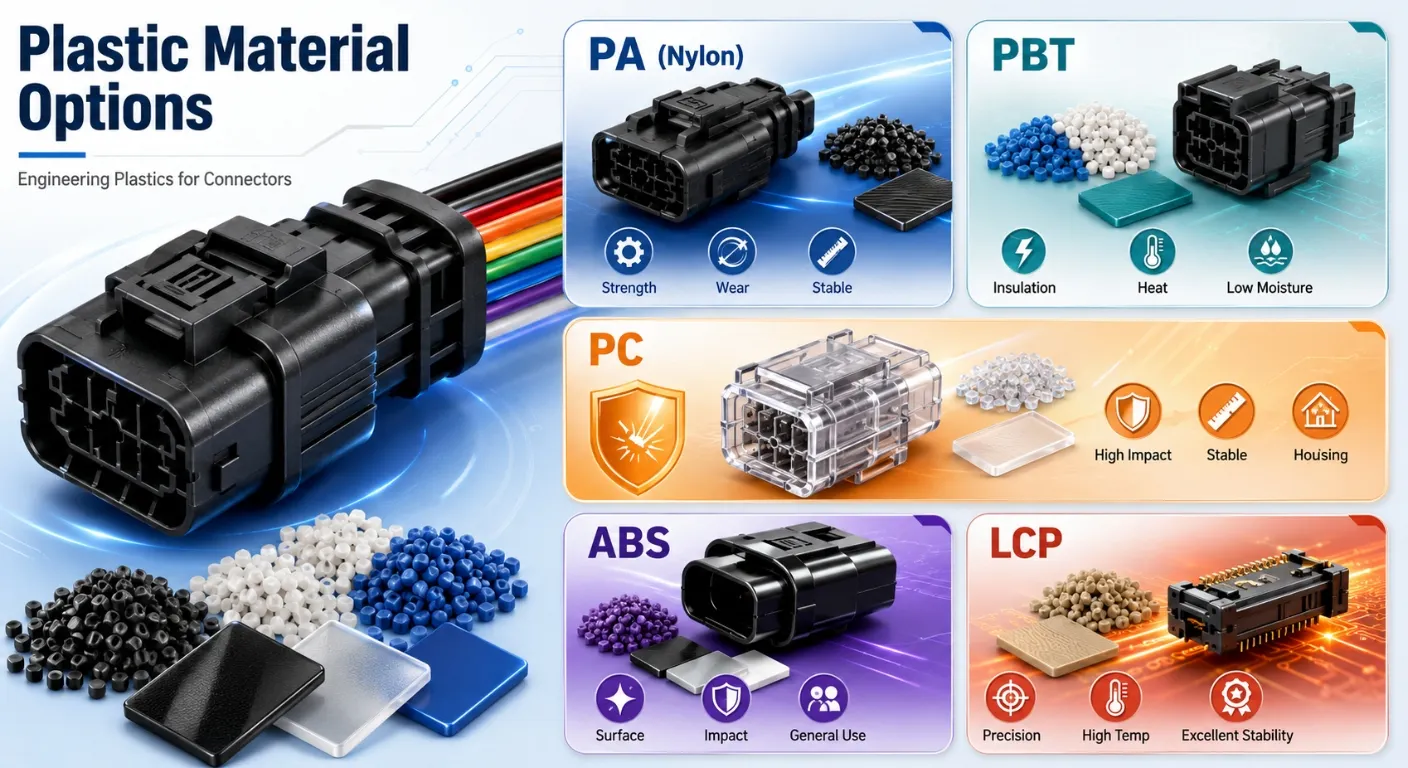
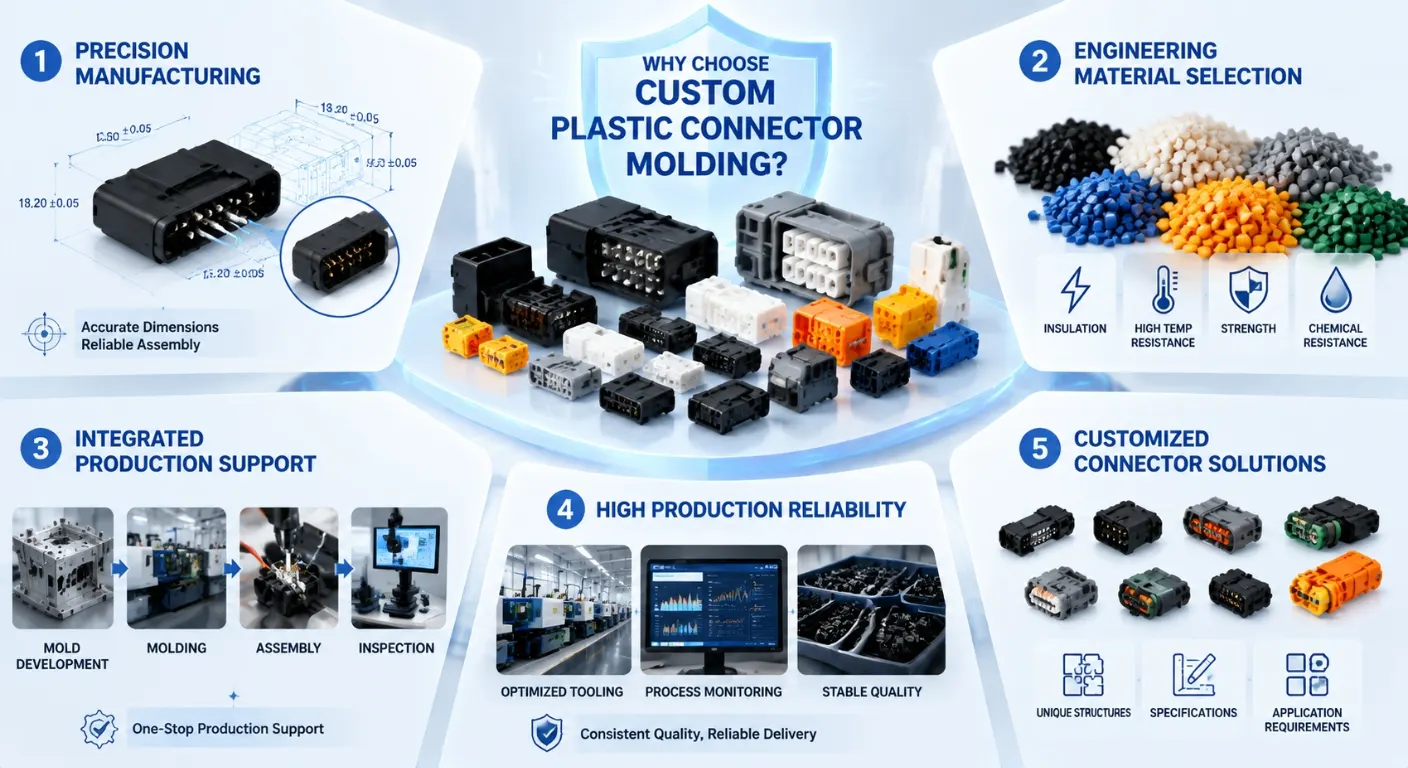
- Material Options:PA, PBT, PC, ABS, LCP, and other engineering plastics.
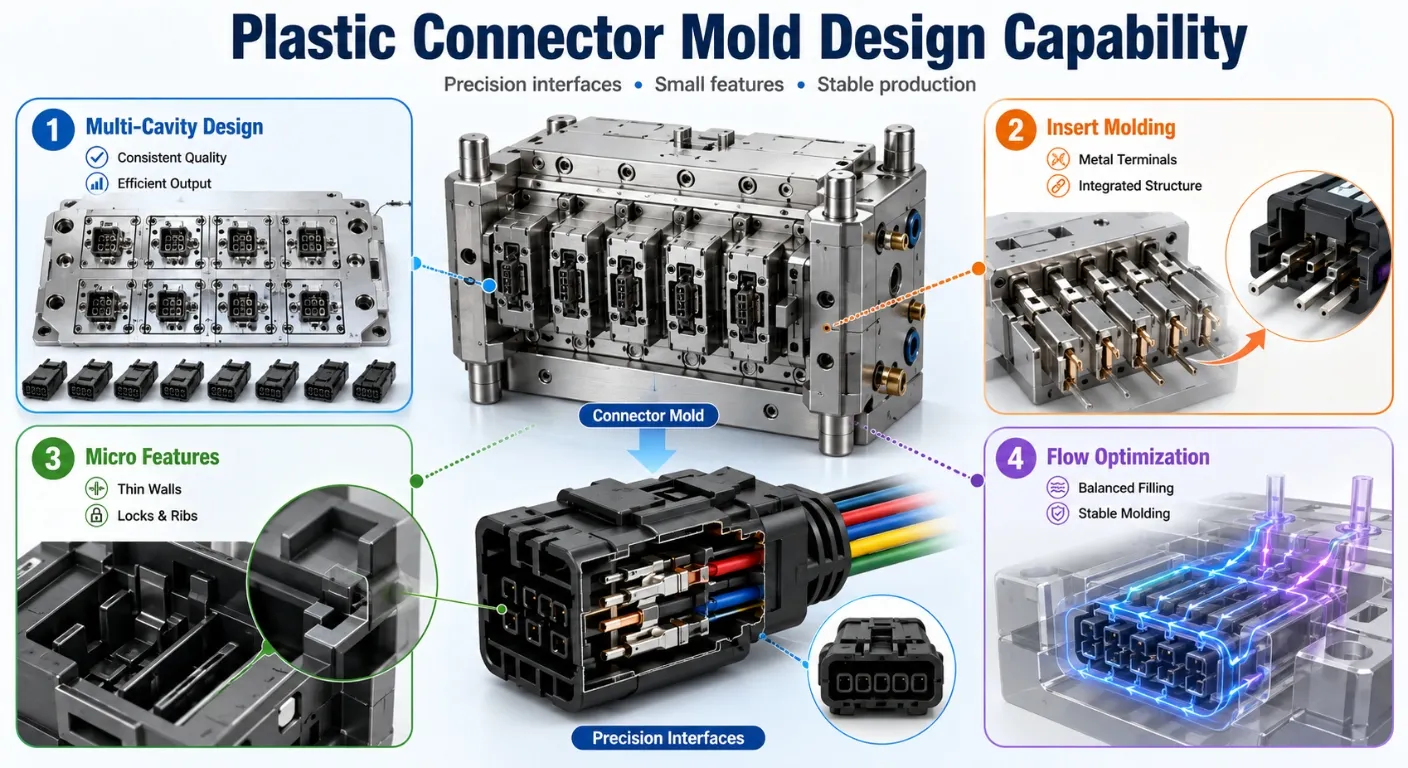
- Molding Process:Injection molding, insert molding, and precision multi-cavity molding.
- Part Capability:Connector housings, terminal holders, locking structures, and insulation components.
- Feature Capability:Thin walls, fine structures, clips, ribs, and precision interfaces.
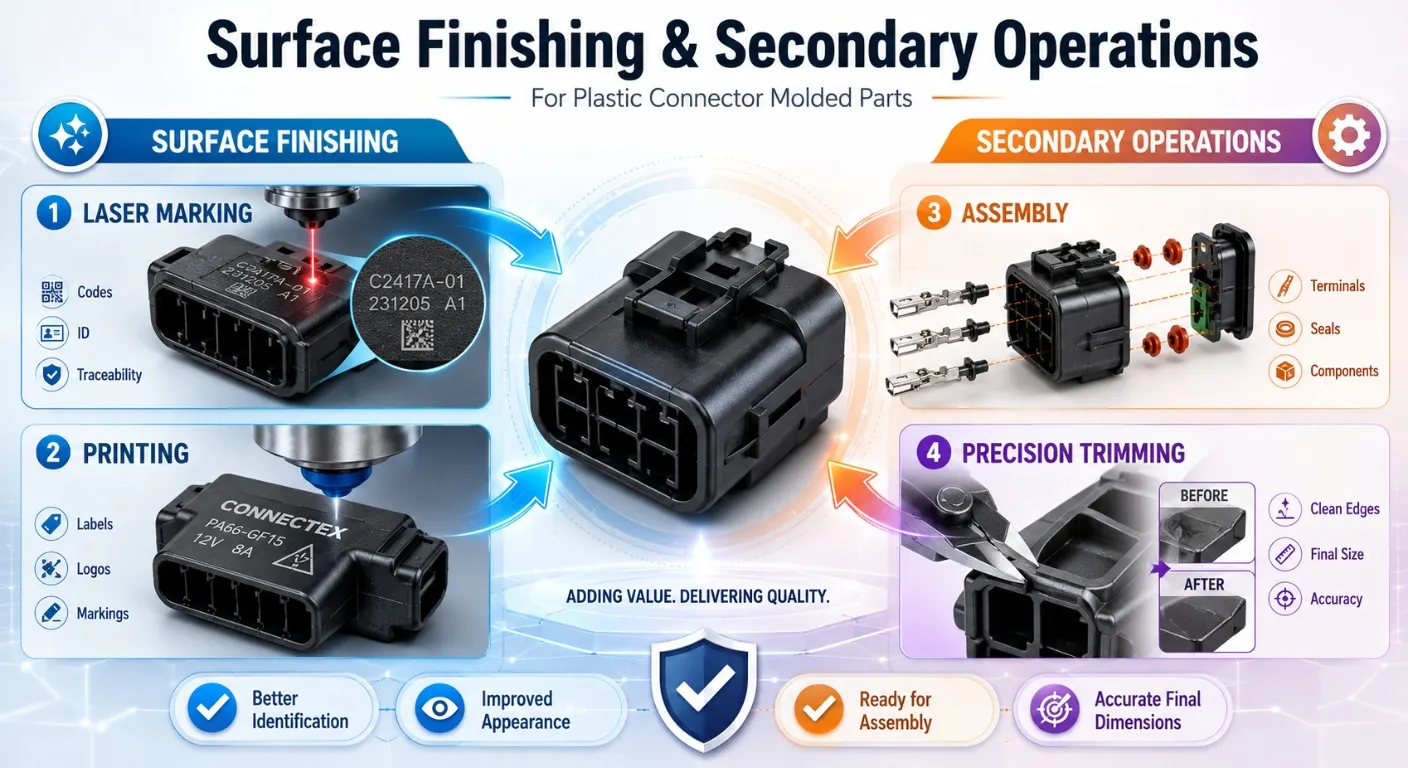
- Secondary Operations:Assembly, laser marking, printing, and trimming.
- Production Volume:Prototype, small batch, and high-volume manufacturing.
Introduction to Plastic Connector Molding
FAQ
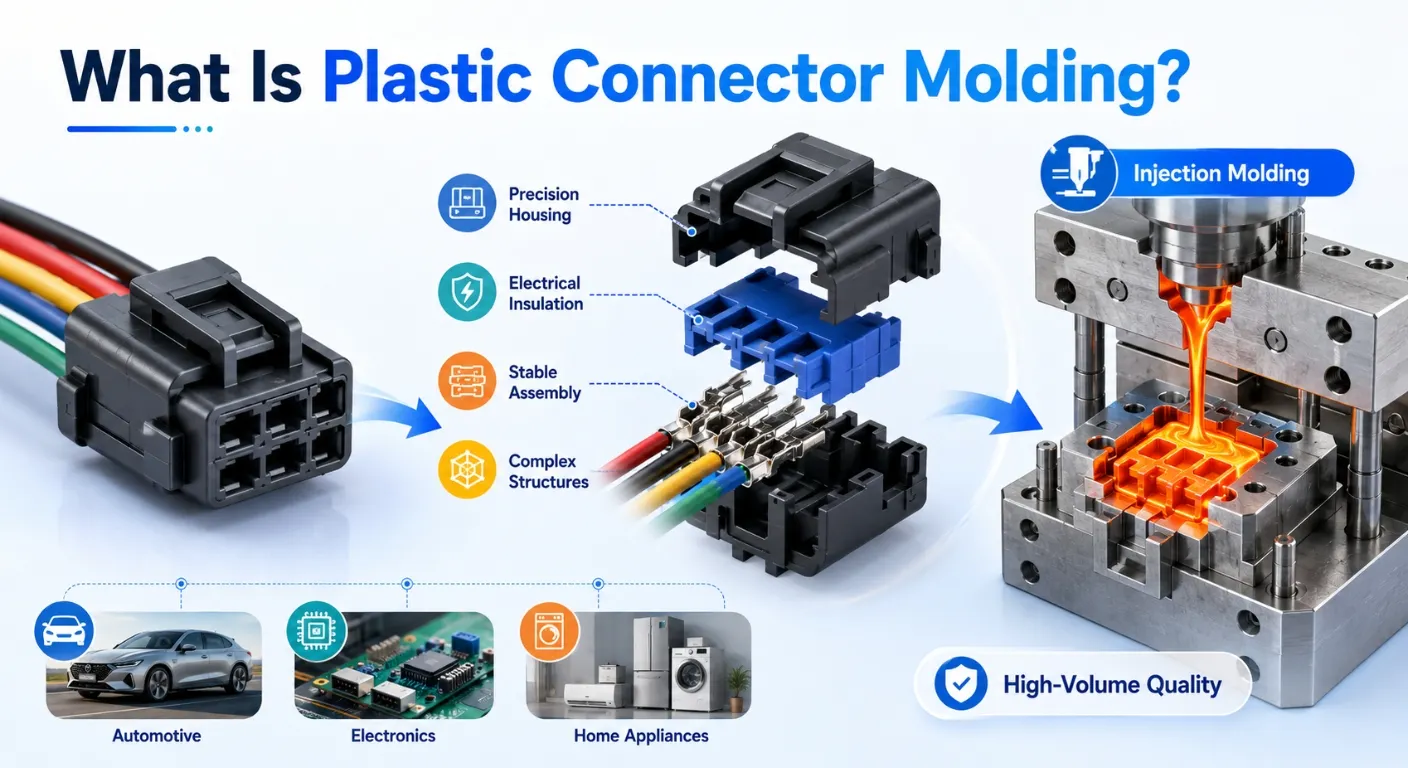
Plastic connector molding is used to produce insulation housings, connector bodies, terminal holders, and electrical interface components for various industries.
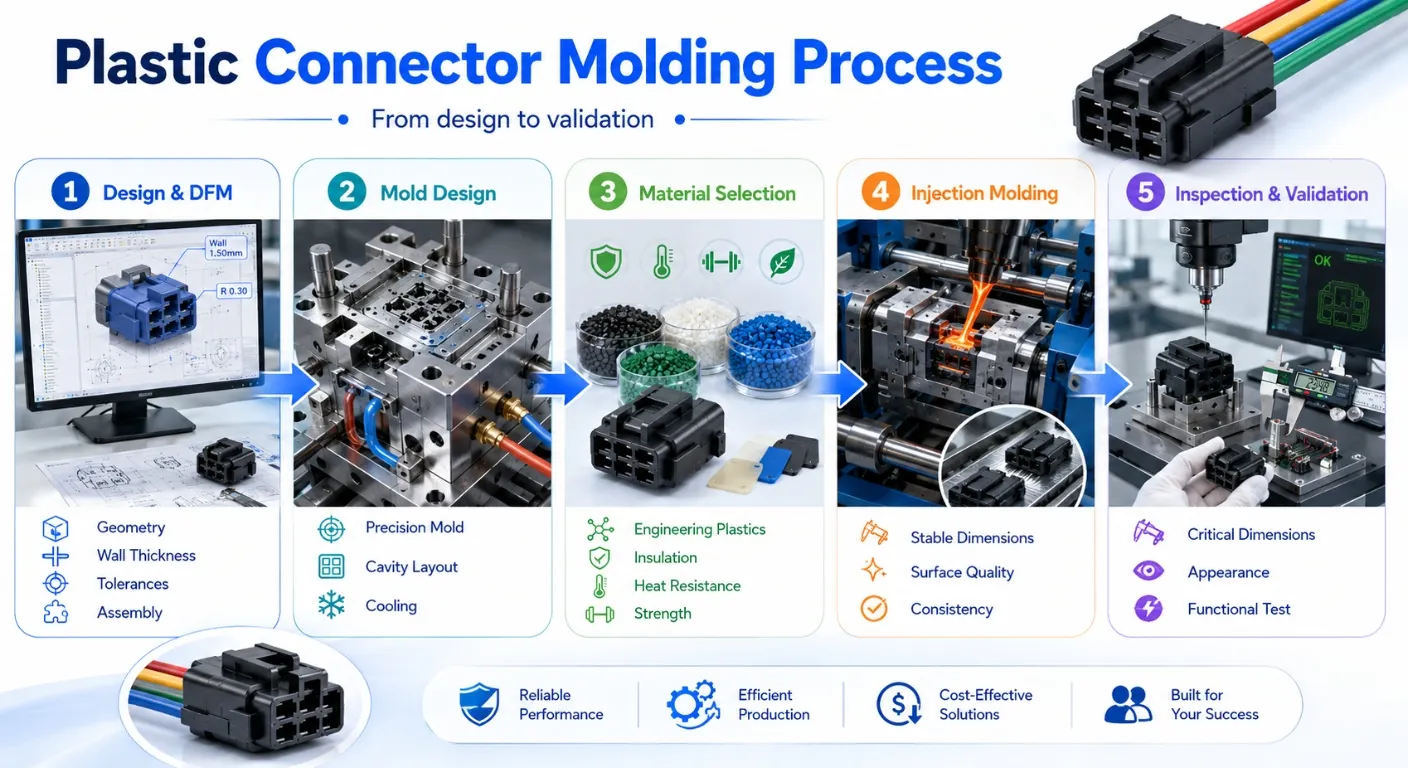
Common materials include PA, PBT, PC, ABS, and LCP, selected based on insulation performance, temperature resistance, strength, and application requirements.
Yes. Insert molding can integrate metal terminals, pins, and conductive components into plastic connector structures.
Critical areas include mating interfaces, terminal positions, locking structures, and mounting features where dimensional accuracy affects assembly performance.
Yes. Automotive connector molding supports applications requiring vibration resistance, temperature stability, and long-term reliability.