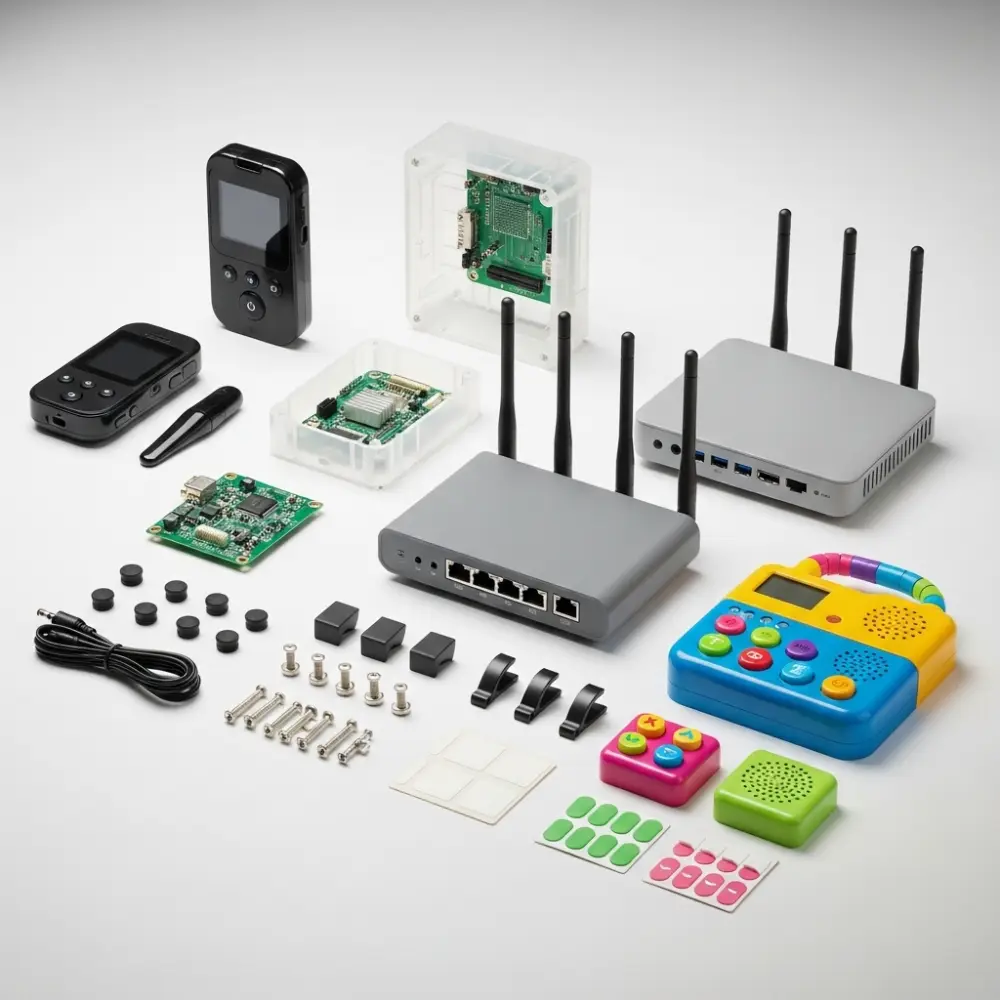


Robotics Injection Molding
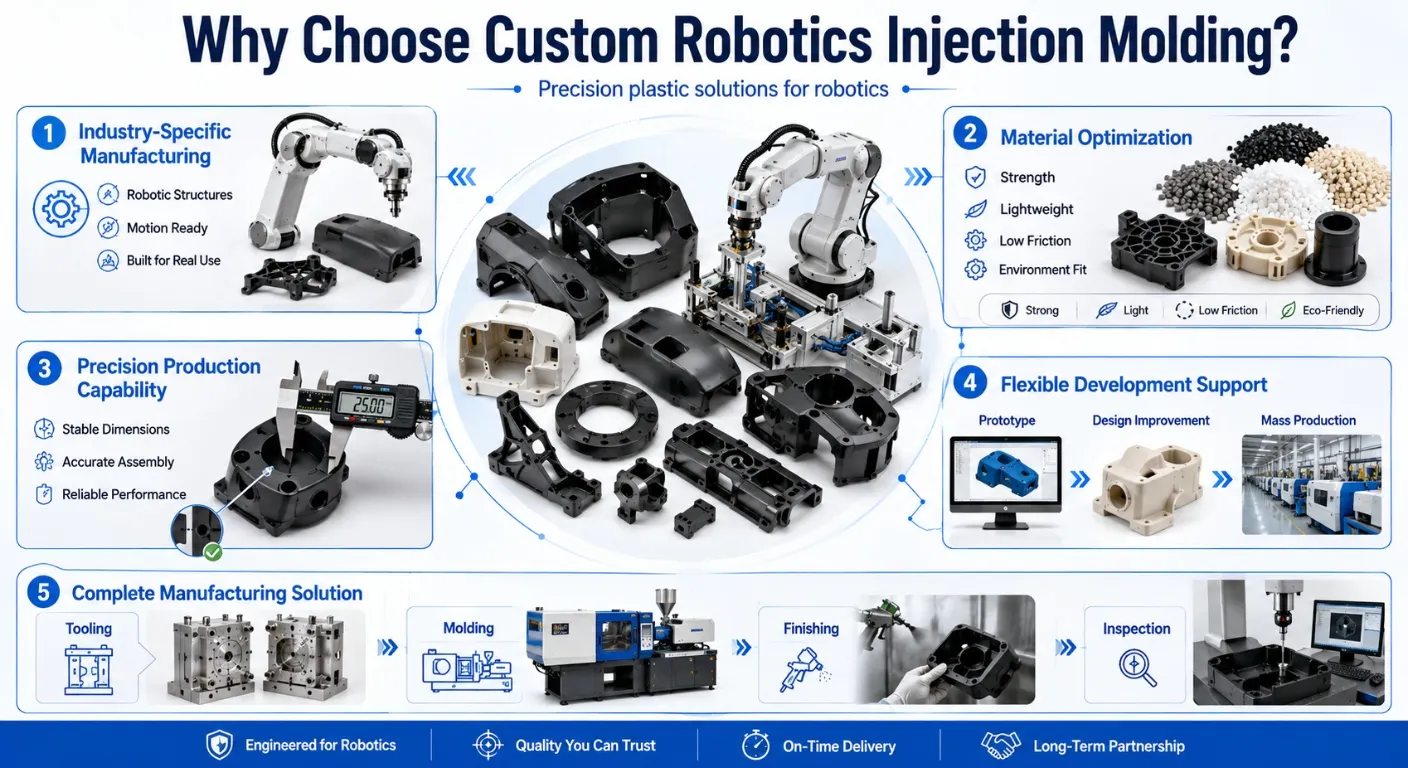
Robotics injection molding provides lightweight, precision plastic components with flexible materials and scalable production capability. It supports robotic systems requiring accurate assembly, durability, and efficient manufacturing.
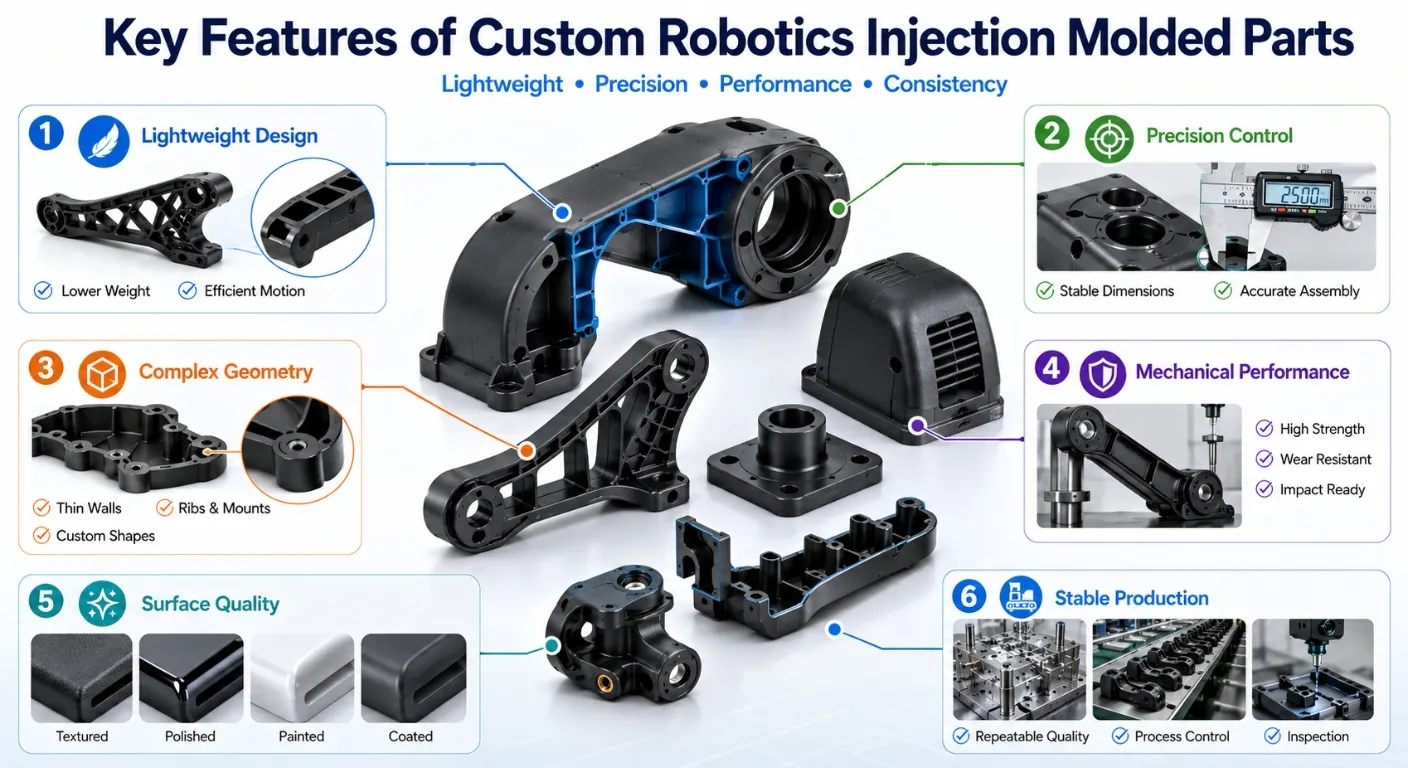
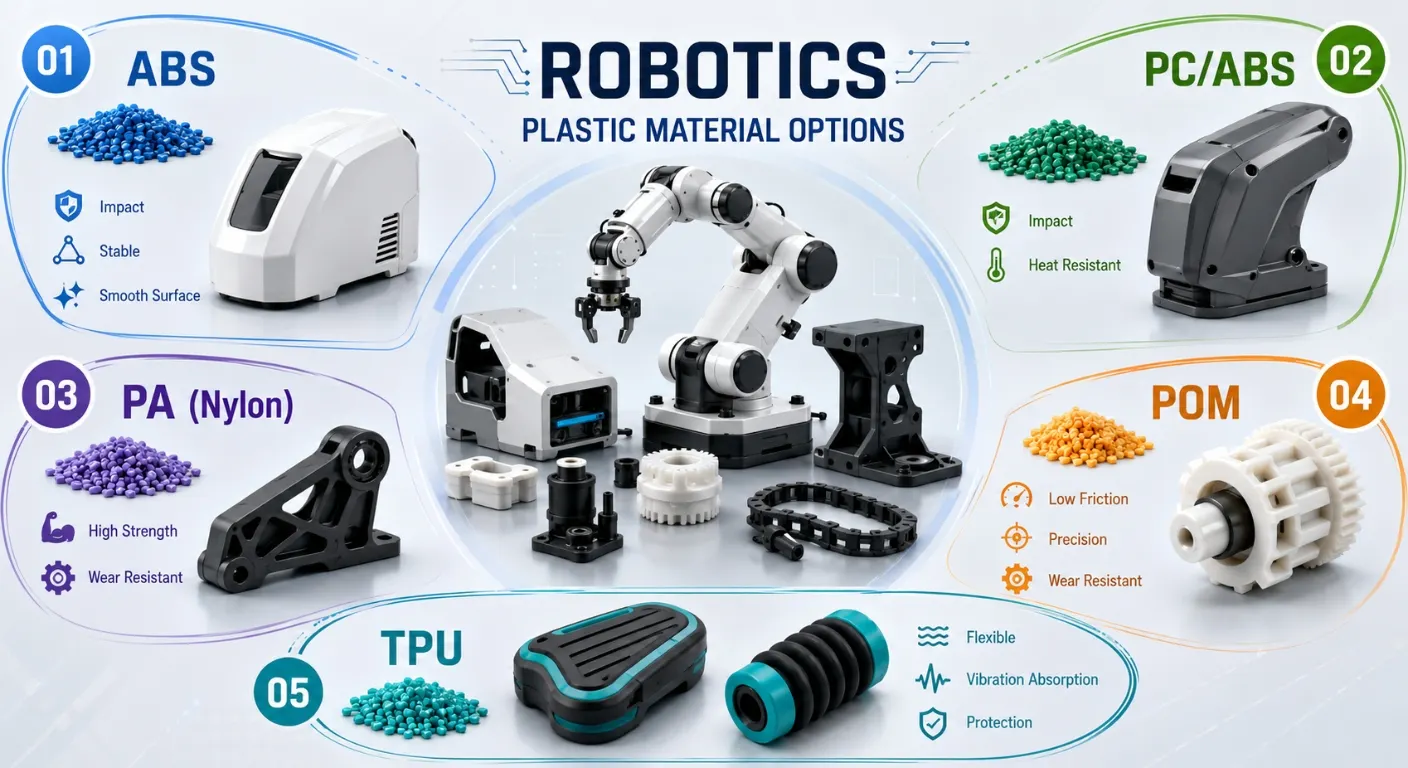
- Material Options:ABS, PC/ABS, PA, POM, TPU, and other engineering plastics.
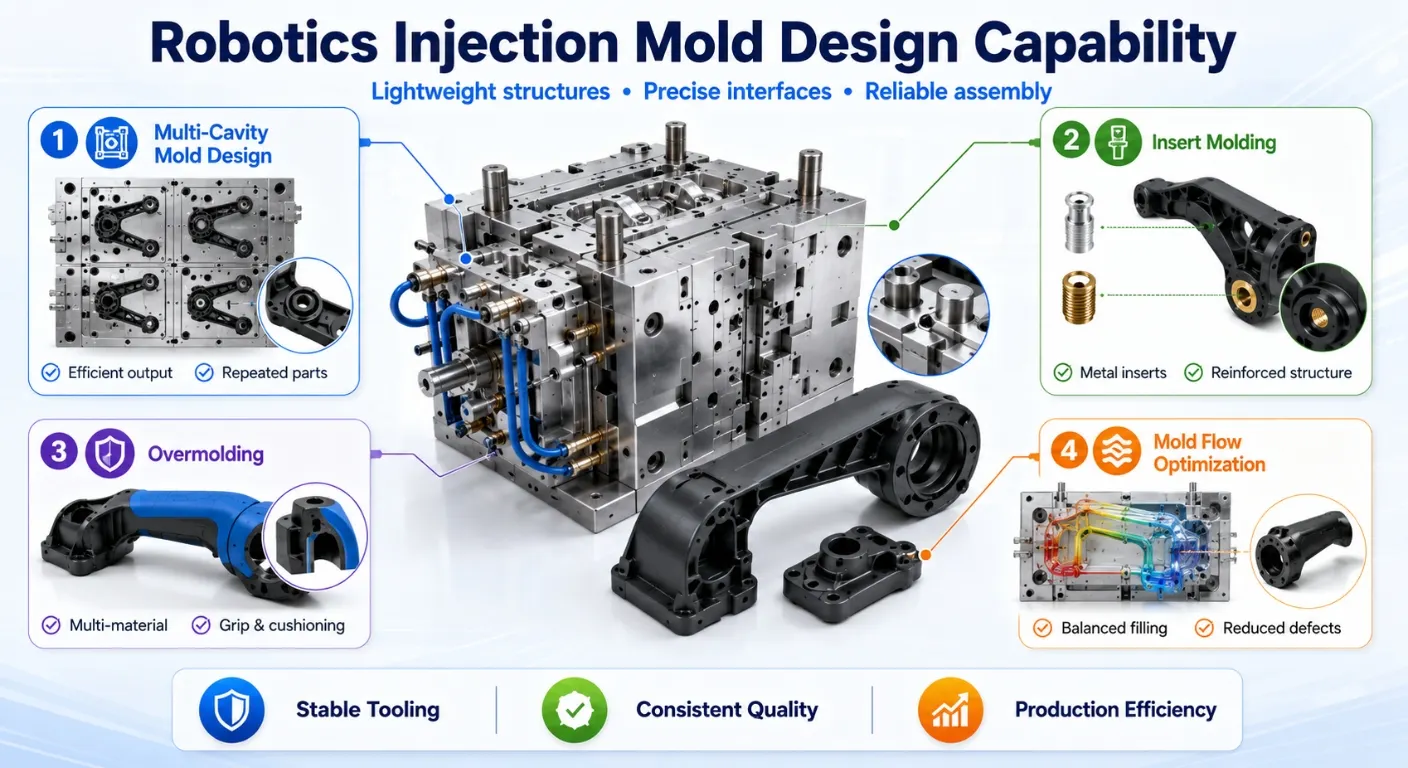
- Molding Process:Injection molding, insert molding, and overmolding.
- Part Capability:Housings, covers, brackets, structural parts, and functional components.
- Design Features:Thin walls, ribs, mounting structures, clips, and integrated features.
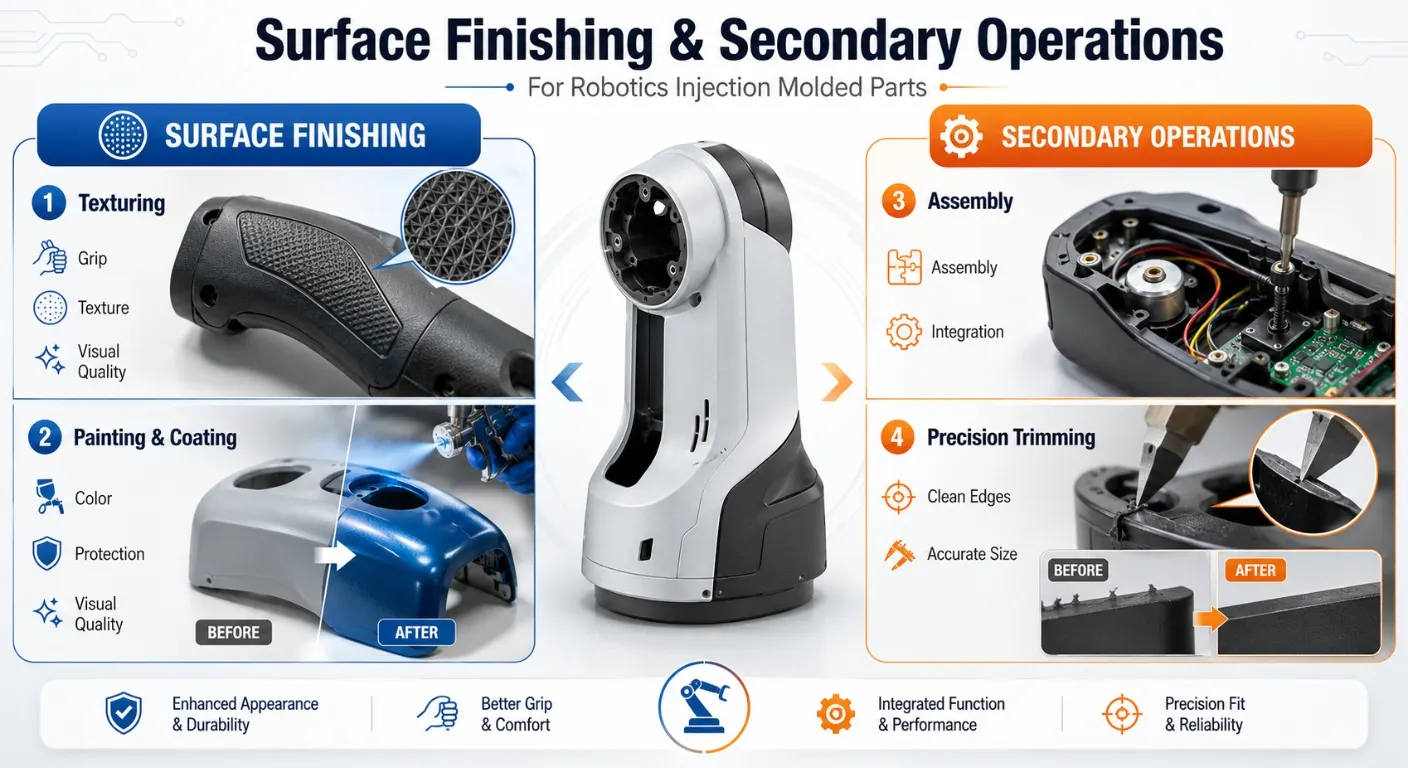
- Surface Finish:Texture, painting, coating, polishing, and custom finishes.
- Production Volume:Prototype, low-volume production, and high-volume manufacturing.
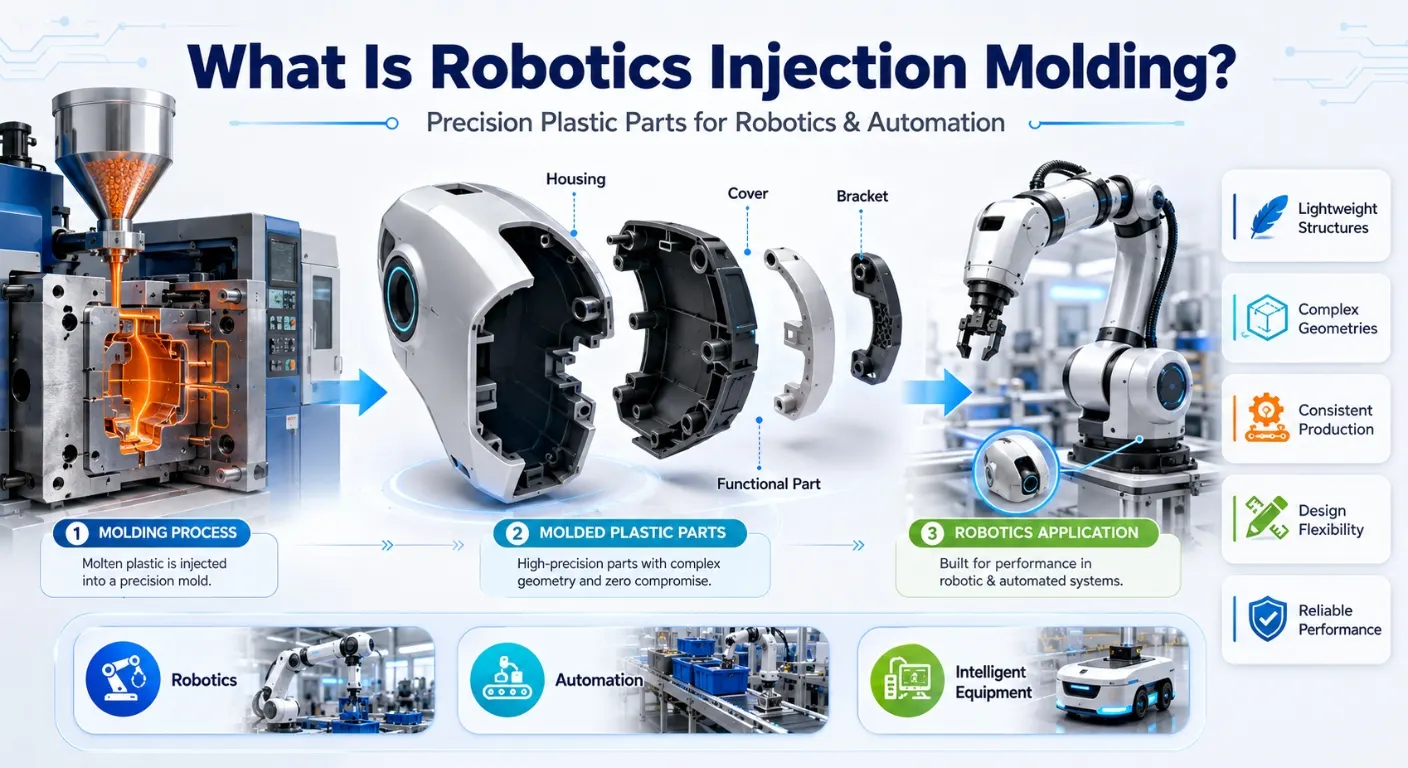
Introduction to Robotics Injection Molding
FAQ
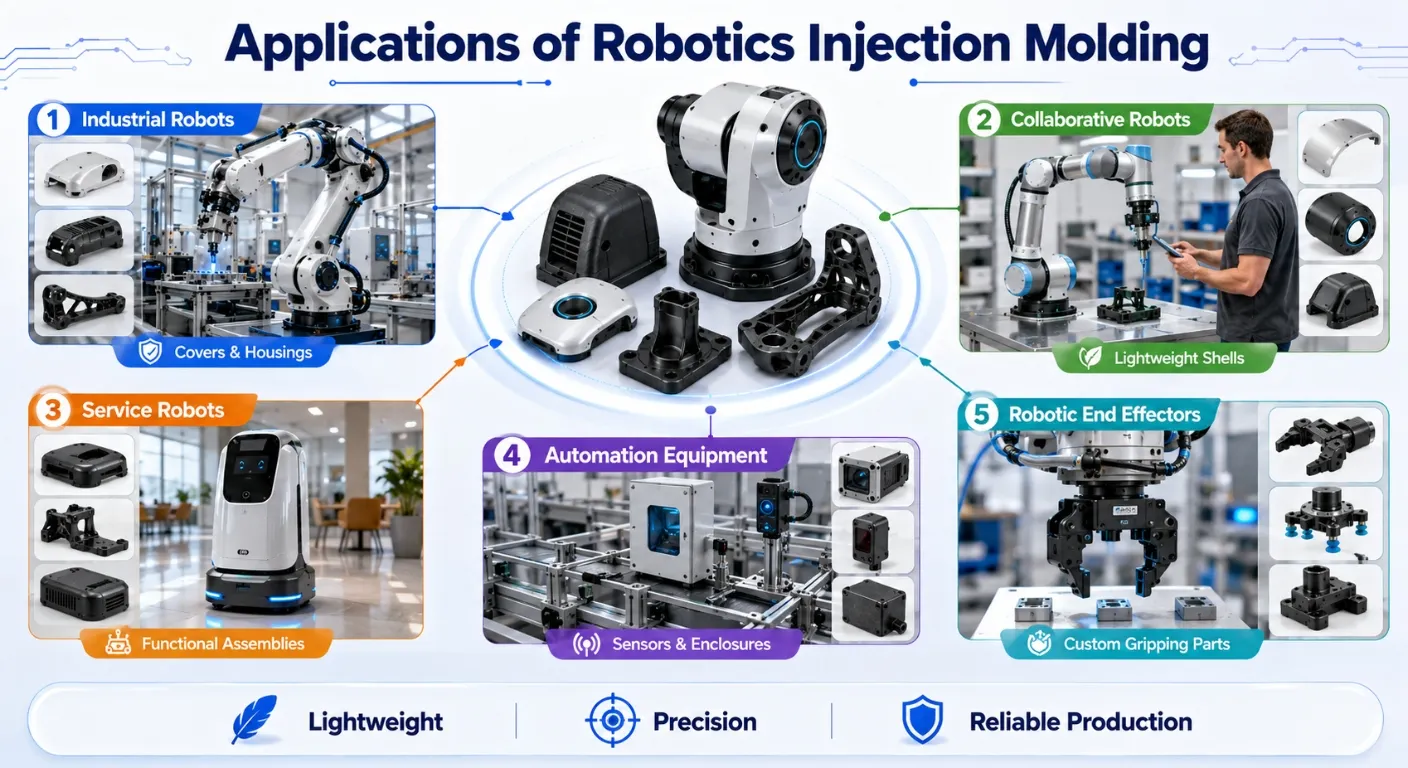
Robotics injection molding can produce housings, covers, brackets, protective shells, sensor enclosures, and functional plastic components.
Common materials include ABS, PC/ABS, PA, POM, and TPU, selected based on strength, wear resistance, flexibility, and environmental requirements.
Yes. Engineering plastics provide lightweight solutions that can reduce component weight while maintaining required mechanical performance.
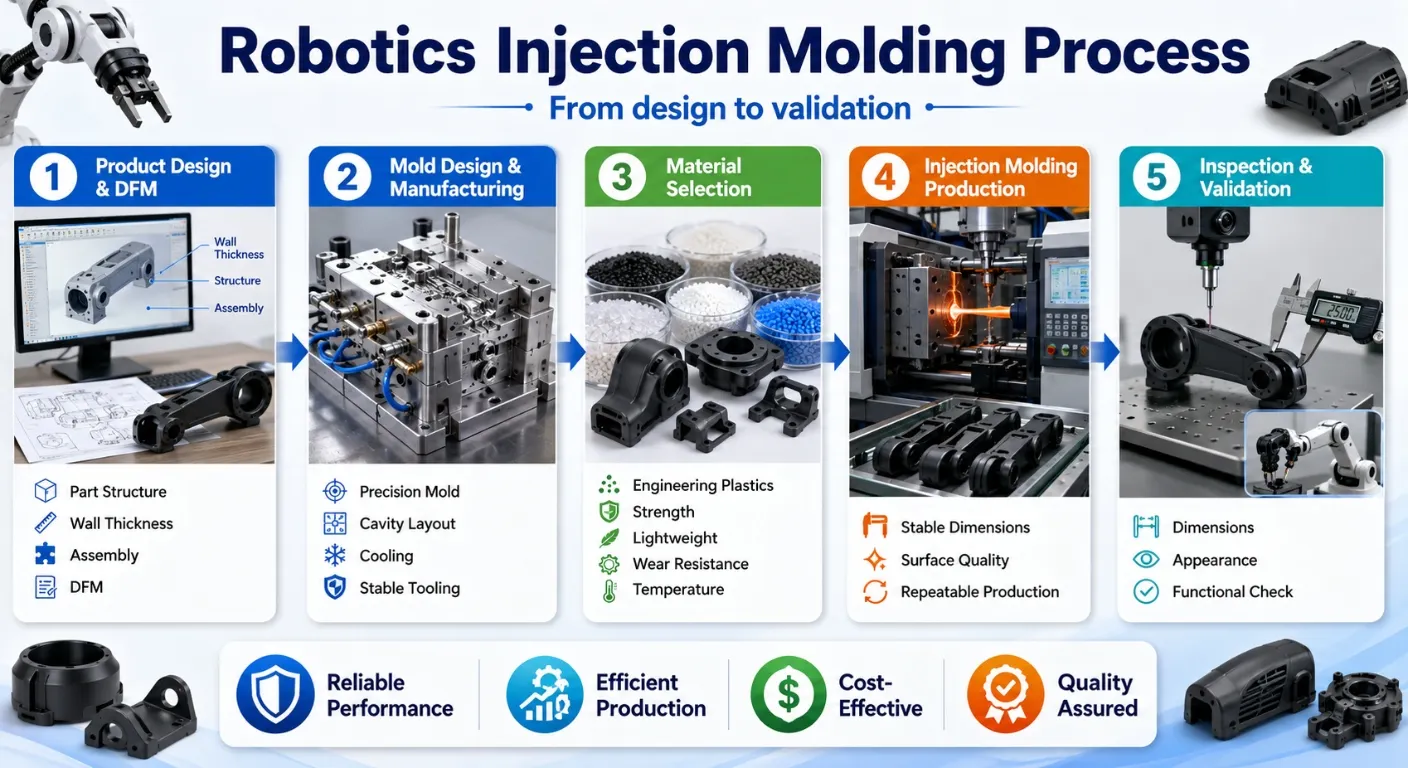
Yes. The process supports prototype validation, tooling development, and transition to volume production.
Yes. Insert molding integrates metal components to improve strength, mounting reliability, or functional performance.