


Soft Tooling Injection Molding
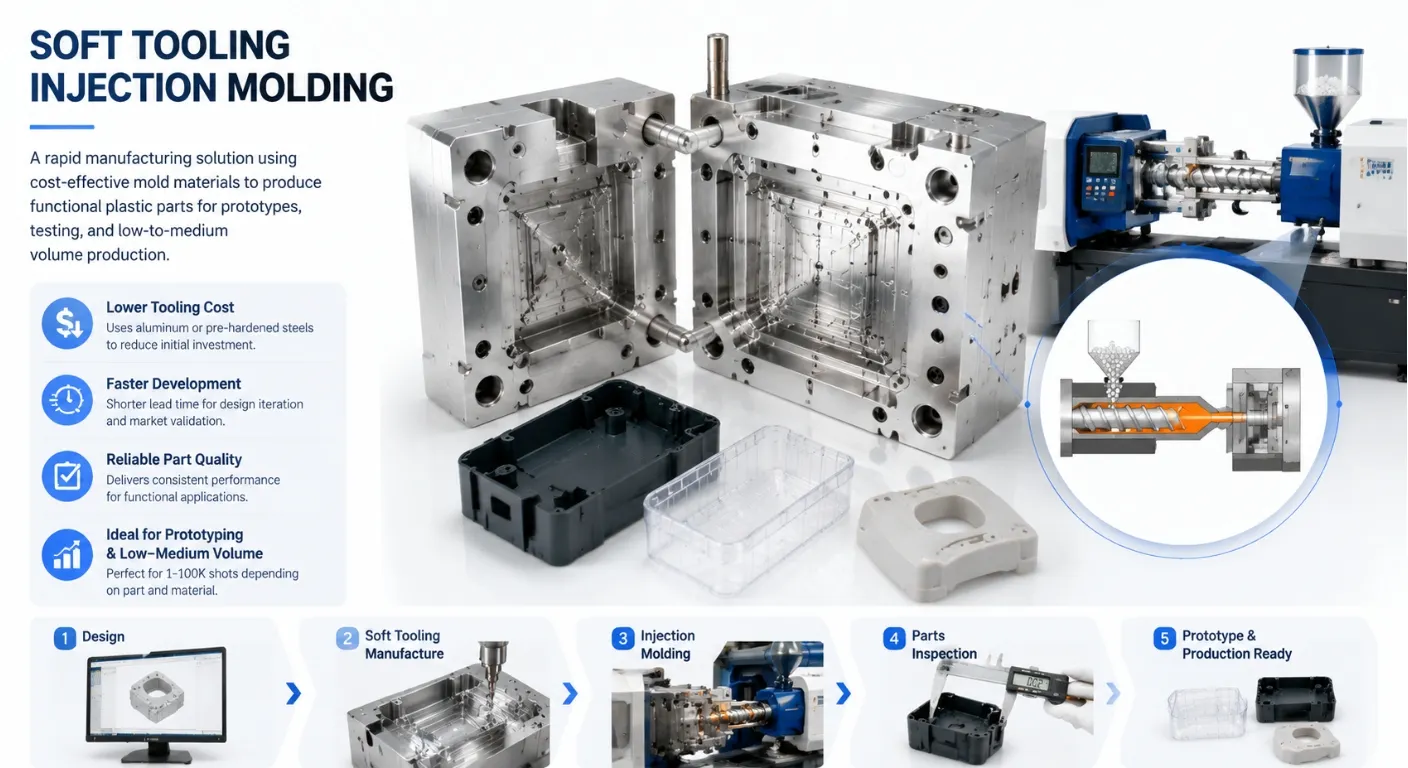
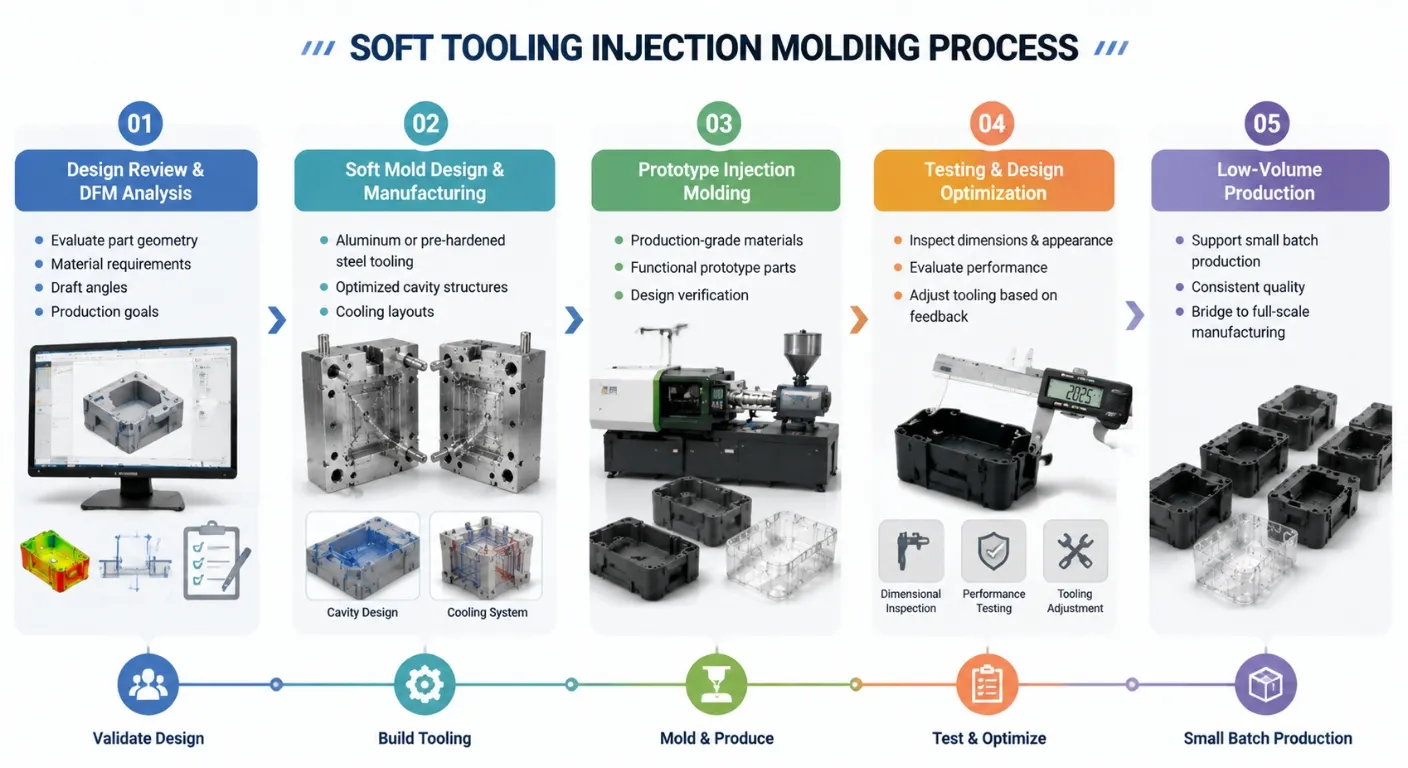
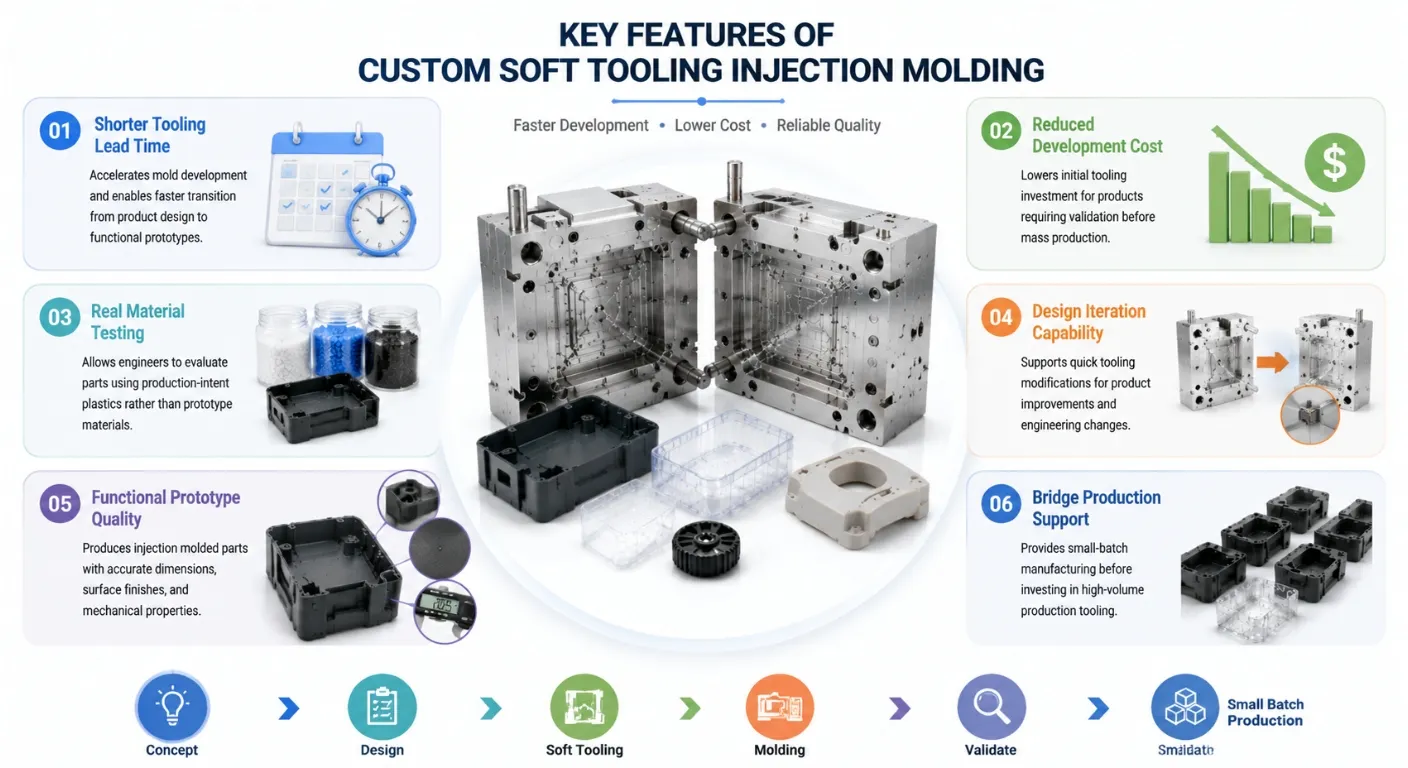
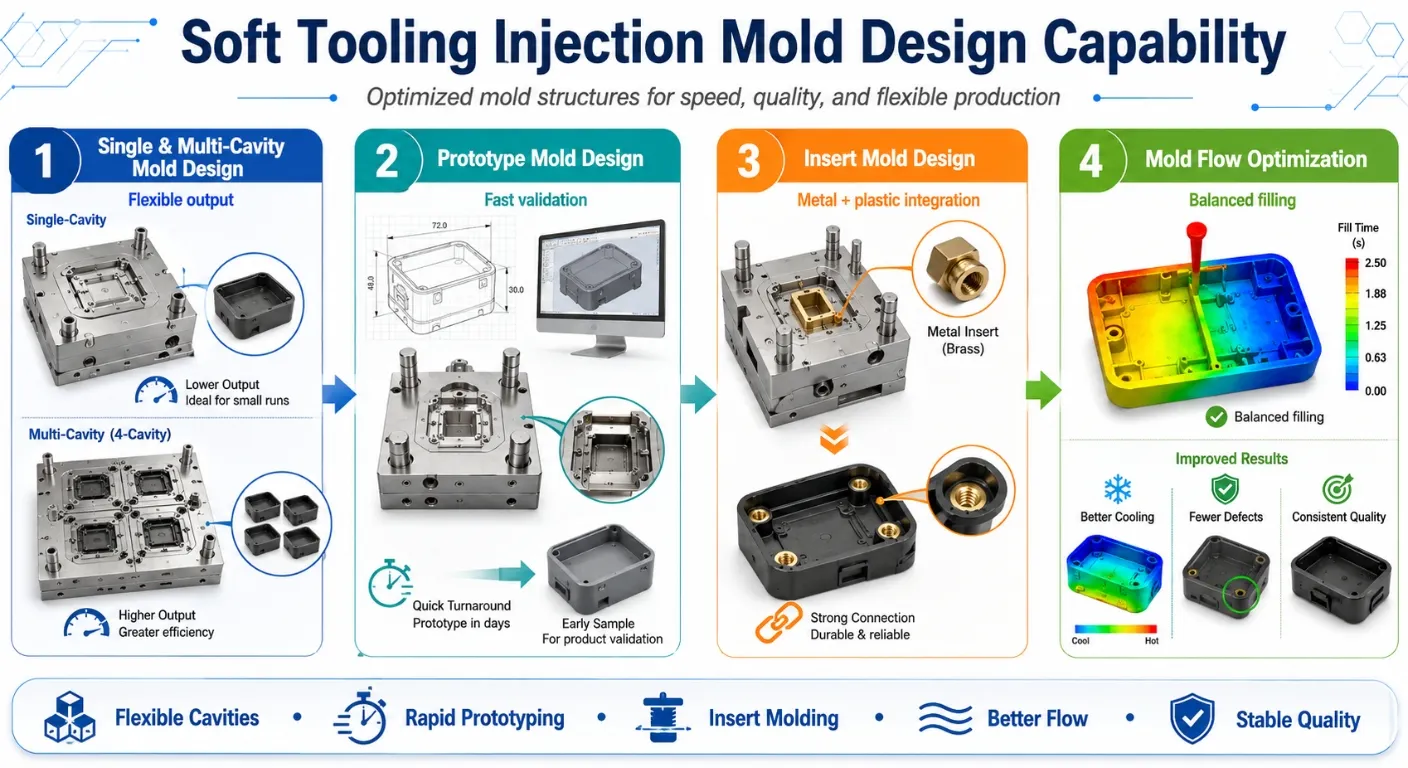
Soft tooling injection molding provides a fast and cost-effective solution for prototype validation, functional testing, and low-volume plastic production. It supports production-grade materials, flexible designs, and efficient product development.
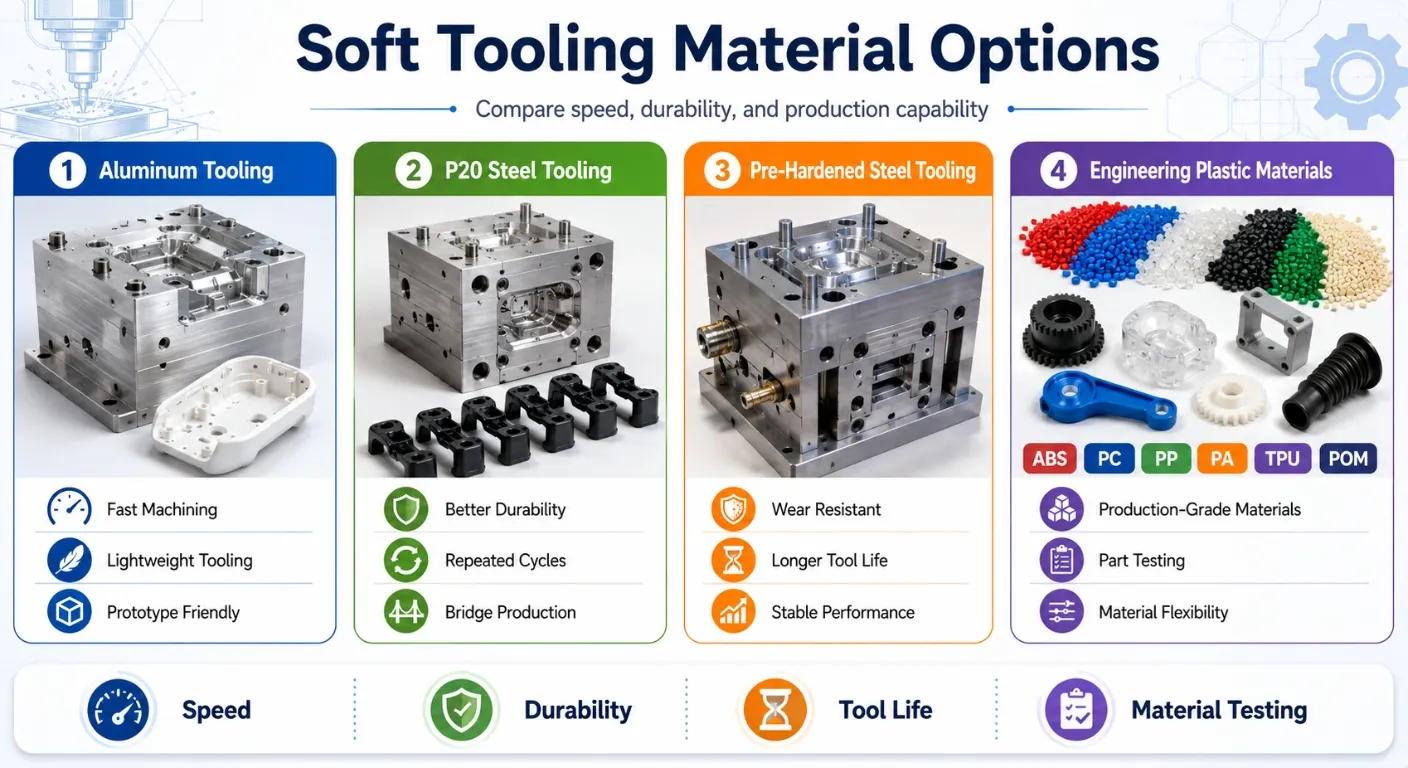
- Tooling Materials:Aluminum, P20 steel, pre-hardened steel, and customized tooling materials.
- Plastic Materials:ABS, PC, PP, PA, TPU, POM, and other engineering plastics.
- Mold Types:Prototype molds, single-cavity molds, multi-cavity molds, and insert molds.
- Production Capability:Prototype parts, bridge production, and low-volume manufacturing.
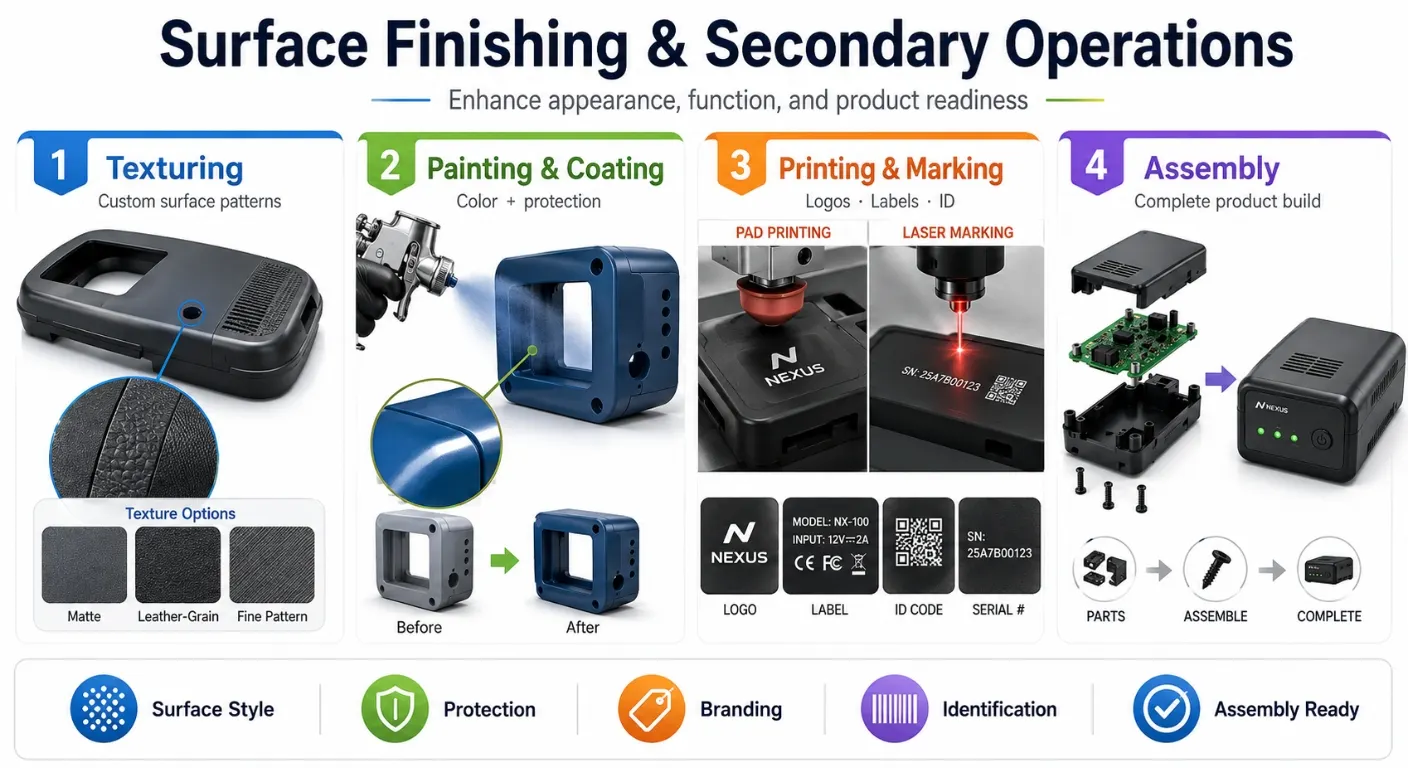
- Surface Finish:Texture, polishing, painting, coating, printing, and assembly.
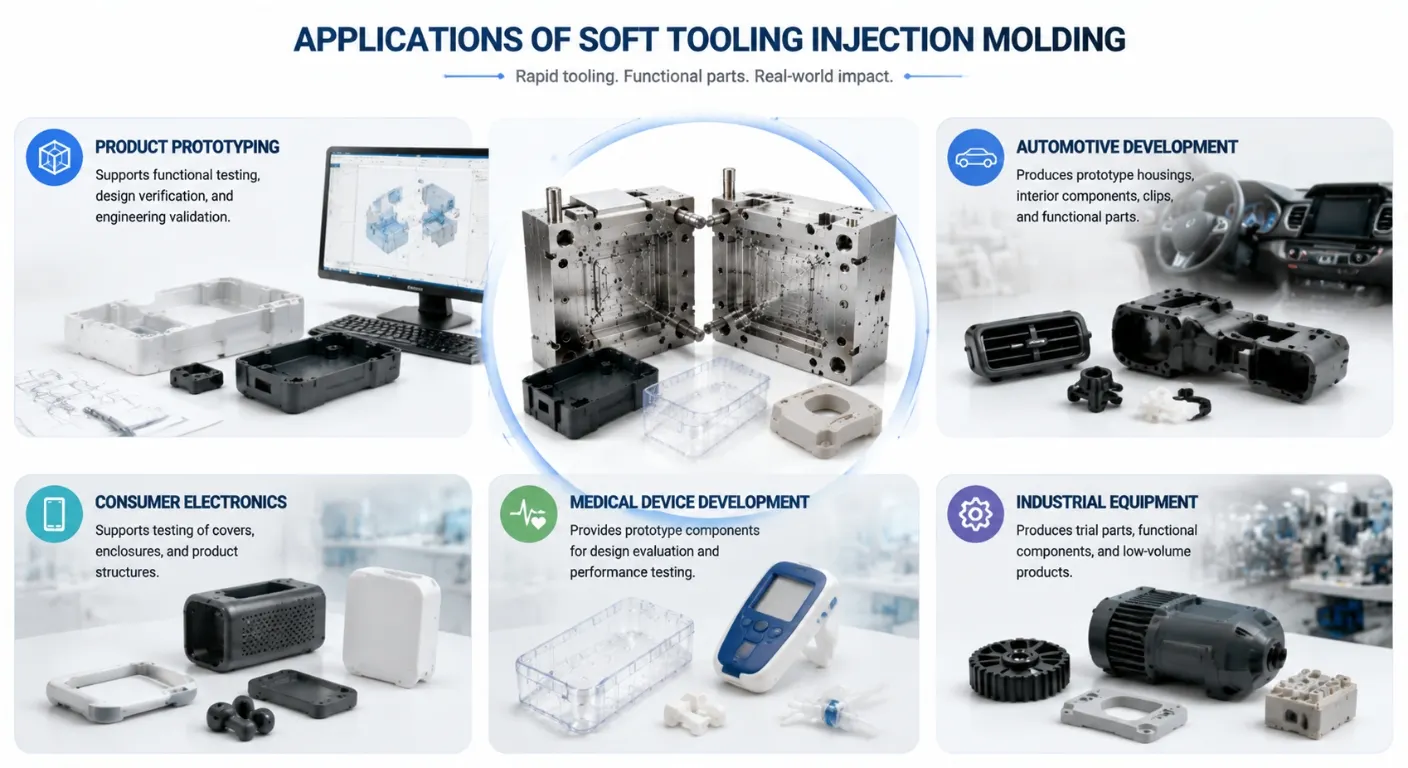
- Application Support:Automotive, electronics, medical, industrial, and consumer products.
Introduction to Soft Tooling Injection Molding
FAQ
Soft tooling injection molding uses lower-cost mold materials to produce functional plastic parts for prototypes, testing, and low-volume production.
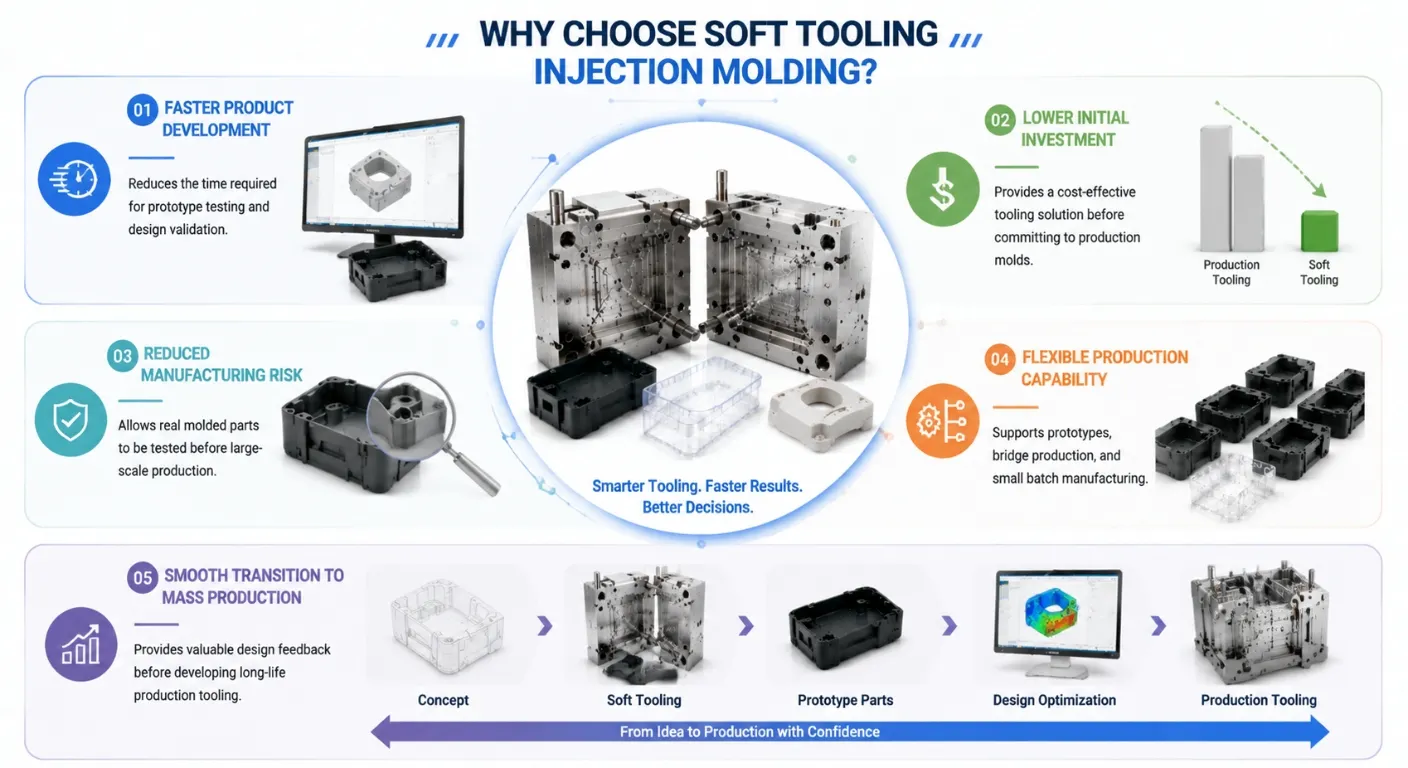
Soft tooling focuses on faster development and lower cost, while hard tooling is designed for long-term, high-volume production.
Tool life depends on mold material, part design, plastic material, and production conditions. Soft tooling is typically suitable for prototypes and limited production runs.
Yes. Materials such as ABS, PC, PP, PA, and TPU can be used for realistic product testing.
It is suitable when products require rapid validation, design changes, bridge production, or low-volume manufacturing before mass production.