


The Ultimate Guide to Sheet Metal Stamping Parts High Volume Production
Sheet metal stamping parts high volume production is the backbone of modern manufacturing, enabling the creation of thousands of precise, identical components at an incredibly low cost per unit. Whether you are scaling a new automotive component or mass-producing consumer electronics, understanding the mechanics of high-volume stamping is essential for maintaining quality while maximizing your ROI.
In this definitive guide, we draw on decades of engineering expertise at Sunon to explain how high-volume stamping works, why it is the gold standard for efficiency, and how to optimize your designs for the most demanding production schedules.
What Is Sheet Metal Stamping Parts High Volume Production?
Sheet metal stamping parts high volume production refers to the industrial process of using specialized dies and high-speed presses to manufacture metal components in quantities typically exceeding 10,000 to 1,000,000 units per year. This method prioritizes automation and tool longevity to ensure consistent quality across massive production runs.
When we talk about high volume at Sunon, we aren't just talking about "more parts." We are talking about a shift in philosophy. While low-volume production might focus on flexibility and lower upfront tooling costs, high-volume production is an investment in speed and repeatability. By utilizing progressive dies and automated coil feeding, manufacturers can produce complex geometries in seconds, drastically reducing the labor cost associated with each individual part.
Why Is High Volume Stamping the Best Choice for Scaling?
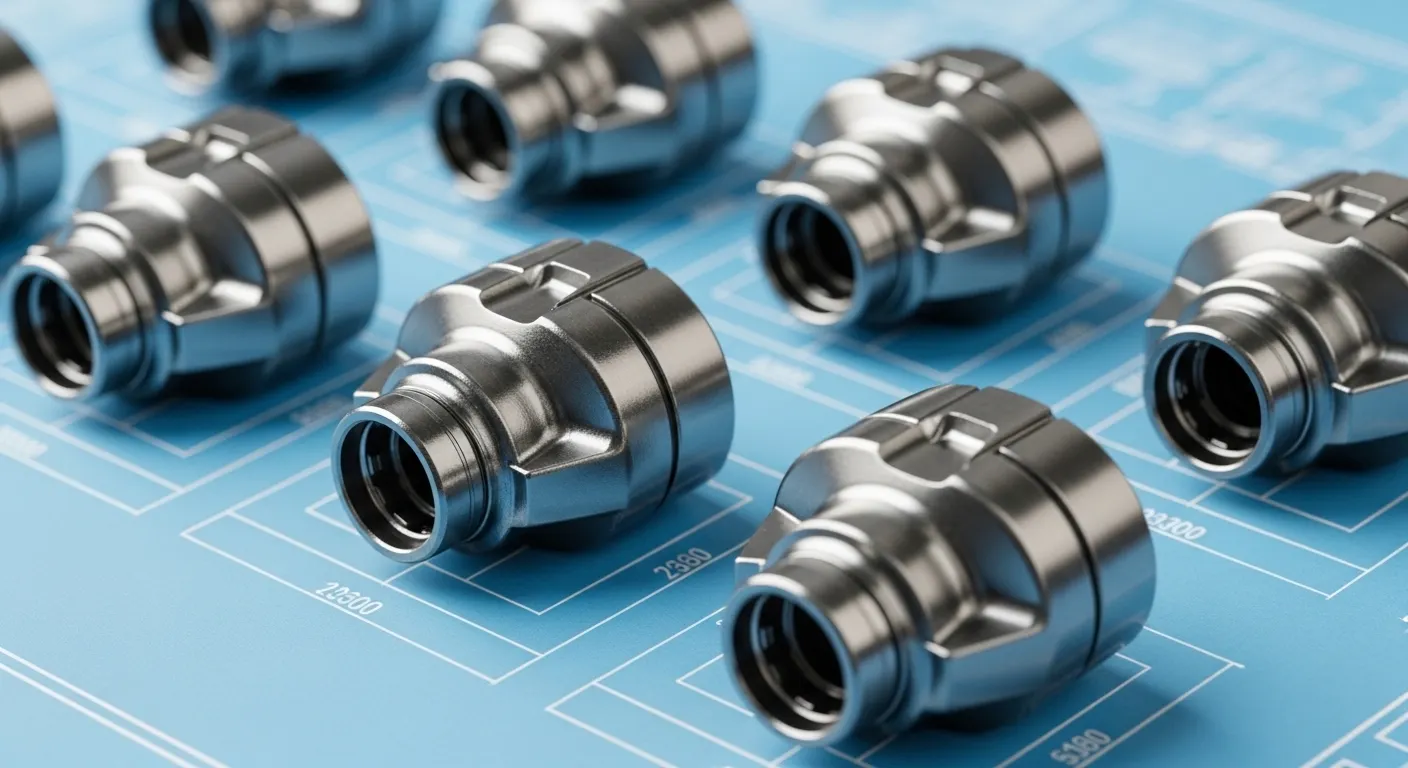
High volume stamping is the best choice because it offers the lowest cost-per-part through extreme economies of scale and high-speed automation. Once the initial "hard tooling" is created, the marginal cost of producing an additional unit is significantly lower than any other metal fabrication method, such as CNC machining or laser cutting.
Key Benefits of Scaling with Stamping
- Cost Efficiency: While the initial investment in a progressive die is higher, the cost per part can drop to pennies when spread across 500,000 units.
- Consistency: Unlike manual fabrication, high-volume presses deliver identical results every time, ensuring your assembly line never encounters "out-of-spec" surprises.
- Material Utilization: Advanced nesting software and precise die design minimize scrap metal, which is a massive cost saver when dealing with tons of raw material.
- Speed: Modern presses can operate at hundreds of strokes per minute.
| Feature | Low Volume (Bridge) | High Volume (Mass Production) |
| Typical Quantity | 100 - 5,000 | 10,000+ |
| Tooling Type | Soft Tooling / Stage Tools | Progressive / Transfer Dies |
| Lead Time | Short (2-4 weeks) | Longer Setup (8-12 weeks) |
| Cost Per Unit | High | Very Low |
How Does Progressive Die Stamping Drive High Volume Success?
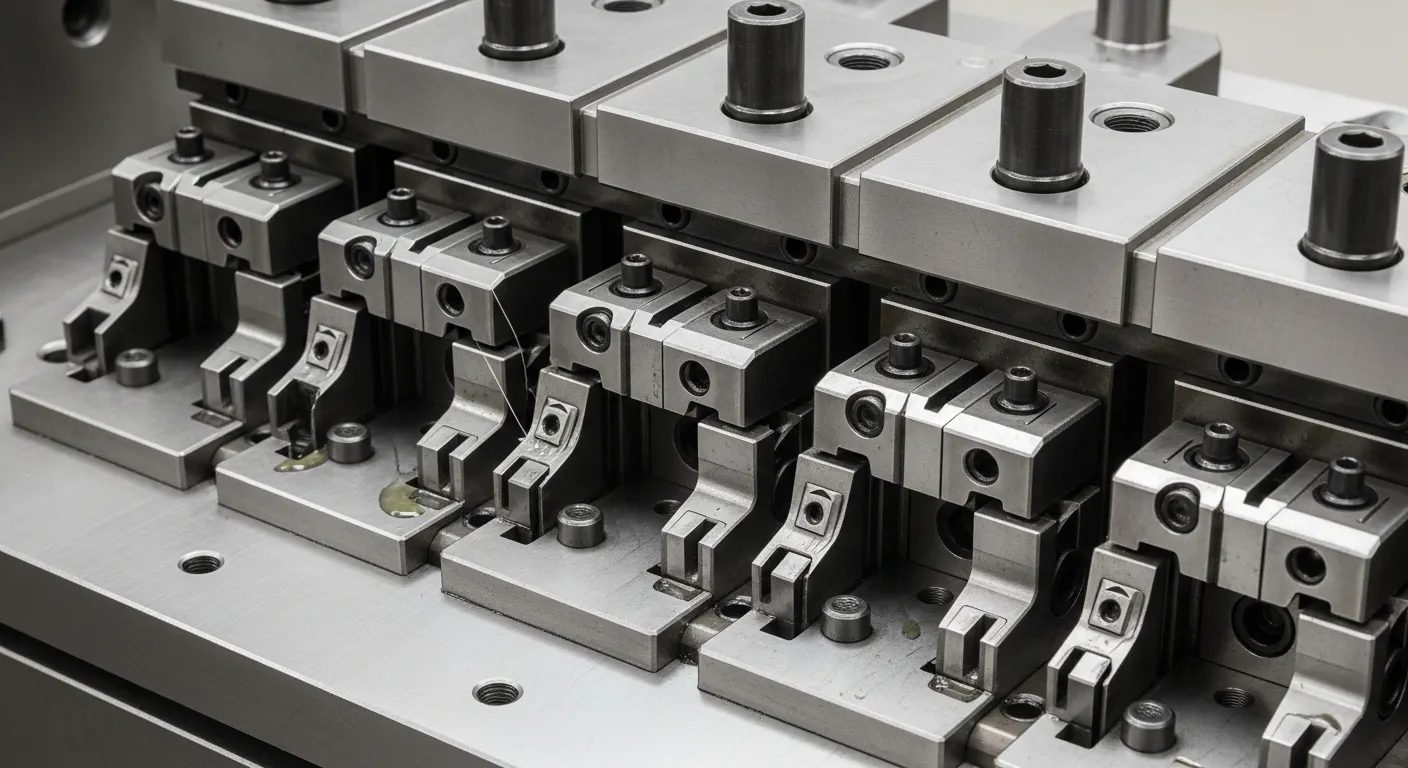
Progressive die stamping drives success by performing multiple operations—such as cutting, punching, and bending—simultaneously at different stations within a single tool. As the metal strip feeds through the press, a finished part is ejected with every single stroke, maximizing throughput and reducing the need for secondary handling.
In my experience overseeing thousands of production runs, the "magic" happens in the strip layout. A well-engineered progressive die acts like a miniature assembly line. At the first station, the press might pierce a pilot hole; at the third, it performs a deep draw; and at the final station, it blanks the finished part from the strip. This eliminates the "human element" and the errors that come with moving parts between different machines.
If you are looking for more specialized, lower-volume precision, you might explore our precision metal stamping services for custom parts, but for true mass production, the progressive die is king.
What Materials Are Best for High Volume Metal Stamping?
The best materials for high-volume stamping include cold-rolled steel, stainless steel, aluminum, and copper alloys because they offer a balance of formability and durability. The choice depends on the part’s end-use environment, such as the need for corrosion resistance, electrical conductivity, or high-strength-to-weight ratios.
Selecting the right material is a game of "tool wear vs. performance." For example:
- Stainless Steel: Excellent for durability but harder on the dies. Requires specialized coatings on the tool steel.
- Aluminum: Lightweight and corrosion-resistant, but can be "gummy," requiring precise lubrication.
- Copper/Brass: Often used in electronics. If you are also working with polymer components, you might ask, is silicone rubber fda approved for medical devices for your housing needs?
- Pre-plated Steels: Using galvanized or pre-painted coils can eliminate the need for post-production finishing, saving significant time in high-volume workflows.
How Do You Ensure Quality in Million-Part Production Runs?
Quality in high-volume production is ensured through "In-Die Sensing" technology and automated optical inspection (AOI) systems. These systems monitor the press in real-time, detecting slug pulling, material thickness variations, or tool wear immediately, allowing the press to stop before producing a single defective part.
At Sunon, we implement a "Defense in Depth" strategy for quality:
- Statistical Process Control (SPC): We track dimensions across the entire run to identify trends before they fall out of tolerance.
- Die Maintenance Schedules: In high volume, a die might hit 5 million cycles. We perform "sharpening" and maintenance every 50,000 to 100,000 hits to prevent burrs.
- Material Traceability: We maintain records of every coil heat number to ensure that if a material defect is found, we can isolate the affected batch.
What Are the Key Design for Manufacturing (DFM) Tips for Stamping?
Key DFM tips include maintaining uniform wall thickness, avoiding sharp internal corners, and keeping hole diameters at least 1.2 times the material thickness. Designing with the stamping process in mind reduces tool breakage risks and ensures that the metal flows smoothly through the die without tearing or excessive thinning.
Pro-Tips for Engineers
- Bend Radii: Always try to make your internal bend radius equal to or greater than the material thickness.
- Hole Placement: Keep holes away from bend lines to prevent "egging" or distortion of the hole shape.
- Simplify: The fewer the "stations" required in the die, the cheaper the tool and the faster the production.
How Much Does High Volume Sheet Metal Stamping Cost?
The cost of high-volume stamping is split into two categories: the upfront "Hard Tooling" cost (which can range from $10,000 to $150,000+) and the "Piece Price." For high volumes, the piece price is usually dominated by material costs, as the labor and overhead are spread thin across millions of units.
Cost Breakdown Example (Annual Volume: 500,000 units):
- Tooling Investment: $50,000 (amortized to $0.10 per part).
- Material Cost: $0.25 per part.
- Manufacturing/Labor: $0.05 per part.
- Total Part Cost: $0.40.
Compare this to CNC machining, where the part might cost $15.00 every single time regardless of quantity, and the advantage of stamping becomes crystal clear.
Frequently Asked Questions About Metal Stamping
Typically, it takes 8 to 12 weeks to design, build, and "try out" a progressive die. This includes the T1 sample phase where we ensure the part meets all specifications before hitting full-speed production.
Yes, through a process called "Deep Drawing," we can create cups, cans, and complex housings. However, if your part requires extreme heat resistance in its assembly, you might also be researching what temperature can silicone rubber parts withstand for the surrounding gaskets.
Slug pulling occurs when the waste metal (the slug) sticks to the punch and comes back up out of the die. In high volume, this can destroy a tool. We use vacuum systems or "slug-retention" geometry in the die to prevent this.
Conclusion: Partnering for Production Success
Achieving success in sheet metal stamping parts high volume production requires more than just a big press; it requires a partnership between design and manufacturing. By focusing on DFM, choosing the right material, and investing in high-quality progressive tooling, you can scale your product from a prototype to a global market leader.
