


Why Are Stainless Steel Stamping Parts Corrosion Resistant? The Definitive Guide
Stainless steel stamping parts corrosion resistant properties are the gold standard for industries ranging from medical devices to marine engineering. Choosing the right material ensures your custom components survive harsh environments without degrading, rusting, or losing structural integrity over time.
Selecting the wrong grade of stainless steel can lead to catastrophic part failure. In my years working with precision manufacturing, I’ve seen projects stall because a designer overlooked the specific saline or acidic conditions of their application. This guide breaks down exactly how to leverage stainless steel for maximum durability and ROI.
Why Is Corrosion Resistance Essential for Stamped Parts?
Stainless steel stamping parts remain corrosion resistant because they contain chromium, which forms a self-healing "passive layer." This invisible film prevents oxygen and moisture from reaching the underlying metal. In precision stamping, maintaining this barrier is vital to ensure parts retain their tight tolerances and aesthetic finish.
When we manufacture precision metal stamping services for custom parts, we aren't just looking at shape. We are looking at surface chemistry. If a part rusts, it expands. In high-precision assemblies, even a few microns of oxidation can cause a mechanical jam. Using corrosion-resistant alloys eliminates these maintenance headaches and extends the lifecycle of the end product.
Which Stainless Steel Grades Offer the Best Corrosion Resistance?
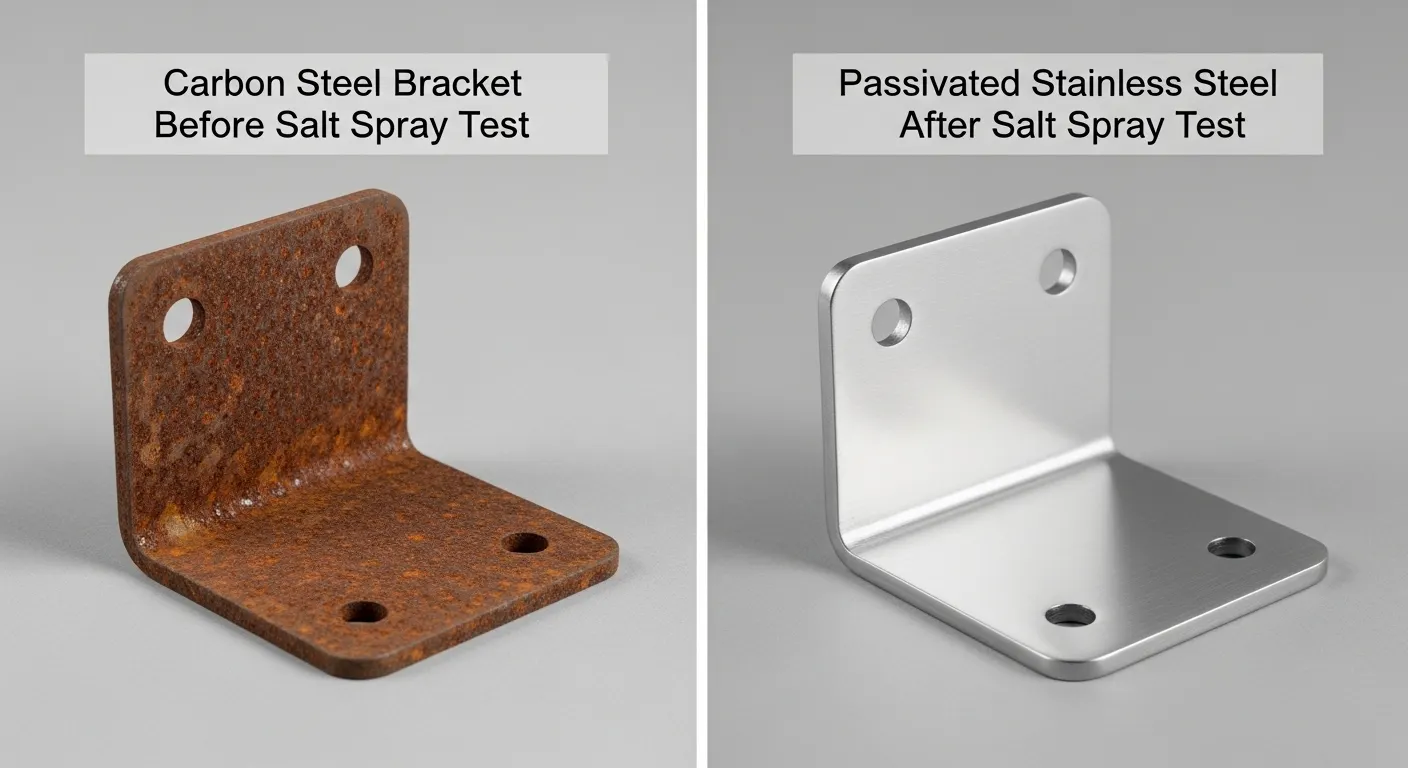
The best grades for corrosion resistance are 304 and 316 stainless steel. While 304 is the industry standard for general use, 316 contains molybdenum, making it superior for marine or chemical environments. For specialized high-heat applications, 400-series ferritic steels offer a balance of price and durability.
| Stainless Steel Grade | Key Alloying Elements | Best Use Case | Corrosion Rating |
| 304 (18/8) | 18% Chromium, 8% Nickel | Kitchenware, Appliances | High |
| 316 | 16% Cr, 10% Ni, 2% Mo | Marine, Medical, Chemical | Superior |
| 430 | 17% Chromium | Automotive trim, Dry indoor use | Moderate |
| 301 | 17% Cr, 7% Ni | Springs, High-strength clips | High |
Selecting the right grade is a balance of cost and chemistry. For example, if you are producing sheet metal stamping parts for high volume production, the price difference between 304 and 316 adds up quickly. Always verify the environment: will the part face salt spray? If yes, 316 is non-negotiable.
How Does the Stamping Process Affect Corrosion Resistance?
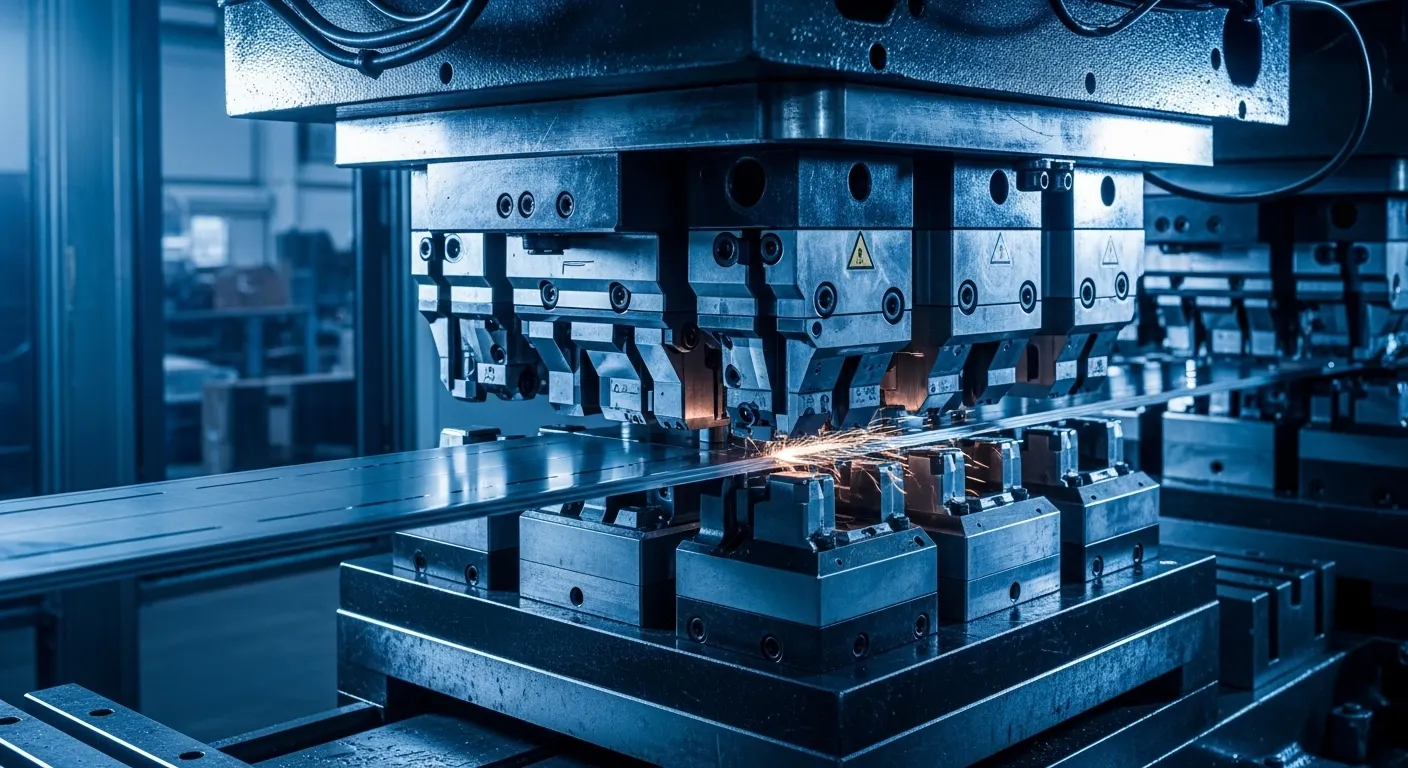
The stamping process affects corrosion resistance by potentially introducing surface contaminants or creating stress points. If tools are made of carbon steel, tiny iron particles can embed in the stainless steel surface, causing "tea staining" or localized rust. Proper cleaning and passivation after stamping are required to restore the protective layer.
- Work Hardening: Rapidly forming complex shapes can stress the crystalline structure, occasionally making it more susceptible to stress-corrosion cracking.
- Tooling Cross-Contamination: Using the same dies for carbon steel and stainless steel is a recipe for disaster. We always recommend dedicated tooling sets.
- Surface Micro-Fissures: High-tonnage stamping can create microscopic cracks where moisture traps.
To mitigate these risks, high-quality manufacturers use synthetic lubricants that are easily washed away and follow up with a citric or nitric acid bath to "passivate" the metal.
What Is Passivation and Why Is It Critical for Stamped Parts?
Passivation is a post-fabrication chemical treatment that removes "free iron" from the surface of stainless steel stamping parts. By stripping away surface impurities, the process allows the chromium to react with oxygen more effectively, forming a thicker, more uniform protective oxide layer that resists rust.
Without passivation, even the most expensive 316 stainless steel can show signs of rust within weeks. I recall a client who skipped this step to save 5% on costs; their entire batch of outdoor sensors failed within one rainy season.
- Alkaline Cleaning: Removes oils and stamping lubricants.
- Acid Bath: Usually nitric or citric acid to dissolve embedded iron.
- Rinsing: Deionized water to ensure no chemical residue remains.
- Testing: Using copper sulfate or salt spray tests to verify the surface is inert.
Can Corrosion-Resistant Stamping Parts Be Used in Medical Devices?
Yes, stainless steel stamping parts are highly valued in the medical industry for their biocompatibility and resistance to harsh sterilization chemicals. Grades like 316L (low carbon) are standard for surgical instruments and implants because they do not leach toxins and remain stable under repeated autoclaving.
In medical manufacturing, material purity is everything. While metal is robust, many medical components also require specialized seals. If your design includes non-metal elements, you might wonder, is silicone rubber fda approved for medical devices? Combining FDA-compliant silicone with 316L stainless steel stampings is a common strategy for creating durable, sterile medical assemblies.
How Do Environmental Factors Impact Part Longevity?
Environmental factors like chloride concentration, humidity, and temperature dictate the lifespan of stainless steel parts. High-salinity coastal air or industrial smog accelerates "pitting," where the protective layer breaks down in small spots. Monitoring the "Pitting Resistance Equivalent Number" (PREN) helps engineers choose the right alloy for these conditions.
- Chloride Exposure: (Road salt, sea spray) Requires Mo-bearing alloys like 316.
- Temperature: Extreme heat can cause "scaling" or loss of corrosion resistance in some 300-series steels.
- Acidity (pH): Low pH environments require high-nickel alloys to prevent surface etching.
How to Optimize Design for Maximum Corrosion Resistance?
To optimize design, avoid sharp internal corners and "crevices" where stagnant liquids can collect. Crevice corrosion occurs when oxygen is depleted in a tight gap, preventing the passive layer from reforming. Using smooth radii and ensuring parts can drain easily significantly increases their service life.
- Specify Radii: Use generous bend radii to prevent thinning of the material at the corners.
- Eliminate Overlaps: If two stamped parts are spot-welded together, seal the edges to prevent moisture from wicking into the gap.
- Finish Matters: A smoother surface (like a #4 brushed finish or electropolished finish) has fewer "valleys" for contaminants to hide in, making it more resistant than a rough, mill-finished part.
Frequently Asked Questions
No. Stainless steel is stain-less, not stain-never. Under extreme conditions (like stagnant saltwater or bleach exposure), the protective layer can be overcome. Proper grade selection is key.
Generally, no. 304 and 316 are austenitic and non-magnetic. However, the cold-working involved in the stamping process can occasionally introduce a slight magnetic pull.
A standard salt spray test (ASTM B117) is the most common way to verify corrosion resistance. Parts are placed in a chamber with a salt fog for a set number of hours (e.g., 24, 48, or 96) to see if rust develops.
Conclusion: Securing Your Supply Chain
Investing in stainless steel stamping parts corrosion resistant properties is an investment in your brand's reputation. By selecting the correct grade, ensuring dedicated tooling to prevent contamination, and insisting on professional passivation, you create components that last for decades.
