


How to Choose a Custom Sheet Metal Fabrication Partner
Choosing the right custom sheet metal fabrication partner is a decision that determines your product's quality and your project's profitability. A poor choice leads to delayed timelines, warped parts, and wasted capital. In this definitive guide, we explore the essential criteria for selecting a high-authority manufacturing partner that delivers precision every time.
What is Custom Sheet Metal Fabrication?
Custom sheet metal fabrication is a specialized manufacturing process that transforms flat metal sheets into specific shapes through cutting, bending, and assembly. Unlike standard production, custom fabrication tailors every step to unique design specifications. It utilizes advanced technologies like fiber lasers and CNC press brakes to create high-precision components for diverse industries.
Precision is the heartbeat of this industry. When I first stepped onto a shop floor twenty years ago, the smell of ozone and the rhythmic thud of the press brake defined the atmosphere. Today, that environment has evolved into a high-tech arena of digital twin simulations and robotic precision.
To succeed, you need more than a vendor; you need a technical ally. Custom work requires a deep understanding of material science. Whether you are working with Aluminum 6061 for aerospace or 304 Stainless Steel for medical devices, the fabrication approach must change. A true partner understands how "grain direction" in a metal sheet affects the final bend, ensuring your parts don't crack under stress.
Why is Choosing the Right Fabrication Partner Critical?
Selecting the right partner is critical because fabrication errors often remain hidden until final assembly, leading to catastrophic costs. A professional partner ensures structural integrity, aesthetic consistency, and logistical reliability. They act as an extension of your engineering team, identifying design flaws before the first piece of metal is cut.
| Factor | Impact of a Good Partner | Risk of a Bad Partner |
| Tolerance | Consistently within $+/- 0.005$ inches | Misaligned parts during assembly |
| Material | Verified mill certifications | Low-grade alloys that rust or fail |
| Lead Time | Data-driven delivery schedules | "Ghosting" and weeks of delay |
| Cost | Optimized "Design for Manufacturing" | Hidden fees and high scrap rates |
In my experience, the "cheapest" quote often becomes the most expensive invoice. I once saw a client save 15% on a quote, only to lose $50,000 in assembly labor because the holes were off by just 2 millimeters. If you are looking for reliability, exploring professional metal fabrication services is the first step toward a stable supply chain.
What Technical Capabilities Should You Look For?
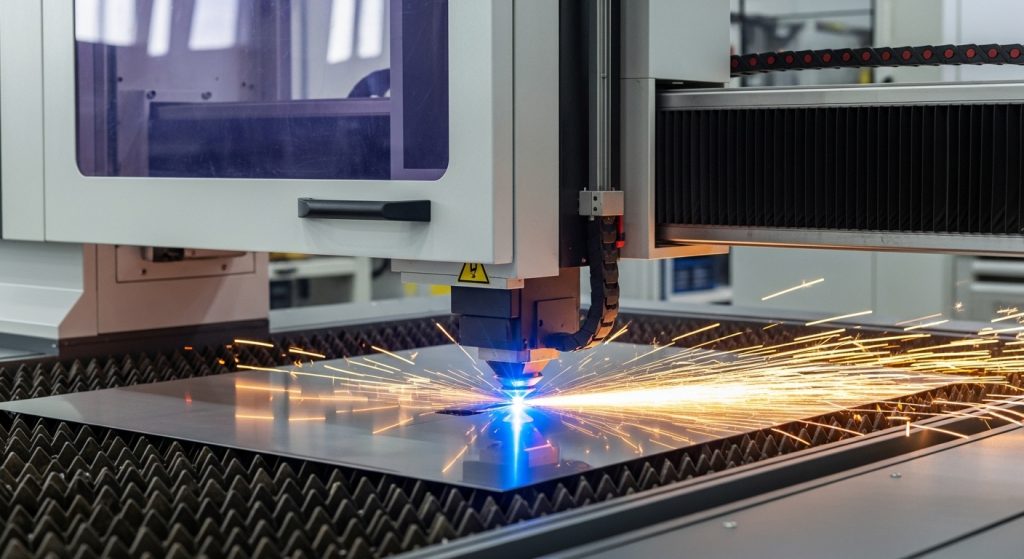
A high-authority partner must possess a comprehensive suite of capabilities, including precision laser cutting, CNC bending, TIG/MIG welding, and finishing. They should utilize modern fiber lasers for speed and accuracy. Furthermore, their equipment should handle various thicknesses and materials, ensuring they can grow with your project's evolving technical demands.
Advanced Cutting and Profiling
Modern fabrication relies heavily on how the metal is initially shaped. High-speed fiber lasers have replaced older CO2 lasers for most applications. They provide a smaller "heat-affected zone," which means the metal near the cut doesn't lose its structural properties. If your project requires complex geometries, you should prioritize partners offering specialized metal profiling services to ensure clean edges and minimal burrs.
Precision Bending and Forming
Bending is where many fabricators fail. It requires CNC press brakes with "crowning" technology. This technology compensates for the natural flex of the machine, ensuring a 90-degree bend is actually 90 degrees across the entire length of the part. Ask your potential partner how they handle "springback" calculations for different alloys.
How Does Custom Fabrication Differ from Metal Stamping?
Custom fabrication is ideal for low-to-medium volumes and complex designs that require flexibility without expensive tooling. In contrast, metal stamping uses dedicated dies for high-volume, repetitive production. While fabrication offers faster setup times and lower initial costs, stamping becomes more economical once you reach tens of thousands of identical units.
Tip: If your annual volume is under 5,000 units, stick to custom fabrication. If you are scaling to 50,000 units, it is time to askwhat is metal stampingand how it can lower your per-part cost.
The primary difference lies in the "upfront" investment. Custom fabrication uses "universal" tools—lasers and press brakes. Metal stamping requires a custom "die," which can cost thousands of dollars. A versatile partner will tell you when it is time to transition from one to the other to save you money.
What Role Does Design for Manufacturing (DFM) Play?
Design for Manufacturing (DFM) is the process of optimizing a part's design to make it easier and cheaper to produce. A great fabrication partner provides DFM feedback to reduce material waste and simplify complex bends. This collaborative approach shortens the production cycle and ensures the highest possible quality for the final product.
When reviewing sheet metal parts manufacturing, DFM is the ultimate "silent" money saver.
- Standardize Radii: Using the same bend radius across a part reduces tool changes.
- Hole Placement: Keeping holes at least $1.5 \times$ the material thickness away from bends prevents distortion.
- Tab and Slot Design: This allows parts to "self-fixture" for welding, reducing the need for expensive jigs.
A partner who simply "builds to print" without questioning the design is not doing you any favors. Look for the engineer who points out that a small change in a flange length could save you 20% on material costs.
What Quality Certifications are Non-Negotiable?
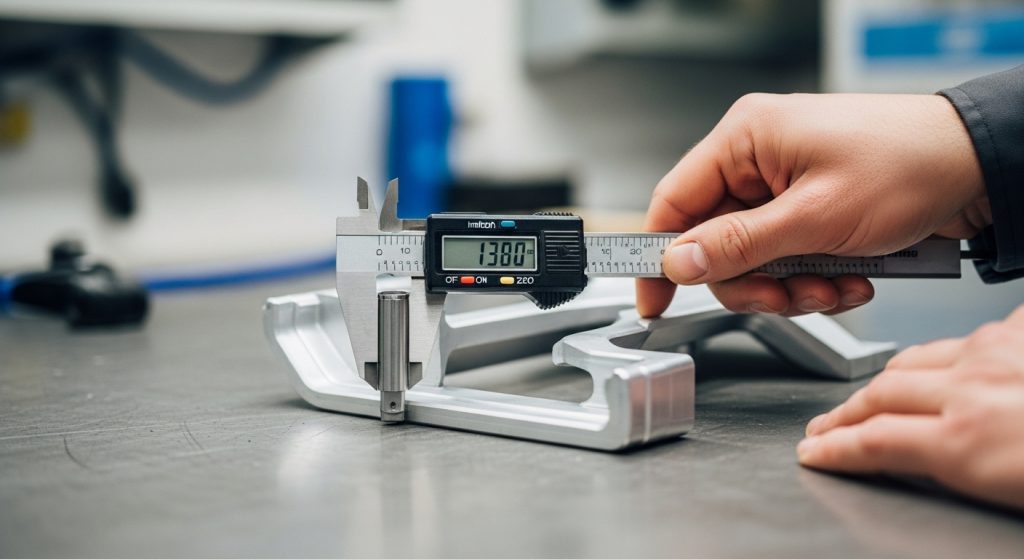
You should prioritize partners with ISO 9001:2015 certification at a minimum. For specialized sectors, look for AS9100 (Aerospace) or ISO 13485 (Medical). These certifications prove the fabricator has a documented system for tracking material batches, calibrating equipment, and managing non-conforming parts, which is essential for risk mitigation.
High-authority fabrication isn't just about the machines; it is about the paperwork. If a part fails in the field, can your partner trace it back to the specific metal coil it was cut from?
- Material Traceability: Essential for safety-critical components.
- In-Process Inspection: Checking parts at the laser, the brake, and the welding station.
- Final Inspection Reports: Requesting a FAIR (First Article Inspection Report) ensures the first batch is perfect before mass production begins.
How Can You Evaluate a Partner's Material Knowledge?
Evaluate a partner by asking specific questions about material behavior, such as grain direction, galvanic corrosion, and heat-treatability. An expert partner will suggest specific grades of aluminum or steel based on your environment. Their knowledge should extend to finishing options like powder coating, anodizing, or passivating to ensure long-term durability.
I once worked with a client who wanted to use stainless steel fasteners on an aluminum enclosure for a coastal project. A novice fabricator would have just done it. An expert partner stepped in and explained "galvanic corrosion"—the process where two dissimilar metals eat each other in salty air. We switched the coating specs, and the product lasted for years instead of months. This level of expertise is what defines a true leader in the field.
Why is Communication More Important Than Equipment?
While modern machinery is necessary, transparent communication is what keeps a project on track. A partner should provide regular status updates and be honest about lead times. Effective communication ensures that if a problem arises—such as a material shortage—you are informed immediately with a proactive solution rather than a last-minute excuse.
Ask potential partners about their Project Management software. Do they use an ERP (Enterprise Resource Planning) system?
- Real-time Tracking: Knowing exactly where your parts are in the factory.
- Dedicated Account Managers: Having one point of contact who understands your technical needs.
- Proactive Problem Solving: Getting a call about a supply chain hiccup before the delivery date passes.
How do You Verify a Partner's Reputation and Experience?
Verify reputation by requesting case studies, visiting the facility, and speaking with current clients in similar industries. A reputable fabricator will be proud to show you their shop floor. Look for long-term client relationships, as high retention rates are the strongest indicator of consistent quality and trustworthy business practices.
Tip: Don't just look at the finished parts in the lobby. Look at the scrap bins. A messy shop floor with overflowing scrap usually indicates poor process control and low efficiency.
A facility visit is the "litmus test" for any partnership. Is the equipment well-maintained? Are the operators using calibrated measuring tools? Is there a clear flow of material from the loading dock to the shipping area? These visual cues tell you more about a company's "character" than any brochure ever could.
What are the Red Flags to Avoid?
Red flags include lack of transparency regarding pricing, refusal to allow facility tours, and extremely low quotes that seem too good to be true. Other warnings include a lack of modern CNC equipment or slow response times during the quoting phase. If a fabricator struggles to communicate early on, they will likely fail during production.
Watch out for these specific warning signs:
- Vague Lead Times: "We'll get to it next week" is not a professional schedule.
- No Quality Documentation: If they can't provide a material cert, walk away.
- High Employee Turnover: Expert fabrication requires skilled labor; a revolving door of staff leads to inconsistent quality.
How Do You Start the Partnership Process?
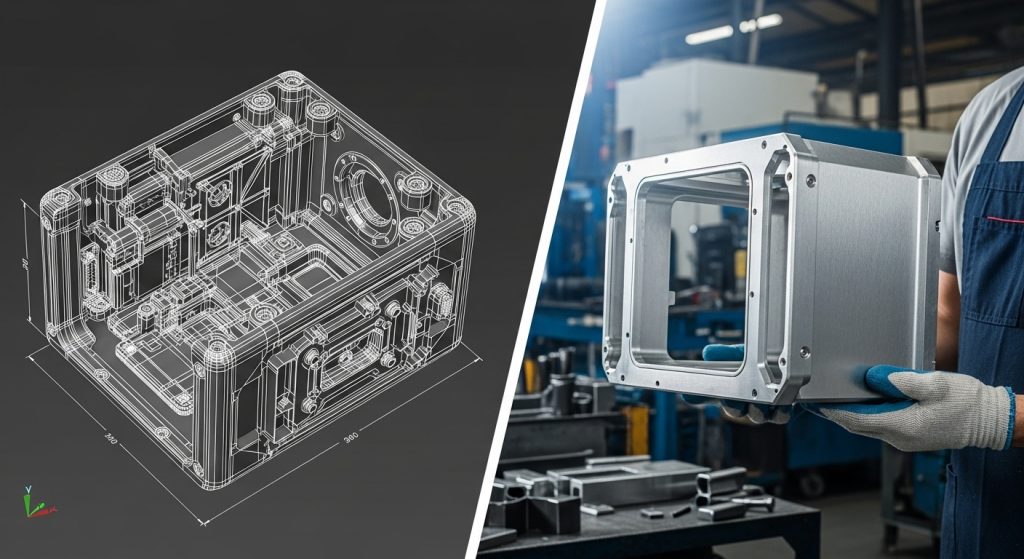
Start by submitting a clean RFQ (Request for Quote) package that includes 3D CAD models, 2D technical drawings with tolerances, and material specifications. A professional partner will review these documents and provide a detailed quote within 48 to 72 hours. This initial interaction serves as a trial run for their technical competence and communication style.
When you prepare your RFQ, be as detailed as possible.
- Specify Finishes: Don't just say "black," say "Matte Black Powder Coat, RAL 9005."
- Define Critical Dimensions: Highlight the tolerances that actually matter for fitment.
- Forecast Volume: Be honest about your quantities so they can quote the right production method.
Choosing a partner for custom sheet metal fabrication is about finding a balance between technical skill and cultural fit. When you find a manufacturer that values your project as much as you do, you gain a competitive edge that goes far beyond the price per part.
