


High Precision Injection Moulds in Chicago
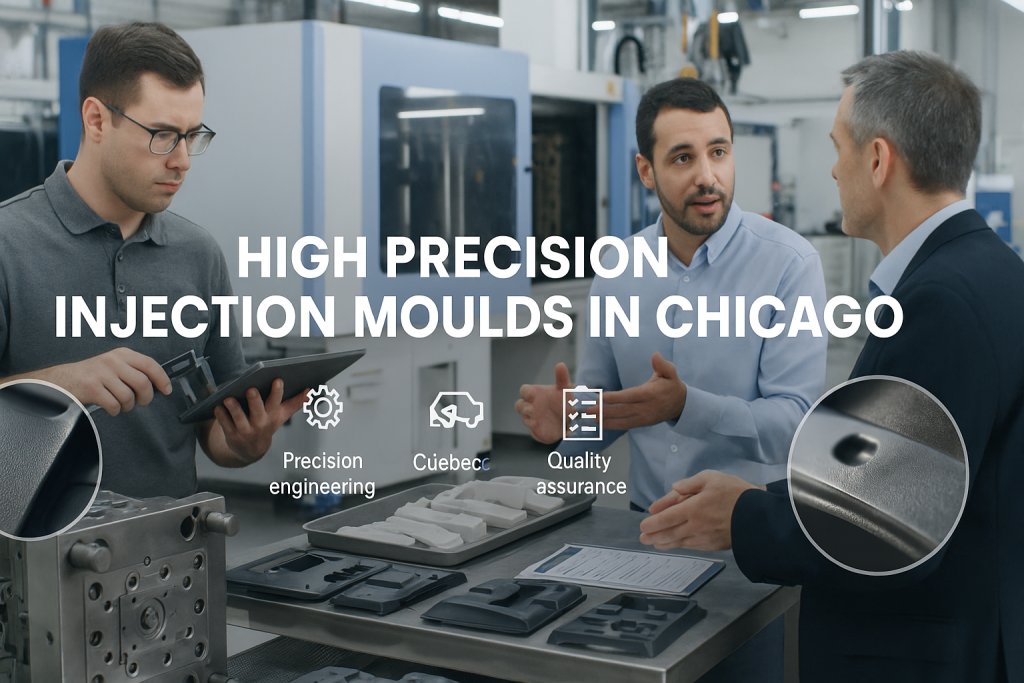
The finest high precision injection moulds in Chicago are the product of a deep industrial heritage. The city and its surrounding region are a globally recognized center for advanced toolmaking. For industries where accuracy is not just a goal but a necessity, Chicago offers a powerful concentration of expertise. The fundamental process of injection moulding is elevated to an exacting science by the city's top makers. These tools are far more than standard blocks of steel; they are highly engineered instruments. They represent the pinnacle of what is possible in the broader category of precision and high-performance moulds. This guide will take a deep dive into the technologies, processes, and philosophies that define the high-precision tooling industry in the Chicago area.
The Science of Precision Moulding
Achieving true precision in an injection mould is a scientific endeavor. It is about controlling a vast number of variables to produce a consistent and accurate result. It requires a deep understanding of physics, material science, and thermodynamics.
Defining Precision: Understanding Micron-Level Tolerances
Precision is the measure of conformity to a standard. In moulding, this means producing parts that match the design specifications with minimal variation. The unit of measure for this is often the micron. A human hair is about 70 microns thick. A precision mould is often expected to produce parts with tolerances of just 10 to 20 microns. This requires the mould itself to be built to an even higher level of accuracy, often in the single-digit micron range.
The Physics of Steel: Thermal Expansion and Stability
A block of steel is not a static object. It expands when it gets hot and contracts when it cools. An injection mould operates at high temperatures. The science of precision mould making requires a deep understanding of the coefficient of thermal expansion for different tool steels. The mould must be designed and built so that it achieves its perfect dimensions at its operating temperature. Long-term dimensional stability is also critical. This is achieved through proper material selection and meticulous heat treatment and stress-relieving processes.
The Principles of Scientific Moulding
Scientific moulding is a systematic, data-driven approach to the injection moulding process. It involves studying the behavior of the plastic material as it flows, packs, and cools. By using sensors and data, a robust and repeatable process can be developed. A precision mould maker does not just build the tool. They often use scientific moulding principles to test and validate the mould. This ensures it is capable of producing consistent parts before it is shipped to the customer.
The Role of a Robust Mould Design
A robust mould design is one that is less sensitive to the normal variations that occur in a production environment. The design of the cooling system is critical for controlling temperature. The design of the venting system is critical for allowing trapped air to escape. A robust design accounts for all these factors. It is the blueprint for a successful precision mould.
Chicago’s Industrial Ecosystem for Precision
The city of Chicago and the greater Midwest region provide the ideal ecosystem for precision manufacturing. This is not something that can be created overnight. It is the result of over a century of industrial development. This ecosystem provides the foundation upon which the local high-precision mould making industry is built.
A Legacy of Tool and Die Manufacturing
The Midwest is the historical heartland of the American tool and die industry. This legacy has created a deep reservoir of knowledge and skill. The craft of toolmaking has been passed down through generations. This creates a workforce with an intuitive understanding of how to work with metal to achieve the highest levels of accuracy. This human capital is the region's most valuable asset.
A Strong Supply Chain for High-Grade Materials
Building a precision mould requires the best materials. The Chicago area has a mature and highly developed supply chain for these specialized materials. This includes distributors of high-grade tool steels from the world's best mills. It also includes suppliers of high-quality mould components, hot runner systems, and specialized surface coatings. Easy access to this supply chain is a key advantage.
A Skilled Workforce with Deep Technical Expertise
The region is home to a large and highly skilled workforce. A strong network of technical colleges and apprenticeship programs ensures a steady supply of new talent. This includes not just toolmakers but also CNC programmers, quality engineers, and mould designers. This deep pool of technical expertise is essential for the high-precision industry.
Proximity to Key Industries
Chicago's location makes it a key supplier to some of the most demanding industries. It is a major hub for the medical device industry. It is also a central player in the automotive and industrial sectors. These industries are major consumers of high-precision components. The close proximity allows for tight collaboration between the mould makers and their customers.
The Global Context of Precision Specialization
The world of high-precision toolmaking is a network of specialized global centers. Each center has developed its own unique areas of expertise, often driven by the primary local industries.
Chicago's Role as an Industrial and Medical Hub
Chicago's primary specialization is in moulds for industrial, automotive, and medical applications. These are typically parts where functional performance and dimensional accuracy are the most critical requirements. The local industry is geared towards producing robust, reliable tooling that can hold tight tolerances over millions of cycles.
Contrasting with Other Global Centers of Excellence
This industrial focus can be contrasted with the specialties of other global hubs. For example, the makers of precision moulds in Italy, Milan, are world-renowned for their expertise in high-aesthetic and cosmetic parts for the fashion and design industries. For the high-volume production of packaging, a company might look to the makers of multi-cavity moulds in Montreal. Extremely large components, they might partner with a specialist in large moulds in Adelaide. For expertise in runnerless technology, they may work with a maker of a hot-runner mould in the Netherlands.
How Global Companies Leverage Chicago's Niche
Large multinational companies understand this landscape of specialization. For a new medical device, their global search for a supplier will very likely lead them to Chicago. They come to the region to tap into its deep well of expertise in this specific type of high-precision manufacturing. This makes the city a key destination for global product development.
Core Technologies for Building Precision Moulds
The creation of high precision injection moulds in Chicago is enabled by a significant investment in technology. The region's top tool shops are equipped with some of the most advanced manufacturing technology in the world. This equipment is essential for achieving the micron-level accuracies that their customers demand.
High-Speed 5-Axis CNC Machining Centers
High-speed, 5-axis CNC machining is a core technology. These machines are able to move a cutting tool with incredible speed and accuracy across five different axes. This allows them to create very complex 3D shapes in hardened tool steel. The precision of these machines is the foundation of the entire mould making process.
Wire and Sinker EDM for Ultra-Fine Details
Electrical Discharge Machining (EDM) is used to create features that are too small or too intricate for conventional machining. Wire EDM uses a very thin wire to cut through steel with extreme precision. Sinker EDM uses a custom-shaped electrode to burn features into the steel. These processes are critical for creating the fine details found in medical and electronic components.
Advanced Grinding and Jig Boring Operations
Grinding is a finishing process that is used to achieve the final, precise dimensions of a mould component. Advanced CNC grinding machines can produce surfaces that are both incredibly flat and have a very fine finish. Jig boring is a specialized process for creating holes that are perfectly located and have a very precise diameter. These are key technologies for achieving the highest levels of accuracy.
State-of-the-Art Polishing and Surface Finishing
The surface finish of the mould is critical. For some parts, it may need to be polished to a mirror-like finish. For others, a specific texture is required. Chicago's makers have access to a strong network of specialists in this area. They use a combination of automated and manual techniques to achieve the exact surface finish required by the design.
Materials and Components for Durability
A precision mould must also be a durable mould. It must be able to withstand the rigors of high-volume production without wearing out or losing its accuracy. This requires the use of the very best materials and components. A commitment to quality extends to every single piece of steel in the tool.
Selecting the Right Tool Steel for the Application
The choice of tool steel is a critical decision. The steel must have the right combination of hardness, toughness, and wear resistance for the specific application. For moulding abrasive materials like glass-filled plastics, a very hard and wear-resistant steel is needed. For moulds with very fine, delicate features, a tougher steel may be required. An expert mould maker will select the optimal grade of steel for the job.
The Importance of High-Quality Mould Components
A mould is an assembly of hundreds of parts. The quality of the standard components, such as the mould base, ejector pins, and leader pins, is very important. Top-tier mould makers use components from reputable suppliers. This ensures that every part of the mould is built to a high standard of quality.
Advanced Coatings for Wear Resistance and Lubricity
Specialized coatings can be applied to the surfaces of the mould. These coatings, such as titanium nitride or diamond-like carbon, can dramatically increase the surface hardness and wear resistance. They can also provide a lower coefficient of friction. This helps the plastic part to release more easily from the mould, which can reduce cycle times.
Heat Treatment and Stress Relieving Processes
Heat treatment is the process of heating and cooling the steel to achieve the desired hardness. This must be done with extreme care to avoid distorting the steel. After machining, the steel components are often put through a stress-relieving process. This removes any internal stresses in the material. This is critical for ensuring the long-term dimensional stability of the mould.
The Critical Role of Quality and Validation
Building a precision mould is one thing. Proving that it is precise is another. A rigorous quality and validation process is essential. The best makers have a robust quality management system and a suite of advanced metrology tools to verify their work.
Climate-Controlled Manufacturing and Metrology Labs
To achieve and measure micron-level accuracy, the environment must be controlled. The best shops have climate-controlled facilities. The temperature and humidity are kept constant. This prevents the steel from expanding or contracting during the machining and measuring processes. This is a key requirement for true high-precision work.
CMM and 3D Scanning for First Article Inspection (FAI)
Once the first parts are moulded, they undergo a First Article Inspection (FAI). This is a comprehensive measurement of every dimension on the part. A Coordinate Measuring Machine (CMM) is used to perform these highly accurate measurements. 3D optical scanners are also used to create a complete digital map of the part, which can be compared to the original CAD file.
The Process Validation Protocol (IQ/OQ/PQ)
For the medical device industry, a formal process validation is required. This is known as IQ/OQ/PQ. It is a structured protocol that proves the mould and the moulding process are capable of consistently producing parts that meet all requirements. Chicago's medical mould makers are experts in this rigorous validation process.
Statistical Process Control (SPC) for Production Monitoring
During mass production, Statistical Process Control (SPC) is used to monitor the process. Key dimensions of the parts are measured at regular intervals. This data is plotted on control charts. This allows the production team to monitor the stability of the process and to detect any trends or deviations before they result in out-of-spec parts.
How to Partner with a Chicago-Based Specialist
Selecting the right partner for a high-precision project is a critical decision. It requires a thorough evaluation of a company's technical capabilities, quality systems, and project management skills. The goal is to find a partner who can act as an extension of your own engineering team.
The Importance of Early Engineering Collaboration
For a precision project, it is essential to involve the mould maker early in the design process. Their expert feedback during the Design for Manufacturability (DFM) stage is invaluable. They can help you to optimize your part design for the moulding process. This early collaboration is key to success.
Understanding the Quoting Process for Complex Tooling
A quote for a high-precision mould is a complex document. It is important to understand what is included. The lowest price is not always the best value. A good quote will be detailed and transparent. It will clearly outline the materials, components, and validation activities that are included.
Assessing a Supplier’s Program Management Capabilities
A complex tooling project requires strong program management. The supplier should have a dedicated program manager who will be your single point of contact. They should provide a detailed project timeline and regular progress updates. Strong program management is essential for keeping the project on track.
Vetting Criteria for a Chicago Precision Mould Maker
A structured checklist can help you to evaluate and compare potential partners in the Chicago area. This will help you to make an informed decision.
- Do they have a strong portfolio demonstrating expertise in the medical, automotive, or industrial sectors?
- What are their in-house metrology capabilities, and is their lab climate-controlled?
- Are they certified to the ISO 9001 or ISO 13485 quality standards?
- Have you conducted a thorough on-site audit of their design and manufacturing facilities?
- Do they demonstrate a deep, scientific understanding of the mould making and moulding processes?
Conclusion
The high precision injection moulds in Chicago are among the best in the world. They are the product of a rich industrial heritage, a skilled workforce, and a relentless commitment to quality. The region's makers have a deep, scientific understanding of the art and science of toolmaking. For companies in the medical, automotive, and other demanding industries, Chicago offers a world-class supply base for their most critical tooling needs. A partnership with a Chicago-based specialist is an investment in precision, reliability, and performance.
