


Understanding Multi-Cavity Moulds in Montreal
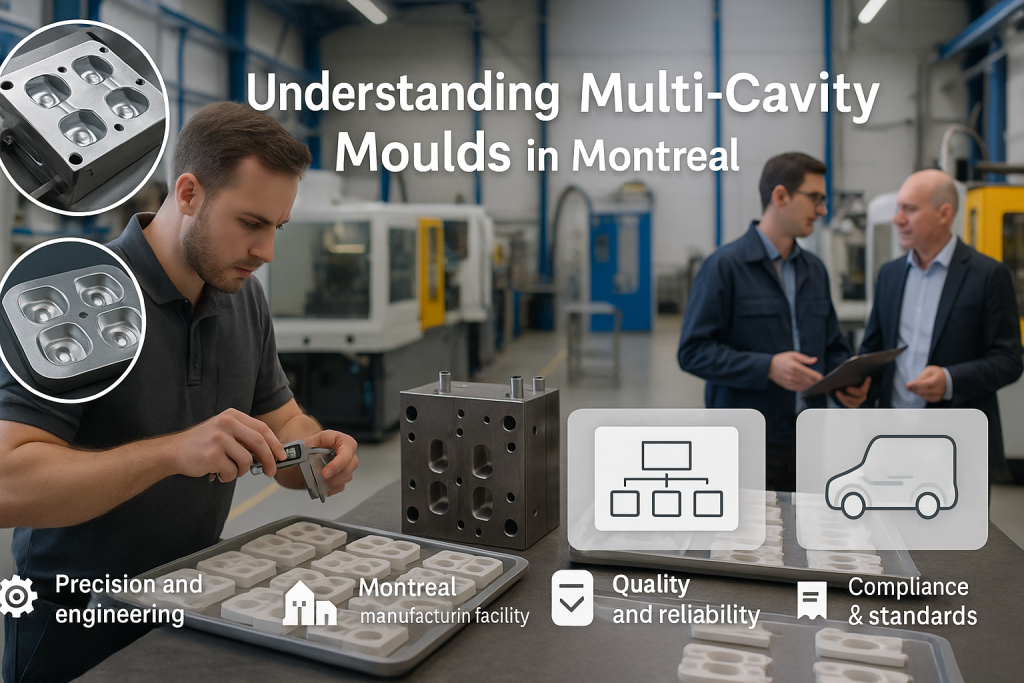
Understanding multi-cavity moulds in Montreal is key to unlocking high-volume manufacturing success. The city is a major North American hub for industries that require massive quantities of identical plastic parts. A multi-cavity mould is a specialized tool designed to produce more than one part in a single machine cycle. This technology is the engine of efficiency for mass production. The process of injection moulding is fundamentally transformed by this approach. It moves from making parts one by one to producing them in large batches. These complex tools are a critical category of precision and high-performance moulds. This guide provides a detailed look at the technology, benefits, and challenges of multi-cavity tooling, with a focus on the expertise found in the Montreal region.
The Economics of Multi-Cavity Moulding
The primary reason to use a multi-cavity mould is economic. For products that are needed in the millions or even billions, this approach offers a dramatic reduction in production costs. The initial investment in the tooling is higher, but the long-term savings in manufacturing are substantial. Understanding this economic equation is essential for any high-volume project.
Drastically Reducing Per-Part Cost
The cost of running an injection moulding machine is largely fixed per hour. A multi-cavity mould allows you to produce many parts within that same hour of machine time. For example, a 32-cavity mould will produce 32 parts in roughly the same time it takes a single-cavity mould to produce one. This drastically reduces the machine-time cost allocated to each individual part. This is the most significant economic advantage.
Maximizing Production Output and Efficiency
For many products, the demand is so high that a single-cavity mould simply cannot keep up. A multi-cavity mould allows a company to maximize the output from a single moulding machine and a single operator. This increases the overall efficiency of the factory floor. It allows a company to meet high market demand without needing to purchase a huge number of machines.
The Upfront Investment vs. Long-Term ROI
A multi-cavity mould is more complex and expensive to build than a single-cavity mould. The cost does not scale linearly; a 16-cavity mould will cost much more than 16 single-cavity moulds. This is due to the complexity of the design and the precision required. However, for a high-volume product, this higher upfront investment is quickly paid back through the savings in production. The return on investment (ROI) is very strong.
When a Multi-Cavity Mould is the Right Choice
A multi-cavity mould is the right choice when the expected production volume is very high. It is ideal for products like bottle caps, medical disposables, and electronic connectors. The decision to move to a multi-cavity tool is based on a careful economic analysis. This calculation will determine the "break-even" point where the savings in production outweigh the higher cost of the tool.
Montreal's Industrial Ecosystem for High-Volume Production
Montreal has a strong and diverse industrial base. This has made it a natural center of excellence for multi-cavity mould making. The region's key industries are major consumers of high-volume plastic parts. This has created a local demand that has fostered the growth of a specialized and highly capable tooling industry.
A Strong Base in Packaging and Consumer Goods
The packaging and consumer goods industries are major drivers of demand in the region. These sectors require billions of identical parts, such as caps, closures, and containers. This is the classic use case for high-cavitation tooling. Montreal's mould makers have deep, world-class expertise in serving the specific needs of these high-volume markets.
The Growing Medical and Pharmaceutical Sectors
Montreal is also a significant hub for the medical and pharmaceutical industries. This sector is another major user of multi-cavity moulds. They are used to produce high volumes of disposable items like pipette tips, sample vials, and components for drug delivery devices. These applications require a combination of high volume and extreme precision.
A Skilled Workforce in Precision Machining
Building a multi-cavity mould requires an exceptionally high level of precision machining. All of the cavities must be absolutely identical to each other. The region has a strong base of skilled machinists and toolmakers. A network of excellent technical schools and apprenticeship programs ensures a steady supply of talent. This skilled workforce is essential for the industry.
Proximity to Major North American Markets
Montreal's strategic location provides excellent logistical access to the major population centers of North America. This makes it an ideal location for producing high-volume goods that need to be distributed widely. The city's strong transportation infrastructure supports this role as a key production hub.
The Technical Challenges of Multi-Cavity Design
Building a successful multi-cavity mould is a major technical challenge. It is not as simple as just copying a single cavity multiple times. The design must ensure that every single cavity produces a perfect and identical part, cycle after cycle. This requires a deep understanding of plastic flow, thermodynamics, and precision mechanics.
Achieving Perfect Cavity-to-Cavity Consistency
The most critical challenge is ensuring that every cavity is identical. This requires a very high level of precision in the machining of the mould. It also means that every part produced, regardless of which cavity it came from, must be dimensionally identical. This is essential for the interchangeability of parts in automated assembly lines.
The Science of Runner Balancing
The runner is the network of channels that delivers the molten plastic to each cavity. In a multi-cavity mould, this runner system must be "naturally balanced." This means the design must ensure that the plastic travels the exact same distance and experiences the same pressure drop to reach every cavity. If the runner is not balanced, some cavities will fill differently than others, leading to inconsistent parts.
Managing Heat and Cooling Across a Large Tool
A multi-cavity mould is a large block of steel. Managing its temperature is a complex thermodynamic challenge. The cooling system must be designed to remove heat evenly from every cavity. If some cavities cool faster than others, the parts will have different amounts of shrinkage. This will result in dimensional variations. A sophisticated cooling design is essential.
The Mechanics of High-Speed Ejection Systems
To achieve a fast cycle time, the parts must be ejected from the mould very quickly. The ejection system for a multi-cavity mould must be robust and perfectly synchronized. It must push all the parts out of the cavities at the same time and with the same force. A failure in the ejection system can damage the mould and cause significant downtime.
Montreal's Place in the Global Tooling Network
The world of advanced toolmaking is a network of specialized global hubs. Montreal's specialization in high-cavitation and multi-cavity moulds is a key part of this network. Companies from around the world look to the city for this specific expertise.
A Hub for High-Cavitation Expertise
Montreal is recognized globally as a center of excellence for high-cavitation tooling. The concentration of skill and experience in this specific niche is very high. For companies in the packaging, medical, and consumer goods sectors, Montreal is a top-tier destination for sourcing their most demanding multi-cavity moulds.
Contrasting with Other Global Specializations
This specialization can be contrasted with the strengths of other global hubs. For example, the makers of precision moulds in Italy, Milan, are renowned for their skill in high-aesthetic parts. Complex industrial or medical parts requiring extreme accuracy in a single cavity, a company might look to the specialists in high-precision moulds in Chicago. For very large, single-cavity tools for industrial applications, they might partner with a supplier of large moulds in Adelaide.
The Critical Role of Runnerless Technology
Multi-cavity moulds almost always use a hot runner system. This technology is essential for eliminating the waste associated with a large cold runner. It also provides much better control over the filling process. The expertise in hot runner technology is itself a global specialty. A Montreal mould maker will often partner with a specialist like a maker of a hot-runner mould in the Netherlands to integrate the best possible system into their tool.
How Global Brands Leverage Montreal's Capabilities
Major multinational brands in the food and beverage, pharmaceutical, and consumer goods industries rely on the expertise of Montreal's mould makers. They come to the region to source the high-performance, high-cavitation tooling that is essential for their mass-production operations. This has made the city a key, strategic partner for many of the world's largest companies.
Core Technologies for Building Multi-Cavity Moulds
Building a mould with up to 128 identical cavities requires a massive investment in technology. The top makers of multi-cavity moulds in Montreal have state-of-the-art facilities. They use the most advanced equipment and processes to achieve the required levels of precision and repeatability.
High-Speed CNC Machining and Automation
The machining of the mould components is done on high-speed CNC machines. These machines are often automated with robotic systems that can change pallets and cutting tools. This allows the machines to run around the clock with minimal human intervention. This automation is key to both the precision and the cost-effectiveness of the mould making process.
Precision Grinding for Interchangeable Components
Many of the components in a multi-cavity mould, such as the cores and cavities, must be perfectly interchangeable. This is achieved through a process of precision grinding. After the components are machined and heat-treated, they are ground to their final dimensions with micron-level accuracy. This allows for easy maintenance and replacement of components over the life of the mould.
The Importance of High-Grade, Durable Tool Steels
A high-cavitation mould is a major investment that is expected to run for many millions of cycles. This requires the use of extremely durable and high-quality tool steels. Stainless steels are often used for their corrosion resistance and durability. The choice of the right steel is a critical factor in the long-term performance of the mould.
Advanced Metrology for Validating All Cavities
A key part of the quality process is the validation of all the cavities. The mould maker must have advanced metrology equipment, such as a CMM, to measure sample parts from every single cavity. This data is used to prove that all the cavities are producing identical parts. This is a critical and data-intensive part of the validation process.
The Process: From Concept to Mass Production
The process of commissioning a multi-cavity mould is a major engineering project. It requires a close partnership and a structured, disciplined approach. A successful project is the result of careful planning and execution at every stage.
The Initial Feasibility and Economic Analysis
The process begins with a detailed analysis. The customer and the mould maker will work together to determine the optimal number of cavities. This is a complex calculation that balances the cost of the mould against the savings in production. This initial feasibility study is the foundation of the project.
A Rigorous DFM and Mould Design Phase
The Design for Manufacturability (DFM) and mould design phase is extremely rigorous for a multi-cavity tool. The engineers will use advanced simulation software to design and validate the runner system and the cooling system. Every aspect of the design is carefully optimized to ensure a balanced fill and uniform cooling across all cavities.
The Mould Validation and Qualification Process
Once the mould is built, it undergoes an extensive validation process. This can include a Factory Acceptance Test (FAT) at the mould maker's facility. It is then often shipped to the customer's facility for a Site Acceptance Test (SAT). This process involves running the mould under production conditions and performing a detailed analysis of the parts.
Integration with High-Speed Moulding and Automation Cells
A multi-cavity mould is just one part of a larger production system. It is often integrated into a complete automation cell. This cell can include a high-speed moulding machine, a robot for part removal, and downstream equipment for assembly and packaging. A top mould maker can help with the design and integration of this entire production cell.
How to Select a Partner in Montreal
Choosing the right partner from the many makers of multi-cavity moulds in Montreal is a critical decision. The success of a high-volume product can depend on it. A thorough vetting process is needed to find a supplier with the right combination of skill, technology, and experience.
Assessing a Maker's Portfolio of High-Cavitation Projects
The most important factor is a proven track record. Look for a supplier with a strong portfolio of successful high-cavitation projects. Ask to see examples of moulds they have built with 32, 64, or more cavities. Their experience with these complex tools is their most important qualification.
Evaluating In-House Engineering and Simulation Capabilities
A top supplier will have a large and experienced in-house engineering team. They must have advanced capabilities in mould flow simulation. Ask them to show you examples of the simulation work they have done on other projects. Their engineering depth is a key indicator of their overall capability.
Auditing Their Quality Systems and Metrology Lab
You must have confidence in their quality systems. They should be certified to ISO 9001. A facility audit should include a detailed review of their metrology lab. They must have the CMMs and other equipment needed to validate a high-cavitation mould.
Key Considerations for a Multi-Cavity Mould Project
A structured checklist can help you to evaluate and select the best partner for your high-volume project. This brings an objective approach to this important decision.
- What is their specific experience in the packaging or medical device industries?
- Can they show a portfolio of moulds with 32 or more cavities?
- What is the depth of their in-house mould flow simulation and FEA capabilities?
- Have you conducted a thorough on-site audit of their manufacturing and quality control facilities?
- Do they have a clear and structured process for mould validation and qualification?
Conclusion
Understanding multi-cavity moulds in Montreal provides a window into a world of high-volume, high-precision manufacturing. The city's makers are global leaders in this specialized field. They have the skills, technology, and experience to build the complex and highly productive tooling needed for mass production. For any company in the packaging, medical, or consumer goods sectors, a multi-cavity mould is a strategic investment in efficiency and competitiveness. Partnering with an expert in Montreal is a world-class choice for these critical projects.
