


Suppliers of Large Moulds in Adelaide
The leading suppliers of large moulds in Adelaide provide a critical capability for the region's key industries. The city and its surrounding state have a unique industrial fabric. It is a landscape defined by agriculture, water management, and advanced manufacturing. This has created a strong local demand for large, durable plastic components. The process of injection moulding is the most efficient way to produce these parts. The moulds required for this work are significant engineering undertakings. These large tools are a specialized category of precision and high-performance moulds. This guide explores the capabilities of the Adelaide market. It also covers the technical challenges and sourcing strategies for large injection moulds.
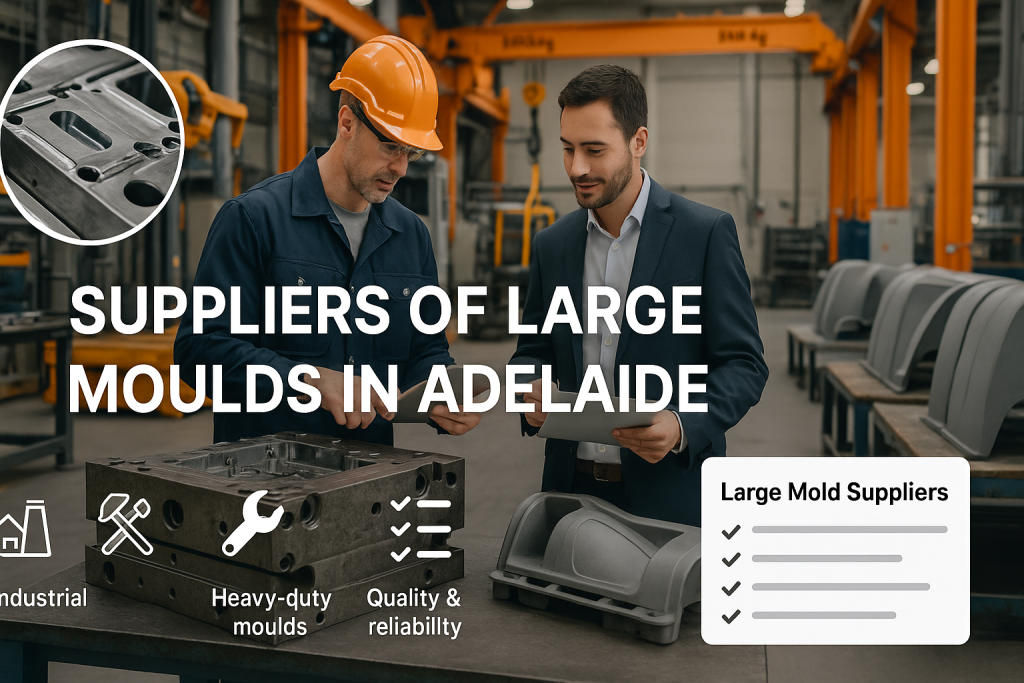
The Industrial Landscape Driving Demand in Adelaide
The demand for large moulds in the Adelaide region is directly linked to the area's primary industries. Unlike other global hubs, the focus is not on mass-market consumer goods or high-volume automotive production. Instead, the demand is for robust, high-performance components that can withstand demanding environments. This unique industrial landscape has shaped the expertise of the local supply base.
The Water Management and Agriculture Sectors
The region is a major center for agriculture and has a strong focus on water management technologies. These sectors require a wide range of large plastic components. This includes parts for irrigation systems, large water tank lids, and various types of agricultural equipment. These components must be durable, weather-resistant, and often very large. This creates a steady demand for suppliers who can build large and robust tooling.
The Defense and Advanced Manufacturing Industry
Adelaide is a key hub for the nation's defense industry, particularly in naval shipbuilding. This sector requires highly engineered components that meet stringent standards. While many of these parts are metal, there is a growing use of advanced plastics and composites. The need for large, complex, and high-strength components is a key driver for advanced manufacturing in the region.
The Automotive Aftermarket and Caravan Industries
The region has a strong automotive aftermarket and a thriving caravan and recreational vehicle industry. These sectors require a variety of large plastic parts. This includes items like custom bumpers, flares, and large interior components for caravans. These are often lower-volume, specialized products that are a good fit for the capabilities of local custom mould makers.
The Need for Large, Durable, and Weather-Resistant Parts
A common thread across all these industries is the need for parts that are large and tough. These components are often used outdoors. They must be able to withstand intense UV radiation, high temperatures, and physical impacts. This has made local suppliers experts in designing and building moulds for parts that are, above all, durable and reliable.
Core Capabilities of Adelaide's Large Mould Suppliers
In response to the demands of the local market, suppliers of large moulds in Adelaide have developed a specific set of core capabilities. These are the areas where they have a distinct advantage. Their expertise is not just in making moulds big, but in making big moulds that work reliably and last a long time.
Expertise in Tooling for Structural and Industrial Parts
The primary area of expertise is in tooling for structural and industrial components. These are parts where mechanical performance is the most important characteristic. Local suppliers are skilled in designing moulds that produce strong, rigid, and dimensionally stable parts. They understand the engineering principles required to make plastic components that can carry a load and withstand stress.
Large-Scale CNC Machining and Handling Equipment
Building a large mould requires large-scale equipment. Adelaide's top shops are equipped with large CNC machining centers. These machines are capable of shaping the massive blocks of steel that are used to create large tooling. They also have the heavy-duty cranes and handling equipment needed to safely move and assemble these heavy moulds.
Experience with Engineering Polymers for Durability
The materials used for large, durable parts are often engineering-grade polymers. These can include glass-filled polypropylene, nylons, and other high-strength resins. These materials can be more challenging to mould than standard plastics. Local suppliers have extensive experience in building tools that are optimized for these tough, durable materials.
A Focus on Robust Mould Design for Longevity
A large mould is a significant capital investment. It is expected to have a very long service life. Adelaide's suppliers are known for their focus on robust mould design. They build tools that are made to last. This includes using high-quality tool steels and designing all mechanical actions, like slides and lifters, for maximum durability.
The Technical Challenges of Large Mould Making
Creating a large injection mould is a major engineering challenge. The sheer scale of the tool introduces a range of technical issues that are not present in smaller moulds. Overcoming these challenges requires a high level of expertise and experience.
Managing the Thermal Expansion of Large Steel Blocks
A large block of steel will expand significantly when it is heated to moulding temperatures. A mould that is two meters long could grow by several millimeters. The mould maker must accurately calculate this thermal expansion. They machine the mould at room temperature so that it is the correct size and shape when it is hot. This is a complex engineering calculation.
Designing Effective Cooling Systems for Thick Parts
Large parts often have thick walls. It can take a long time for the heat to be removed from the center of these thick sections. An effective cooling system is critical. The mould maker must design a network of cooling channels within the mould. These channels must be placed to ensure the part cools evenly. Uneven cooling can cause the part to warp.
The Science of Gating and Filling Large Cavities
Injecting molten plastic into a very large cavity presents a challenge. The plastic has to travel a long distance, and it begins to cool as soon as it enters the mould. The mould maker must carefully design the "gate" or entry point for the plastic. They often use multiple gates to fill the part evenly. Mould flow simulation software is essential for designing an effective filling strategy.
The Mechanics of Handling and Clamping Heavy Moulds
A large mould can weigh 20, 30, or even 50 tons. Moving, installing, and running these massive tools requires specialized equipment. The mould maker must design the tool so that it can be safely lifted and handled. They must also ensure that the injection moulding machine has enough clamping force to hold the two halves of the mould together against the immense pressure of the injected plastic.
Adelaide's Connection to Global Tooling Expertise
While Adelaide has its own unique strengths, the world of advanced tooling is global. For many projects, it makes sense to leverage the specialized expertise of international hubs. A successful sourcing strategy often involves connecting with this global network.
The Role of a Global Sourcing Strategy
A smart company will source its tooling from the supplier that has the best expertise for a specific job. This may be a local partner or it may be a specialist on the other side of the world. For a company based in Adelaide, having a global sourcing strategy provides access to a much wider range of capabilities.
Contrasting with Other Global Specializations
The world's tooling industry is a network of specialized hubs. Adelaide's focus on large, durable moulds is one such specialization. This can be contrasted with the strengths of other centers. For example, the makers of precision moulds in Italy, Milan, are experts in high-aesthetic parts. For projects requiring extreme dimensional accuracy for medical devices, a company might look to the specialists in high-precision moulds in Chicago. The mass production of small bottle caps, the experts in multi-cavity moulds in Montreal would be a top choice. For advanced runnerless technology, a partner like a maker of a hot-runner mould in the Netherlands would be considered.
How Local Companies Access a Global Network
Companies in Adelaide are adept at working with international partners. The region's involvement in global trade, particularly in the resources sector, has given local businesses strong logistical and project management skills. They are able to effectively manage complex projects with suppliers from different parts of the world. This allows them to tap into the best global expertise when needed.
The Process of Commissioning a Large Mould
The process of commissioning a large mould is a major project in itself. It requires careful planning, close collaboration, and strong project management. A structured process is essential for ensuring that the final tool is delivered on time and meets all expectations.
The Initial Engineering and Feasibility Study
The process begins with a detailed engineering and feasibility study. This is a collaborative effort between the customer and the mould supplier. They will review the part design and material specifications. They will use simulation software to confirm that the part can be moulded successfully. This upfront study is critical for identifying and mitigating any potential risks.
A Collaborative DFM Process for Large Parts
The Design for Manufacturability (DFM) process is especially important for large parts. Small changes to the design can have a big impact on the mould's cost and performance. The supplier's engineers will provide expert feedback on the design. They may suggest changes to improve the part's strength, reduce warpage, or simplify the mould's construction.
The Importance of Mould Trials and Validation
Once the large mould is built, it must be thoroughly tested. This is done through a series of mould trials. The supplier will install the mould in a large-tonnage injection moulding machine. They will run the mould and produce sample parts. These trials are used to fine-tune the moulding process and to verify that the mould is functioning correctly.
Logistics of Transporting and Installing a Large Mould
Moving a mould that weighs many tons is a major logistical challenge. The supplier must have a plan for safely packaging and transporting the tool. Special heavy-haulage trucks and cranes are often required. The customer must also ensure that they have the equipment and infrastructure needed to receive and install the large mould in their facility.
Quality Assurance for Large Industrial Components
For large industrial parts, quality is often defined by durability and reliability. The quality assurance process must be designed to verify these critical attributes. A robust quality plan is a key part of any large mould project.
The Importance of High-Quality Steel and Components
The quality of a large mould starts with the quality of its materials. It is essential to use high-grade, certified tool steel from a reputable mill. All of the components used in the mould, from the hot runner system to the hydraulic cylinders, must also be of the highest quality. This ensures the long-term reliability of the tool.
Advanced Metrology for Large-Scale Parts
Measuring a very large part accurately can be a challenge. Traditional CMMs may not be big enough. Suppliers of large moulds often use advanced metrology tools like portable CMM arms or laser trackers. These tools allow them to perform accurate dimensional inspections on very large components.
Material Testing for Durability and Performance
For many industrial applications, the mechanical performance of the part is critical. The quality assurance process may include destructive testing of the moulded parts. This can include impact testing, tensile testing, and other methods to verify that the part meets the required strength and durability specifications.
The Role of ISO 9001 in Ensuring Process Control
A supplier with ISO 9001 certification has a documented quality management system. This provides a framework for ensuring that all processes are controlled and repeatable. This is a key indicator that the supplier is committed to quality and has a professional approach to manufacturing.
How to Select the Right Supplier in Adelaide
Choosing the right partner is the most important decision. A thorough vetting process is needed to find a supplier that has the right equipment, skills, and experience for your large mould project.
Assessing a Supplier's Capacity for Large Tooling
The first step is to confirm that the supplier has the physical capacity to handle your project. Do they have large-scale CNC machines? A facility visit is the best way to verify this capacity.
Evaluating their Portfolio of Similar-Sized Projects
Look for a supplier with a proven track record of building moulds of a similar size and complexity to yours. Ask to see their portfolio. A strong portfolio of successful large mould projects is the best evidence of their capabilities. Ask for references from other customers who have purchased large tools from them.
The Value of Local Support and Maintenance
For a large and complex mould, the value of local support cannot be overstated. Having a partner in Adelaide who can provide fast and effective service and maintenance is a major advantage. This can significantly reduce downtime and improve the overall efficiency of your production.
Vetting Criteria for a Large Mould Supplier
A structured checklist can help you to evaluate and select the best partner for your large mould project. This ensures a thorough and objective decision-making process.
- Do they have the large-scale machining and handling equipment required?
- Can they show you a portfolio of large moulds they have successfully built?
- What is their experience with the specific engineering materials for your project?
- Do they have in-house capabilities for mould trials and validation?
- What is their plan for providing ongoing maintenance and support?
Conclusion
The suppliers of large moulds in Adelaide offer a specialized and valuable capability. Their expertise is aligned with the needs of the region's key industries. They are experts in building robust, durable tooling for large industrial, agricultural, and aftermarket components. For projects that require different capabilities, the global supply chain offers access to a wide range of other specializations. By developing a smart sourcing strategy that leverages both local and global expertise, a company in Adelaide can secure the best possible tooling solution for any large-part project.
