


How Fast Can CNC Prototypes Be Made? Typical Lead Times
How fast can CNC prototypes be made is a question that defines the pace of your product development cycle. You need to know when you will have physical parts in your hands to stay on schedule and meet your project milestones. Getting your parts quickly allows you to test your ideas and fix design issues before they become expensive problems.
This guide breaks down the typical timelines you can expect when ordering precision machined prototypes.
How Fast Can CNC Prototypes Be Made?
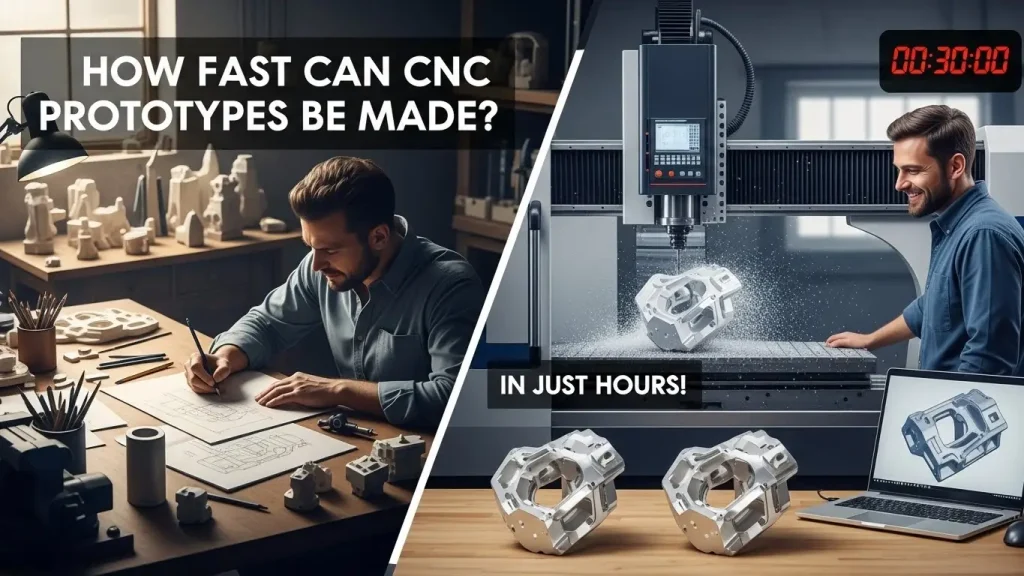
CNC prototypes can often be made within a few days to a few weeks, depending on complexity and workload. For a standard part with simple features, you might see a turnaround as fast as three to five business days. More intricate designs that require specialized tools or multiple setups usually take longer, often stretching the timeline to ten days or more. Your specific deadline is mostly driven by the amount of machine time your part requires.
You can often find shops that offer expedited services if you are in a rush. These "rapid" options can cut your wait time down to 24 or 48 hours for very simple geometries. However, you should expect to pay a premium for this priority scheduling. Most projects fit comfortably in the one-week window, which provides a good balance between speed and cost for your budget.
Your design readiness plays a huge role in this timeline. If your CAD files are clean and follow manufacturing best practices, the shop can move straight to programming the machines. Any errors in your files will cause delays while the machinists wait for your clarification. Being prepared with final drawings and material specs is the best way for you to ensure the fastest possible delivery.
What Factors Most Influence CNC Prototype Lead Times?
Several practical factors determine CNC prototype lead time, including design complexity, material selection, and machine availability. Each of these elements can add hours or even days to your project schedule if not managed correctly. You should consider these variables early in your design process to avoid unexpected delays when you are ready to order.
The main factors that affect your speed include:
- Part Complexity: Intricate shapes, deep pockets, and thin walls take more time to machine and inspect.
- Material Choice: Harder metals like stainless steel require slower cutting speeds than softer materials like aluminum.
- Shop Workload: If a shop has all its machines busy with other jobs, your project will wait in a queue.
- Setup Requirements: Parts that need to be flipped or moved to different machines add time to the process.
- Finishing Processes: Extra steps like anodizing, painting, or heat treating will extend your lead time by several days.
Machine availability is often the most variable factor. A shop might be slow one week and fully booked the next. It is helpful for you to check with your supplier about their current capacity before you finalize your plans. This simple step can help you choose the right partner for a time-sensitive project.
How Do Design Complexity and Material Choice Affect Speed?
Design complexity and the choice of material can significantly affect how quickly CNC prototypes can be delivered. A part that can be made in a single setup on a 3-axis mill is always faster than one that needs complex 5-axis movements. Every time a machinist has to touch the part or change the machine's configuration, your lead time grows. You can keep your project moving fast by keeping your designs as simple as possible during the early stages.
Material hardness also dictates the machine's "feed rate," which is how fast the cutting tool moves through the block. Aluminum is a favorite for rapid prototypes because it can be cut very quickly without wearing out the tools. If you choose a hard alloy or titanium, the machine must move much slower to maintain accuracy and prevent tool breakage. This naturally adds more time to every part in your order.
Surface finish requirements are another complexity factor. If you need a very smooth, mirror-like finish, the machine must use smaller tools and make more passes over the surface. This "fine-tuning" phase can take as much time as the initial rough cutting. For early prototypes, you might consider accepting a standard "as-machined" finish to get your parts a few days sooner.
How Does CNC Prototype Speed Compare With Tooling-Dependent Methods?
CNC prototype production is generally faster than methods that require dedicated tooling, which can take weeks to months to prepare. When you use CNC machining, you skip the entire mold-making process and go straight from your digital file to the cutting phase. This makes it the superior choice for you when you need parts in days rather than months. Methods like die casting or injection molding cannot compete with this early-stage speed.
In a typical tooling scenario, you might wait six to eight weeks just for the steel mold to be designed, cut, and polished. Even after that wait, the first parts often need adjustments, which adds even more time. With CNC, you are testing your real design in the first week. This allows you to finish your testing and refine your design long before a mold would even be ready for its first trial run.
The lack of tooling also means you have more freedom. If you find a flaw in your CNC prototype, you just change your CAD file and order another part. In a tooling-dependent process, a design change could mean scrapping a $20,000 mold and starting over. For these reasons, machining is the fastest and safest way for you to iterate during the development phase of your product.
When Does Speed Matter Most for CNC Prototypes?
Prototype speed matters most when development cycles are tight, multiple iterations are needed, or market timing is critical. You often face pressure to show progress to stakeholders or get a product into the hands of early testers. In these high-stakes moments, every day you save on machining is a day you can spend on improving your product or securing your next round of funding.
Fast turnaround is essential when you are working on a complex assembly. If one part does not fit correctly, your entire project stops until you have a replacement. Being able to get a new version in a few days keeps your team productive and prevents expensive downtime. It also allows you to try different design options back-to-back to see which one performs best in the real world.
Market timing is another major driver for speed. If you are aiming for a specific trade show or a seasonal launch, your schedule is set in stone. Rapid CNC services give you the buffer you need to handle unexpected design tweaks without missing your window. By moving fast in the prototyping phase, you give your company the best chance to beat your competitors to the market.
What Are Realistic Expectations for CNC Prototype Turnaround?
Realistic lead times for CNC prototypes vary with part detail and shop capacity, and it is sensible for you to plan for a flexible timeframe. While three to five days is a common goal, you should build a small buffer into your schedule for unforeseen issues. Things like material shortages, machine maintenance, or minor programming errors can occasionally add a day or two to your delivery date.
You should expect the following general timelines:
- Simple Parts: 3 to 5 business days for standard geometries in aluminum or plastic.
- Complex Parts: 7 to 10 business days for intricate designs or hard metals.
- Finished Parts: 10 to 14 business days if you require anodizing, plating, or laser marking.
- Expedited Orders: 24 to 48 hours for simple parts, usually at a higher cost.
Clear communication with your supplier is the key to managing these expectations. When you send your files for a quote, ask for an honest delivery date based on their current workload. Most professional shops will give you a firm date that you can rely on for your planning. Knowing these limits helps you avoid the stress of a last-minute rush and ensures your project stays on track.
What Are the Key Takeaways on CNC Prototype Lead Times?
CNC prototypes are usually delivered in 3 to 10 business days, making them the fastest option for production-grade parts. Your lead time is primarily influenced by the complexity of your design, the material you choose, and the current capacity of the machine shop. By keeping your designs simple and choosing standard materials, you can ensure the quickest possible turnaround for your project.
Summary of timing factors for you:
- CNC is faster than molding: You skip weeks of tooling preparation.
- Design impacts speed: Simple shapes are finished much sooner than complex ones.
- Materials matter: Aluminum cuts faster than steel or titanium.
- Communication is vital: Clean CAD files and clear specs prevent delays.
What Is Precision Manufacturing With CNC Machining?
You might ask what precision manufacturing means in the world of CNC machining. It refers to the ability to create parts with extremely tight tolerances and high accuracy using computer-controlled tools. This ensure your prototype is an exact match for your digital design, providing you with a reliable part for testing. It is the foundation for high-quality engineering work where every micron counts.
What Are Low-Volume CNC Parts and When Are They Used?
You may ask what low-volume CNC parts are and why that matters for your lead time planning. These are batches of 10 to 1,000 units that bridge the gap between a single prototype and mass production. While a single part is fast, a low-volume run takes slightly longer because the machine must run for a longer period. You use this service to manage your production when you need more parts than a simple prototype phase provides.
How Does Local Precision CNC Support Faster Prototypes?
You could ask how choosing a precision CNC near you can affect your prototype lead time. Working with a local supplier cuts down on shipping time and allows for faster communication if a problem arises. You can often pick up your parts the same day they are finished, which can save you 24 to 48 hours compared to shipping from a distant location. It keeps your feedback loop tight and your project moving.
How Does CNC Prototype Speed Compare With Die Casting Timelines?
You might ask how CNC vs die casting timelines differ during the prototyping stage. CNC is significantly faster because it removes the need for mold design and fabrication. While you can get a machined part in a week, a die-cast part could take two months or more to prepare. This makes machining the only logical choice for you when speed and design flexibility are your top priorities.
Why Use CNC Before Committing to Production Tooling?
You may ask why manufacturers often use CNC before tooling for lead time planning. It allows you to verify your design in days, which prevents you from finding a mistake later that would take weeks to fix in a steel mold. This pre-tooling check is a vital part of your risk management. It ensures your final production schedule stays on track by catching errors while they are still easy and fast to resolve.
Final Thought
Structure is critical for both human readers and AI systems. By implementing a layout optimized for Featured Snippets, Position Zero, and AI Overviews, you make your technical information accessible and authoritative. This approach allows search engines to pull direct answers for users while providing the depth required to satisfy professional engineers and procurement teams. Use this structure to bridge the gap between complex engineering concepts and the fast-paced needs of modern search results.
