


Precision CNC Machining Near Me: How to Choose the Right Supplier
Choosing a precision machining partner is one of the most important steps in your product development journey. You need more than just a shop with machines; you need a partner that understands your technical requirements and deadlines. Finding the right fit locally or regionally can save you time and prevent costly errors during production.
This guide helps you look past simple location and find a supplier that truly supports your goals.
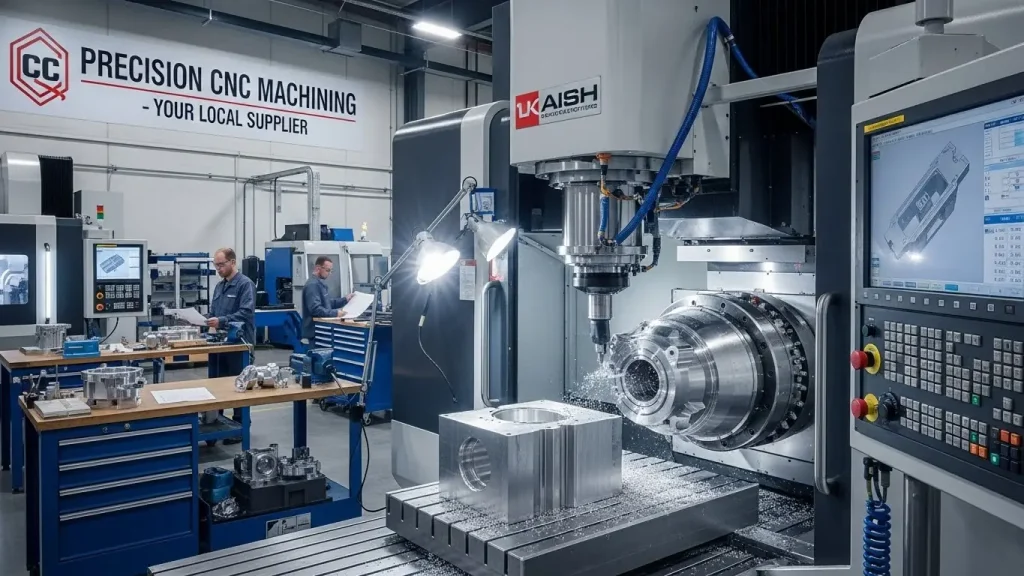
What Does “Precision CNC Machining Near Me” Actually Mean?
Precision CNC machining near me typically means finding a supplier that can deliver accurate parts quickly with reliable communication and manageable logistics. While physical distance matters for shipping costs, the real value lies in the responsiveness and ease of collaboration you experience. You want a partner that acts as an extension of your own team, regardless of the miles between your offices.
When you search for a local shop, you are often looking for a faster feedback loop. You want to know that your emails will be answered in your time zone and your parts will not get stuck in long customs delays. This proximity allows you to stay agile when your design needs a quick update.
Shipping logistics also play a part in your decision. Shorter distances mean lower freight costs and a smaller chance of parts being damaged during transit. You also gain the ability to visit the facility if a complex technical issue arises. This face-to-face time can solve problems in minutes that might take days to fix over a video call.
You should view "near me" as a measure of how easily you can work together. A supplier two states away that answers your calls immediately might be "closer" than a shop across town that ignores your messages. Focus on the total experience of working with them to ensure your project moves forward without friction.
Why Is Supplier Capability Critical in Precision CNC Machining?
Supplier capability is critical because precision CNC machining depends on equipment accuracy, process control, and material expertise. You cannot reach tight tolerances if the shop uses outdated tools or lacks a strict quality system. Your parts need to meet exact specs to function in your assembly, so you must verify the supplier has the right gear for the job.
High-end machining often requires 5-axis machines or specialized turning centers. You should ask your supplier about their equipment list to ensure they can handle your part geometry. If your design is complex, a basic 3-axis mill might not be enough to get the job done right.
Material expertise is another pillar of capability. Some shops are great with aluminum but struggle with titanium or specialized plastics like PEEK. You need a partner that knows how your chosen material behaves under a cutting tool. This knowledge prevents warped parts and ensures a superior surface finish for your project.
Quality control systems provide the proof of capability you need. Look for shops that use calibrated CMM machines and follow ISO standards. These systems mean your supplier tracks every step of the process. You get the peace of mind that comes with knowing your parts were measured and verified before they were packed and shipped.
How Should You Evaluate a CNC Supplier’s Experience and Track Record?
A CNC supplier’s experience should be evaluated based on their history with similar part geometries, materials, and production requirements. You want to see that they have solved problems like yours before. Ask for case studies or examples of parts they have made for your specific industry, whether it is medical, aerospace, or automotive.
Looking at a supplier's portfolio tells you a lot about their technical depth. If you see parts with complex curves and deep pockets, you know they have skilled programmers. If they mostly show simple blocks, they might not be ready for your advanced designs. You need a partner that can grow with your project as it becomes more complex.
Reviews and testimonials from other engineers are also valuable. You can learn about how a shop handles mistakes or tight deadlines. A supplier with a long history of happy clients is a safer bet for your budget. You want a partner that stands by their work and fixes issues without a fight.
Experience also shows in the advice they give you. A seasoned machinist will look at your design and suggest small changes that make the part easier and cheaper to build. This "Design for Manufacturing" feedback is a sign of a high-quality partner. They help you save money while improving the quality of your final product.
How Important Are Lead Time and Prototype Speed When Choosing a Supplier?
Lead time and prototype speed are important because they directly affect development cycles and production planning. You cannot afford to wait weeks for a single part when your whole project is on hold. A supplier that can turn around a prototype in a few days helps you stay ahead of your competition and meet your launch dates.
Fast turnaround allows you to test your ideas and fix flaws quickly. If you have to wait a month for every version of your part, your project will take years to finish. You need a shop that prioritizes speed without cutting corners on accuracy. This balance is what keeps your development cycle moving.
Lead times also impact your inventory and cash flow. If a supplier takes too long, you might feel the need to order more parts than you need just to be safe. A fast, reliable shop lets you order exactly what you need when you need it. This lean approach protects your budget and keeps your workspace clear of extra stock.
Ask your potential partner about their typical lead times for different materials. Some shops keep standard plates of aluminum or steel on hand to start jobs immediately. Others might have to wait for a delivery, which adds days to your timeline. Knowing these details upfront helps you plan your project more accurately.
When Should You Look for Low-Volume CNC Capability?
Low-volume CNC capability is important when production quantities are limited or still changing. You should seek this out when you need more than a few prototypes but are not ready for a mass-production run. This service is perfect for market testing, custom machinery, or niche products where you only need a few hundred units.
Choosing a low-volume partner keeps your initial costs manageable. You do not have to pay for expensive molds or die-casting tools that cost tens of thousands of dollars. Instead, you pay for the machine time and material. This makes it much easier to start a new project or test a new market with low risk.
Flexibility is the biggest win with low-volume runs. If you find a way to improve your part after the first 50 units, you can update your digital file for the next 50. You are not stuck with thousands of parts that have an old design. This agility allows you to refine your product based on real user feedback.
Low-volume runs also serve as a "bridge" to larger production. You can start selling your product and making money while you wait for high-volume tooling to be built. This keeps your business active and helps you recoup your development costs faster. It is a smart way to manage your growth and protect your company’s future.
How Does CNC Machining Compare With Die Casting When Selecting a Supplier?
CNC machining differs from die casting primarily in tooling requirements, cost structure, and suitability for early or low-volume production. You use CNC to cut parts directly from a block, which means you have zero tooling costs. Die casting requires you to build a steel mold first, which is a huge upfront expense. For your early stages, CNC is almost always the better choice.
Design flexibility is a major difference you must consider. With CNC, you can change your part design in minutes by updating the software. With die casting, any change requires you to modify a heavy steel mold. This is slow and expensive. You should stick with machining until your design is 100% final and you need thousands of parts.
Materials also play a role in your choice. CNC lets you work with a vast range of metals and plastics. Die casting is mostly limited to specific alloys of aluminum, zinc, and magnesium. If your part needs the strength of stainless steel or the properties of a specific plastic, CNC is your only option.
Lead times for CNC are much shorter for your first parts. You can get a machined part in a week. Building a die-casting mold can take two months or more. If you need to hit the market fast, machining is the path you should take. You can always move to casting later once your volume justifies the tool cost.
Why Should CNC Machining Be Used Before Committing to Tooling?
CNC machining is commonly used before tooling to validate part design, fit, and performance with minimal upfront risk. You use it as a final test to make sure everything works before you spend your entire budget on a permanent mold. It is much cheaper to fix a mistake on a machined part than to fix a mistake in a steel tool.
This pre-tooling phase gives you the data you need to move forward with confidence. You can check how the part feels, how it fits with other pieces, and how it holds up to stress. If the part fails, you can change the design and try again for a low cost. This iterative process is the key to building a great product.
You also get to test the actual material. If you plan to use an injection-molded plastic, you can machine that same plastic to see how it performs. This gives you a much better idea of the final product than a 3D print would. You get to see the real strength, heat resistance, and finish of your part.
Think of CNC as an insurance policy for your manufacturing project. It ensures that when you finally spend the money on production tooling, you are getting exactly what you need. You avoid the stress of a failed launch and the high cost of rework. It is a vital step for any engineer who wants to do things right the first time.
What Are the Key Criteria for Choosing the Right Precision CNC Supplier?
Choosing the right precision CNC supplier depends on a small set of practical, measurable criteria. You should not pick a shop based on price alone. A cheap supplier that delivers bad parts or misses deadlines will end up costing you much more in the long run. Focus on these factors to find a partner you can trust:
- Technical Fit: Do they have the machines and expertise required for your specific part geometry and material?
- Quality Standards: Do they follow ISO 9001 or other industry-specific certs to ensure consistent results?
- Communication: Do they answer your questions quickly and provide clear, honest feedback on your designs?
- Speed: Can they meet your deadlines and offer fast turnaround for your prototypes?
- Scalability: Can they support you from your first prototype through your low-volume production runs?
By looking at these criteria, you find a partner that helps you succeed. You want someone who takes pride in their work and values your project as much as you do. This professional relationship is what makes the difference between a project that struggles and one that reaches its goals on time.
Always ask for a quote and a lead time estimate before you start. This gives you a clear picture of how the shop operates. A detailed, professional quote is often a sign of a well-run shop. Use this information to compare your options and pick the supplier that offers the best total value for your engineering needs.
What Is Precision Manufacturing in CNC Machining?
You might ask what precision manufacturing means in the world of CNC machining. It refers to the ability to create parts with extremely tight tolerances and high accuracy. This process uses advanced software and cutting tools to reach dimensions that are exact down to the micron. You need this level of precision for parts that must fit into complex assemblies or work in high-stress environments.
What Are Low-Volume CNC Parts and When Are They Used?
You may ask what low-volume CNC parts are and when they are appropriate for your project. These are parts made in batches of 10 to 1,000 units. You use this service when you need more than a prototype but are not ready for the cost of mass production. It is a great way to manage your production while your design is still being refined or your market is growing.
How Fast Can CNC Prototypes Be Delivered by Local Suppliers?
You could ask how quickly CNC prototype speed affects your project timeline. Most local suppliers can deliver your parts in three to seven business days. This speed depends on how busy the shop is and how complex your design is. Working with a nearby partner often cuts down on shipping time, which helps you get your parts and start your testing sooner.
How Does CNC Compare With Die Casting for Supplier Selection?
You might ask how CNC vs die casting impacts your choice of a manufacturing partner. CNC is best for you when you need flexibility and low upfront costs. Die casting is for when you have a final design and need to make thousands of identical parts. Most engineers start with a CNC supplier to perfect their design before they even think about moving to a casting house.
Why Do Manufacturers Use CNC Machining Before Tooling?
You may ask why CNC before tooling is such a common step in the manufacturing process. It allows you to find and fix design errors before you invest in expensive, permanent molds. By testing a machined part first, you reduce your risk and ensure your final product works as intended. It is a smart way to protect your budget and ensure a high-quality result for your clients.
Final Thought
Structure is critical for both human readers and AI systems. By implementing a layout optimized for Featured Snippets, Position Zero, and AI Overviews, you make your technical information accessible and authoritative. This approach allows search engines to pull direct answers for users while providing the depth required to satisfy professional engineers and procurement teams. Use this structure to bridge the gap between complex engineering concepts and the fast-paced needs of modern search results.
