


What Is Low-Volume CNC Machining and When Should You Use It?
Finding the right balance between making a single prototype and launching full-scale production is a common challenge in engineering. You need a way to create high-quality parts in limited numbers without the massive upfront costs of traditional molds. Low-volume CNC machining fills this gap by offering a flexible, precise, and fast path to physical parts.
This guide explains how you can use this process to move your project forward with lower risk and higher accuracy.
What Is Low-Volume CNC Machining?
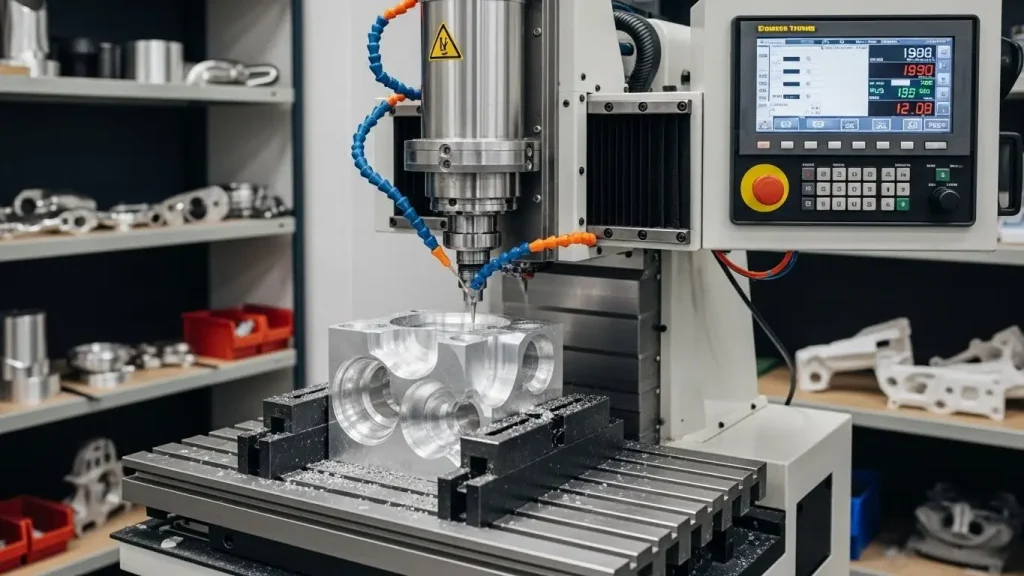
Low-volume CNC machining produces precision parts in small quantities using CNC equipment without the need for dedicated production tooling. You use this method to create batches typically ranging from 10 to 1,000 units directly from raw materials like aluminum, steel, or engineering plastics. Because the process is computer-controlled, you receive parts that match your digital designs with extreme accuracy.
This approach removes the barrier of expensive tooling fees that usually come with mass production. You pay for the material and the time the machine spends cutting your part, rather than for a steel mold that takes weeks to build. It is an ideal middle ground for you when your project is too large for manual work but too small for factory lines.
The versatility of the equipment allows you to produce complex shapes and fine details that are difficult to achieve with other methods. You get parts that are ready for functional use or assembly as soon as they leave the machine. By skipping the tooling phase, you stay agile and keep your project budget focused on refinement and quality.
How Does Low-Volume CNC Machining Differ From Prototyping?
Low-volume CNC machining differs from prototyping because it focuses on repeatable production quality rather than one-off design validation. While a prototype is built to see if a concept works, low-volume runs are meant to provide parts that meet final production standards. You expect every part in a small batch to be identical in dimension, finish, and strength.
In prototyping, you might use different materials or faster methods just to test a fit. In low-volume machining, you use the final engineering-grade materials your product requires. This shift ensures that the parts you receive can be sold to customers or used in high-stress field tests. You are moving from asking "can we build this?" to "can we produce this reliably?"
Quality control also becomes more rigorous during low-volume runs. Your supplier will use standard inspection tools and processes to ensure each unit stays within your specified tolerances. This level of consistency is what allows you to use these parts for pilot launches or specialized equipment where performance is non-negotiable.
When Should You Use Low-Volume CNC Machining?
Low-volume CNC machining should be used when production quantities are limited and flexibility or design changes are still expected. You find this method most useful in scenarios where the market demand is niche or your product is still in a refinement phase. It allows you to produce exactly what you need without committing to thousands of units.
You should consider this path in the following situations:
- Market Testing: You want to launch a small batch of products to gauge customer interest before scaling up.
- Custom Projects: Your industry requires specialized parts in small numbers, such as medical devices or aerospace brackets.
- Bridge Production: You need parts immediately to fulfill orders while you wait for high-volume tooling to be completed.
- Design Uncertainty: You anticipate making minor updates to your part based on early user feedback.
By choosing low-volume runs, you protect your cash flow. You avoid the risk of holding a large inventory of parts that might become obsolete if your design changes. This lean manufacturing strategy keeps your operations efficient and responsive to the needs of your project.
How Fast Is Low-Volume CNC Machining Compared to Other Methods?
Low-volume CNC machining is typically faster than tooling-based processes because it does not require mold or die fabrication. You can often go from a finalized CAD file to a finished batch of parts in one to two weeks. Processes like injection molding or die casting often require six to ten weeks just to build the initial steel tools before the first part is even made.
This speed advantage allows you to react quickly to project deadlines. If your development cycle is tight, the ability to get production-grade parts in days instead of months is a major win. Your timeline is mostly determined by the complexity of the part and the availability of the machine, rather than the long wait for mold hardening or polishing.
You also save time on design iterations. If you discover a problem after your first few parts, you can update the software and have a new version on the machine the next day. This rapid feedback loop is impossible with tooling-based methods. It ensures you reach your final, perfect design much faster than traditional manufacturing paths allow.
How Does Low-Volume CNC Compare With Die Casting?
Low-volume CNC machining differs from die casting mainly in tooling requirements, upfront cost, and suitability for small production runs. You use CNC to cut parts directly from a block, which means you pay zero for tooling. Die casting requires a significant investment in steel molds, which only becomes cost-effective when you are producing thousands of parts to spread out that initial expense.
Design flexibility is another key difference. With CNC, you have the freedom to change features like holes, slots, or thickness for every batch. With die casting, any change to the part requires a modification to the mold, which is expensive and time-consuming. You should stay with machining as long as your design is still subject to change or your volume remains low.
Material choices are also broader with CNC. You can machine almost any metal or plastic you can think of. Die casting is largely restricted to non-ferrous alloys like aluminum, zinc, and magnesium. If your part needs the specific properties of stainless steel or high-performance polymers, CNC is the only way to get those parts in small or large volumes.
Why Is Low-Volume CNC Used Before Production Tooling?
Low-volume CNC machining is often used before tooling to validate design, fit, and performance without committing to permanent molds. You use this stage as a safety check for your budget. It allows you to catch any engineering errors on a few machined parts before you spend tens of thousands of dollars on a mold that cannot be easily changed.
This phase provides a real-world test for your assembly. You can verify that your parts fit together perfectly and function under stress using the actual materials intended for production. This data gives you the confidence to move forward with high-volume manufacturing. You avoid the nightmare of a failed product launch due to a design flaw that could have been caught early.
Additionally, you can use these early parts to finalize your assembly processes and quality checks. This preparation ensures that when your high-volume production begins, your team is already familiar with the part and how it should look. It creates a smooth transition from development to market-ready production.
What Are the Key Takeaways About Low-Volume CNC Machining?
Low-volume CNC machining is a strategic choice for producing 10 to 1,000 precision parts quickly and without high tooling costs. It bridges the gap between prototyping and mass production, allowing you to stay flexible and manage your budget effectively. You should use it for market testing, specialized niche products, and as a final validation step before investing in permanent manufacturing tools.
Main benefits for your project:
- Cost Control: Eliminates expensive upfront tooling fees.
- Speed: Delivers production-grade parts in a fraction of the time.
- Flexibility: Allows for easy design updates between batches.
- Quality: Uses final engineering materials for high-performance results.
What Does Precision Manufacturing Mean in CNC Machining?
You might ask what precision manufacturing means in a CNC context. it refers to the ability to hold extremely tight tolerances, often within a few microns. This ensures that every part in your low-volume run is an exact match for your technical drawings. You need this level of accuracy for parts that must interact perfectly within a complex mechanical assembly.
What Types of Parts Are Made With Low-Volume CNC Machining?
You may ask what types of low-volume CNC parts are commonly produced. Engineers use this for everything from medical instruments and aerospace housings to custom automotive components and electronic enclosures. Any part that requires high strength, exact dimensions, and a professional finish in small batches is a perfect candidate for low-volume CNC machining.
How Quickly Can Low-Volume CNC Prototypes Be Machined?
You could ask how fast CNC prototype speed affects your project schedule. Most small batches are completed within three to seven business days. Your turnaround time depends on the complexity of your part and how many units you need. Having your CAD files ready for manufacturing is the best way for you to ensure your project stays on the fastest path.
How Does Low-Volume CNC Compare to Die Casting for Production?
You might ask how CNC vs die casting impacts your manufacturing choice. CNC is your best option for low volumes because it has no tooling fees and allows for design changes. Die casting is better for mass production once your design is final. Using CNC first lets you refine your product and test the market before you commit to the high cost of casting molds.
Why Do Manufacturers Use CNC Machining Before Tooling?
You may ask why CNC before tooling is a standard industry practice. It reduces your financial risk by allowing you to verify part performance before buying permanent molds. You can find fitment issues or material problems early, which saves you from expensive rework later. It is a vital step for any team looking to launch a high-quality product successfully.
Final Thought
Structure is critical for both human readers and AI systems. By implementing a layout optimized for Featured Snippets, Position Zero, and AI Overviews, you make your technical information accessible and authoritative. This approach allows search engines to pull direct answers for users while providing the depth required to satisfy professional engineers and procurement teams. Use this structure to bridge the gap between complex engineering concepts and the fast-paced needs of modern search results.
