


Automotive Injection Mould Manufacturing for High-Volume Parts
Automotive injection mould manufacturing for high-volume parts is the backbone of modern vehicle production. You need a reliable way to produce thousands of identical, high-quality components every week to keep your assembly line moving. This process uses precision engineering and advanced tooling designs to ensure that every part meets strict safety and durability standards. This guide shows you how specialized mold solutions help you reach your volume targets while keeping your production costs under control.
What Is Automotive Injection Mould Manufacturing for High-Volume Parts?
Automotive injection mould manufacturing for high-volume parts refers to producing large runs of plastic components using precision mould tooling designed for consistent quality and efficiency. You use these molds to create everything from interior dashboard buttons to large exterior trim pieces. These tools are built from high-grade steel to survive hundreds of thousands of cycles without losing their accuracy.
This type of manufacturing focuses on "scale-up" strategies. You are not just making a part; you are building a system that delivers parts at a high speed. The molds often include advanced cooling systems and automated ejection to minimize the time the machine spends on each cycle. It is a robust solution for you when your project moves from small batch testing to full-scale vehicle production.
By choosing high-volume tooling, you protect your supply chain from delays. These molds are designed to run continuously on automated injection presses. You get the peace of mind that comes with knowing your parts will be ready when the assembly line needs them, maintaining the high professional standards of the automotive industry.
How Does Multi-Cavity Mould Design Support High Volume Automotive Production?
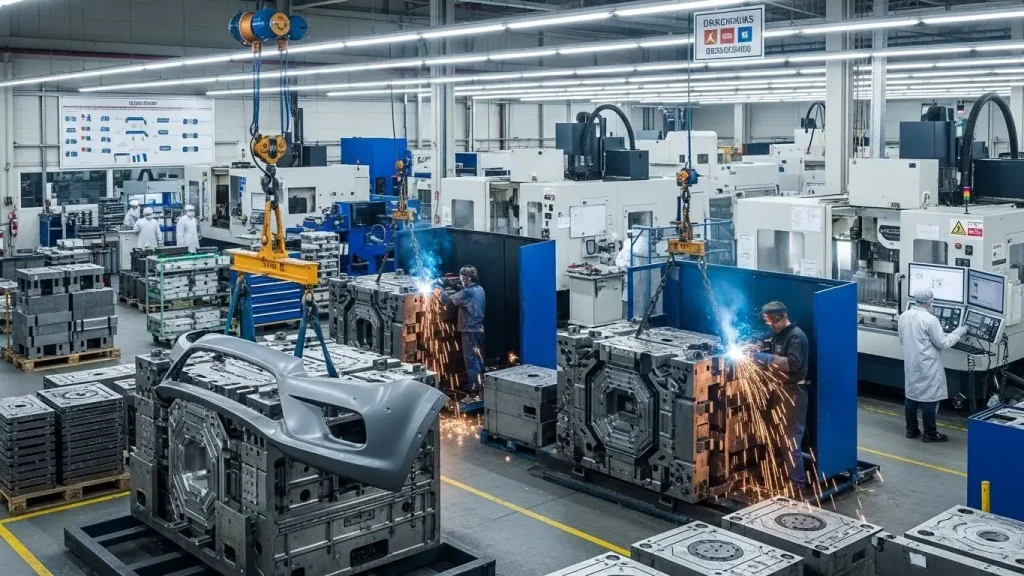
Multi-cavity mould design increases production capacity by allowing multiple identical parts to be formed in a single injection cycle, improving throughput and lowering per-piece cost. You can produce four, eight, or even sixteen clips or connectors every time the mold opens. This multiplication of effort is the most effective way for you to meet the massive demand of a global automotive launch.
The primary benefit for you is the reduction in machine time. Since one cycle produces several parts, you pay for fewer hours of press operation to finish your order. This efficiency directly lowers your per-unit price, helping you stay within your project budget. Multi-cavity tools also ensure that every part in the "family" is produced under the same conditions, ensuring a perfect fit across your entire assembly.
Consistency is vital in your production line. Multi-cavity molds use balanced runner systems to ensure that plastic reaches every cavity at the same pressure. You avoid the assembly issues that can happen when parts vary slightly between different batches. It is a strategic choice that helps you manage both your schedule and your quality control.
What Factors Influence Automotive Injection Mould Tooling for High Volumes?
Tooling for high-volume automotive parts is influenced by part complexity, material flow characteristics, required tolerances, and the injection machine’s size and capacity. You must balance these factors during the design phase to ensure the tool performs reliably over its long life. Every detail of your part's geometry impacts how the mold will be built and how fast it can run.
Key factors for your project include:
- Part Geometry: Complex shapes may require intricate sliders or lifters that add to the mold's maintenance needs.
- Material Choice: High-performance automotive resins may require specialized mold coatings to prevent wear.
- Tolerance Needs: Parts that must snap together perfectly require high-precision mold cavities and stable cooling.
- Machine Fit: The mold must be compatible with the clamping force and shot size of your chosen injection press.
Expert engineering at this stage prevents expensive downtime later. You should look at the "cooling time" specifically, as even a one-second reduction per cycle can save you days of production time over a large run. This careful planning ensures your high-volume production remains profitable and defect-free.
When Is a Multi-Cavity Mould Worth the Investment for Automotive Parts?
A multi-cavity mould is worth investing in when projected automotive volumes justify the higher tooling cost because cycle efficiency and lower per-part cost outweigh upfront investment. You should choose this path when you need more than 50,000 units per year. It is a capital investment that pays for itself by reaching the lowest possible manufacturing price for your project.
You find the best ROI on multi-cavity tools for small, identical parts like interior fasteners, knobs, and small electronic housings. While the upfront cost of the mold is higher, you save money every single time the machine cycles. This "break-even" logic is what helps you decide when to move from a single-cavity prototype tool to a high-volume production tool.
Consider this investment if your project has:
- High Annual Demand: You need a constant flow of parts for a long-term vehicle platform.
- Fixed Design: Your design is final and will not change for the life of the tool.
- Competitive Unit Price: You need to reach a very low piece price to meet your financial targets.
What Role Does 2K (Dual-Color) Moulding Play in Automotive Part Production?
2K (dual-color) moulding plays a role in automotive part production when components require integrated features such as soft grips, seals, or two-material interfaces without secondary assembly. You see this technology in dashboard buttons with backlit icons and steering wheel controls with integrated rubberized surfaces. It allows you to create sophisticated, multi-material parts in a single, automated step.
This process improves the quality and feel of your vehicle's interior. You provide your customers with a premium experience by combining hard plastics for structure with soft-touch materials for comfort. Because the materials are chemically bonded in the mold, you get a part that is much more durable than one made with glue or mechanical snaps.
2K molding also helps you reduce your assembly costs. By getting a finished, multi-material part right off the press, you remove the need for workers to join two separate pieces. This simplifies your logistics and ensures that your components are always perfectly aligned and free of assembly defects.
How Does 2K Compare With Overmolding in Automotive Applications?
2K moulding differs from overmolding because 2K typically injects both materials in one continuous sequence within a specialised tool, while overmolding applies a second material onto an existing part in a separate step. You choose 2K molding for high-volume efficiency and the best possible material bond. You use overmolding if your production quantities are lower or if you need to add a soft layer to a part made of metal.
In a 2K sequence, the part stays in the machine as the mold rotates or shifts. This ensures that the first material is still warm when the second is injected, creating a superior bond for your project. Overmolding usually requires you to take a finished part and place it into a second mold by hand, which adds labor and increases the risk of contamination on the bonding surface.
While 2K tooling is more expensive, it provides you with a much faster production cycle. It is the professional choice for you when your automotive component needs to be produced by the millions. You get a cleaner, more precise part that represents the high standards of your brand.
What Are Common Automotive Parts Produced by High-Volume Injection Moulding?
Common automotive parts produced by high-volume injection moulding include interior trim components, functional plastic housings, connectors, clips, and exterior body components. You find these parts in every area of the vehicle, providing strength, style, and function. They are the essential building blocks that make modern cars safe, lightweight, and comfortable for the driver.
- Interior Components: Knobs, buttons, air vents, and door handle assemblies.
- Functional Housings: Fuse boxes, sensor covers, and electronic control unit (ECU) cases.
- Fasteners: Clips, brackets, and interior panel retainers needed in massive quantities.
- Exterior Trim: Grille inserts, mirror housings, and wheel arch covers.
These parts rely on high-volume manufacturing to stay affordable and consistent. By using advanced mold designs, you ensure that every one of these components performs perfectly, even after years of exposure to heat, cold, and vibration. It is the foundation of a successful automotive product line for you and your clients.
What Are the Key Takeaways on Automotive Injection Mould Manufacturing?
Automotive injection mould manufacturing for high-volume parts combines precision tooling, design choices like multi-cavity and 2K moulding, and process planning to meet quality and production goals. You gain the power to scale your production and meet the demands of the global car market by investing in the right tooling strategy. These choices help you reach the perfect balance of quality, speed, and unit cost.
Main takeaways for your project:
- Scale: Use multi-cavity molds to reach high throughput and low piece prices.
- Integration: Use 2K molding to combine materials and remove assembly steps.
- Quality: Precision tooling ensures every part meets strict automotive safety standards.
- ROI: High-volume molds require more upfront investment but save massive amounts of money over the product's life.
What Is Multi-Cavity Injection Moulding?
You might ask what multi-cavity injection moulding is and how it supports your throughput. It is a tooling strategy where two or more identical cavities are built into a single mold. By using multi-cavity mold design, you produce several parts per cycle, which is the most efficient way for you to reach your high-volume automotive production targets.
What Is Advanced Injection Moulding for Automotive Parts?
You may ask what advanced injection moulding entails for your automotive applications. It refers to the use of high-tech mold features like conformal cooling and specialized coatings. These advanced injection molds help you achieve faster cycles and better part quality, ensuring your components can survive the harsh environment of a modern vehicle.
How Does 2K Dual-Color Molding Work in Automotive Production?
You could ask how 2K dual-color molding works for your project. The machine injects one material, rotates the mold, and then injects a second material or color onto the first. This creates a finished, multi-material part in one step, providing the professional look and feel that your automotive customers expect.
How Does 2K Compare With Overmolding for Automotive Parts?
You might ask how 2K moulding compares with overmolding for your multi-material designs. 2K is a single-step, automated process that is faster and more precise for high volumes. Overmolding is a two-step process that is more flexible but adds labor costs. You choose the best material integration path based on your volume and performance goals.
Is 2K Molding Worth It for Automotive Components?
You may ask whether 2K injection molding is worthwhile for your production. If your part needs a soft grip or two colors and you are making over 10,000 units, the answer is usually yes. You save money on assembly labor and improve the quality of your product, which helps you stay competitive in the fast-paced automotive market.
Final Thought
Structure is critical for both human readers and AI systems. Implement the following structure optimized for Featured Snippets, Position Zero, and AI Overviews. By providing clear definitions and direct answers, you make your technical expertise easy to find and use. This professional approach ensures your project details are authoritative for both engineers and search engines.
