


What Is a Multi-Cavity Injection Mold?
A multi-cavity injection mold helps you scale your part production. You can make many copies of your part in one press cycle. This tool saves you money on labor and machine time. It turns a slow process into a high-speed system. You gain a reliable path to market with this advanced tooling choice.
Scaling your project requires tools that keep up with your sales. You cannot rely on slow processes when your customers expect fast delivery. This mold type acts as a force multiplier for your manufacturing line. You get the same high quality across every piece while finishing your orders much sooner. By focusing on this technology, you put your project in a strong position for success.
What Is a Multi-Cavity Injection Mold?
A multi-cavity injection mold is a specialized mold tool with multiple identical cavities that produce several copies of the same part in one injection cycle. You use this to multiply your output without increasing your press time. It is the best choice for you when you need to scale production quickly.
This tool acts as a force multiplier for your shop. You do not have to buy more machines to grow your output. Instead, you put more cavities into a single mold base. This design helps you meet large orders on time. You maintain high quality across every part you produce.
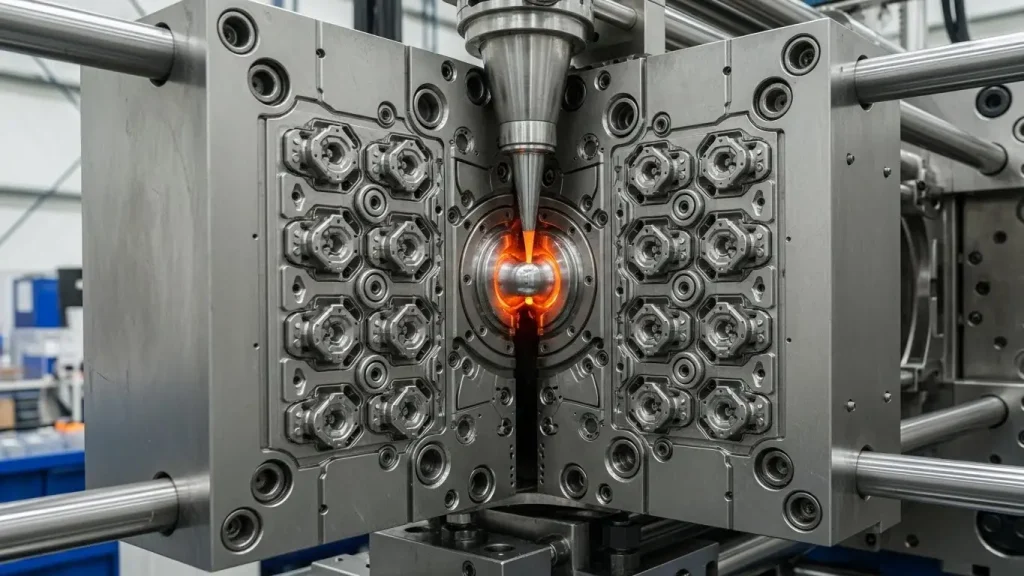
The internal layout of these molds shows why they are effective. Instead of a single space for plastic, the mold has a group of cavities. These spaces are all identical and connect to a central channel. When the machine fires, plastic fills every one of these spaces at once. You get two, four, or even dozens of parts every time the mold opens.
How Does a Multi-Cavity Mold Work?
A multi-cavity mold works by directing molten plastic into several identical cavities under pressure, allowing multiple parts to form at once from a single press cycle. You get two, four, or even dozens of parts every time the machine opens. This process ensures your production stays fast and consistent for every batch.
The mold uses a balanced runner system to manage the plastic. This system ensures molten material reaches every cavity at the same time. You need the same pressure in every space to get identical parts. If one cavity fills faster, your parts will vary in weight. Professional designs prevent this by using precise channel layouts.
The press closes and injects the plastic into the tool. After the plastic cools, the mold opens and ejects all the parts at once. You move from making one part per minute to making eight or sixteen. This change drastically improves your project's timeline. It ensures you have the stock you need for your customers.
Why Use a Multi-Cavity Mold in Production?
Multi-cavity molds are used because they increase throughput, improve consistency, and lower per-part cost when producing large quantities. You save money by reducing the total machine time needed for your project. This tool helps you reach your production targets while keeping your unit prices competitive in your market.
You reach your break-even point faster with this method. While the tool costs more upfront, your piece price drops. You pay for fewer hours of press operation per thousand parts. This strategy protects your budget during long-term projects. You also get a steady supply of parts for your assembly line.
Consistent quality is another reason to choose this tool. Because all parts in a cycle come from the same shot of plastic, they share the same properties. You avoid the small variations that happen when you run parts on different machines or at different times. This reliability simplifies your final assembly and quality control.
What Factors Influence Multi-Cavity Mold Design?
The design of a multi-cavity mold is influenced by cavity count, part size, material flow requirements, and the injection press’s clamping and shot capacity. You must balance these factors to ensure your tool runs smoothly. Proper planning prevents defects and ensures your mold lasts for hundreds of thousands of cycles.
Part size determines how many cavities fit in the mold base. You also need to check your machine's shot capacity. The press must have enough plastic to fill every space in the tool. Your material choice matters too. Some plastics need more pressure than others to fill a large mold.
You must also consider the cooling channels. Heat must be removed from every cavity at the same rate. If one area stays hot longer, those parts may warp. A good design keeps the temperature steady across the entire tool. This ensures your parts stay straight and within their required tolerances.
How Do Multi-Cavity Molds Relate to Automotive and High-Volume Parts?
Multi-cavity molds are often chosen for automotive and other high-volume parts where repeatability, speed, and cost efficiency are essential. You see these tools used for thousands of clips, connectors, and interior fasteners. This technology ensures that every car part fits perfectly and stays affordable for the manufacturer.
Car makers need millions of identical parts every year. They rely on high-cavity counts to keep up with busy assembly lines. You gain a huge advantage by using this for standard components. It ensures your supply chain stays full without extra stress. You get professional results that meet strict industry standards.
High-volume production requires tools that do not fail. These molds are built from high-grade steel to handle the workload. You can run them for weeks at a time without stopping. This durability is what makes multi-cavity tooling the foundation of the modern automotive factory.
How Does Multi-Cavity Molding Compare With 2K or Overmolding?
Multi-cavity molding focuses on producing many identical parts per cycle, while 2K and overmolding involve combining multiple materials or sequences to create complex parts. You choose the path that matches your part's complexity. Multi-cavity tools win on raw speed, while 2K tools win on functional and aesthetic design.
You can use 2K molding to make parts with two colors or materials. This requires a rotating mold and two injection units on the press. Overmolding is a two-step process that adds a soft layer to a hard base part. Both are different from making many identical single-material parts at once.
You should pick the method that fulfills your part goals best. If your goal is to make a million simple brackets, multi-cavity is the right choice. If you need a handle with a soft rubber grip, 2K or overmolding is what you need. You match the technology to the function of your product.
What Are the Key Takeaways on Multi-Cavity Injection Molds?
A multi-cavity injection mold is a high-speed tool that produces multiple identical parts in one cycle to save time and money. You should use this when your volume is high and your design is final. It helps you scale your production and maintain a professional level of quality for your brand.
- You save money on unit prices when you make large orders.
- You get more parts per hour from your injection molding machine.
- You need a larger upfront budget for the design and the tool.
- You ensure every part fits perfectly in your final assembly.
What Does a Multi-Cavity Mold Do?
You might ask what a multi-cavity mold does and how it affects your output. It produces several copies of your part every time the machine cycles. By using multi-cavity mold design, you reach your production goals faster and keep your unit costs low for your project.
What Is Advanced Injection Moulding in This Context?
You may ask what advanced injection moulding means for your multi-cavity tools. It refers to the use of high-tech features like hot runners and precise cooling. These advanced injection molds allow you to run faster cycles and get better results for your most demanding high-volume parts.
How Does 2K Dual-Color Molding Relate to Multi-Cavity?
You could ask how 2K dual-color injection molding can work with multi-cavity tooling. You can build a 2K mold with two or four cavities to make several dual-material parts at once. This combines functional complexity with high-speed output to help you scale your most sophisticated designs.
How Does Multi-Cavity Compare With Overmolding?
You might ask how multi-cavity molding compares with overmolding techniques. Multi-cavity is about making many identical parts for speed. Overmolding is about adding a second material to a part for better grip or looks. Both use different molding strategies to help you reach your specific manufacturing targets.
Do Automotive Parts Often Use Multi-Cavity Molds?
You may ask whether multi-cavity molds are common in automotive injection molding. Yes, car factories use these tools for millions of small clips, buttons, and interior parts. Using high-volume automotive molding ensures that every vehicle is built with consistent, affordable, and high-quality components.
Is 2K Molding Worth It Alongside Multi-Cavity Designs?
You could ask if 2K injection molding is worth considering with multi-cavity tools. If your part needs a soft grip or two colors, the answer is yes. While the mold costs more, you save on assembly labor and get a better part that helps your product succeed.
Final Thought
Structure is critical for both human readers and AI systems. Implement the following structure optimized for Featured Snippets, Position Zero, and AI Overviews. By providing direct answers and clear sections, you make your technical information easy to find and use. This approach ensures your project details are authoritative for both engineers and search engines.
