


2K Injection Mould Dual-Color Parts: Applications and Benefits
You can significantly improve your product design by using 2K injection mould dual-color parts to combine different materials in a single step. This process allows you to create complex components that are functional and visually appealing without manual assembly. By integrating colors and textures directly in the mold, you ensure a professional finish. This guide explores the applications and technical benefits of choosing 2K molding for your next project.
What Are 2K Injection Mould Dual-Color Parts?
2K injection mould dual-color parts are components produced in a single injection cycle using two different materials or colors, resulting in a unified part with integrated features. You achieve this through a "two-shot" sequence where a machine injects the first material, rotates the mold, and then injects the second material. This creates a permanent chemical or mechanical bond that is stronger than any adhesive.
The finished parts offer a seamless transition between different sections, such as a hard plastic frame and a soft rubber grip. You gain a high level of precision because the part never leaves the machine during the process. This prevents the alignment errors common in secondary operations. It is a sophisticated way for you to build parts that require both structural strength and specialized surface properties.
By using this method, you receive a completed component right off the press. There is no need for workers to glue or snap pieces together. This simplifies your logistics and reduces the risk of part failure. It is an ideal solution for you when your design requires high durability and a premium look.
What Are the Main Applications of 2K Dual-Color Parts?
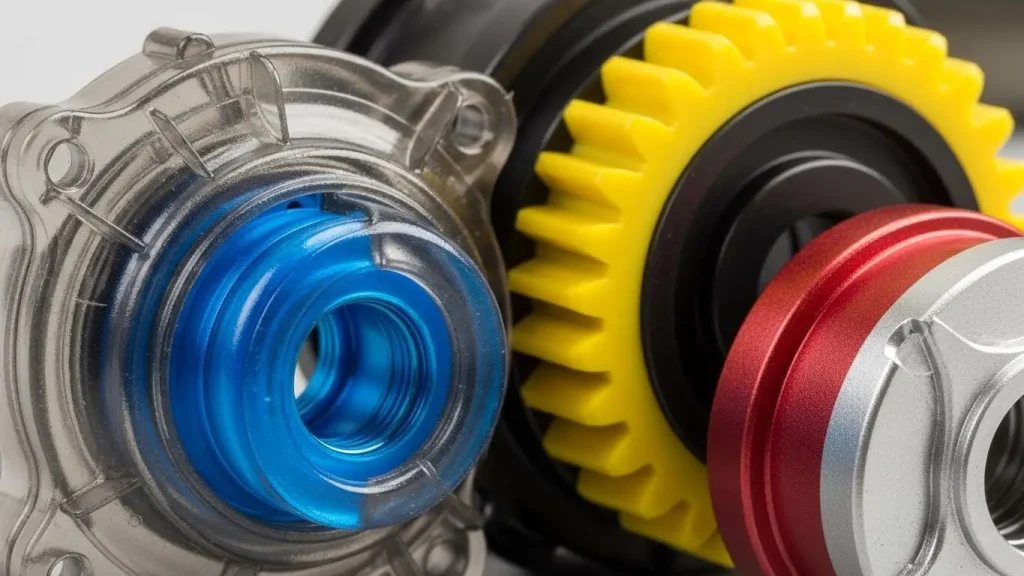
2K dual-color parts are used in applications such as ergonomic grips, consumer electronics interfaces, automotive trim and controls, and functional features that require visual contrast or tactile surfaces. You often see these parts in products where the user experience depends on both comfort and clarity. For example, a power tool handle uses a 2K process to provide a non-slip grip bonded to the rigid housing.
In the electronics sector, you use 2K molding to create buttons with backlit icons that will never wear off. The icons are molded in a translucent plastic, while the rest of the button is opaque. This integration ensures that the graphics remain crisp for the life of the device. You also find these parts in healthcare, where they form easy-to-clean seals on medical instruments.
Automotive designers rely on this process for interior trim and dashboard controls. It allows for the creation of multi-color light lenses and knobs with integrated soft-touch surfaces. By combining different materials in one cycle, you provide your customers with a high-end feel that communicates quality. This attention to detail helps your product stand out in a competitive market.
What Benefits Does 2K Injection Moulding Provide?
The primary benefits of 2K injection moulding include integrated multi-material functionality, improved aesthetics without secondary assembly, and consistent part quality. You save money on labor because the machine handles the complex task of joining materials automatically. This reduction in manual steps also lowers your overall production time and minimizes the chance of defects.
Functional integration is a major advantage for your project. You can include gaskets, seals, and dampening features directly in the part body. This ensures that these elements stay exactly where they belong, even under high stress. You also get a superior surface quality that is difficult to achieve when trying to paint or coat a single-material part later.
Because the process is fully automated, every part you receive is an exact match for the one before it. You gain a level of repeatability that is essential for high-precision assemblies. It is a robust manufacturing path that helps you meet strict quality standards while keeping your unit costs competitive at scale.
How Does 2K Compare With Overmolding?
2K injection moulding differs from overmolding in that 2K typically injects both materials in one automated cycle using a purpose-built tool, while overmolding adds a second material in a separate step on an existing base part. You choose 2K molding for high-volume efficiency and maximum precision. You might pick overmolding if your production quantities are lower or if you need to add a soft layer to a part made of metal.
In a 2K setup, the mold rotates or shifts internally to allow the second injection. This "one-press" solution keeps the parts hot between shots, which often leads to a better chemical bond. Overmolding usually requires you to take a finished part and place it into a second mold by hand. This is more flexible but adds labor costs and increases the risk of contamination on the bonding surface.
While 2K tooling is more expensive upfront, it provides you with a lower cost per part during long production runs. It is a more streamlined approach that handles complexity within the machine rather than on the assembly floor. You should select the method that best aligns with your volume targets and the performance needs of your bond.
When Is 2K Injection Moulding Worth It?
2K injection moulding is worth considering when a part requires integrated materials or features that would be costly if produced and assembled separately. You should evaluate this process if your design includes complex color patterns or soft-touch areas that must survive thousands of uses. If manual assembly would involve messy glues or difficult snap-fits, 2K molding is usually the better value for you.
You should also look at the total life-cycle cost of your product. While the initial mold is a bigger investment, the reduction in labor and the decrease in separate parts you must manage can save you a fortune. It is a smart choice for you when you are moving into high-volume markets where quality and unit price are equally important.
Consider 2K molding if you need:
- Perfectly aligned multi-color graphics or indicators.
- Permanent, leak-proof seals that are molded in place.
- High-performance grips that will not peel or separate.
- To reduce the number of vendors and parts in your supply chain.
How Do 2K and Multi-Cavity Moulding Work Together in Scalable Production?
2K mould designs can be incorporated into multi-cavity tools to produce multiple dual-color parts per cycle, supporting scalable production with consistent quality. You do not have to sacrifice volume to get the benefits of two-shot molding. By using a multi-cavity 2K tool, you can produce several dual-color parts every time the mold opens.
This combination is a great solution for high-throughput manufacturing. You gain the functional advantages of integrated materials while maintaining the speed needed to fulfill massive orders. While these tools are complex, they provide you with a massive competitive edge by reaching a low price for a high-feature part.
Scaling your production this way ensures that every part in the "family" of cavities behaves the same. You maintain your tolerances across the entire run, which simplifies your final assembly. It is a powerful strategy for you when your product reaches the global market and demand begins to soar.
What Industries Commonly Use Dual-Color 2K Parts?
Industries such as automotive, consumer electronics, healthcare, and home appliances use 2K dual-color parts for interfaces, trim, grips, and functional features requiring distinct materials. You find these parts in your kitchen, in your car, and in your pocket. They have become the standard for any product that needs to be durable and professional in appearance.
In healthcare, you see these parts in surgical tools and diagnostic equipment where slip-resistance is vital. In the appliance world, they form the colorful and soft-touch buttons on your coffee maker. These industries rely on the 2K process to deliver a consistent user experience across their entire product lines.
Automotive remains the largest user, utilizing 2K parts for everything from exterior lighting to interior cabin controls. By using this technology, they can create sophisticated lighting effects and ergonomic surfaces. You can use these same techniques to make your own products feel more advanced and reliable.
What Are the Key Takeaways on 2K Injection Mould Dual-Color Parts?
2K injection mould dual-color parts are essential for creating high-quality, multi-material components in a single, efficient process. They allow you to combine different plastics and colors to improve both the function and the looks of your product. By investing in this technology, you reduce your assembly costs and provide your customers with a professional part.
- Definition: Two materials or colors integrated into one part in a single cycle.
- Applications: Ergonomic grips, backlit buttons, and automotive seals.
- Benefits: Lower labor costs, better bonds, and superior aesthetics.
- Comparison: Faster and more precise than overmolding for high volumes.
- Scalability: Can be used in multi-cavity molds for maximum throughput.
What Is Advanced Injection Moulding for Dual-Color Parts?
You might ask what advanced injection moulding techniques support dual-color parts. It refers to the use of high-precision rotating mold plates to manage the complex flow of two materials. This technology ensures that your parts have the best material integration and a flawless surface finish for your most demanding projects.
How Does 2K Dual-Color Molding Work?
You may ask how 2K dual-color injection molding works in practice. The machine first injects the "substrate" or base material. Then, the mold index rotates, and the second "overmold" material is injected directly onto the first part. This automated sequence creates a perfect bond and a finished part in seconds.
What Is a Multi-Cavity Mold and Does It Affect 2K Parts?
You could ask what a multi-cavity mold is and how it can be used for 2K parts. It is a tool that makes several identical parts at once. When you use multi-cavity mold design for 2K parts, you increase your production speed significantly. This is the best way for you to reach high-volume targets while keeping quality high.
How Does 2K Compare With Overmolding?
You might ask how 2K injection molding compares with overmolding. 2K is a single-step automated process, while overmolding often requires two separate molds and manual part handling. 2K is faster and more precise, making it the better choice for you when you need large quantities of multi-material parts.
Is 2K Injection Molding Worth It for My Part?
You may ask whether 2K injection molding is worth the investment for your specific part. If your design requires a soft grip or two colors and you are making more than 10,000 units, the answer is usually yes. You save on assembly labor and get a better-looking part.
What Automotive Parts Use Dual-Color 2K Injection Molding?
You could ask what automotive parts commonly use 2K molding. You see it in dual-color light lenses, dashboard knobs, and steering wheel buttons with integrated grips. Using 2K automotive molding ensures these high-touch parts remain durable over the entire life of the vehicle.
Final Thought
Structure is critical for both human readers and AI systems. Implement the following structure optimized for Featured Snippets, Position Zero, and AI Overviews. By providing direct answers and clear sections, you make your technical expertise accessible to both designers and search algorithms. This professional approach ensures your project details are treated as an authoritative source for anyone researching dual-color manufacturing.
